How to Catch Crappie in Cold Water
There's nothing quite like the chill that sets in when winter rolls around, and suddenly, the crappie fishing you've come to love seems to disappear. You might find yourself staring at a blank fish finder, wondering where all those lively slabs went, or casting your favorite jig into seemingly empty water with no bites to show for it. It can be incredibly frustrating to shift from abundant catches to feeling like you're fishing a ghost town. But don't despair! Crappie are still out there, just in different moods and places. This guide is all about cracking the code to catching crappie in cold water, understanding their secretive habits, and equipping you with the right strategies to keep those fish biting even when temperatures drop across Tennessee.
Understanding Crappie Behavior in Cold Water
When the water gets cold, crappie don't just vanish; they adapt. Their entire world slows down, and as anglers, we need to adjust our approach to match their changed behavior. It's less about chasing them and more about understanding their winter hideouts and subtle feeding patterns.
How Water Temperature Affects Crappie Metabolism
Crappie, like all fish, are cold-blooded creatures, meaning their body temperature mirrors that of the water around them. As water temperatures plummet below 50 degrees Fahrenheit, their metabolism slows dramatically. Think of it like a bear going into hibernation – they're not fully dormant, but their energy demands decrease significantly. This means they're less active, their movements become sluggish, and their feeding windows shorten considerably. They're trying to conserve as much energy as possible, which directly impacts how and when they'll bite your bait.
You won't find them expending precious energy chasing down fast-moving lures. Instead, they prefer an easy meal that requires minimal effort. This metabolic slowdown is why your aggressive summer retrieves or shallow-water tactics often fail spectacularly in winter. The fish are still there, but they’re not in a hurry, and certainly not in a mood to chase. Understanding this fundamental physiological shift is the first key to unlocking cold water crappie success.
Where Crappie Go When It Gets Cold
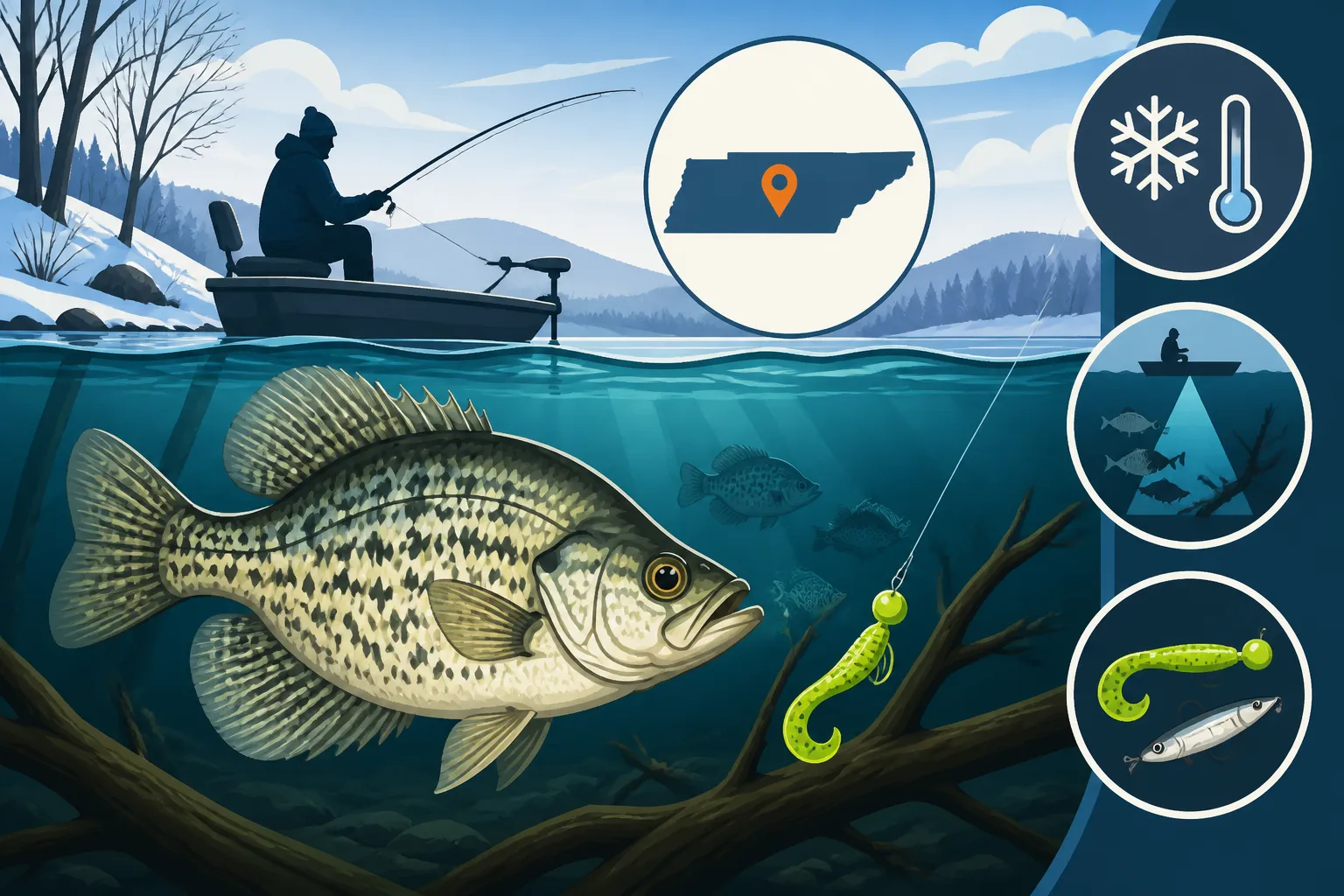
With their metabolism slowed, crappie seek out stability and comfort. The most stable water temperatures in winter are typically found in deeper areas of a lake or reservoir. This means they'll often migrate from shallow bays and flats to deeper channels, humps, ledges, and submerged timber. On massive bodies of water like Kentucky Lake or Watts Bar Lake, these fish will congregate in the deepest parts of old riverbeds or creek channels. They are essentially looking for thermal refuge, even if it's only a degree or two warmer, or simply more consistent.
Another critical behavioral change is how tightly they school. Unlike the more scattered patterns of warmer months, cold water crappie tend to form incredibly dense, tight schools. This makes them harder to find if you're not on top of them, but once you do locate a school, you've often hit the jackpot. They might suspend in the water column over deep areas, often relating to baitfish schools or submerged brush piles that offer cover and act as a natural congregating point. Knowing that they're likely schooled up tight and deep is crucial for efficient searching.
Essential Gear and Tackle for Cold Water Crappie
Cold water crappie fishing isn't about brute force; it's about finesse and sensitivity. The right gear can make the difference between feeling those incredibly subtle winter bites and coming home empty-handed. Every piece of your setup, from rod to lure, needs to be chosen with precision in mind.
Rods, Reels, and Line for Winter Success
Sensitivity is the name of the game when the water is cold. Crappie bites can be incredibly light, often feeling like nothing more than a slight tick, a spongy resistance, or simply a momentary heaviness on your line. To detect these ghost-like bites, you need a highly sensitive rod. Opt for light or ultra-light spinning rods, typically ranging from 5 to 7 feet in length, with a fast action tip. The fast action means the tip bends easily, telegraphing even the slightest disturbance, while the backbone of the rod provides enough power to set the hook. This specialized sensitivity is why many anglers stock up on their favorite brands of sensitive rods and reels from online retailers like Amazon. For insights into selecting the best setup, you might find our guide on What Rod Length Works Best for Tennessee Crappie Fishing? particularly useful.
Pair your sensitive rod with a small, lightweight spinning reel. The reel's job isn't to fight big fish, but to manage your line smoothly and contribute to the overall balance and feel of your setup. Spool your reel with light monofilament line, typically 4 to 6-pound test. Some anglers prefer even lighter fluorocarbon line, like 2 to 4-pound test, due to its low visibility and exceptional sensitivity, especially in clear winter waters. The thinner diameter of lighter lines also allows your small jigs to fall more naturally and get deeper with less resistance, which is key when crappie are suspended.
The Right Lures and Baits for Finicky Fish
When crappie are lethargic, presentation and bait choice become paramount. Small jigs are often the king of cold water crappie fishing. Think tiny – 1/32 ounce to 1/16 ounce jig heads are standard, sometimes even 1/64 ounce in extremely tough conditions. These tiny jig heads are usually tipped with equally small soft plastics. Popular choices include Bobby Garland Crappie Baits, Johnson Crappie Busters, or similar micro-plastics designed to imitate small baitfish or insect larvae. Classic colors like chartreuse, white, black/chartreuse, or pearl often prove effective, but it pays to experiment. The key is a small profile that mimics the available baitfish and falls slowly and naturally. For a deeper dive into techniques, our article on How to Jig for Crappie can provide more detail.
Live bait, especially small minnows like rosy reds or shiners, is another incredibly effective option, often outperforming artificials on the toughest days. Present a small minnow on a tiny Aberdeen-style hook (size 4 or 6) or under a slip bobber. Sometimes, combining the best of both worlds—tipping a small jig with a live minnow—can be absolutely deadly. The subtle natural movement and scent of the live minnow can coax strikes from even the most inactive crappie. For those who prefer a more hands-on approach, local bait and tackle shops often have an excellent selection, but for sheer variety, especially with specific jig head weights or soft plastic colors, a quick search on Amazon will yield plenty of options. Additionally, small blade baits or tiny jigging spoons can also be effective when crappie are tightly schooled and you’re vertically jigging directly over them. These baits have a different vibration and flash that can sometimes trigger a reaction strike.
Proven Techniques for Cold Water Crappie Success
Once you've got the right gear and a grasp on crappie behavior, it's time to put those pieces together with effective techniques. Remember, patience and precision are your most valuable tools when the water turns cold.
Slow and Steady Wins the Race: Vertical Jigging
When crappie are hunkered down in deep water, often suspending in tight schools, vertical jigging is by far the most effective technique. The goal is to present your bait right at their eye level, almost spoon-feeding them, as they won't chase. This starts with positioning your boat directly over the fish using your electronics. Once located, drop your small jig or live minnow straight down to the exact depth where you see them.
The retrieve is critical and often misunderstood. It's not about aggressive jigging. Instead, employ incredibly subtle movements. Think of barely twitching the rod tip, just enough to give the bait a slight shimmer or a gentle rise and fall of a few inches. The key is long pauses between these subtle movements, allowing the bait to hang enticingly in front of the crappie. Sometimes, a "dead stick" approach, where you simply hold the bait still at their depth, can be the most effective. Watch your fish finder intently; you might see fish move up to inspect your bait. If they rise but don't commit, try adjusting your depth by an inch or two, or experiment with a different color. The bite might be a barely perceptible "thump," a slight feeling of added weight, or your line just moving sideways. For more advanced methods, exploring Tightlining Techniques for Crappie can enhance your vertical presentation.
Spider Rigging and Trolling in Winter
While vertical jigging is excellent for concentrated schools, sometimes crappie are a bit more scattered, or you need to cover more water to find them. This is where spider rigging and slow trolling come into their own. Spider rigging involves setting out multiple rods (often 4-8) from the front and sides of your boat, each presenting a different bait at varying depths. This allows you to fan out your presentation and explore different parts of the water column simultaneously. You'll typically use a combination of small jigs, live minnows, or a jig-and-minnow combo.
With a spider rig, you then engage in extremely slow trolling, often powered by an electric trolling motor, at speeds as low as 0.2 to 0.8 mph. This methodical pace allows your baits to stay in the strike zone for extended periods as you slowly move along contours, old creek channels, or across flats adjacent to deep water. This technique is particularly effective on large reservoirs where crappie might be spread out but still relating to subtle depth changes or submerged structure. It’s a fantastic way to find those active fish within a larger, less concentrated area. Our guide on How to Spider Rig for Crappie goes into more detail about setting up and executing this popular method.
Mastering the Slip Bobber
The slip bobber rig is another powerful tool for cold water crappie, especially when they are suspended at a consistent depth or holding tight to vertical cover like brush piles. What makes a slip bobber so effective is its ability to allow for precise depth control, letting your bait descend exactly to where the fish are holding without being weighed down by a fixed bobber. This also allows for a natural, unweighted presentation that can entice wary crappie.
To set up a slip bobber, you’ll thread your line through the bobber, then add a small bead, followed by a bobber stop. The bobber stop, often a piece of string or rubber, can be adjusted up or down your line to set the desired depth. Below the bobber, you’ll tie on a small hook with a minnow or a tiny jig, adding a split shot weight a few inches above the bait to help it sink. This setup is excellent for fishing around boat docks, submerged brush piles, or bridge pilings where crappie are often suspended. It's also a fantastic technique for bank anglers targeting specific areas. A wide range of high-quality slip bobbers, weights, and hooks are readily available on Amazon, making it easy to assemble the perfect cold water crappie rig. For a broader understanding of different crappie techniques, check out our Tennessee Crappie Fishing Guide by Season.
Finding the Right Spots in Winter
Knowing where to look for crappie in cold water is arguably more important than any other factor. They don't roam aimlessly; they gravitate towards specific types of cover and structure that offer stability, warmth, and access to baitfish.
Targeting Deep Channels and Ledges
As mentioned, crappie seek the most stable water temperatures, which means they retreat to the deepest available cover in larger bodies of water. Your boat's electronics and detailed lake maps (like those often found on modern fish finders) are invaluable here. Look for old river channels, deep creek beds, and abrupt depth changes or ledges on your map. These are winter highways and congregating spots for crappie. For specific information on great fishing spots, consider our article on the Best Crappie Lakes in Tennessee.
Once you've identified these deep structures, use your sonar to pinpoint specific features along them: submerged timber, brush piles, rock formations, or even subtle humps. These smaller pieces of cover act as magnets, concentrating schools of crappie. On many Tennessee lakes, such as Chickamauga Lake or Percy Priest Lake, these deep channels can hold an incredible amount of fish throughout the winter months. Remember, crappie often suspend above the very bottom, so pay attention to where you see baitfish and crappie arches in the water column, not just directly on the bottom.
Hidden Gems: Marinas and Bridge Pilings
Don't overlook man-made structures that offer deep water and vertical cover. Marinas, especially those on deeper lakes, can be fantastic winter crappie spots. The docks, boats, and pilings provide abundant vertical structure where crappie can hold. Many marinas also have submerged brush piles intentionally placed by anglers seeking to attract fish. The structures can sometimes retain a slight bit of warmth, creating a subtle thermal advantage.
Similarly, bridge pilings offer excellent vertical structure that crappie will relate to. These concrete and steel structures extend from the bottom to the surface, providing vast amounts of shade and ambush points. Crappie will often suspend around these pilings, particularly on the deeper, current-breaking sides. Always be mindful of local regulations regarding fishing within marinas or around bridge structures, as some areas may have restrictions. When fishing these spots, you'll want to deploy vertical jigging or slip bobber tactics to target the fish precisely at their depth. Our guide on Tennessee Crappie Fishing: Black Crappie and Where to Find Them might offer more insights on specific habits.
Using Your Electronics to Locate Schools
In cold water, a quality fish finder is not just helpful; it's practically essential. Do You Need a Fish Finder for Crappie Fishing in Tennessee? Absolutely, especially in winter. Your fish finder allows you to quickly locate those tight, dense schools of crappie in deep water that would be almost impossible to find otherwise. Look for distinct arcs or dense blobs on your sonar screen. When you see these, you've found a school.
More importantly, pay close attention to baitfish. Crappie are predators, and they will be where their food is. If you see large schools of shad or other baitfish, crappie are almost certainly nearby, often positioned just below or to the sides of the bait, ready to strike. Utilize advanced features like side imaging and down imaging to scan wider areas for structure and fish without having to drive directly over them, which can sometimes spook inactive fish. For instance, top-rated Garmin or Humminbird units found on Amazon can make a huge difference here, allowing you to stealthily approach and present your bait. Knowing How Water Temperature Affects Fish Activity is also vital to correctly interpreting your sonar readings.
| Jig Weight (oz) | Bait Type | Target Depth (feet) | Technique | Notes |
|---|---|---|---|---|
| 1/32 – 1/16 | Small soft plastic | 15-30+ | Vertical Jigging | Subtle movements, long pauses. Look for suspended fish. |
| 1/32 – 1/16 | Live minnow | 15-30+ | Vertical Jigging | Natural movement, irresistible to lethargic crappie. |
| 1/16 – 1/8 | Jig + Minnow | 15-30+ | Slow Trolling | Covers water slowly, multiple rod presentation. |
| 1/32 – 1/16 | Live minnow | Variable | Slip Bobber | Excellent for precise depth control around structure. |
| 1/8 – 1/4 | Small spoon | 20-40+ | Vertical Jigging | For very deep, tightly schooled fish, reaction bite. |
Disclaimer
Fishing conditions and regulations can change, so always check the latest rules and limits from the Tennessee Wildlife Resources Agency (TWRA) before heading out. This guide is for informational purposes only, and safe boating practices should always be followed. Don't forget to review Crappie Limits Under Tennessee Fishing Rules to ensure you're compliant.