Cold-Water Trout Species in Tennessee
There's nothing quite like the crisp air of a Tennessee mountain stream, the sound of rushing water over ancient stones, and the thrilling tug of a trout on the end of your line. But if you're like many anglers, you might wonder which cold-water species truly thrive here and how to best pursue them. This guide is dedicated to exploring the incredible world of cold-water trout in our beautiful state, helping you understand their habitats, identify them, and learn the best techniques to enjoy a successful and responsible fishing experience.
The Allure of Tennessee's Cold-Water Streams
Tennessee is often celebrated for its incredible bass and crappie fisheries in large reservoirs, and rightfully so. But for those who love the pursuit of trout, our state offers a different kind of magic, tucked away in the cooler elevations and spring-fed rivers. It's a different kind of challenge, a different rhythm of the cast and retrieve, and a truly rewarding experience for those willing to seek it out.
Why Cold Water is King for Trout
Trout, by their very nature, are creatures of the cold. They thrive in water temperatures generally below 68 degrees Fahrenheit, and many species prefer it even colder, ideally in the low 50s. This isn't just a preference; it's a physiological necessity. Colder water holds more dissolved oxygen, which trout need in abundance to survive and flourish. When water temperatures climb too high, oxygen levels drop, stressing the fish and making them more susceptible to disease and even death. That's why you won't typically find healthy populations of wild trout in the stagnant, warm backwaters of a lowland lake.
Here in Tennessee, our cold-water trout streams are often characterized by their high elevation, tree-lined banks providing ample shade, and constant influx of spring water from underground sources. Rivers like the Clinch River downstream from Norris Dam or sections of the Caney Fork River are prime examples, where deep, cool water releases create perfect conditions year-round. These environments aren't just good for the fish; they create a stunning backdrop for anglers looking to escape the summer heat and find tranquility. Understanding this vital connection between water temperature and trout health is the first step to becoming a truly effective and ethical trout angler in our state.
Understanding Tennessee's Unique Trout Habitats
Our state's cold-water habitats are wonderfully diverse, ranging from small, pristine headwater streams high in the Appalachian Mountains to large tailwater fisheries below major dams. Each type of habitat offers unique challenges and rewards. For instance, the high-gradient mountain streams, often found within the Great Smoky Mountains National Park, are typically smaller, shallower, and characterized by abundant riffles, runs, and small plunge pools. These are the natural homes of our native brook trout and can also hold wild rainbow and brown trout. Navigating these streams often means wading, bushwhacking, and making precise casts with lightweight gear.
In contrast, our tailwater fisheries, like the aforementioned Clinch and Caney Fork rivers, are entirely different beasts. These rivers are fed by the cold, oxygen-rich water released from the bottom of deep reservoirs. This creates an artificially cold environment that sustains impressive populations of stocked and sometimes wild rainbow and brown trout, even at lower elevations. These rivers can be much wider and deeper, often requiring drift boats or specialized wading techniques. The conditions can change drastically with dam releases, so checking the generation schedule is absolutely crucial before you head out. Whether you're clambering over rocks in a tiny mountain creek or methodically drifting nymphs in a broad river, Tennessee offers a spectrum of trout experiences. For more specific details on where these fish can be found, check out our guide on Best Rivers for Fishing in Tennessee.
The Magnificent Rainbow Trout: Tennessee's Stocked Superstar
When most folks think of trout fishing in Tennessee, the vibrant rainbow trout often comes to mind first. These beautiful fish are a staple of our state's trout program, offering consistent angling opportunities across a variety of waters. They're often the first trout species many anglers encounter, and for good reason – they're generally eager biters and put up a fantastic fight.
Identifying a Rainbow Trout
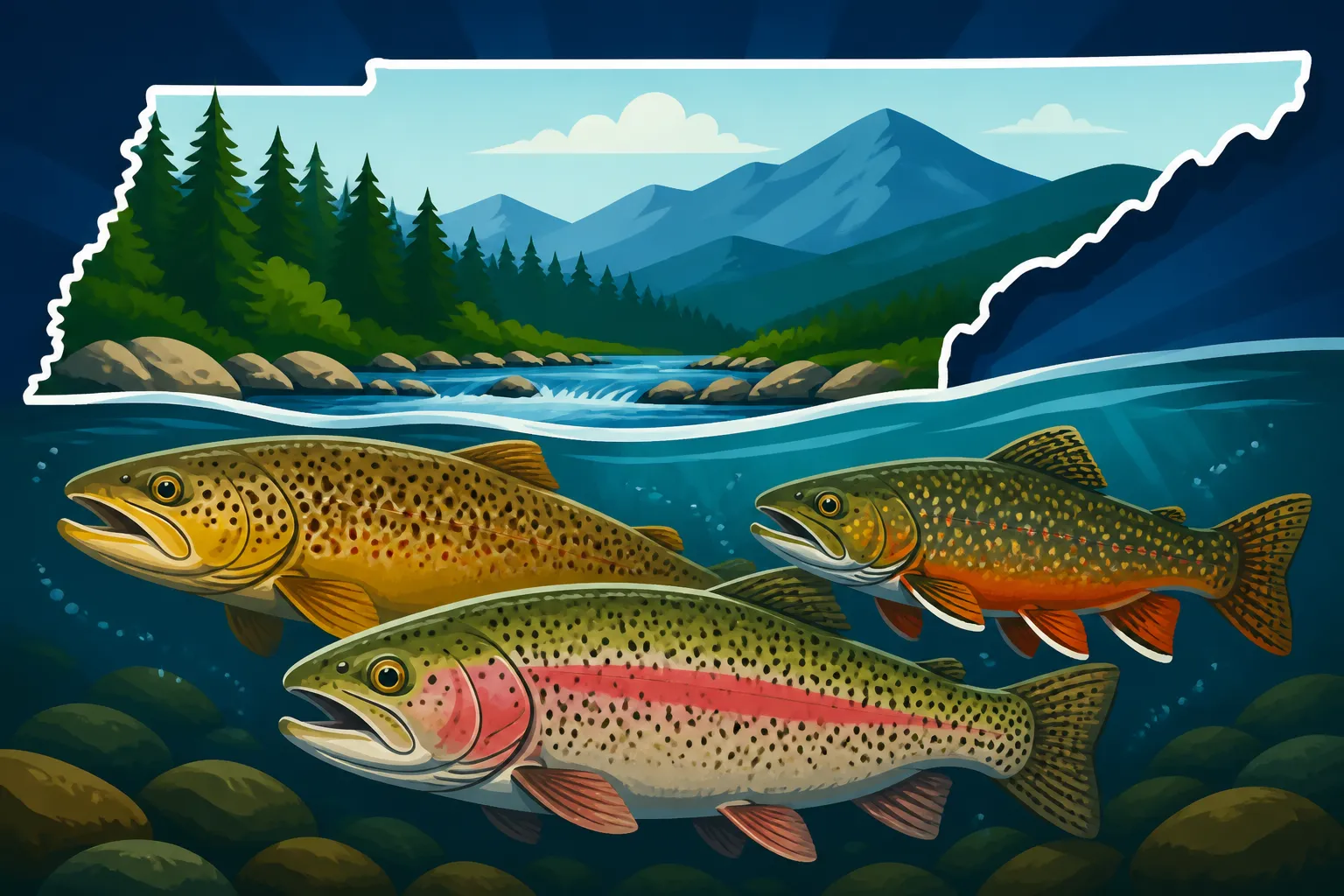
Rainbow trout are relatively easy to identify, even for a beginner. Their most distinctive feature is a broad, reddish-pink stripe that runs horizontally along their flanks, from their gills all the way to their tail. This stripe can be quite vivid in some individuals, especially spawning males. Their bodies are typically silver to olive-green on the back, fading to white on the belly, and they are covered in numerous small, dark spots on their back, sides, and caudal (tail) fin.
Unlike some other trout species, rainbow trout typically have a relatively small mouth that doesn't extend beyond the back of their eye. Their tail fin is usually slightly forked, not squared or rounded. They can vary quite a bit in coloration depending on their habitat and diet, with wild fish often appearing darker and more brilliantly colored than hatchery-raised fish. The spotting pattern is a key differentiator when comparing them to other trout species you might encounter.
Where to Find Stocked Rainbows
Tennessee's wildlife agencies work hard to ensure robust rainbow trout populations by regularly stocking rivers and streams throughout the state. You'll find a heavy concentration of stocked rainbows in our prime tailwater fisheries, such as the Clinch River near Oak Ridge, the Caney Fork River near Gordonsville, and the Hiwassee River in Polk County. These rivers benefit from the consistent cold-water releases from dams, creating ideal year-round habitat. Beyond the major rivers, many smaller streams and even some ponds in state parks receive periodic stockings, particularly in the cooler months.
The stocking schedule varies, but it's often more frequent in spring and fall. These fish provide fantastic opportunities for anglers of all skill levels, from beginners trying their hand at trout for the first time to seasoned pros looking for a consistent bite. Keep an eye on local stocking reports from the Tennessee Wildlife Resources Agency (TWRA) to plan your trips, as fresh stockers can be quite aggressive. You can often find the schedule for these stockings through their website or by checking with local bait and tackle shops. For details on how stocking works, see Tennessee Trout Stocking Schedule and Season.
Fishing Tips for Rainbow Trout
Rainbow trout, especially recently stocked ones, are often less wary than their wild counterparts, making them a great target for a variety of techniques. When fishing for rainbows, consider using lighter tackle – an ultralight spinning rod with 2-4 pound test line is often perfect. Baits like corn, small pieces of powerbait, or salmon eggs are traditional favorites, especially for stocked fish in slower-moving waters. For lures, small inline spinners (like Panther Martins or Rooster Tails), spoons, and tiny crankbaits can be incredibly effective.
Fly anglers will find success with a range of patterns, including nymphs (e.g., Prince Nymph, Pheasant Tail), wet flies, and small streamers. During insect hatches, dry flies can be exhilarating, but often, dead-drifting nymphs under an indicator is a highly productive method. Focus on areas where the current breaks, behind rocks, in deeper pools, and near structures like submerged logs. Remember, patience and a stealthy approach are key, especially in clearer waters. Make sure you have a valid trout permit with your license, which you can often purchase on Amazon along with your fishing gear. For a deeper dive into techniques, our guide on Spin Fishing Techniques for Trout is a great resource.
The Elusive Brown Trout: A Challenge for the Patient Angler
Brown trout are the grizzled veterans of the trout world in Tennessee. They are known for their cunning, their propensity for larger sizes, and their often-reclusive nature. Catching a true wild brown trout in Tennessee is a badge of honor for many anglers, as these fish often demand a higher level of skill and patience.
How to Spot a Brown Trout
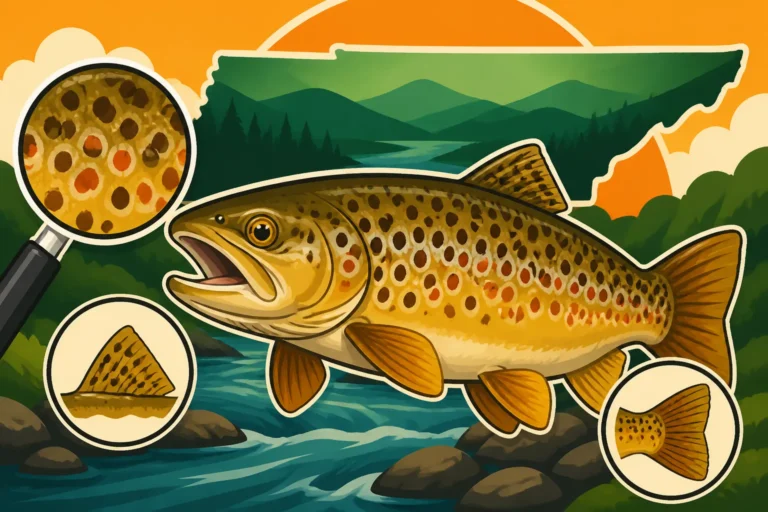
Brown trout have a distinctive appearance that sets them apart from rainbows and brook trout. Their base color can range from a golden brown to an olive-brown on their back, fading to a creamy white or yellowish belly. The most defining characteristic is the presence of both dark spots and distinctive reddish-orange spots, often with a pale halo around them, scattered across their sides. These red spots are usually absent on rainbow trout.
Their dorsal (top) fin and adipose fin typically have dark spots, but their tail fin usually has few to no spots and is often squared off or only slightly forked, unlike the more pronounced fork of a rainbow. Brown trout also have a larger mouth compared to rainbows, often extending past the back of their eye. These subtle differences become more apparent with practice, especially when you're comparing fish side-by-side or looking at clear photos. Pay attention to the combination of dark and red spots, as this is often the clearest tell.
Brown Trout's Preferred Haunts
Brown trout are incredibly adaptable but generally prefer slightly slower, deeper, and more structured water than rainbows. You'll often find them lurking under undercut banks, beneath submerged logs, around large boulders, and in the deep pools of rivers and large creeks. They are more nocturnal than rainbows, especially larger specimens, making dawn, dusk, and even night fishing productive times to target them. This nocturnal behavior is largely tied to their diet, as they are opportunistic predators that will readily consume smaller fish, crayfish, and large insects.
In Tennessee, excellent brown trout fishing can be found in our major tailwater fisheries, especially the Clinch and Caney Fork rivers. These waters offer the deep, cold, oxygenated conditions and abundant forage that brown trout thrive on. While less common, wild populations of brown trout can also be found in some larger mountain streams, often coexisting with rainbows and brook trout in the mid-elevations. The more challenging the access and the more complex the cover, the more likely you are to find a resident brown trout. The pursuit of these elusive fish often takes you to some of the most serene and untouched parts of our natural landscapes.
Tactics for Catching Browns
Catching brown trout, particularly larger ones, often requires a more refined approach. They are generally more wary than rainbows and can be easily spooked by heavy footsteps, bright clothing, or clumsy casts. Stealth is paramount. When it comes to bait, live offerings like worms, minnows, or crayfish can be very effective, especially when fished near structure. For artificial lures, larger spinners, spoons, and small jerkbaits or crankbaits that imitate baitfish can entice an aggressive strike.
Fly anglers targeting browns often opt for larger nymph patterns (stoneflies, caddis larvae) dead-drifted along the bottom or swung through deeper runs. Streamers, especially those imitating baitfish like sculpins or minnows, are a favorite for chasing bigger browns, particularly in low light conditions. The "chuck and duck" method with heavy streamers can be incredibly effective in deep, swift water. Remember that brown trout can be quite territorial, so if you catch one, there might be another lurking nearby. Experiment with presentation and retrieve speed until you find what triggers a strike. For more specific insights into this, check out Best Fly Patterns for Stocked Trout which can be adapted for wild fish too.
The Native Brook Trout: A Gem of the High Country
The brook trout, often affectionately called "brookies," are Tennessee's only truly native trout species. They are smaller than rainbows and browns, but their iridescent beauty and the wild, pristine streams they inhabit make them a prized catch for any angler. Finding and catching a brook trout is often less about the size of the fish and more about the experience of connecting with a piece of Tennessee's natural heritage.
Distinguishing a Brook Trout
Brook trout are arguably the most stunning of our cold-water trout species, with a kaleidoscope of colors. They have a dark, olive-green to black marbled pattern on their back and dorsal fin, often described as "worm-like" markings or vermiculation. Their sides are dotted with pale spots, and importantly, many of these spots are surrounded by blue halos. Their lower fins (pectoral, pelvic, and anal) are often vibrant orange with a distinct white leading edge, followed by a black stripe, and then the orange. This white leading edge is a key identifying feature.
Their belly can range from white to a brilliant red or orange, especially in spawning males. Like brown trout, their tail fin is typically square or only very slightly forked. Their mouth is relatively small. The combination of the worm-like markings, the blue-haloed spots, and the white-edged fins makes the brook trout truly unique and unforgettable once you've seen one. You'll definitely want to remember these distinctions if you're ever exploring streams within the Great Smoky Mountains National Park or other high-elevation areas. For a visual comparison, you might consult a guide on Brook Trout in Tennessee's Cold-Water Streams.
Preserving Native Brook Trout Waters
The native brook trout populations in Tennessee are precious and often fragile. They require the coldest, cleanest, and most pristine headwater streams, largely untouched by human activity. Their habitats are typically found at higher elevations, primarily within the Great Smoky Mountains National Park and other protected wilderness areas. These are the streams where the water tumbles clear and cold directly from the mountainsides, often forming small pools and runs under a dense canopy of rhododendrons and hardwoods.
Because of their specific habitat requirements and sensitivity to environmental changes, brook trout are often the first species to disappear when water quality degrades or temperatures rise. Conservation efforts are crucial to protecting these native fish. This often means practicing strict catch-and-release, especially for larger individuals that are vital for reproduction, using single barbless hooks, and minimizing your impact on the stream banks. Being a responsible angler in brook trout waters means leaving no trace and doing everything you can to ensure these vibrant fish continue to thrive for future generations.
Fly Fishing for Brookies
Fly fishing is almost synonymous with brook trout fishing, primarily because their small, pristine habitats often lend themselves perfectly to delicate fly presentations. Ultralight spinning gear with tiny spinners or baits can also be effective, but many purists prefer the fly rod for these native beauties. A short, lightweight fly rod (2-4 weight) is ideal for navigating the tight quarters of mountain streams, allowing for accurate short casts and roll casts under overhanging vegetation.
Small dry flies, mimicking terrestrial insects like ants, beetles, and small grasshoppers, can be incredibly exciting when brookies rise to the surface. Otherwise, small nymph patterns (such as a Hare's Ear or Copper John) or tiny wet flies dead-drifted through plunge pools and riffles are often productive. Brook trout are generally aggressive for their size, and even tiny brookies will readily attack a well-presented fly. Focus on small pockets of calm water behind boulders, deeper seams, and under overhanging banks. The adventure of finding a remote brook trout stream and coaxing one of these native gems to bite is an experience that truly connects you with the wild heart of Tennessee. You can find essential fly fishing accessories on Amazon to prepare for these trips.
General Cold-Water Trout Fishing Strategies and Gear
Regardless of whether you're chasing rainbow, brown, or brook trout, certain universal principles and gear choices will significantly improve your chances of success in Tennessee's cold waters. These aren't just about catching fish; they're about enjoying the experience, staying safe, and being prepared for the conditions that come with fishing in these often wild and beautiful places.
Essential Gear for Cold-Water Success
When gearing up for cold-water trout fishing, think light, stealthy, and prepared for the elements. For rods, a sensitive ultralight spinning rod (4.5 to 6 feet) paired with a small spinning reel spooled with 2-6 lb monofilament or fluorocarbon line is excellent for both bait and small lures. Fly anglers will find a 7.5 to 9-foot, 3 to 5-weight rod versatile for most Tennessee trout scenarios. Don't forget a small pair of pliers or forceps for hook removal and a net with a rubberized basket to minimize harm to fish during catch-and-release.
Beyond the rod and reel, personal comfort and safety are paramount. Waders (chest waders are often best for deeper waters and colder temperatures) and sturdy wading boots with good grip are essential for navigating rocky stream beds. Layers of clothing, including a moisture-wicking base layer, insulating mid-layers, and a waterproof outer shell, are crucial for staying warm and dry in unpredictable mountain weather. A good pair of polarized sunglasses will help you spot fish and submerged obstacles, and a hat provides sun protection. You can browse a wide selection of these items on Amazon before your next trip. Always carry plenty of water and some snacks, as these excursions can be physically demanding.
Reading the Water for Trout
Learning to "read the water" is one of the most important skills any trout angler can develop. It means understanding where trout are likely to hold based on the current, depth, and structure of the stream. Trout are constantly looking for three things: food, cover, and a comfortable water temperature. They want to be in a place where food is delivered to them with minimal effort, where they can hide from predators, and where they feel safe.
Look for areas where the current slows down, creating eddies and slack water behind large rocks or logs. These are prime resting and feeding lies. Deeper pools, especially those with undercut banks or submerged brush, offer excellent cover. Riffles and runs, where the water is turbulent, can be great feeding zones as they dislodge insects and provide oxygen. The seam where fast water meets slow water is almost always a productive spot. Pay attention to changes in depth, color, and flow, as these often indicate prime holding water. Trout are creatures of habit, and once you learn to recognize their preferred lies, you'll find them repeatedly in similar spots throughout a stream. This skill is critical for maximizing your success, whether you're fishing in the Great Smoky Mountains or the Clinch River.
Seasonal Considerations for Trout Fishing
Tennessee's trout fishing opportunities are truly year-round, but your strategies will need to adapt with the seasons.
| Season | Water Temperature | Fish Behavior & Location | Recommended Tactics |
|---|---|---|---|
| Spring | Warming (45-60°F) | More active, moving into shallower feeding areas after winter. Post-spawn hunger. | Nymphs, streamers, small inline spinners. Dry flies during hatches. |
| Summer | Warmer (55-68°F) | Seeking colder, oxygenated water; deeper pools, shaded areas, tailwaters. More nocturnal. | Early/late in day. Nymphs, terrestrials (grasshoppers, ants), small lures, night fishing for browns. |
| Fall | Cooling (45-60°F) | Highly active, feeding heavily before winter. Brown trout spawning begins. | Streamers, nymphs, egg patterns (for browns), larger lures. |
| Winter | Coldest (35-50°F) | Less active, conserving energy, concentrated in deeper, slower pools. | Slow, deep presentations. Small nymphs, midge patterns, very slow retrieve with bait. |
In spring, as water temperatures rise, trout become more active and begin to feed aggressively, often moving into shallower riffles and runs. This is a fantastic time for nymphing and, when hatches occur, dry fly fishing. The Tennessee Trout Season Split Explained: March to September vs October to February covers this in more detail.
Summer can be challenging, especially in smaller, lower-elevation streams, as water temperatures can become dangerously high for trout. During this time, focus on our large tailwater fisheries where cold-water releases keep temperatures stable, or seek out high-elevation mountain streams. Early morning and late evening are often the most productive times, and larger brown trout may become more active after dark.
Fall is a favorite season for many trout anglers. Water temperatures cool, and trout become highly active, feeding to build up energy for winter. Brown trout also begin their spawning runs, often becoming more aggressive and territorial. This is an excellent time for streamers and larger nymph patterns.
Winter fishing requires patience and a slow approach. Trout are less active and conserve energy, typically holding in deeper, slower pools. Small nymphs, midge patterns, and very slow retrieves with natural baits can be effective. Dress warmly and be mindful of icy banks. Understanding these seasonal shifts is crucial for consistent success.
Conservation and Responsible Angling Practices
As anglers, we have a profound responsibility to protect the very resources that bring us so much joy. Tennessee's cold-water trout ecosystems are delicate, and our actions can have a lasting impact. Embracing responsible angling practices isn't just about following the rules; it's about being a steward of these beautiful places and ensuring they remain healthy for generations to come.
Catch and Release Best Practices
While keeping a few fish for the dinner table is a cherished part of fishing for many, especially with stocked rainbows, practicing responsible catch and release is vital, particularly for wild trout populations and larger, breeding fish. To maximize a fish's survival chances:
- Minimize Fight Time: Land the fish as quickly as possible to reduce stress and exhaustion.
- Handle with Care: Keep the fish in the water as much as possible. If you must remove it, use wet hands, a rubber net, or a cradle, and support its full body weight. Avoid squeezing it or touching its gills.
- Use Barbless Hooks: Barbless hooks are much easier and quicker to remove, causing less damage. You can pinch down the barbs on your existing hooks with pliers.
- Quick Hook Removal: Use forceps or pliers to remove the hook swiftly. If the fish is deeply hooked, it's often best to cut the line as close to the hook as possible rather than tearing tissue.
- Revive Properly: Hold the fish gently facing into a slow current until it regains its strength and can swim away on its own. Don't simply toss it back; make sure it's fully revived.
These practices help ensure that the fish you release have the best chance of survival, contributing to healthy and sustainable populations. Many dedicated anglers go to Amazon to find specific tools like forceps and rubber nets designed for gentle handling.
Protecting Tennessee's Delicate Trout Ecosystems
Our fishing experiences are only as good as the health of the ecosystems we rely on. Protecting these delicate cold-water habitats goes beyond just handling fish properly. It involves a broader commitment to environmental stewardship. Always pack out everything you pack in – and then some! Even biodegradable items like orange peels can take a surprisingly long time to break down and are unsightly. Avoid leaving behind fishing line, bait containers, or any other trash.
Be mindful of your footsteps, especially in smaller streams. Wade carefully and avoid disturbing the stream bottom unnecessarily, as this can dislodge aquatic insects and disrupt spawning beds. Never introduce non-native species or baitfish from other waters, as this can spread diseases or upset the natural balance of the ecosystem. Support conservation efforts by purchasing your Tennessee Fishing License Costs and Types and trout permits, as these funds directly contribute to habitat restoration, research, and stocking programs. By being a responsible angler and an active conservationist, we can all play a part in preserving Tennessee's incredible cold-water trout fishing for future generations.
Disclaimer
This article is for general informational purposes only and does not constitute professional advice. Laws, prices and regulations vary by location and change over time. Consult a qualified professional for guidance on your specific situation.