Warmwater Gamefish Found in Tennessee
It's incredibly frustrating to stand on the banks of a beautiful Tennessee lake or river, knowing there are fish swimming below, but having no idea what kind they are or how to even begin targeting them. So many folks, myself included, have felt that slight panic, wondering if they're using the right bait or technique for the local residents. This guide is all about cutting through that confusion, giving you a deep dive into the warmwater gamefish that call Tennessee home, so you can approach your next fishing trip with confidence and a clear plan.
The World of Tennessee's Warmwater Wonders
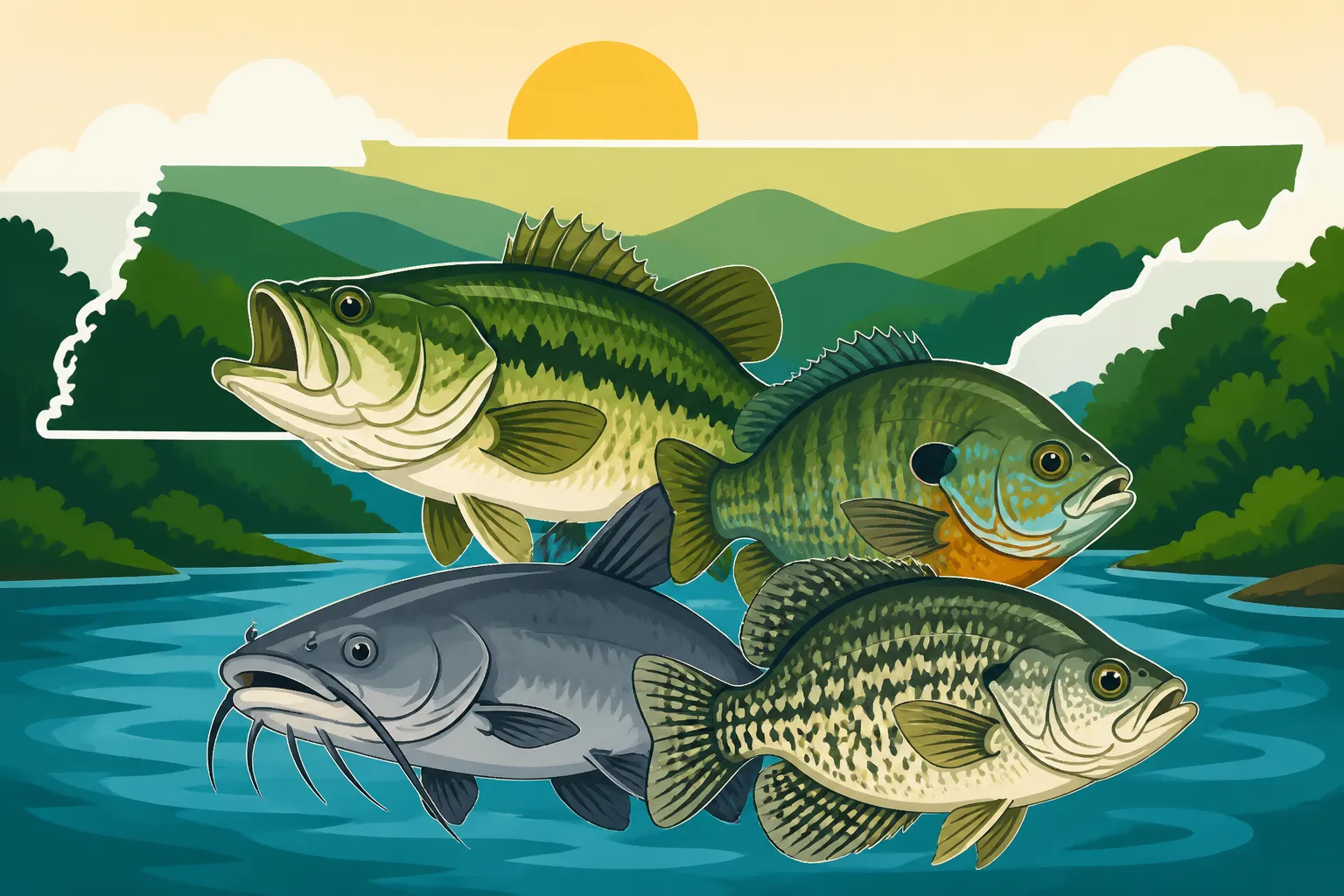
Tennessee is absolutely brimming with incredible fishing opportunities, and a huge part of that magic comes from its diverse warmwater gamefish populations. When we talk about "warmwater" fish, we're generally referring to species that thrive in temperatures above 65-70 degrees Fahrenheit, which pretty much covers the vast majority of our state's lakes, reservoirs, and slower-moving rivers for much of the year. These aren't your cold-water trout you'd find high in the mountains; these are the powerhouses and the panfish that make up the backbone of Tennessee angling.
What Exactly Are Warmwater Gamefish?
Warmwater gamefish are those species that have adapted to and prefer the warmer water temperatures found in most of our state's expansive reservoirs, large rivers, and numerous ponds. Unlike cold-water species such as trout, which demand crisp, oxygen-rich flows, warmwater fish like bass, crappie, and catfish are perfectly content in the gentler, often slower, and warmer currents or standing bodies of water. These fish tend to be more active, and thus more catchable, during the warmer months, though dedicated anglers find ways to pursue them year-round. They're often highly adaptable, capable of surviving in a variety of conditions, from clear lakes to murkier rivers.
Think about the big, sprawling lakes like Chickamauga or Kentucky Lake. These huge bodies of water heat up significantly in the summer, creating ideal conditions for these fish to thrive, grow, and reproduce. They form intricate food webs, with smaller baitfish providing sustenance for the larger predators. Understanding this basic distinction between warmwater and cold-water species is the first step in knowing where to cast your line and what kind of tackle to choose.
Why Tennessee is a Haven for Warmwater Species
Our beautiful state of Tennessee is, without a doubt, a premier destination for warmwater fishing, and it's largely thanks to our incredible network of rivers and reservoirs. The Tennessee Valley Authority (TVA) system alone has created a series of vast, interconnected lakes that offer immense and varied habitats for a multitude of species. From the deep, clear waters of Norris Lake to the sprawling, nutrient-rich expanse of Reelfoot Lake, the diversity of aquatic environments supports a robust and thriving ecosystem for warmwater fish. This means you're never too far from a great fishing spot, no matter where you are in the state.
Beyond the sheer volume of water, the sheer productivity of these waters is a huge factor. The fertile lands drained by our rivers constantly supply nutrients, leading to healthy aquatic plant growth and abundant baitfish populations. This robust food chain fuels the growth of our gamefish, often leading to impressive sizes and catch rates that draw anglers from all over. Whether you're chasing trophy bass or a stringer full of crappie for a fish fry, Tennessee's warm waters truly deliver.
Bass – The Kings of Tennessee's Warm Waters
When most folks think about fishing in Tennessee, especially in our warmer lakes and rivers, bass immediately come to mind. And for good reason! Bass fishing here is world-class, offering thrilling challenges and the potential for some truly magnificent catches. We have a few different species that are highly prized, each with its own unique characteristics and preferred haunts. Knowing the difference and how to target them can make all the difference in your success. You can dive deeper into all the different kinds of bass with our guide, A Complete Guide to Tennessee Bass Species.
Largemouth Bass: The Classic Target
Ah, the largemouth bass – the quintessential warmwater gamefish. These green giants are probably the most recognized and sought-after fish in Tennessee. You'll find them almost everywhere in our warm, fertile waters, from massive reservoirs like Chickamauga and Watts Bar to smaller farm ponds and slow-moving rivers. Largemouths are ambush predators; they love to hide in cover, waiting for an unsuspecting meal to swim by. Think submerged timber, thick weed beds, lily pads, docks, and rocky points. Any place they can conceal themselves and dart out for a meal is prime largemouth territory.
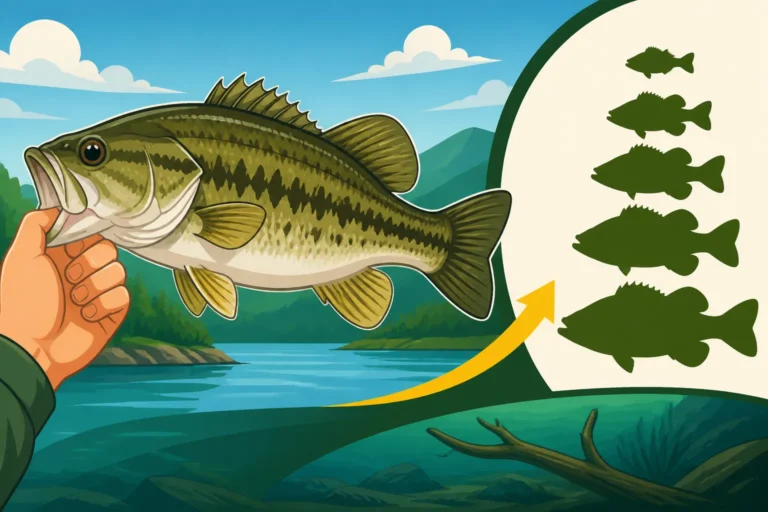
Identifying a largemouth is usually pretty straightforward: look for that distinctive dark, irregular horizontal stripe along its side, and most importantly, when its mouth is closed, the corner of its jaw extends beyond its eye. Anglers target them with a huge array of lures and techniques. Topwater baits fished over grass early in the morning, soft plastic worms and jigs flipped into heavy cover, or crankbaits retrieved along ledges are all extremely effective. If you're looking to consistently hook into these aggressive eaters, learning their habits and preferred structures is key. For more in-depth tips, check out Largemouth Bass Identification Tips for Tennessee Anglers.
When it comes to tackle, a medium-heavy to heavy action casting rod paired with a baitcasting reel spooled with strong fluorocarbon or braided line is standard for tackling these fish in heavy cover. You can find a fantastic selection of these rods and reels, along with all sorts of specialized largemouth lures, on Amazon, making it easy to gear up for your next trip. They are fierce fighters, known for their explosive strikes and acrobatic jumps, making them a perennial favorite for both casual and tournament anglers alike.
Smallmouth Bass: River and Reservoir Fighters
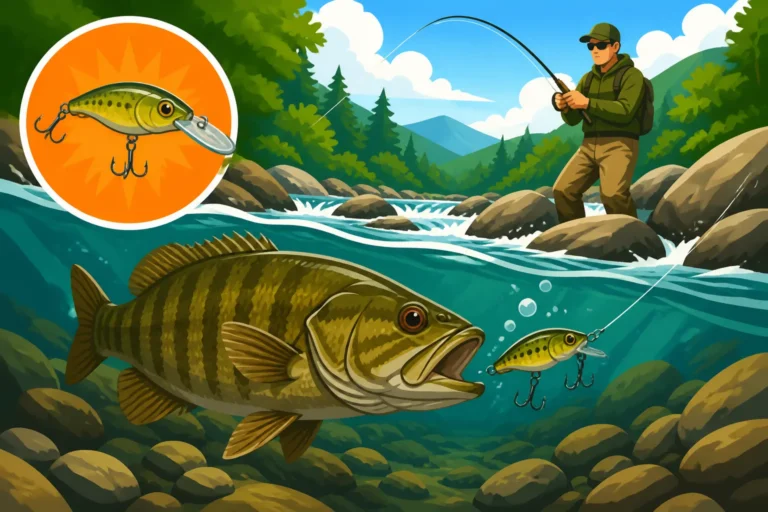
While largemouths might be the most common, the smallmouth bass holds a special place in the hearts of many Tennessee anglers, so much so that it's one of Tennessee's official state fish! Known for their incredible fighting spirit, bronze coloration, and preference for clearer, cooler, and rockier waters, smallmouths are often found in the upper reaches of our reservoirs, larger rivers like the Cumberland, and rocky main lake points. They don't typically hide in thick weeds like largemouths; instead, they relate to hard bottom structure like rocks, boulders, ledges, and current breaks.
You can distinguish a smallmouth by its brownish or bronze coloration, vertical bars (instead of a horizontal stripe), and a jaw that doesn't extend past the eye when closed. They also have a much smaller mouth compared to their largemouth cousins. Targeting smallmouth often involves different techniques. Tube jigs, grubs, jerkbaits, and small crankbaits that mimic crawfish or baitfish are highly effective when fished around rocky areas, current seams, and deep humps. These fish are known for strong, drag-peeling runs and head shakes, making every catch an exhilarating battle. Learn more about these incredible fighters in Smallmouth Bass: Tennessee's Official State Fish.
Spotted Bass: The Often-Overlooked Angler's Delight
The spotted bass, often mistaken for either a largemouth or smallmouth, is another fantastic warmwater gamefish found throughout Tennessee. They're increasingly prevalent in many of our reservoirs and larger rivers, and they offer a unique angling experience. Spotted bass tend to inhabit areas that are a bit of a mix between largemouth and smallmouth territory – you'll find them in open water relating to creek channels, humps, and points, but they also like some cover like brush piles and submerged timber. They're often found deeper than largemouths and can be aggressive schooling fish.
To tell a spotted bass apart, look for small dark spots below the lateral line, especially on its belly. Crucially, if you run your finger across its tongue, you'll feel a rough patch of teeth (a "tooth patch"), which is absent in largemouths. Its jaw also extends to about the middle of the eye, not past it like a largemouth. They tend to be smaller than largemouths but share the aggressive nature of a smallmouth. Techniques often involve fishing crankbaits, jigging spoons, or drop shots in deeper water, particularly when they're schooling around baitfish. Knowing the subtle differences between these bass species can help you understand their behavior and where to find them, and Spotted Bass vs Largemouth Bass in Tennessee Lakes can help clarify those distinctions.
Crappie – Panfish Perfection
If you're looking for a delicious meal and a fun, fast-paced fishing experience, crappie are your answer in Tennessee. These popular panfish are incredibly abundant and offer fantastic angling opportunities across the state, drawing huge numbers of fishermen, especially in the spring and fall. They're known for their delicate, flaky white meat, making them a favorite for many families looking to fill the cooler.
Black Crappie: Abundant and Fun to Catch
Black crappie are among the most popular panfish in Tennessee, and for good reason – they're prolific, widespread, and incredibly tasty. You'll find them thriving in most of our larger reservoirs and lakes, preferring clear to moderately clear water with plenty of submerged cover like brush piles, standing timber, and weed beds. They're a schooling fish, so when you find one, you often find many! Their activity picks up significantly during their spring spawn when they move into shallower waters, making them easier targets for bank anglers and boaters alike.
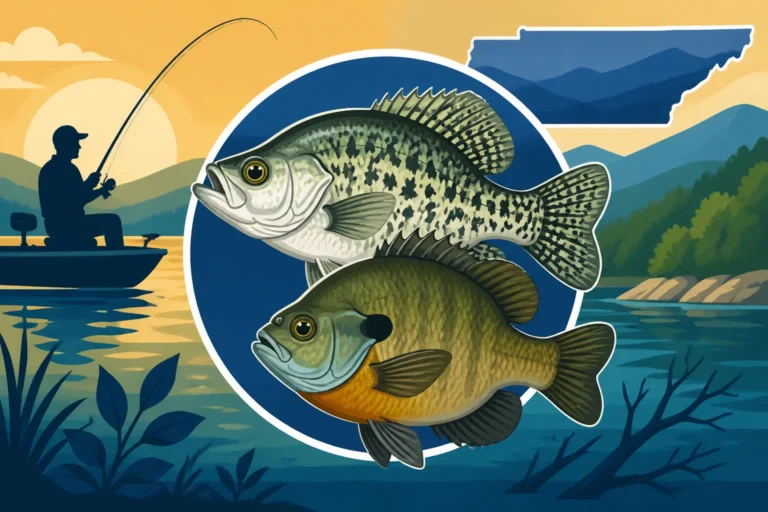
Identifying a black crappie is fairly easy: they have a deep, compressed body with a silvery-olive coloration and irregular, scattered black spots. A key feature is that they typically have 7 or 8 dorsal spines. Anglers usually target them with light tackle, using small jigs (1/32 to 1/16 ounce), minnows, or small spinners. Vertical jigging over brush piles or slow trolling with multiple rods (spider rigging) are highly effective methods. They're fantastic for introducing kids to fishing because of their willingness to bite. The Tennessee Wildlife Resources Agency (TWRA) does a great job of managing and stocking these fish, and you can learn more about their efforts in Black Crappie Stocking by TWRA in Tennessee.
White Crappie: Similar But Distinct
While very similar to black crappie in terms of habitat and behavior, white crappie are also widely distributed across Tennessee, often coexisting with their black-spotted cousins. They tend to be a bit more tolerant of turbid or murky water and can be found in more open areas of lakes and rivers, though they still seek structure. Like black crappie, they school up and are a prime target during their spring spawn.
The main way to distinguish a white crappie is by its dorsal fin. White crappie will almost always have 5 or 6 dorsal spines, and the dark markings on their sides usually form distinct vertical bars rather than the random speckles of a black crappie. Their body is also often a bit more elongated compared to the rounder black crappie. Fishing techniques for white crappie are virtually identical to those for black crappie – small jigs, minnows, and ultralight tackle are the go-to choices. Both species offer incredible angling fun and are truly panfish perfection for the dinner plate.
Catfish – The Bottom-Dwelling Giants
If you're looking for a powerful fight, often under the cover of darkness, and some of the best eating fish our waters have to offer, then Tennessee's catfish species are calling your name. These whiskered wonders patrol the bottoms of our rivers and reservoirs, ranging from widespread favorites to true behemoths that can challenge any angler.
Channel Catfish: The Widespread Favorite
The channel catfish is another of Tennessee's official state fish and an absolute staple for anglers across the state. These fish are incredibly adaptable and can be found in nearly every warmwater system, from small creeks and farm ponds to the largest rivers and reservoirs. They prefer moderately moving water with access to deeper holes, submerged structure, and muddy or sandy bottoms where they forage for food. They're not picky eaters and are often caught using a wide variety of baits.
Identifying a channel catfish involves looking for a deeply forked tail, scattered dark spots along its body (though these can fade in larger, older fish), and a relatively sleek, silvery-brown body. They have smooth skin without scales. Channel cats are opportunistic feeders, eating everything from insects and crustaceans to smaller fish. Anglers targeting them often use stink baits, chicken livers, cut bait, or even corn and hot dogs on a simple bottom rig. They offer a respectable fight and are renowned for their delicious, mild-flavored meat. Channel Catfish: Tennessee's Other Official State Fish offers a deep dive into this beloved species. When buying circle hooks or specialized catfish rigs, check out Amazon for a great selection and convenience.
Blue Catfish: Reservoir Brutes
For those seeking a true tug-of-war, the blue catfish is the king of the heavyweights in Tennessee. These colossal fish primarily inhabit our larger reservoirs and big rivers, such as the Tennessee and Cumberland River systems, where they can grow to truly enormous sizes, sometimes exceeding 100 pounds! They prefer deep water, main channel currents, and areas with submerged structure like old river channels, humps, and drops-offs. Blue cats are primarily piscivorous, meaning they eat other fish.
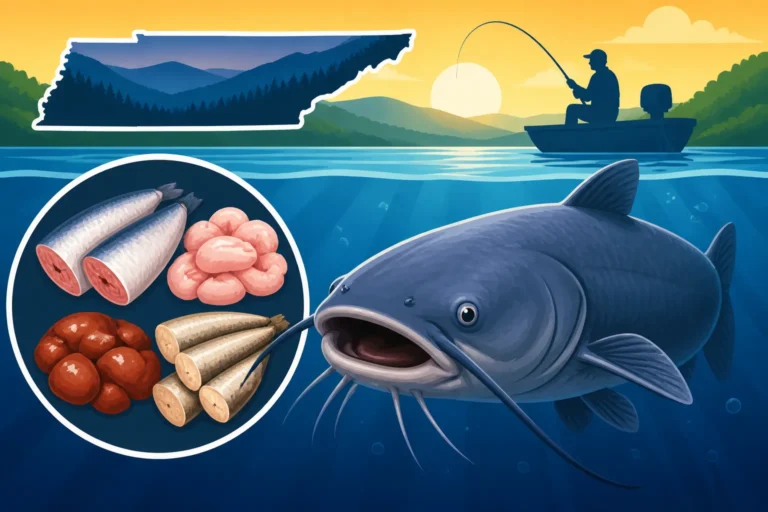
Distinguishing a blue catfish from a channel cat is important, especially given their potential size. Blue cats have a more steeply sloped head, a distinct hump on their back (especially in larger specimens), and a deeply forked tail, much like a channel cat, but their body lacks the spots found on many channel catfish. Their color is usually a uniform slate blue or gray. Anglers target blues with heavy-duty tackle, using large chunks of cut bait (shad, skipjack herring are favorites), often fished on stout circle hooks near the bottom in deep holes or along river channels. A heavy-action rod and a large capacity conventional reel with strong braided line are essential for these brutes. For help telling the difference between these two giants, read Blue Catfish vs Channel Catfish Identification.
Flathead Catfish: Ambush Predators
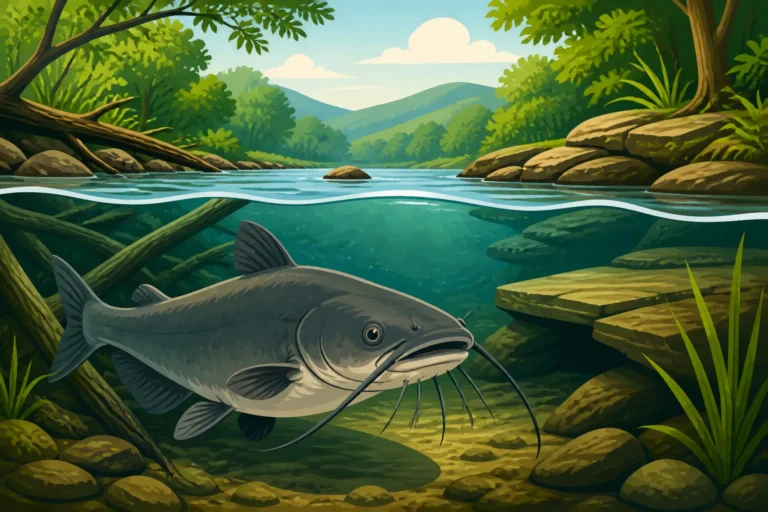
The flathead catfish is a unique and formidable predator found in many of Tennessee's larger rivers and reservoirs. Unlike the more social channel and blue cats, flatheads are solitary, territorial hunters. They are strict piscivores, preferring live bait, and are known for their preference for incredibly heavy cover – think log jams, rock piles, and deep snags. They're true ambush predators, lurking in the shadows to snatch passing prey.
The flathead is easily identified by its distinctively broad, flattened head, small eyes, and a lower jaw that protrudes beyond the upper jaw. Their tail is square or only slightly notched, not deeply forked like channel or blue cats. Their coloration is typically mottled brown and yellow, offering excellent camouflage. Targeting flatheads requires patience and specific tactics. Live bait, such as bluegill, sunfish, or large shiners, is paramount. They are often fished at night, tight to heavy cover, using heavy rods, stout line, and strong hooks. If you're looking for a serious challenge and a fish that pulls like a freight train, the flathead is your adversary. Learn more about their preferred habitats in Flathead Catfish Habitat in Tennessee Rivers.
Sunfish and Other Panfish – Fun for All Ages
Beyond crappie, Tennessee's warm waters are teeming with a variety of other sunfish, often collectively referred to as "bream" or "panfish." These species are fantastic targets for anglers of all skill levels, especially beginners and kids, due to their abundance and willingness to bite. They might not be the biggest fish in the lake, but they offer endless fun and make for excellent table fare.
Bluegill: The Everyday Panfish
Bluegill are perhaps the most common and recognizable panfish in Tennessee. They are truly everywhere – from small farm ponds to the shallow coves of our largest reservoirs. They are a schooling fish that love to hang around any kind of cover: docks, lily pads, submerged brush, or weed beds. They're also incredibly aggressive, making them a perfect target for youngsters and anyone looking for consistent action.
You can identify bluegill by their deep, plate-like body, olive-green to bluish coloration, and a prominent black spot on the "ear flap" (the operculum). They also have a small black spot at the base of their dorsal fin. Bluegill are typically caught using ultralight tackle, small hooks, and natural baits like worms, crickets, or grubs. They'll also readily strike tiny jigs and spinners. Fishing for bluegill is often about finding a good brush pile or weed line in shallow water and dropping a bait in. They provide a surprisingly spirited fight for their size and are delicious pan-fried. For tips on getting started, check out Bluegill Fishing for Beginners in Tennessee.
Redear Sunfish (Shellcrackers): A Delicious Bonus
Redear sunfish, affectionately known as "shellcrackers" in many parts of the South, are another excellent panfish found in Tennessee's warm waters. They're not as widespread as bluegill but can be found in good numbers in many of our clearer lakes and ponds, often preferring areas with clean, hard bottoms and aquatic vegetation. The "shellcracker" nickname comes from their unique diet: they have specialized crushing plates in their throats that allow them to eat snails and other mollusks.
Identifying a redear sunfish involves looking for a deep, compressed body similar to a bluegill, but with a distinctive red or orange margin on the opercular flap (the "ear flap"), which is much more pronounced in males. They typically lack the black spot at the base of the dorsal fin that bluegill possess. Anglers often target redears using natural baits like redworms or crickets, fished close to the bottom in areas with aquatic vegetation where snails are abundant. They tend to be a bit larger on average than bluegill and offer a strong, steady pull. Many anglers consider them even tastier than bluegill, with their mollusk-rich diet contributing to their flavor.
Striped Bass and Hybrids – Hard-Fighting Pelagic Predators
While most bass are either largemouth, smallmouth, or spotted, Tennessee's waters also hold another class of bass: the powerful striped bass and their equally hard-fighting hybrid cousins. These fish are true open-water predators, offering an exhilarating challenge and the chance to hook into some truly massive fish.
Striped Bass: The Open-Water Powerhouses
Full-blooded striped bass are an incredible warmwater gamefish found in several of Tennessee's larger, deeper reservoirs like Norris Lake, Cherokee Lake, and Percy Priest Lake. These are anadromous fish by nature (meaning they migrate from saltwater to spawn in freshwater), but in Tennessee, they are landlocked and sustained by stocking efforts. They are powerful, open-water predators that chase schools of shad and other baitfish, often cruising main lake channels and deep points.
Striped bass are easily identified by their sleek, elongated, silvery bodies with distinct, unbroken horizontal stripes running from gill to tail. They have two separate dorsal fins. These fish can grow to immense sizes in Tennessee, regularly topping 30-40 pounds, with much larger specimens possible. Anglers typically target stripers by trolling large crankbaits or swimbaits, vertical jigging, or using live bait (often large shad) fished in open water or along deep structure. They are known for their incredibly strong, sustained runs that will test your tackle and your stamina. Exploring the thrill of going after these fish can be a true adventure; check out Striped Bass Fishing in Tennessee Reservoirs for more details. For appropriate heavy-duty trolling lures and line, Amazon offers a comprehensive selection.
Hybrid Striped Bass: A Stocked Thrill
Hybrid striped bass, often simply called "wipers," are a cross between a striped bass and a white bass. They are also stocked in many of Tennessee's reservoirs (sometimes even in the same lakes as pure stripers) and provide an outstanding sport fishing opportunity. Hybrids are known for their aggressive nature and incredible fighting ability, often hitting lures with a ferocity that belies their size. They typically don't grow quite as large as pure stripers but are more readily available in many lakes and are incredibly fun to catch.
To differentiate a hybrid from a pure striped bass, look at the stripes. While hybrids also have horizontal stripes, many of them will be broken or disjointed, especially below the lateral line, unlike the solid, unbroken stripes of a pure striper. Hybrids also tend to have a deeper body profile than a pure striper. Like pure stripers, hybrids are open-water predators that chase baitfish, so techniques are similar: casting spoons, swimbaits, or large lipless crankbaits into schooling fish, or trolling the main lake channels. They offer an exceptional fight, often pulling harder than fish twice their size, and are a fantastic target when you want consistent action with hard-fighting fish.
Comparing Tennessee's Warmwater Gamefish
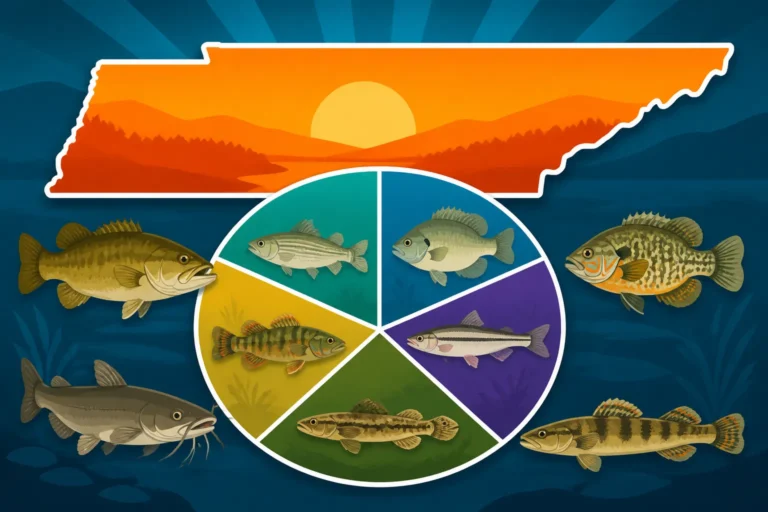
To give you a quick overview of some of the key differences and characteristics of Tennessee's diverse warmwater gamefish, here's a handy comparison table. This isn't exhaustive, of course, but it highlights some of the main distinctions between these incredible species.
| Species | Typical Habitat | Identification Feature | Common Angling Technique(s) | Typical Size Range (lbs) |
|---|---|---|---|---|
| Largemouth Bass | Weeds, timber, docks, shallow cover | Jaw extends past eye, horizontal stripe | Flipping, crankbaits, topwater | 1-8 (trophies >10) |
| Smallmouth Bass | Rocky rivers, clear deep reservoirs | Jaw not past eye, vertical bars, no tooth patch | Jigs, tubes, jerkbaits | 1-5 (trophies >7) |
| Spotted Bass | Deep humps, open water, some structure | Small spots below lateral line, tooth patch on tongue | Drop shot, deep cranks, spoons | 0.5-3 (trophies >4) |
| Black Crappie | Clear water, brush piles, standing timber | Irregular spots, 7-8 dorsal spines | Small jigs, minnows, spider rigging | 0.5-1.5 (slabs >2) |
| White Crappie | Murky water, open areas, some timber | Vertical bars, 5-6 dorsal spines | Small jigs, minnows, spider rigging | 0.5-1.5 (slabs >2) |
| Channel Catfish | Rivers, lakes, ponds, varied bottoms | Forked tail, spots (often fade), smooth skin | Stink bait, cut bait, worms | 1-10 (trophies >20) |
| Blue Catfish | Large rivers, deep reservoirs, main channels | Deeply forked tail, no spots, uniform blue/gray | Cut bait (shad), live bait | 5-50+ (trophies >100) |
| Flathead Catfish | Heavy cover (log jams), deep holes in rivers | Flat head, protruding jaw, square tail, mottled | Live bait (bluegill, shiners) | 5-40+ (trophies >80) |
| Bluegill | Shallow weeds, docks, brush, farm ponds | Black "ear flap" spot, small black dorsal spot | Worms, crickets, small jigs | 0.1-0.5 (big ones >1) |
| Redear Sunfish | Clear water, hard bottom, aquatic vegetation | Red/orange margin on "ear flap" | Redworms, crickets, grubs | 0.2-1.0 (big ones >1.5) |
| Striped Bass | Large, deep open reservoirs | Solid, unbroken horizontal stripes | Trolling, live bait, large spoons | 10-40+ (trophies >60) |
| Hybrid Striped Bass | Large open reservoirs | Broken or disjointed horizontal stripes | Casting spoons, topwater, trolling | 2-10 (trophies >15) |
Disclaimer
This article is for general informational purposes only and does not constitute professional advice. Laws, prices and regulations vary by location and change over time. Consult a qualified professional for guidance on your specific situation.