Spotted Bass Identification in Tennessee Reservoirs
There's nothing quite like the thrill of reeling in a feisty bass on a beautiful Tennessee reservoir, but for many anglers, especially those newer to our waters, figuring out exactly which bass species you've caught can be a real head-scratcher. It's incredibly frustrating when you're trying to follow the rules, but the fish in your hand seems to blur the lines between a largemouth, a smallmouth, and that often-misunderstood spotted bass. This guide is all about helping you confidently identify spotted bass in Tennessee's expansive reservoirs, ensuring you're compliant with regulations and truly understanding the fish you're targeting.
The Challenge of Spotted Bass Identification in Tennessee
When you're out on the water, especially in the low light of dawn or dusk, or when a fish is flopping around in the net, distinguishing between different black bass species can feel like trying to solve a riddle. Tennessee is home to several fantastic bass species, and while they all offer a thrilling fight, each has its own unique characteristics and, importantly, its own specific regulations.
Why Anglers Often Confuse Bass Species
Let's be honest: at first glance, a lot of bass look pretty similar. They all have that classic torpedo shape, dorsal fins, and generally aggressive demeanor. Spotted bass, in particular, often get mistaken for their more famous cousins, the largemouth, or even the bronzebacks, the smallmouth. This confusion stems from a few factors. Sometimes, it's simply the size of the fish; a smaller largemouth might have a mouth that doesn't seem quite "large" enough to an untrained eye. Other times, it's the coloration, which can vary wildly depending on the water clarity, depth, and even the diet of the fish. A spotted bass caught in stained water might look darker and less distinct than one pulled from clear depths, further muddying the waters of identification. The reality is, they all belong to the Micropterus genus, the "black bass," so they share a lot of fundamental traits that can make initial identification tricky without knowing what specific features to look for.
The Importance of Correct Identification for Regulations
Beyond just knowing what you've caught, accurate identification is absolutely crucial for staying on the right side of the law. Each species of bass, and often even different bodies of water, can have distinct regulations regarding size limits, creel limits (how many you can keep), and even seasons. For instance, you might find specific size restrictions for largemouth bass on one lake that don't apply to spotted bass, or vice versa. Imagine thinking you've caught a largemouth and keeping it, only to find out it was a spotted bass with a different legal size. That's a headache no angler wants. Being able to correctly identify your catch means you can confidently adhere to the Tennessee Fishing Season and Catch Limits and avoid any potential fines or penalties. Understanding these nuances is part of being a responsible and informed angler on Tennessee waters. It really pays to know your fish, and this guide aims to make that process a whole lot easier for you.
Key Physical Characteristics of Spotted Bass
To really get a handle on spotted bass, you need to look beyond the general "bass" appearance and focus on a few very specific, reliable features. These aren't always obvious at first, but with a little practice and a keen eye, you'll be identifying them like a pro. Think of it as learning the secret handshake of the spotted bass.
The Tell-Tale Jawline and Mouth Structure
One of the most reliable ways to differentiate a spotted bass from a largemouth bass is to examine its mouth. When a spotted bass's mouth is closed, the upper jaw (or maxillary) typically does not extend beyond the back edge of its eye. This is a crucial distinction. With a largemouth, that jawline usually extends noticeably past the eye, sometimes quite a bit further, giving it that characteristic "large mouth" appearance. The spotted bass’s mouth, while still sizable, is proportionally smaller than that of a largemouth. This particular feature is often the quickest visual cue you can use, especially when you're comparing two fish side-by-side or have an unsure catch in your hand. Practice with a ruler or even just your thumb on different bass species to get a feel for this difference, and you'll quickly build confidence in this key indicator.
Body Shape and Lateral Line Markings
Another important characteristic to observe is the overall body shape and the markings along the lateral line. Spotted bass tend to have a body that is more slender and elongated than a largemouth, but often a bit stockier or more robust than a smallmouth. They're often described as having a "football" shape, not quite as compressed as some other panfish, but not as bulky as a truly mature largemouth. The lateral line itself on a spotted bass is usually quite distinct. Below this line, you'll typically find a pattern of dark, diamond-shaped blotches or a continuous horizontal band that looks very broken or "spotted." This "spotted" pattern is where they get their name! These spots are generally more pronounced and numerous than what you'd typically see on a largemouth, which might have a more solid, often jagged, lateral stripe. The contrast of these spots against their typically greenish-gold background coloration can be a strong visual clue.
The Distinctive Tongue Patch
This is perhaps the single most foolproof method for identifying a spotted bass, and it's something many anglers overlook. If you gently open the mouth of a suspected spotted bass and feel its tongue, you will find a small, rough patch of teeth. It feels almost like sandpaper or a small brush. This "tongue patch" is present on virtually all spotted bass. Here’s the kicker: largemouth bass do not have this patch on their tongue – their tongue will feel smooth. Smallmouth bass can sometimes have a very faint or small patch, but it's usually not as pronounced as on a spotted bass. So, if you're ever in doubt after looking at the jawline and body markings, a quick, gentle feel of the tongue can provide definitive proof. Just be careful with hooks and handling the fish properly, of course! This tiny detail makes all the difference when you're striving for correct Freshwater Fish Identification Guide for Anglers.
Comparing Spotted Bass to Their Tennessee Cousins
The waters of Tennessee are teeming with different black bass species, making it an incredible place to fish, but also a challenging place to differentiate your catch. Knowing how spotted bass stack up against largemouth and smallmouth is key to confident identification. It's like knowing the difference between a golden retriever, a lab, and a border collie – they're all dogs, but their traits are distinct once you know what to look for!
Spotted Bass vs Largemouth Bass: Key Differences
This is probably the most common confusion point for anglers in Tennessee. Many times, what an angler thinks is a small largemouth, particularly in a reservoir known for big spots, turns out to be a spotted bass. Let's break down the primary distinctions.
| Feature | Spotted Bass | Largemouth Bass |
|---|---|---|
| Upper Jaw | Does not extend past the back of the eye. | Extends noticeably past the back of the eye. |
| Dorsal Fins | Connected with little to no noticeable dip. | Deeply separated, almost appearing as two fins. |
| Lateral Line | Prominent row of dark, diamond-shaped spots below the lateral line, often forming a broken stripe. | More solid, often jagged or irregular horizontal dark stripe. |
| Tongue | Has a rough patch of teeth. | Smooth; no teeth on the tongue. |
| Body Shape | More slender and football-shaped. | Typically chunkier, especially mature fish. |
| Coloration | Often greenish-gold, with distinct spots. | Varies, but often dark green to black on back, fading to white belly. |
When you're comparing them, the jaw extension is usually the easiest first check. Hold the fish gently, close its mouth, and look at where the upper jaw ends relative to its eye. Then, if you're still unsure, feel for that tongue patch. This is truly the "secret weapon" for telling them apart from a largemouth. You can also refer to our guide on Largemouth Bass Identification Tips for Tennessee Anglers for more specific details on their characteristics. Remember, knowing these specific differences will not only make you a better identifier but also ensure you're compliant with any lake-specific rules regarding Tennessee Fishing Regulations Explained.
Spotted Bass vs Smallmouth Bass: Subtle Distinctions
Now, comparing spotted bass to smallmouth bass can be a bit more challenging, as their mouth sizes are somewhat similar, and their preferred habitats can sometimes overlap. However, there are still reliable cues to help you differentiate them. Smallmouth bass, Tennessee's official state fish, are known for their bronze, brown, or golden-brown coloration, often with vertical bars or stripes, giving them that classic "bronzeback" look. Spotted bass, in contrast, typically have more of a greenish-gold hue with those distinct horizontal spots.
Another key difference often lies in the eye color; smallmouth bass frequently have reddish eyes, while spotted bass usually have more brownish or yellowish eyes. While both have the upper jaw ending before or just at the back of the eye, the smallmouth's dorsal fins are usually more completely connected than a largemouth's, but the spotted bass’s connection is even smoother, almost like a single fin. And again, the tongue patch becomes your best friend here. While a smallmouth can sometimes have a very small, barely perceptible rough patch, it is almost always much more pronounced and obvious on a spotted bass. If you feel a distinct, unmistakable patch, you’re almost certainly holding a spotted bass. For a deeper dive into their traits, check out Smallmouth Bass: Tennessee's Official State Fish.
Understanding Hybridization and Its Impact on ID
While we mostly talk about pure species, the world of fish isn't always so clear-cut. Hybridization, where two different species crossbreed, can sometimes occur, making identification even trickier. In Tennessee, the most commonly encountered hybrids involve striped bass and white bass, creating the popular "hybrid stripers" or "wipers." While it's less common for spotted bass to hybridize with largemouth or smallmouth in a way that significantly blurs identification for the average angler, it's not impossible. Certain conditions can lead to interbreeding, resulting in fish with characteristics that are a mix of both parents. These hybrids might have a mouth size that falls somewhere in between, or a coloration pattern that's ambiguous. If you catch a fish that just doesn't seem to fit any description perfectly, it could be a hybrid. In such rare cases, don't sweat it too much. Focus on the most pronounced features, adhere to the most conservative regulation for the potential species involved, or simply release the fish. It's a reminder that nature always has a few surprises in store! For anglers keen on knowing all the possible species, our A Complete Guide to Tennessee Bass Species provides a great overview.
Where Spotted Bass Thrive in Tennessee Reservoirs
Spotted bass aren't just random wanderers; they have preferences when it comes to their home turf. Understanding their favored habitats will not only help you identify them once caught but also give you a significant advantage in finding them in the first place! It's like knowing which neighborhoods the cool kids hang out in.
Preferred Habitat and Structure
Spotted bass are adaptable, but they definitely have a type. Unlike largemouth that often hug dense shallow cover like lily pads, laydowns, and thick weeds, spotted bass prefer clearer, deeper water with rocky structure. Think about points that drop off quickly, humps, ledges, and submerged timber on those hard, rocky bottoms. They are often found in areas that would be considered too deep or too sparse for largemouth, but sometimes a bit too warm for prime smallmouth habitat. They appreciate current, so you'll often find them congregating around creek channel swings, dam structures, and areas with water flow. They're not afraid of open water either, especially when chasing schools of baitfish. This preference for depth and hard structure is a key behavioral trait that sets them apart and can help you target them more effectively.
Common Tennessee Reservoirs for Spotted Bass
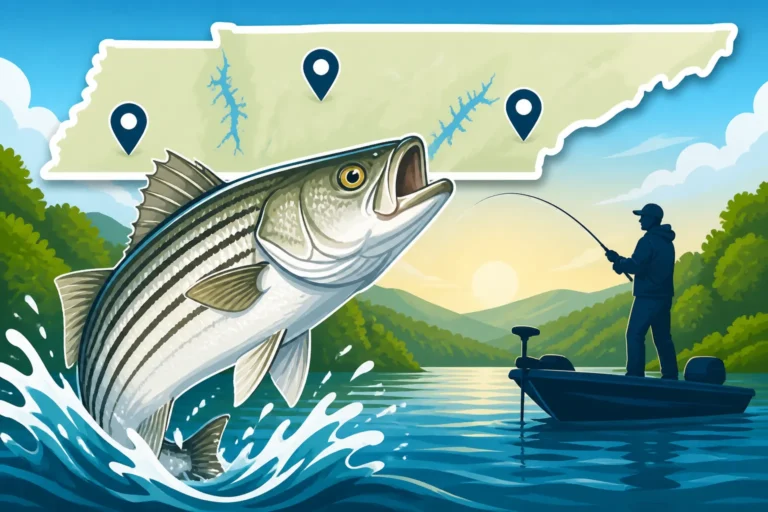
Tennessee is blessed with an abundance of fantastic reservoirs, and many of them hold thriving populations of spotted bass. While the Tennessee River system is perhaps most famous for its trophy largemouth, particularly places like Chickamauga Lake, spotted bass are very prevalent, especially further upstream or in the less fertile parts of these impoundments. Watts Bar Lake, for example, is known for its excellent spotted bass fishery, offering anglers plenty of opportunities to catch these aggressive fighters. Other lakes like Norris Lake, Center Hill Lake, and Dale Hollow Lake, while also renowned for smallmouth and largemouth, also hold healthy populations of spotted bass, especially in their clearer, deeper sections. Basically, if you're fishing a large, rocky, clear-to-moderately-stained reservoir in Tennessee, there's a good chance you'll encounter a spotted bass. Keeping an eye on localized reports and maps can also point you to specific areas within these lakes. Our Watts Bar Lake Bass and Catfish Species guide provides more localized information for that particular lake, which is a prime spotted bass spot.
Seasonal Movements and Feeding Patterns
Just like other bass species, spotted bass exhibit seasonal movements and changes in feeding patterns that are dictated by water temperature and the availability of forage. In spring, as water temperatures rise, spotted bass will move shallower to spawn, often found on rocky points or gravel bottoms. This is a great time to target them with jigs, crankbaits, or even topwater lures. As summer heat sets in, they tend to move deeper, seeking cooler, more oxygenated water, often suspending over humps, creek channels, or congregating around deep structure. During these hot months, deep-diving crankbaits, jigging spoons, or drop-shot rigs can be incredibly effective. Come fall, as water temperatures begin to cool, they become highly active, aggressively feeding in preparation for winter, often chasing baitfish in schools closer to the surface or around rocky points. Even in winter, they can be caught deep, often near baitfish schools or submerged timber. Understanding these seasonal shifts helps you not only locate them but also adapt your presentation to maximize your chances of a catch.
Tips for Confident Identification on the Water
Even with all the knowledge in the world, identifying fish on the fly can be tough. But don't worry, there are some practical, on-the-water tips you can use to feel more confident about your catch. It’s all about having a system and knowing what to prioritize.
The "Mouth Test" and "Tongue Test" in Practice
When you land a bass and you're unsure if it's a spotted bass, immediately perform the "mouth test." Gently hold the fish horizontally and close its mouth. Observe where the end of the upper jaw (maxillary) falls in relation to the back of its eye. If it doesn't extend past the eye, that's a strong indicator for spotted bass or smallmouth. If it goes well past, you've likely got a largemouth.
If the mouth test points towards a spotted or smallmouth bass, then it's time for the "tongue test." Carefully open the fish's mouth and look for its tongue. Then, gently run your finger (or the tip of a small, blunt object like a plastic ruler) over the top of the tongue. If you feel that distinctly rough, sandpaper-like patch of teeth, you can be very confident you have a spotted bass. Remember, a largemouth will have a smooth tongue. Always handle the fish gently, support its weight, and minimize its time out of water, especially if you plan to release it. These two tests, combined, are your most reliable on-the-spot tools for identification.
Using Photography for Later Reference
Sometimes, in the heat of the moment, or when the fish is particularly lively, getting a perfect identification can be difficult. That's where your smartphone or a small, waterproof camera can be a lifesaver. Before releasing an uncertain catch, quickly take a few clear photos. Make sure to get shots that clearly show:
- The entire fish, especially its body shape and lateral line markings.
- A close-up of the head, with the mouth closed, to show the jaw extension relative to the eye.
- A clear picture of the open mouth, specifically focusing on the tongue so you can examine it for that crucial tooth patch later.
You can then review these photos at home, compare them to online guides or identification charts, or even ask for help from experienced anglers in online forums. Products like waterproof phone cases or compact cameras, easily found on Amazon, can protect your gear and ensure you capture those essential details for identification without worry. Taking good photos is a smart habit for any angler who wants to improve their knowledge of Fish Species Found in Tennessee Waters.
Consulting Local Experts and TWRA Resources
Never underestimate the value of local knowledge! The folks who work at your local bait and tackle shop have seen thousands of fish caught from local waters and are often a fantastic resource for identification. They can tell you what specific characteristics to look for on fish from that particular lake and might even have photos or taxidermy examples to show you. Fishing guides who specialize in the area are another excellent source of expertise.
Beyond personal connections, the Tennessee Wildlife Resources Agency (TWRA) is your official go-to. Their website is packed with incredibly detailed information, including species identification guides, stocking schedules, and the specific regulations for various lakes and rivers across the state. They often publish brochures or downloadable PDFs that feature clear images and descriptions of different bass species. If you’re ever truly stumped, or just want to brush up on your knowledge, their resources are invaluable. Regularly checking their site ensures you're up-to-date on all Tennessee Fishing Regulations Explained.
Disclaimer
This article is for general informational purposes only and does not constitute professional advice. Laws, prices and regulations vary by location and change over time. Consult a qualified professional for guidance on your specific situation.