Best Bait for Largemouth Bass Fishing
One of the biggest head-scratchers for any angler, especially when you're targeting those elusive largemouth bass, is figuring out what bait to tie on. With so many options out there, it's easy to feel overwhelmed, wondering if you've got the "right" thing to entice a bite. This guide is here to cut through the confusion and help you understand the best baits for largemouth bass fishing, giving you the confidence to make smarter choices on the water in Tennessee and beyond.
Understanding Largemouth Bass Behavior and Bait Selection
Before we even dive into specific baits, it's crucial to understand a bit about largemouth bass themselves. These powerful, ambush predators are driven by a few key instincts: hunger, reproduction, and self-preservation. Their behavior shifts dramatically with water temperature, light conditions, and the presence of forage, all of which should influence your bait choice. Thinking like a bass—where they'd hide, what they'd eat—is half the battle won. It’s not just about what looks good to us, but what looks like an easy meal to them.
Seasonal Influences on Bass Feeding
Largemouth bass are cold-blooded creatures, meaning their metabolism and activity levels are directly tied to the water temperature. This is why a bait that works wonders in the spring might be completely ignored in the dead of summer or winter. In Tennessee, we see distinct seasonal patterns that dictate where bass hold and what they're willing to chase. Understanding these shifts is paramount to consistent success.
During the spring, as waters warm, bass move shallower for the spawn. They're often aggressive, protecting nests or feeding heavily to build energy. This is a time when moving baits or soft plastics mimicking crawfish and baitfish can be incredibly effective. Come summer, with scorching temperatures, bass often retreat to deeper, cooler waters or seek dense cover to ambush prey. You might need to present baits slower and deeper. In the fall, as temperatures drop again, bass go on a feeding frenzy, bulking up for winter, making reaction baits excellent choices. Finally, winter slows everything down; bass are lethargic, requiring very slow, subtle presentations. Tennessee Bass Fishing Seasons and Patterns offers a deeper dive into these seasonal shifts.
Forage Base and Imitation
What do largemouth bass eat? The answer largely depends on where you're fishing in Tennessee. In a lake like Chickamauga Lake, Tennessee's Top Bass Fishing Destination, famous for its trophy bass, they might be gorging on gizzard shad, threadfin shad, or massive bluegill. In smaller ponds or rivers, crawfish, frogs, and smaller baitfish like minnows could be their primary diet. Your bait selection should aim to "match the hatch"—that is, imitate what the bass are already feeding on.
This doesn't always mean an exact replica, but rather a lure that has the right profile, size, color, and action to mimic their natural prey. If you know the lake has a strong population of golden shiners, a gold-colored crankbait might outfish a chartreuse one. If crawfish are abundant, a jig-and-trailer combination that mimics a crawfish scuttling along the bottom will be hard to beat. Observing what's swimming or crawling around the edges of the water can give you invaluable clues.
Soft Plastic Baits: Versatility and Natural Appeal
Soft plastic baits are arguably the most versatile category of lures available for largemouth bass. They come in an endless array of shapes, sizes, and colors, designed to imitate everything from worms and crawfish to baitfish and even frogs. Their soft, pliable nature gives them a lifelike action in the water that hard baits often can't replicate, making them incredibly effective for finicky bass or when a more subtle approach is needed.
Plastic Worms and Stick Baits
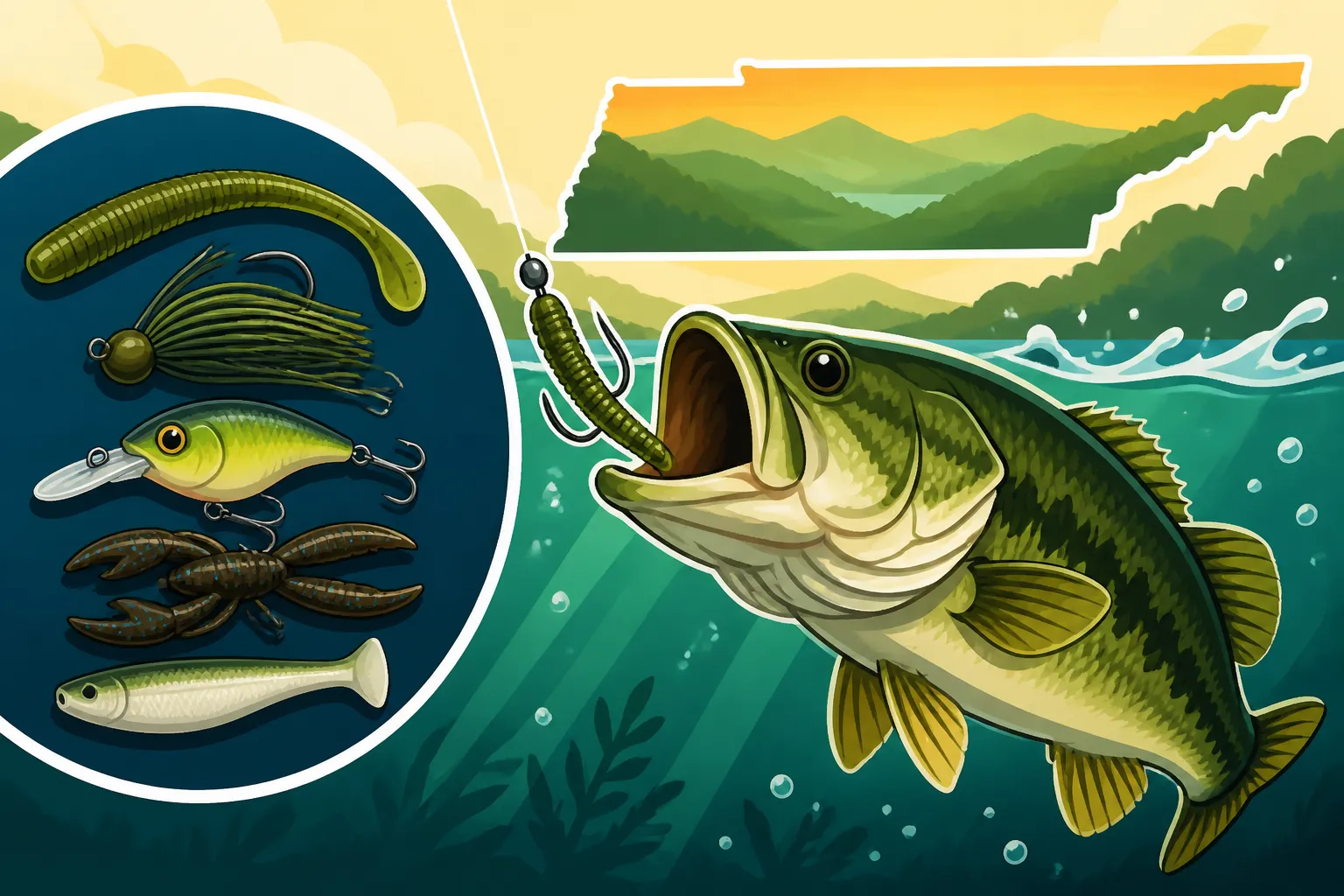
Ah, the plastic worm. If there's one bait that has probably caught more largemouth bass than any other, it's this humble offering. From classic "ribbon tail" worms to the ever-popular "straight tail" or "stick bait" varieties, they are a must-have in any bass angler's tackle box. Rigged weightless, Texas-rigged, Carolina-rigged, or on a shaky head, their simple, undulating action is often irresistible. The weightless Senko, for example, has a unique shimmy on the fall that can drive bass absolutely wild, especially in calmer waters.
| Rigging Method | Description | Ideal Conditions | Target Depth |
|---|---|---|---|
| Texas Rig | Worm threaded on hook, point buried in plastic, weight optional. | Heavy cover, weeds, wood, bottom bumping | All |
| Carolina Rig | Leader with worm, main line with sliding weight and swivel. | Open water, deep points, sparse cover | Deep |
| Weightless (Wacky) | Hook through middle of stick bait, both ends wiggle on the fall. | Clear water, shallow cover, calm conditions | Shallow |
| Shaky Head | Worm on a jig head, allowing jig head to stand up on the bottom. | Rocky bottoms, open water, finicky bass | Mid to Deep |
When fishing plastic worms in Tennessee, consider the clarity of the water. In clearer lakes like Norris, natural colors like green pumpkin, watermelon, or brown often excel. In stained or muddy waters, black-and-blue, junebug, or even chartreuse might get more attention. For the famous bass of Kentucky Lake Fishing on the Tennessee Side, a larger plastic worm fished on a Texas rig through submerged timber can be deadly. You can find a vast selection of plastic worms and stick baits on Amazon to experiment with different sizes and colors.
Creature Baits and Jigs
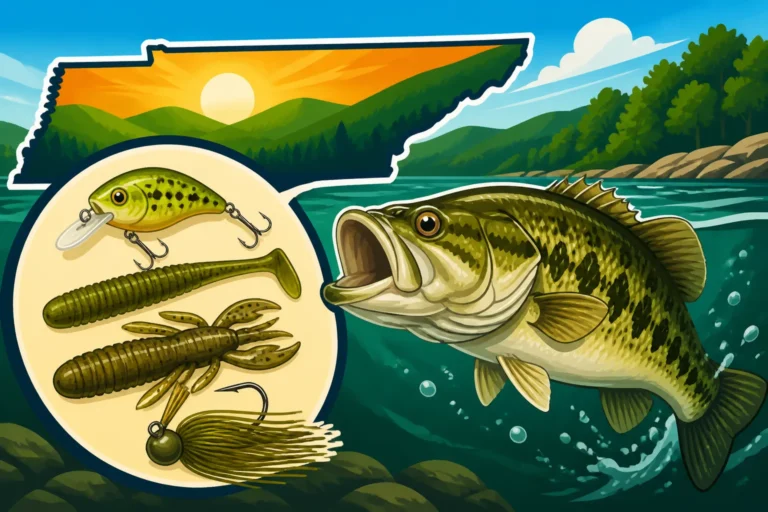
Creature baits are a fascinating category, often resembling a mix of crawfish, lizards, and various aquatic critters. They have multiple appendages that create a lot of movement and vibration in the water, making them perfect for mimicking crawfish or other bottom-dwelling prey. These are typically fished on a Texas rig or, even more effectively, as a trailer on a jig. A jig-and-trailer combination is a bona fide bass killer, especially when fished around heavy cover like brush piles, submerged trees, or rock structures.
Imagine a big, black-and-blue jig with a matching creature bait trailer slowly dragged across the bottom next to a dock on Percy Priest Lake Fishing Near Nashville, Tennessee. That slow, deliberate presentation often triggers a reaction strike from a territorial bass. The jig head design (football, stand-up, arky) dictates how it moves and interacts with the bottom. Football jigs are great for rocky bottoms, while arky jigs are fantastic for punching through grass mats. Experiment with different trailer types – some anglers prefer chunks for a bulkier profile, while others like slender creature baits for more subtle action. Learning How to Jig for Crappie might seem different, but the principles of presenting a jig near cover are surprisingly similar for both species.
Hard Baits: Reaction and Flash
Hard baits are designed to create a reaction strike. They often mimic baitfish through their erratic action, vibrant colors, and reflective surfaces. These lures excel when bass are actively feeding or when you need to cover a lot of water quickly to find active fish. The vibration, flash, and sound they produce can draw bass in from a distance, making them invaluable tools in your arsenal.
Crankbaits and Jerkbaits
Crankbaits are fantastic search baits, excellent for covering broad areas and quickly locating active bass. They come in shallow-diving, medium-diving, and deep-diving varieties, allowing you to target bass at specific depths. The lip of the crankbait is what gives it its unique wobble and determines its diving depth. Rattling crankbaits add sound, which can be a huge advantage in stained water or on windy days.
For lakes with prominent ledges and drop-offs, like Watts Bar Lake, a deep-diving crankbait "cranked" down to the target depth and then slowly retrieved, occasionally bumping the bottom, can be incredibly effective. Consider bright colors like chartreuse or fire tiger in murky water, and more natural patterns like shad or bluegill in clearer conditions. Jerkbaits, on the other hand, are fished with a "rip-rip-pause" retrieve. That erratic, darting action followed by a suspended pause often elicits vicious strikes from bass, especially in cooler water or when they're a bit lethargic. A good jerkbait can suspend perfectly still during the pause, appearing like a vulnerable, stunned baitfish. Many top-performing crankbaits and jerkbaits from leading brands are readily available on Amazon.
Spinnerbaits and Chatterbaits
Spinnerbaits are all about flash and vibration. Their spinning blades create a lot of commotion in the water, mimicking fleeing baitfish. They're incredibly weedless, making them perfect for fishing through submerged vegetation, standing timber, or brush. The thumping vibration of a spinnerbait can be felt through your rod, indicating it's working properly. Tandem willow leaf blades offer maximum flash, while Colorado blades provide more thump and lift.
Chatterbaits, also known as bladed jigs, have exploded in popularity for their unique, erratic action. The blade on the front of the jig causes it to vibrate violently, creating a distinct "chatter" and shimmy that bass absolutely love. They combine the flash of a spinnerbait with the profile of a jig, making them extremely versatile. Fishing them with a steady retrieve, or "yo-yoing" them through cover, can produce explosive strikes. These are excellent choices for fishing around docks and grass lines on lakes like Old Hickory Lake Fishing Spots, especially after a cold front when bass might be a bit more sluggish but still respond to vibration.
Topwater Lures
There's nothing quite like a topwater strike. These baits are designed to be fished exclusively on the surface, creating commotion that draws bass up from below. Poppers, walkers, frogs, and buzzbaits all fall into this category. They are most effective during low-light conditions – dawn, dusk, or on cloudy days – and especially in warmer water when bass are willing to come to the surface for a meal.
Walking baits, like a Zara Spook, are worked with a "walk-the-dog" retrieve, creating a side-to-side sashay that mimics a struggling baitfish. Poppers make a "gloop" sound by pushing water, drawing attention with both sound and splash. Frog lures, often made of soft plastic, are fantastic for fishing over thick lily pads or matted vegetation where other lures would snag. A buzzbait creates a loud gurgling sound and a surface disturbance that can call in bass from a surprising distance. If you're out early morning on Reelfoot Lake Fishing, Tennessee's Cypress Swamp Lake, a topwater frog hopped across the cypress knees can lead to some truly unforgettable bites.
Live Bait: The Original and Often Unbeatable Option
While artificial lures offer the challenge and satisfaction of "tricking" a fish, sometimes nothing beats the real thing. Live bait has a natural scent, texture, and movement that no artificial lure can perfectly replicate. For tough fishing days, or for anglers who prefer a simpler approach, live bait can often turn a slow day into a successful one.
Minnows and Shad
Live minnows and shad are classic bass baits for a reason: they are what bass naturally eat. Presenting a lively minnow on a hook, either suspended under a bobber or fished free-lined near cover, can be incredibly effective. Small shiners or robust fathead minnows are often readily available at bait shops. For truly large bass, especially those that feast on big forage, a legal-sized gizzard or threadfin shad (where legal to use and acquire) can be the ticket to a trophy catch.
When using live bait, remember that freshness is key. Keep your bait healthy and lively in a well-aerated bait bucket. The natural frantic movements of a nervous minnow are what often triggers a strike. This method is particularly useful when targeting lethargic bass in cold water or when they are simply not responding to artificial presentations. Just make sure to check local regulations on bait collection and usage, as rules can vary.
Crawfish and Worms
Crawfish are a primary food source for largemouth bass across much of Tennessee. A live crawfish, hooked carefully through the tail or carapace, is an irresistible meal. They'll naturally try to hide in cover, which is exactly where bass will be waiting. This makes them ideal for fishing around rocks, stumps, and riprap. The frantic scuttling of a live crawfish on the bottom can elicit an aggressive strike when nothing else will.
Nightcrawlers, though more commonly associated with panfish or catfish, can also catch largemouth bass, especially smaller ones. Their wriggling action and natural scent can be very attractive. Rigged on a plain hook with a split shot or under a bobber, they offer a simple, effective presentation, particularly if you're fishing in a farm pond or a smaller body of water. While artificial worms are great, the real deal brings an undeniable natural appeal. If you're fishing a place like Center Hill Lake Fishing Guide, where rocky banks offer great crawfish habitat, live crawfish can be particularly effective.
Essential Considerations for Bait Presentation
Having the best bait is only half the battle; knowing how to present it effectively is just as important. Your retrieve speed, the location of your cast, and even the line you choose can all make a significant difference in whether a bass commits to your bait.
Matching Bait Size and Color to Conditions
Always think about the conditions you're fishing in. In clear water, go for more natural, subtle colors and smaller baits that don't spook fish. In murky or stained water, brighter, bolder colors like chartreuse, neon green, or black-and-blue, and larger profile baits that create more vibration, will stand out better. The size of your bait should also generally match the size of the forage in the lake. If you're on a lake known for massive shad, a small finesse worm might not get noticed. Conversely, if the bass are feeding on small minnows, a giant crankbait might be ignored.
Water temperature also plays a role. In cold water, bass are often sluggish, preferring smaller, slower-moving baits. As the water warms, their metabolism speeds up, and they'll chase faster, more aggressive presentations. It's often a good idea to start with a versatile bait, like a jig or a spinnerbait, to gauge the fish's activity level before fine-tuning your selection.
Rod, Reel, and Line for Optimal Performance
Your gear setup is crucial for presenting bait effectively and landing those big largemouth. For most bass fishing, a medium-heavy to heavy power rod with a fast action tip is ideal. This gives you the backbone to fight strong fish and the sensitivity to detect subtle bites. Baitcasting reels are preferred by many experienced bass anglers for their casting accuracy and power, especially with heavier lures. Spinning reels excel with lighter baits or for finesse techniques.
Line choice is also critical. Monofilament line offers stretch, which can be forgiving with aggressive strikes, and is good for topwater lures. Fluorocarbon line is nearly invisible underwater, offers great sensitivity, and sinks, making it perfect for bottom-contact baits like jigs and worms. Braided line has no stretch, incredible strength, and great sensitivity, making it excellent for fishing heavy cover or with chatterbaits. Using the right line helps your bait perform as intended and increases your chances of a successful hookset. Learning about different Best Rods for Largemouth Bass and Best Baitcasting Reels for Bass Anglers can truly elevate your game.
Disclaimer
This article is for general informational purposes only and does not constitute professional advice. Laws, prices and regulations vary by location and change over time. Consult a qualified professional for guidance on your specific situation.