Best Bait for Brown Trout Fishing
Catching brown trout can feel like cracking a secret code sometimes, can't it? These beautiful, wary fish are notoriously picky, making many anglers feel like they’re doing everything wrong when the bite just isn't there. It's truly frustrating to spend hours on the water, seeing fish, but never feeling that exciting tug on your line. This guide is all about demystifying brown trout fishing in Tennessee, focusing on the very best baits and how to present them to finally start landing those elusive beauties.
Understanding Brown Trout Behavior and Diet
Before we even talk about specific baits, it's essential to understand the mindset of a brown trout. Unlike some of their trout cousins, brown trout are often more solitary, aggressive, and nocturnal, especially as they grow larger. They're opportunistic predators, meaning they'll eat whatever is readily available and seems like an easy meal. This adaptable nature is both a challenge and an opportunity when choosing your bait.
Why Brown Trout Are So Finicky
Brown trout develop a reputation for being finicky for good reason. They're keenly aware of their surroundings, possess excellent eyesight, and can be easily spooked by unnatural presentations, shadows, or even the wrong line size. In heavily fished waters, they quickly learn to avoid anything that looks or acts suspicious. This wariness means your presentation, the stealth of your approach, and the realism of your bait are often just as important as the bait itself. It's a game of wits, and the brown trout often holds the higher hand!
Moreover, their territorial nature means they might ignore a bait entirely if it doesn't cross their "strike zone" just right or if they aren't actively feeding. They don't always chase food far, preferring to ambush prey that drifts right into their path. So, thinking like a brown trout—where it might be hiding, what it might be watching for—becomes crucial to bait selection and placement.
Seasonal Diet Changes
Brown trout diets aren't static; they shift significantly with the seasons and the available food sources. In spring, after the long winter, they might be highly aggressive, targeting larger meals to regain energy. Terrestrial insects become more prevalent as the weather warms, and a variety of aquatic insects are hatching. As summer progresses and water temperatures rise, their activity might decrease during the day, pushing them into deeper, cooler waters or making them more active at dawn, dusk, and even at night when larger prey like baitfish are vulnerable.
Fall is often a prime time for brown trout, as they become incredibly aggressive, fattening up for winter and the spawning season. This is when they might be most willing to strike at larger, more enticing baits, including sizable streamer patterns or larger minnow imitations. Winter, while challenging, can still yield results, especially during warmer spells when fish might move from deep pockets to feed on smaller aquatic insects or opportunistic baitfish. Always consider what's naturally available in the water when you're fishing.
Top Live and Natural Baits for Brown Trout
When in doubt, go natural! Live and natural baits are incredibly effective for brown trout because they perfectly mimic the fish's everyday diet. The scent, texture, and natural movement can trigger strikes when artificial lures fail, especially for pressured or larger, more wary brown trout.
Worms and Nightcrawlers
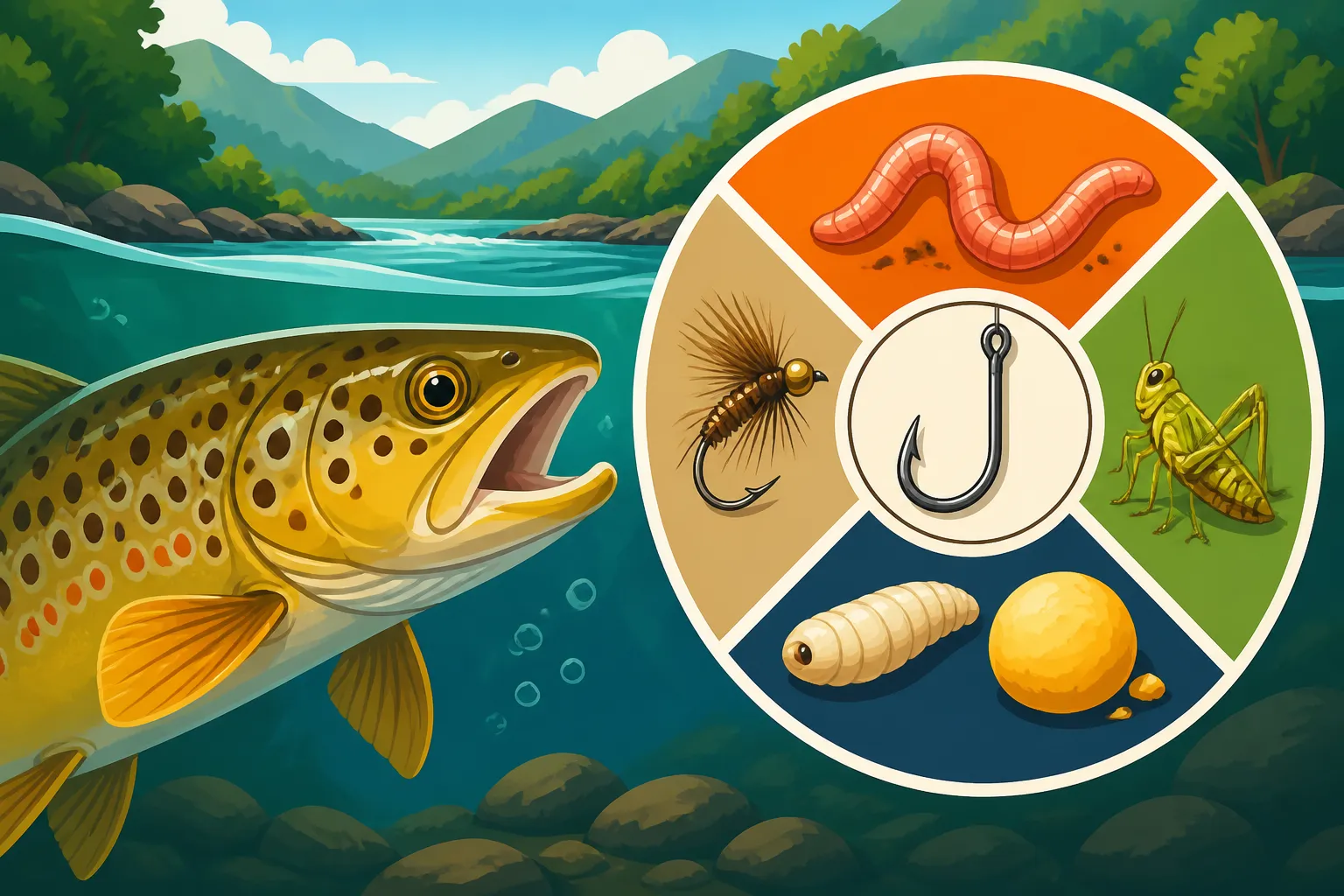
Ah, the humble worm! There's a reason worms, particularly nightcrawlers, are a timeless go-to for trout. They are a staple food source for brown trout in many environments, especially after a good rain washes them into rivers and streams. The natural scent and squirming action of a fresh worm are hard for any trout to resist.
For presentation, you can fish worms effectively in several ways. Drifting a small piece of nightcrawler or a whole red wiggler under a tiny bobber or float can be deadly in slower currents or still pools. In faster water, try a bottom rig with a small split shot just above the hook, allowing the worm to tumble naturally along the bottom. You can also fish them on a simple hook and line without any weight in very slow or calm water, letting them sink slowly and enticingly. Remember, brown trout can be surprisingly cautious, so a subtle, natural drift is key. Many anglers swear by a size 6 or 8 bait holder hook, threaded lightly through the worm to allow maximum movement.
Minnows and Other Baitfish
For bigger brown trout, especially those with a predatory streak, nothing beats a live minnow. Large brown trout are often piscivorous, meaning they primarily feed on other fish. The flash and darting action of a live minnow can drive them wild. Creek chubs, shiners, sculpins, and even small panfish can all be excellent bait choices, depending on what's natural in the water you're fishing.
When using minnows, consider a slip bobber rig to suspend the minnow at the desired depth, especially in deeper pools or along current seams. A small treble hook or a single hook through the lip or dorsal fin (being careful not to damage the fish) will keep the minnow lively. You can also fish minnows effectively on a simple jig head, allowing you to cast and retrieve, mimicking a wounded baitfish. Be mindful of local regulations regarding the use of live baitfish, as some areas might have restrictions to prevent the spread of invasive species. Checking the Tennessee Fishing Rules Every Angler Should Know is always a good practice.
Insect Larvae and Eggs
Smaller, more delicate natural baits often work wonders, especially in clearer waters or when targeting smaller brown trout, though big ones won't ignore them either. This category includes mealworms, wax worms, crickets, grasshoppers, and even salmon or trout eggs. These baits are irresistible because they are a natural part of a trout's diet throughout the year.
For presentation, these baits are typically fished on very light line with small hooks (size 10-14), often under a strike indicator (fly fishing term for a bobber) or drifted naturally with minimal weight. When fishing crickets or grasshoppers, especially in late summer and fall, try casting them near overhanging vegetation where they might naturally fall into the water. PowerBait, while not truly "natural," is often grouped here because its scent and texture are designed to mimic trout eggs or other soft natural foods. It can be particularly effective in stocked waters and still-water situations. You can find a wide variety of these specialized baits, like scented PowerBait, available on Amazon.
Effective Artificial Lures for Brown Trout
Sometimes, live bait isn't allowed, or you simply prefer the challenge and active nature of fishing with artificials. Thankfully, there's a huge array of lures that brown trout absolutely smash, especially if you understand how to make them look alive in the water.
Spinners and Spoons
Spinners and spoons are classic trout lures for a reason: they work! The flash, vibration, and erratic movement mimic fleeing baitfish or injured prey, triggering the brown trout's predatory instincts. Spinners like those from Mepps or Panther Martin are legendary, with their spinning blades creating tantalizing flashes and vibrations. Sizes from 0 to 2 are generally good for most stream and river conditions in Tennessee.
Spoons, like the classic Kastmaster or Little Cleo, flutter and flash as they sink or are retrieved, mimicking a struggling baitfish. These are particularly effective in larger pools, lakes, or wider river sections where you need to cover more water. Experiment with different retrieve speeds and pauses to find what the fish are keying into. The key with both is to match the size and color to the local forage and water conditions. Bright colors work well in murky water, while natural tones are better in clear conditions. A quick search on Amazon will show you just how many options there are for these reliable lures.
Jigs and Soft Plastics
Jigs and soft plastics offer incredible versatility and a more subtle approach, which can be exactly what a wary brown trout needs. Small marabou jigs, often in olive, black, or white, are fantastic for imitating aquatic insects or small baitfish. They breathe and pulsate in the water, looking incredibly lifelike with minimal effort. Tipping them with a small piece of worm or a wax worm can add an extra layer of scent and appeal.
Soft plastic baits, like tiny grubs, tubes, or small swimbaits, can also be rigged on small jig heads. The key is to impart subtle action: short twitches, lifts, and drops, letting the current do some of the work. This technique is particularly effective when fish are holding tight to structure or in slower, deeper runs. A natural presentation of a small grub tumbling downstream can be irresistible. Consider micro-jigs and tiny plastic worms, which can be a game-changer when fishing clear, cold streams.
Crankbaits and Jerkbaits
For aggressive brown trout, especially those looking for a bigger meal in lakes or wider river sections, crankbaits and jerkbaits can be incredibly productive. These lures are designed to imitate larger baitfish, diving to specific depths and having a strong, wobbling action. Brands like Rapala, Rebel, and Berkley offer a wide range of sizes and colors.
Crankbaits are typically retrieved steadily, allowing their lip to dig into the water and create that enticing wobble. Different models dive to different depths, so choose one that gets into the strike zone where the fish are holding. Jerkbaits, on the other hand, require a more active retrieve: a series of "jerks" or "twitches" of the rod tip, followed by pauses. This erratic, stop-and-go action perfectly mimics a wounded baitfish, often triggering violent strikes during the pause. These lures are excellent for covering water quickly and drawing out those bigger, more territorial brown trout.
Fly Fishing: The Ultimate Challenge
For many, fly fishing represents the pinnacle of trout fishing, offering a unique and incredibly rewarding way to target brown trout. This method focuses on imitating the various aquatic and terrestrial insects that make up a brown trout's diet, as well as baitfish. It's a highly technical approach that requires matching the hatch, understanding entomology, and perfecting delicate presentations.
Common fly patterns for brown trout include nymphs (like Pheasant Tail, Hare's Ear, or Prince Nymphs) which imitate subsurface insect larvae, dry flies (such as Elk Hair Caddis, Adams, or Parachute Adams) for when trout are rising to surface insects, and streamers (Woolly Bugger, Clouser Minnow, Sculpzilla) to imitate baitfish. Best Fly Patterns for Brown Trout often vary by region and season, so checking local hatch reports is helpful. Learning to "read the water" is especially critical in fly fishing, as brown trout will position themselves in current seams, behind rocks, and under undercut banks to ambush prey. Many Best Trout Streams for Fly Fishing in Tennessee are teeming with opportunities for this method.
Matching Your Bait to Tennessee's Brown Trout Habitats
Tennessee offers a diverse range of fishing environments, from wild mountain streams to large, sprawling reservoirs. The "best" bait often depends heavily on where you're casting your line. Understanding the nuances of each habitat will significantly increase your success.
Fast-Flowing Streams
In the swift currents of smaller, fast-flowing streams, especially those in East Tennessee's mountain ranges, brown trout often hold in pockets behind rocks, in small eddies, or in the deeper parts of runs. Here, stealth and quick, natural presentations are paramount. The fish don't have much time to inspect your offering.
For these environments, smaller, heavier baits that get down quickly are often best. Small spinners (size 0 or 1) can be cast upstream and allowed to tumble back, or fished across current. Small jigs, particularly marabou jigs, are excellent. Fly anglers will find success with nymphing rigs, using weighted nymphs to get into the strike zone. Small worms or wax worms drifted naturally with minimal split shot are also incredibly effective. The goal is to present something that looks like it's been dislodged by the current and is an easy meal. Remember, brown trout in these areas are often wild and very wary. You might also want to look into How to Read Water When Trout Fishing to identify those key holding spots.
Deep Pools and Runs
Larger, deeper pools and longer, slower runs found in many of Tennessee's rivers and larger streams present different challenges and opportunities. Brown trout in these areas might be less wary due to the depth, but they also have more time to inspect your bait. They often hold near structure like submerged logs, large rocks, or undercut banks.
Here, a wider range of baits can be effective. Spinners and spoons can be cast across the pool and retrieved, allowing them to sweep through the deeper sections. Larger jigs or soft plastics can be jigged vertically or slowly retrieved along the bottom. Live minnows, fished under a slip bobber or slowly retrieved on a jig head, are deadly for targeting bigger browns that cruise these depths. Crankbaits and jerkbaits that dive to appropriate depths can also draw explosive strikes from aggressive fish. For fly anglers, swinging large streamers through these deep sections is a time-honored technique for trophy brown trout.
Lakes and Reservoirs
While many people think of brown trout as strictly stream fish, some of Tennessee's larger lakes and reservoirs also hold healthy populations, often due to stocking efforts. These environments demand different tactics, as the fish are often dispersed and can be found at various depths, frequently following baitfish schools in open water.
In lakes, trolling is a highly effective method for covering large areas. Small spoons, stickbaits, or even cowbells and dodgers rigged with a worm or minnow behind them can draw strikes. For stationary fishing, live minnows or shiners, suspended under a float or fished on the bottom with an egg sinker, are excellent choices. Tipping a jig with a minnow or piece of worm can also work. When targeting brown trout in these larger waters, using a fish finder to locate schools of baitfish or thermal breaks (where cooler, oxygenated water congregates) can be a huge advantage. You can find robust, reliable fish finders suitable for these larger bodies of water on Amazon, which can help you pinpoint those elusive schools. Tennessee Trout Stocking Schedule and Season can also give you clues as to which lakes might be receiving fish and when.
| Bait Type | Best Use Case | Pros | Cons | Optimal Conditions |
|---|---|---|---|---|
| Worms/Nightcrawlers | General purpose, subtle presentation | Natural scent, universally appealing | Can be easily stolen, less selective for size | After rain, slightly murky water, all seasons |
| Minnows/Baitfish | Targeting larger, predatory brown trout | Highly enticing, natural movement | Requires careful handling, availability | Clear water, active feeding periods |
| Insect Larvae/Eggs | Finicky fish, clear water, smaller streams | Subtle, natural, easy to present | Can attract smaller fish, delicate | Low flows, cold water, post-hatch events |
| Spinners/Spoons | Covering water, aggressive fish | Flash & vibration, easy to use | Can twist line, less subtle | Moving water, overcast days |
| Jigs/Soft Plastics | Versatility, subtle presentation, structure | Mimics many food sources, depth control | Requires active manipulation, less scent | Deeper pockets, clear water |
| Crankbaits/Jerkbaits | Aggressive fish, covering water, specific depths | Strong action, attracts big fish | Less subtle, can get snagged | Lakes, larger rivers, active feeding |
| Flies (Nymphs/Dry/Streamers) | Technical challenge, precise imitation | Highly natural, varied presentations | Requires specialized gear and skill | "Matching the hatch", varied by pattern |
Ultimately, finding the best bait for brown trout fishing is often a process of observation, adaptation, and a bit of experimentation. The key is to pay attention to what the fish are telling you on any given day and be willing to switch up your tactics. Good luck out there, and tight lines!
Disclaimer
This article is for general informational purposes only and does not constitute professional advice. Laws, prices and regulations vary by location and change over time. Consult a qualified professional for guidance on your specific situation.