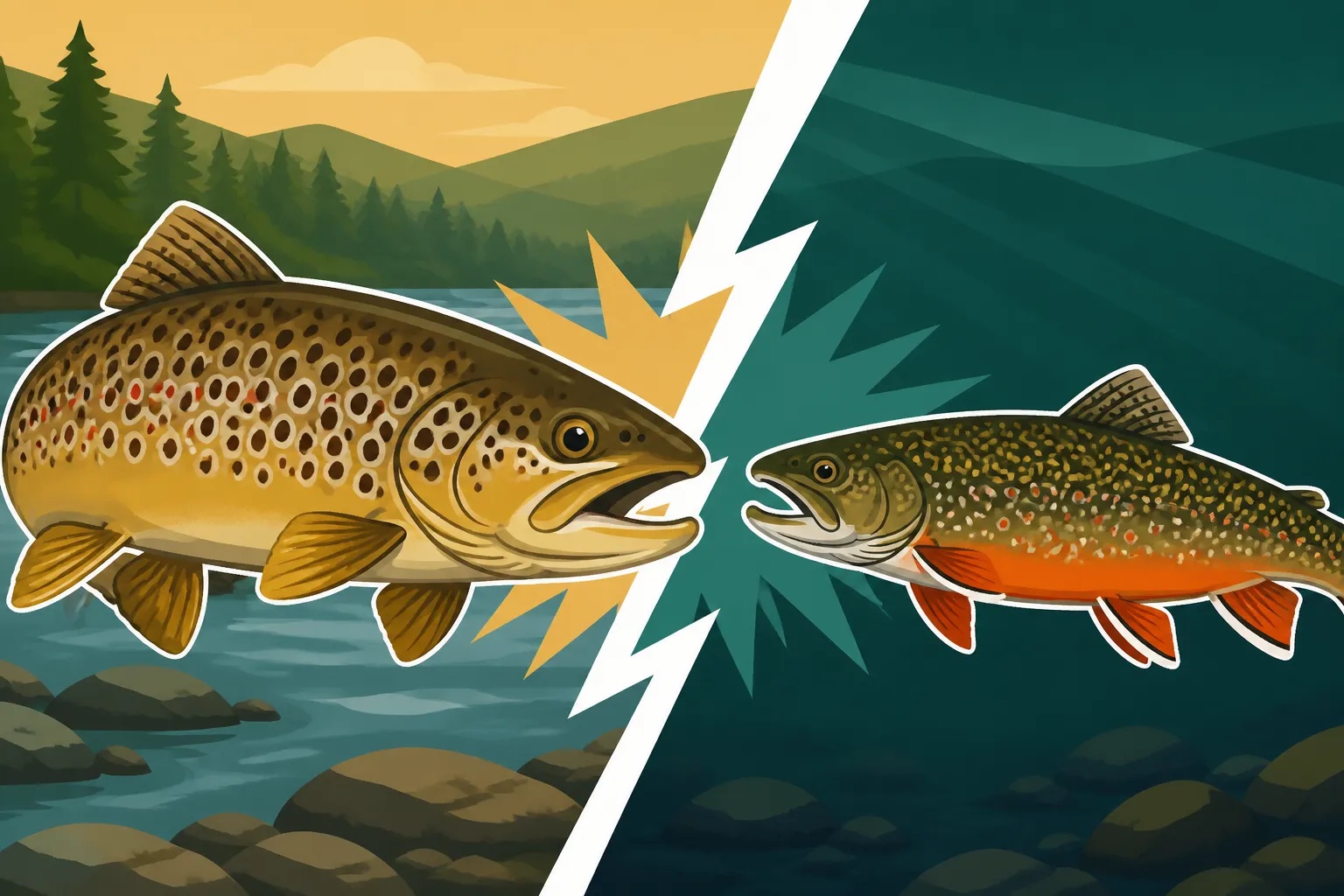
Brown Trout vs Brook Trout Size Comparison
For many anglers exploring the beautiful, cold waters of Tennessee, two native trout species often come up in conversation: the brown trout and the brook trout. While both are prized catches, there's often a bit of confusion, especially regarding their typical sizes and how to tell them apart when they're not fully grown. This guide aims to clear up that confusion, diving deep into the size, growth patterns, and distinguishing characteristics of both brown and brook trout found throughout the Volunteer State, helping you better understand and appreciate these magnificent fish.
Brown Trout: Size, Growth, and Habitat in Tennessee
Brown trout, originally introduced from Europe, have established a strong presence in many of Tennessee's rivers and streams. They are renowned for their ability to grow to impressive sizes, making them a highly sought-after sport fish for anglers looking for a challenge. Their resilience and adaptability allow them to thrive in various conditions, often outcompeting other trout species in warmer waters.
Typical Size and Weight
When we talk about brown trout in Tennessee, we're generally discussing fish that can reach quite substantial sizes. While a typical stream brown might range from 12 to 18 inches, it's not uncommon to encounter fish well over 20 inches, especially in larger rivers or tailwater fisheries below dams. These larger specimens can easily tip the scales at several pounds. For instance, in a rich tailwater like the Clinch River, anglers regularly pull out brown trout that are much bigger than anything you'd expect from a typical mountain brook trout. The potential for a true trophy brown is a huge draw for many experienced anglers, often requiring heavier tackle and more robust lines.
Factors Influencing Brown Trout Growth
Several factors contribute to the impressive growth potential of brown trout. Foremost among these is their diet, which tends to be far more diverse and opportunistic than that of their brook trout cousins. Brown trout are known predators, readily consuming smaller fish, large insects, and even mice or other small terrestrial creatures that fall into the water. This protein-rich diet fuels rapid growth. Water temperature also plays a role; while they prefer cool, oxygenated water, brown trout can tolerate slightly warmer temperatures than brook trout, which sometimes means access to more food resources. The abundance of prey, combined with less competition in certain areas, allows them to pack on the pounds. It's truly amazing what a robust food source can do for a fish's growth trajectory, turning a fingerling into a lunker within a few years.
Brown Trout Habitat in Tennessee
In Tennessee, you'll find brown trout thriving in a variety of habitats, though they generally prefer larger, cooler streams, rivers, and tailwater fisheries. Good examples include sections of the Clinch River Trout Fishing in East Tennessee or the Hiwassee River. These environments often provide ample cover in the form of submerged logs, undercut banks, and deep pools, which brown trout utilize for ambush points and protection. They are less common in the highest, smallest mountain freestone streams where brook trout are dominant. They are quite hardy, capable of handling a wider range of environmental conditions, which is why they've been so successful as an introduced species. When you're looking for Where to Catch Brown Trout in Tennessee, these larger, cooler river systems are almost always your best bet.
Brook Trout: Size, Growth, and Habitat in Tennessee
Brook trout, affectionately known as "brookies," are Tennessee's only native trout species. They are jewels of the Appalachian mountains, characterized by their stunning coloration and preference for pristine, cold headwater streams. While they don't typically reach the gargantuan sizes of brown trout, their beauty and native status make them incredibly special to catch.
Typical Size and Weight
Compared to brown trout, brook trout are generally much smaller. A typical brook trout in a Tennessee mountain stream might only be 6 to 10 inches long. Anything over 12 inches is considered a true trophy, and a 14-inch brookie is an exceptional catch that will earn you bragging rights among your fellow anglers. Their weight rarely exceeds a pound in these small streams. While they are smaller, the fight they put up on light tackle in a tight mountain stream is exhilarating, making every catch memorable. Anglers fishing for Brook Trout: Tennessee's Native Cold-Water Species often value the experience over the sheer size of the fish.
Factors Influencing Brook Trout Growth
Brook trout growth is significantly influenced by the limited resources and harsh conditions of their preferred habitat. These fish primarily feed on aquatic insects, small terrestrial insects, and tiny crustaceans. The cold, nutrient-poor waters of high-elevation streams simply don't support the abundant, large prey items that brown trout feed on. Additionally, their habitat is often characterized by extreme temperature fluctuations, low oxygen levels in summer, and potential flash floods, all of which stress the fish and limit growth. It's a tough life in those pristine headwaters, and every calorie counts, which directly impacts their ability to grow large. Small stream conditions mean that even the biggest brook trout are still quite modest in size compared to their counterparts in larger waters.
Brook Trout Habitat in Tennessee
Brook trout are quintessential residents of Tennessee's highest elevation, pristine headwater streams, particularly within the Great Smoky Mountains National Park and other remote mountain areas. They require exceptionally cold, clean, and highly oxygenated water to thrive. These are typically small, clear freestone streams, often characterized by steep gradients, abundant rock structure, and heavy forest cover that provides shade and keeps water temperatures low. Where Do Brook Trout Live in Tennessee Streams? is almost always synonym with these cold, clear, unspoiled mountain environments. They are incredibly sensitive to habitat degradation and pollution, which is why their presence is often seen as a marker of excellent water quality. You won't typically find brook trout in the same larger, warmer rivers where brown trout proliferate; they simply cannot compete or survive in those conditions.
Brown Trout vs. Brook Trout: A Direct Size and Feature Comparison
Understanding the differences between brown and brook trout goes beyond just their average size. While size is often the most obvious differentiator, there are distinct visual cues, behavioral patterns, and habitat preferences that can help you tell them apart. It's crucial for anglers to know these distinctions, not only for identification but also for adhering to specific regulations, as brown trout often have different limits than other species. Remember, Only 2 Brown Trout Allowed Per Day During Tennessee's Trout Season can be a specific regulation in certain areas, highlighting the importance of correct identification.
Head-to-Head Size Differences
As we've discussed, the most striking difference is size. Brown trout, especially in nutrient-rich tailwaters, can easily reach 20 inches or more, with some monsters exceeding 30 inches and weighing over 10 pounds. Their growth is robust, driven by an aggressive predatory diet. Brook trout, on the other hand, are typically much smaller, usually under 10 inches, and rarely exceeding 14 inches even in prime conditions. The difference in their average size is so significant that if you catch a large trout in Tennessee, say over 15 inches, it's almost certainly a brown trout (or possibly a rainbow trout), not a brook trout. If you're comparing a 6-inch fish, it could be either, but if it's a 2-pound fish, it's almost certainly not a brook trout.
Here's a quick comparison of their typical characteristics:
| Feature | Brown Trout | Brook Trout |
|---|---|---|
| Typical Length | 12-24 inches (can exceed 30 inches) | 6-12 inches (rarely exceeds 14 inches) |
| Typical Weight | 1-10+ pounds | <1 pound (rarely exceeds 1.5 pounds) |
| Coloration | Olive-brown to golden-brown, large dark spots surrounded by lighter halos, sometimes red spots. | Dark olive to black on back, worm-like (vermiculation) patterns, bright red/orange spots with blue halos on sides, white leading edges on lower fins. |
| Tail Fin | Square to slightly forked | Square or slightly emarginate |
| Habitat | Larger rivers, tailwaters, medium-to-large streams, tolerates warmer water. | Pristine, cold, high-elevation headwater streams, highly oxygenated water. |
| Native to TN? | No (introduced from Europe) | Yes (only native TN trout species) |
| Diet | Fish, large insects, crustaceans, small mammals, opportunistic. | Aquatic insects, small terrestrial insects, small crustaceans. |
Visual Cues Beyond Size
Even when dealing with smaller fish, there are clear visual differences to help you identify them. Brown trout typically have a body color ranging from olive-brown to golden-brown, with prominent dark spots, many of which are surrounded by a lighter halo. They often have red spots as well, particularly on their sides. Their tail fin is usually square to slightly forked. You can learn more about these specifics with Brown Trout Identification Tips for Tennessee Anglers.
Brook trout, on the other hand, are absolute stunners. Their backs are dark olive to black, covered with distinctive worm-like (vermiculation) patterns. Their sides display vibrant red or orange spots, often encircled by striking blue halos. Perhaps the most unmistakable feature of a brook trout is the white leading edge on their lower fins (pelvic, anal, and pectoral fins), often followed by a black stripe. This "white-tipped fin" is almost a dead giveaway. They also tend to have a squarer or slightly emarginate tail fin. For a deeper dive into their appearance, check out How to Identify a Brook Trout.
Why Understanding the Differences Matters for Anglers
Knowing the difference between brown and brook trout isn't just about showing off your fish identification skills; it has practical implications for responsible angling. Firstly, fishing regulations for trout species in Tennessee can vary. For example, some areas might have specific slot limits or daily creel limits that apply to one species but not another. Misidentifying a fish could lead to unintentional violations. Secondly, understanding their habitat preferences helps you target your desired species more effectively. If you're seeking large, aggressive fish, you'll gear up for a different experience in a tailwater than if you're pursuing small, native brookies in a tiny mountain stream.
Furthermore, it speaks to conservation. Brook trout, being Tennessee's only native trout and living in fragile environments, are often a focus of conservation efforts. By correctly identifying them, anglers can contribute to data collection and promote sustainable fishing practices in their delicate habitats. If you're packing your gear, whether you're shopping for specific flies on Amazon or looking for a Best Fly Rods and Waders for Tennessee Trout Streams, knowing your target species helps you make informed choices. Ultimately, appreciating these subtle yet significant differences enhances the overall fishing experience, connecting you more deeply with the diverse aquatic life of Tennessee. For a broader overview of the various trout species, consider reading Tennessee Trout Guide: Rainbow, Brown, and Brook Trout.
Disclaimer
This article is for general informational purposes only and does not constitute professional advice. Laws, prices and regulations vary by location and change over time. Consult a qualified professional for guidance on your specific situation.