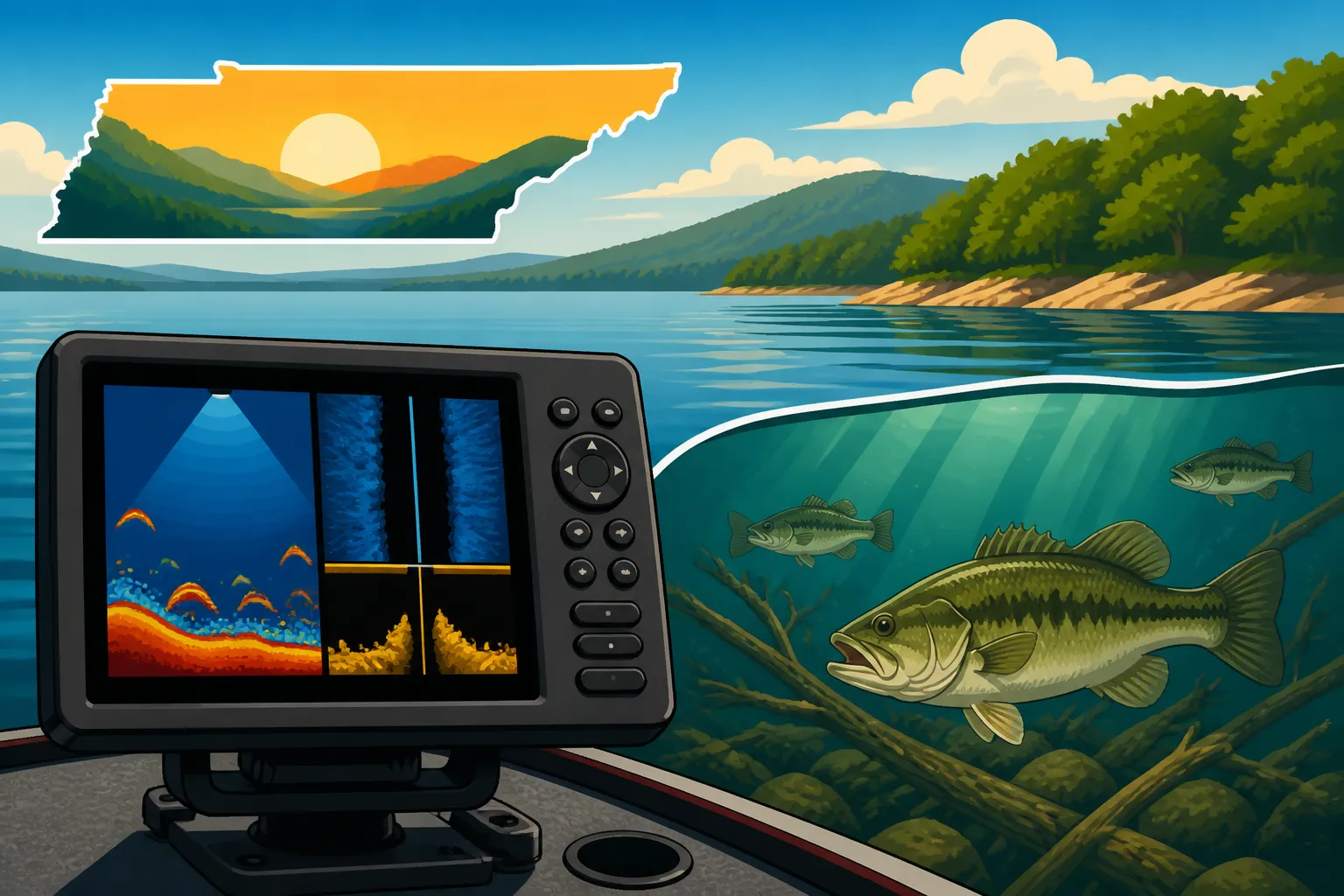
Best Fish Finders for Tennessee Reservoir Fishing
Navigating the expansive and often mysterious waters of Tennessee's reservoirs can feel like searching for a needle in a haystack, especially when you're trying to locate elusive fish. The sheer size, depth, and complex underwater topography of lakes like Chickamauga, Norris, or Kentucky Lake can be incredibly intimidating, leaving many anglers frustrated and wondering where the fish actually are. This comprehensive guide is here to demystify the process, helping you understand how the best fish finders can transform your Tennessee fishing experience from a guessing game into a precise, targeted pursuit, ensuring you spend less time searching and more time reeling in that trophy catch.
Why a Fish Finder is Essential for Tennessee Reservoirs
Tennessee is blessed with some incredible reservoirs, but their immense size and varied underwater landscapes present unique challenges. You can't just drop a line anywhere and expect consistent results. This is where a quality fish finder becomes more than just a gadget; it's an indispensable tool that levels the playing field, giving you an unparalleled view into the underwater world.
The Scale of Tennessee's Water Bodies
Think about the sheer acreage of a lake like Watts Bar or the staggering depths of Dale Hollow. These aren't small farm ponds. They are vast, intricate ecosystems with hundreds of miles of shoreline, countless bays, and open-water expanses that can stretch for miles. Without a fish finder, you're essentially blind to what lies beneath your boat. You might be floating directly over a massive school of crappie or a hidden bass haven, completely unaware.
Imagine launching your boat onto the immense surface of Kentucky Lake, a well-known spot for catfish and bass. Where do you even begin? A fish finder helps you quickly scan large areas, pinpointing changes in depth, variations in the bottom composition, and most importantly, concentrations of baitfish or game fish. It allows you to eliminate unproductive water swiftly, drastically cutting down on wasted time and fuel, and focusing your efforts where they're most likely to pay off. For instance, knowing which Boat Ramp Access on Tennessee's Major Lakes to use is helpful, but a fish finder tells you where the fish are once you're on the water.
Unlocking Hidden Structure and Depths
Below the surface of every Tennessee reservoir lies a labyrinth of structure: submerged timber, rock piles, ledges, drop-offs, humps, and old creek beds. These are the highways and neighborhoods for fish, providing cover, feeding grounds, and ambush points. From the surface, these crucial elements are completely invisible. You might see a flat, featureless expanse, but your fish finder could be showing you a thriving underwater city.
Consider fishing a deep reservoir like Norris Lake. The sheer drop-offs and vast submerged canyons can hold huge schools of suspended baitfish, which, in turn, attract predatory striped bass or walleye. A good fish finder will clearly display these depth contours, allowing you to follow a specific depth line or investigate an abrupt change in the bottom. You'll see detailed representations of brush piles that act as magnets for crappie, or individual boulders that provide cover for a lunker largemouth bass. This ability to "see" the underwater world with such clarity allows you to present your bait precisely where the fish are holding, rather than casting blindly into empty water.
Understanding Different Fish Finder Technologies
The world of fish finders can seem a bit overwhelming with all the different sonar types and acronyms thrown around. But once you break them down, you'll see how each technology offers a distinct advantage, especially when piecing together the puzzle of Tennessee's diverse fishing environments.
2D Sonar: The Foundation
Traditional 2D sonar, often called CHIRP (Compressed High-Intensity Radiated Pulse) sonar in modern units, is the backbone of every fish finder. It works by sending sound waves straight down into the water and listening for their return. These sound waves bounce off anything denser than water – fish, baitfish, structure, or the bottom itself – and paint a picture on your screen. You’ll typically see the bottom as a solid line, and fish will appear as "arches" or "streaks" above it.
Understanding 2D sonar is crucial for interpreting what's beneath your boat. Different frequencies are used for different purposes; lower frequencies (like 50 kHz) penetrate deeper and are great for offshore or very deep lakes, while higher frequencies (like 200 kHz or 83 kHz) offer more detail and better target separation in shallower water. On a deep Tennessee lake like Dale Hollow, a unit with strong 2D sonar performance is invaluable for marking ledges and suspended fish. Learning to distinguish between bait balls and larger fish arches, or identifying a hard bottom versus a soft, muddy one, comes with practice, but it's the fundamental skill you'll build upon with any fish finder.
Down Imaging and Side Imaging: Seeing Beneath and Around You
These are the technologies that truly changed the game for many anglers, offering near-photographic views of the underwater world.
Down Imaging
Down Imaging (often called DownScan, ClearVü, or MEGA Down Imaging depending on the brand) provides a picture-like view of what's directly beneath your boat. Instead of traditional arches, you'll see structure like sunken trees, rock piles, or even individual fish in much clearer, more defined shapes. It works with a very thin, high-frequency beam that essentially "scans" vertically, painting a detailed image. This is fantastic for verifying what your 2D sonar is showing you – confirming that a blob on your 2D screen is indeed a brush pile, for example. It helps you accurately drop a bait onto a specific piece of cover you've identified directly below you.
Side Imaging
Side Imaging (or SideScan, SideVü, MEGA Side Imaging) is perhaps the most revolutionary technology for covering large bodies of water like Tennessee's reservoirs. Instead of just looking straight down, Side Imaging sends beams out to the sides of your boat, scanning vast areas to the left and right. This allows you to "see" brush piles, rock formations, creek channels, and schools of fish off to the sides, even hundreds of feet away. It’s incredibly efficient for quickly finding productive areas, especially when you're exploring new water or trying to locate scattered cover. Imagine cruising down a shoreline on Percy Priest Lake, and your Side Imaging picks up a hidden channel full of fish 50 feet to your left – something you would have completely missed with traditional sonar. This saves countless hours of idling and allows you to pinpoint exactly where to turn and cast.
GPS and Mapping: Navigating and Marking Spots
While technically not a "fish finder" technology in the sonar sense, integrated GPS and mapping are absolutely critical features for a fish finder destined for Tennessee's reservoirs. These tools transform your unit from just a fish detector into a powerful navigation and planning station.
High-Precision GPS
A reliable GPS receiver built into your fish finder allows you to accurately know your location on the water, your speed, and your direction of travel. This is essential for safe navigation, especially on large, featureless expanses or in low visibility. But beyond basic navigation, its real power lies in its ability to mark waypoints. When you find a promising brush pile, a school of baitfish, or even catch a fish, you can instantly drop a waypoint, saving its exact coordinates. This means you can return to that precise spot on your next pass, or even your next trip, with pinpoint accuracy. This is especially useful for Tournament Angler Rules on Tennessee Waters where precise spot-on-spot fishing can make all the difference.
Detailed Mapping
Most modern fish finders come with pre-loaded base maps, but the real advantage comes with high-definition mapping options like Navionics or LakeMaster. These detailed charts show depth contours, navigation aids, creek channels, roadbeds, submerged structures, and even points of interest. On a massive reservoir like Chickamauga Lake, having detailed contours allows you to understand the topography of the bottom without ever having to drive over it. You can plan your fishing strategy before you even launch the boat, identifying potential ledges, humps, and points where fish are likely to hold. Some advanced mapping even offers shaded relief or satellite imagery, giving you an even richer understanding of the lakebed. For example, knowing the Best Bass Fishing Spot on Watts Bar Lake, Tennessee becomes much easier when you can visualize its contours on your screen.
Key Features to Look For in a Reservoir Fish Finder
When you’re looking to invest in a fish finder for the vast and varied waters of Tennessee, it's not just about getting any unit. It's about getting the right unit that can stand up to the challenges and opportunities these reservoirs present. Several key features will elevate your experience from frustrating guesswork to precise, informed angling.
Screen Size and Resolution
This is often overlooked but can make a monumental difference, especially under the bright Tennessee sun. Trying to squint at a small, low-resolution screen while your boat bounces on waves is a recipe for headaches and missed fish. A larger screen, generally 7 inches or more, provides ample real estate to view multiple sonar technologies simultaneously – perhaps 2D sonar, Down Imaging, and your map all on one split screen. This allows you to gather more information at a glance without constantly switching views.
Beyond size, resolution (measured in pixels) is paramount. A higher pixel count means a sharper, more detailed image. Fish arches will be clearer, structure will appear more defined, and map contours will be easier to discern. On a big lake, being able to clearly see a subtle transition on a deep ledge or distinguish individual fish within a bait ball on your Best Fish Finders for Tennessee Reservoir Fishing is invaluable. Imagine seeing a faint structure on your Side Imaging, then zooming in with high resolution to confirm it's a perfect ambush point for bass. Don't skimp here; a clear, large display enhances your ability to interpret what your sonar is showing you.
Transducer Quality and Power
The transducer is the "eye" of your fish finder, sending and receiving the sonar signals. A cheap or poorly installed transducer can cripple even the most expensive head unit. You want a high-quality transducer that is compatible with all the sonar technologies you plan to use (2D, Down Imaging, Side Imaging). Pay attention to the cone angles – wider cones cover more area but offer less detail, while narrower cones offer more detail in a smaller area. Many modern transducers offer multiple frequencies to adapt to different depths and conditions.
Power, measured in RMS (Root Mean Square) wattage, dictates how effectively your unit can penetrate deep water and how clear your returns will be. For deep Tennessee reservoirs like Norris Lake or Watts Bar, a more powerful transducer (typically 500W RMS or higher) will provide better performance, allowing you to mark fish and structure at greater depths with greater clarity. It helps with target separation too, meaning you can distinguish between individual fish rather than just seeing a single blob. Best Trolling Motors for Tennessee Bass Boats often have built-in transducers that can offer excellent clarity, especially when paired with a compatible head unit.
User Interface and Ease of Use
While advanced features are great, a fish finder that's too complicated to operate efficiently on the water can be more of a hindrance than a help. Look for a unit with an intuitive user interface, easily accessible menus, and customizable displays. You want to be able to quickly adjust settings, switch screens, or mark a waypoint without fumbling through endless sub-menus. Physical buttons can be an advantage, especially in cold weather or when wearing gloves, though modern touchscreens have become very responsive.
Consider how easy it is to save and recall favorite views or make quick adjustments to sensitivity or range. If you're spending more time trying to figure out the controls than actually fishing, you're missing the point. Some brands are renowned for their user-friendly designs, making the learning curve much less steep. This is especially important for new anglers or those who prefer to spend their time fishing rather than tinkering with electronics.
Networking and Integration Capabilities
For serious anglers or those looking to expand their electronics setup, networking capabilities are a significant factor. Modern fish finders can often be networked together, allowing you to share transducer data, waypoints, and maps between multiple units on your boat. For example, you might have one unit at the console for mapping and Side Imaging, and another at the bow for 2D sonar and trolling motor control.
Integration with other marine electronics is also increasingly common and highly beneficial. This can include:
- Trolling Motors: Seamless integration with electric trolling motors (like those from Garmin, Lowrance, or Humminbird) allows for features like Spot-Lock (electronic anchoring), autopilot navigation, and even controlling your trolling motor directly from your fish finder screen.
- Radar: For safety on large, foggy mornings, radar integration can be a lifesaver.
- Engine Data: Displaying engine parameters directly on your fish finder screen.
- VHF Radios: For communication and distress signals.
Having a system that can grow with your needs and integrate different components creates a cohesive, powerful fishing machine. For instance, pairing a top-tier fish finder with an advanced trolling motor can be a game-changer for precise boat control and target acquisition on Chickamauga Lake: Tennessee's Top Bass Fishing Destination.
Tailoring Your Fish Finder to Tennessee's Diverse Reservoirs
Tennessee's fishing landscape is incredibly diverse, from the clear, deep mountain lakes to the shallow, timber-filled riverine reservoirs. A "one-size-fits-all" approach to fish finders might work, but tailoring your unit to the specific characteristics of the waters you frequent most will dramatically improve your success.
Deep Water Lakes (e.g., Dale Hollow, Norris)
Lakes like Dale Hollow, known for its smallmouth bass, and Norris Lake, with its abundant striped bass and walleye, are characterized by significant depths, often reaching hundreds of feet. The water is typically clearer here, but the sheer volume makes finding fish a challenge. For these bodies of water, your fish finder needs to excel at deep-water performance.
Units with powerful 2D CHIRP sonar are paramount. Look for models that boast high RMS wattage and transducers capable of effectively transmitting and receiving signals in deep water. You'll want to focus on lower frequency settings (e.g., 50 kHz or even specialized deep-water transducers) to ensure maximum depth penetration and clear returns from the bottom and suspended fish. Excellent target separation on 2D sonar is key to distinguishing individual fish from bait balls or structure, especially when they're holding tight to a deep ledge. While Side Imaging is still useful for initial scanning, Down Imaging becomes critical for precisely identifying deep-holding fish or structures once you're directly over them. Having detailed contour maps is also vital for navigating and interpreting the steep drop-offs and submerged creek channels common in these lakes. Knowing the Best Boats for Norris Lake is one thing, but knowing where the fish are hiding in its clear depths is another, and that's where a capable fish finder shines.
Shallow & Cover-Rich Lakes (e.g., Reelfoot, parts of Chickamauga)
On the other end of the spectrum are lakes like Reelfoot, famous for its cypress trees and shallow, often murky water, or the vast, cover-rich flats and creek channels of Chickamauga Lake. These waters demand different strengths from your fish finder. Here, Side Imaging is king.
The ability to scan wide areas to the left and right of your boat quickly becomes indispensable for locating brush piles, submerged timber, grass beds, and other cover that holds fish in shallower water. You can cover ground much faster, identifying productive "hotspots" without having to drive directly over them and potentially spook fish. High-frequency Side Imaging (like Humminbird's MEGA Side Imaging or Garmin's UHD) will provide unparalleled clarity, allowing you to pick out individual logs or even fish hiding within dense cover. While 2D and Down Imaging are still useful for verifying targets once you're on top of them, the primary search tool in these environments will be Side Imaging. Good GPS with detailed mapping is also crucial for navigating complex, timber-filled areas and marking the exact location of discovered cover. The Best Bass Fishing Spot on Chickamauga Lake, Tennessee often involves finding specific pieces of structure, which Side Imaging makes infinitely easier.
Riverine Reservoirs (e.g., Tennessee River segments, Cumberland River)
Tennessee's riverine reservoirs, such as the segments of the Tennessee River that form Kentucky Lake or the Cumberland River near Nashville, present a unique blend of challenges. These waters often have current, distinct channels, submerged roadbeds, and a mix of shallow and deep areas. For these conditions, a fish finder with robust GPS and advanced mapping capabilities, combined with versatile sonar, is your best bet.
The current means fish often relate to current breaks, channel swings, and subtle depth changes. Detailed mapping showing old river channels, humps, and submerged roadbeds is critical for identifying these prime locations. An integrated GPS allows you to follow specific contours, track your drift, and mark current breaks precisely. Side Imaging is incredibly useful here for scanning the flats adjacent to the river channel for scattered cover or schools of bait. Down Imaging can help verify targets in the channel itself. Additionally, features like AutoChart Live (from Humminbird) or Quickdraw Contours (from Garmin) can be immensely helpful for creating your own custom, high-definition maps of areas that might not be perfectly mapped, revealing subtle nuances in the bottom that hold fish. This allows you to stay on track and return to productive stretches of the Cumberland River Fishing Spots in Tennessee, even as conditions change.
Installation and Calibration Tips for Optimal Performance
Even the most expensive, feature-packed fish finder won't perform to its potential if it's not installed correctly or properly calibrated. Many anglers overlook these crucial steps, leading to frustratingly unclear images or missed fish. Getting these basics right is fundamental to maximizing your investment and getting the most out of your time on Tennessee’s waters.
Transducer Placement: A Critical Step
The transducer is the heart of your fish finder, sending and receiving all the sonar signals. Its placement is perhaps the single most critical factor for clear, accurate readings. Improper placement can lead to "cavitation," where air bubbles interfere with the sonar signal, causing noise on your screen, especially at higher speeds.
There are several common mounting options, and the best choice depends on your boat and fishing style:
- Transom Mount: This is the most common and easiest to install. The transducer is mounted on the back of the boat, slightly below the hull. It must be positioned in "clean" water, away from propellers, strakes, or other obstructions that could create turbulence. The bottom of the transducer should be flush with or slightly below the hull.
- Thru-Hull Mount: For fiberglass boats, a thru-hull transducer is mounted through a hole drilled in the hull. This provides the cleanest possible water flow and is ideal for higher speeds but requires drilling and sealing the hull.
- In-Hull (Shoot-Thru) Mount: This type is mounted inside the hull, usually in the bilge, shooting the sonar signal directly through the fiberglass. It's great for maintaining hull integrity and offers protection, but it can experience some signal loss and may not work with all hull materials or advanced imaging (like Side Imaging).
- Trolling Motor Mount: Many transducers are designed to be mounted directly on the shaft or head of a trolling motor. This is excellent for slow-speed fishing and offers an unobstructed view, as the transducer is always in clean water. It’s particularly effective for Side and Down Imaging when paired with a good Best Trolling Motors for Tennessee Bass Boats.
Regardless of the mount, ensure the transducer is level and free from obstructions. Take your time, test at different speeds, and make small adjustments until you achieve the clearest possible image across your speed range.
Fine-Tuning Your Settings
Once your fish finder is installed, it’s not just a matter of turning it on and going. To truly get the best performance, you need to fine-tune its settings to match the specific conditions you're fishing in, as well as the target species and depths.
- Sensitivity/Gain: This is perhaps the most important setting. It controls how much detail your sonar picks up. Too low, and you'll miss faint returns from fish or small bait. Too high, and you'll get excessive clutter and noise. The ideal setting is usually just below the point where noise starts to appear, or just enough to clearly see your bait and target fish. Adjust this regularly as water conditions (clarity, depth) change.
- Range/Depth: Setting your depth range appropriately is crucial. If you're fishing in 30 feet of water, don't set your range to 100 feet; you'll compress the image and lose detail. Conversely, if you're exploring deep ledges on Norris Lake, you'll need a range that extends well beyond the bottom. Use auto-range when starting, then manually adjust for specific areas.
- Frequency: As mentioned, different frequencies offer different advantages. Use higher frequencies (e.g., 200 kHz, 455 kHz, 800 kHz, MEGA) for sharper detail in shallower water and imaging, and lower frequencies (e.g., 50 kHz) for greater depth penetration. Many units offer dual-beam or multiple-frequency options.
- Scroll Speed: This controls how fast the sonar history scrolls across your screen. A faster scroll speed provides more real-time information but can make fish arches appear longer. A slower speed allows for better interpretation of bottom structure. Adjust to your preference and speed of travel.
- Noise Rejection/Surface Clutter: These filters help eliminate interference from surface turbulence, thermoclines, or electrical noise from your boat's systems. Use them judiciously, as too much filtering can also mask real fish targets.
Don't be afraid to experiment with these settings! What works perfectly on a sunny, calm day in 20 feet of water might need tweaking when it's windy, cloudy, and you're fishing in 80 feet.
Software Updates and Maintenance
Just like your smartphone or computer, your fish finder runs on software, and manufacturers regularly release updates. These updates can introduce new features, improve performance, fix bugs, or enhance mapping capabilities. Always check your manufacturer's website periodically for the latest software and follow their instructions for updating your unit. This is usually done via a micro SD card. Keeping your software current ensures you're getting the best possible performance and access to the newest innovations.
Beyond software, physical maintenance is important. Routinely check your transducer for any damage, marine growth, or debris, especially after fishing in murky or weedy areas. A dirty transducer can severely impair its performance. Use a soft cloth and mild soap (avoid harsh chemicals or abrasives) to clean it. Check all cable connections for corrosion or looseness, and ensure your unit's display is clean for optimal viewing. A small investment of time in maintenance can prevent major headaches on the water.
Top Fish Finder Brands and Models for Tennessee Anglers
When it comes to outfitting your boat with a fish finder for Tennessee's diverse waters, certain brands consistently rise to the top, offering a range of technologies and features tailored to different budgets and fishing styles. While specific models change, the core strengths of these manufacturers remain. You can often find a great selection of these brands at retailers like Bass Pro Shops or online at Amazon.
Humminbird: The Imaging Powerhouse
Humminbird has established itself as a leader, particularly with its groundbreaking imaging technologies. If you value ultra-clear, detailed views of structure and fish, Humminbird should be high on your list.
Key Technologies
Humminbird's MEGA Imaging (including MEGA Side Imaging and MEGA Down Imaging) offers incredible clarity and detail, allowing you to discern individual branches of submerged trees, rock piles, and even differentiate fish from structure with exceptional precision. This high-frequency imaging is often described as "photographic," giving anglers an almost real-time X-ray view of the underwater world. Their Dual Spectrum CHIRP sonar provides excellent 2D returns, and their LakeMaster mapping is renowned for its detailed contours and easy-to-read interface, often featuring exclusive lake data critical for Tennessee anglers.
Why it Excels for Tennessee Reservoirs
For chasing bass in the timber of Chickamauga Lake or scanning ledges on Kentucky Lake for crappie, Humminbird's MEGA Side Imaging is a game-changer. The ability to scan hundreds of feet to either side of your boat with such clarity means you can cover vast areas quickly, identify targets, and then use MEGA Down Imaging for pinpoint accuracy once you're over them. Their networking capabilities, especially with Minn Kota trolling motors and their Spot-Lock feature, create a seamless system for precise boat control and target acquisition. Many Tennessee tournament anglers swear by Humminbird for its ability to show them exactly what's below and around their boat.
Garmin: User-Friendly and Feature-Packed
Garmin has made massive strides in the fishing electronics market, quickly becoming a favorite for its intuitive interfaces, robust mapping, and revolutionary live sonar technology.
Key Technologies
Garmin's UHD (Ultra High-Definition) scanning sonar delivers impressive detail in traditional CHIRP, ClearVü (Down Imaging), and SideVü (Side Imaging). However, their crown jewel is arguably LiveScope (and more recently, LiveScope Plus and XR). LiveScope provides real-time, live-action sonar images of fish and structure around and below your boat. You can actually see your lure falling and fish reacting to it in real-time, which is revolutionary for understanding fish behavior. Their Quickdraw Contours feature allows users to instantly create their own high-definition contour maps of any body of water, even previously unmapped areas.
Why it Excels for Tennessee Reservoirs
Garmin's user-friendly interface makes it approachable for anglers of all skill levels, from beginners on a local pond to seasoned pros on Percy Priest Lake. LiveScope is a massive advantage, particularly when targeting suspended fish or those holding tight to specific structures. Imagine pitching a jig to a brush pile on Watts Bar Lake and watching on your screen as a crappie rises to inspect it. This capability provides instant feedback and allows for unparalleled precision. Quickdraw Contours is also incredibly valuable on less-mapped Tennessee waters, letting you build custom charts to pinpoint subtle bottom transitions that other anglers might miss. You can often find great deals on Garmin units at places like Amazon.
Lowrance: Proven Performance and Innovation
Lowrance has a long and storied history in marine electronics, consistently delivering innovative and reliable fish finders that are popular across all types of fishing.
Key Technologies
Lowrance offers powerful CHIRP sonar, SideScan, and DownScan Imaging through their HDS, Elite FS, and Hook Reveal series. Their ActiveTarget Live Sonar is Lowrance's answer to real-time viewing, providing high-resolution, live images of fish movement and structure. They also integrate seamlessly with their Ghost Trolling Motor, offering deep integration and control from the fish finder unit. Lowrance's C-MAP mapping provides detailed charts with rich contour data.
Why it Excels for Tennessee Reservoirs
Lowrance units are known for their strong performance across all sonar types, offering versatility for different fishing scenarios. The ActiveTarget Live Sonar, like Garmin's LiveScope, is a game-changer for active fish interpretation, allowing anglers to refine their presentations based on real-time reactions. For anglers who value an integrated system, the combination of a Lowrance fish finder with a Ghost trolling motor provides unparalleled control and precision, which is especially beneficial when meticulously working a creek channel or a submerged point on Old Hickory Lake. Their history and continuous innovation mean they remain a top choice for serious anglers seeking reliable performance and cutting-edge features. You can compare their offerings and read reviews on Amazon before making a purchase.
Comparison of Key Fish Finder Features
Here’s a simplified table comparing some general features you’ll find across these top brands, keeping in mind that specific models within each brand will have varying levels of features.
| Feature Area | Humminbird | Garmin | Lowrance |
|---|---|---|---|
| Primary Strength | Unmatched Imaging Clarity (MEGA) | User Interface, Live Sonar (LiveScope) | Deep History, Integrated System (ActiveTarget, Ghost) |
| 2D Sonar | Dual Spectrum CHIRP (High Performance) | ClearVü CHIRP (Excellent Detail) | Traditional CHIRP (Reliable Performance) |
| Down Imaging | MEGA Down Imaging (Best Clarity) | ClearVü (High Definition) | DownScan Imaging (Good Detail) |
| Side Imaging | MEGA Side Imaging (Best Clarity/Range) | SideVü (High Definition) | SideScan Imaging (Solid Performance) |
| Live Sonar | MEGA Live Imaging (Real-time Views) | LiveScope (Real-time, Industry Leading) | ActiveTarget (Real-time Views) |
| Mapping | LakeMaster (Detailed Contours, Exclusives) | Quickdraw Contours, Navionics, LakeVü (User-created maps) | C-MAP (Detailed, Navionics Compatible) |
| Trolling Motor Integration | Minn Kota (Seamless, Spot-Lock) | Force (Seamless, Pinpoint GPS) | Ghost (Seamless, Quiet, Powerful) |
| Price Range Shape | Mid to High, often premium for MEGA | Varied, with LiveScope at premium | Mid to High, good value for features |
| Typical Screen Sizes | 5" – 15" | 4" – 16" | 5" – 16" |
This table provides a general overview, but always check the specific model's specifications and features before making a decision. What works best for one angler might not be ideal for another, so consider your primary fishing style and the Tennessee waters you frequent.
Disclaimer
This article is for general informational purposes only and does not constitute professional advice. Laws, prices and regulations vary by location and change over time. Consult a qualified professional for guidance on your specific situation.