Can Kids Skip Life Jackets When a Boat Is Anchored in Tennessee?
Oh, the age-old question that many a fishing parent has pondered on a beautiful Tennessee lake! You've set up shop in a prime cove on Watts Bar Lake, Tennessee, the anchor is dug in, the cooler is open, and the fish are biting. Your little ones, after an hour of active fishing, are ready to shed that bulky life jacket. It's a common dilemma, and one that often leads to confusion about Tennessee's specific boating safety rules. This guide is here to untangle those knots for you, ensuring you understand exactly when those vests can come off, and when they absolutely must stay on, for a safe and enjoyable family fishing trip in the Volunteer State.
Navigating Tennessee's Life Jacket Rules: When Kids Must Wear Them and When They Don't
Let's cut right to the chase because this is where the nuance lies. Tennessee's life jacket laws, like those in many states, are designed to keep everyone safe, especially our youngest anglers. However, they're not a blanket rule that mandates wearing a life jacket 100% of the time your child is on a boat. The key differentiator is often whether the vessel is "underway" or "at anchor."
General Requirements for Young Anglers
In Tennessee, the law specifies that children under 13 years of age must wear a Coast Guard-approved life jacket (Personal Flotation Device or PFD) at all times while on the open deck or cockpit of any vessel that is underway. This "underway" clause is crucial. It means if the boat is moving under its own power (whether engine, trolling motor, or sail), your child, if under 13, needs that PFD securely fastened. This is a non-negotiable rule, and game wardens take it very seriously for good reason. Imagine a sudden jolt, a quick turn, or an unexpected wave hitting the boat. A child without a life jacket can be in serious trouble in a blink. This rule applies whether you're cruising across Kentucky Lake Fishing on the Tennessee Side or slowly moving through a slough on Chickamauga Lake: Tennessee's Top Bass Fishing Destination.
The purpose of this strict rule for underway vessels is to prevent tragic accidents where a child might accidentally fall overboard while the boat is in motion. The swift current of the Tennessee River, or even the wakes from other boats on larger reservoirs, can quickly pull a child away from the vessel, making rescue incredibly difficult, even for the most prepared adults. It's about proactive safety, removing the risk before an incident can even begin.
The Explicit "Underway" Clause
So, what exactly does "underway" mean in the eyes of Tennessee law? It means your boat is not anchored, moored, or aground. If you're drifting with the current, even without the engine on, the boat is generally considered underway. If you're using a trolling motor to slowly move along a bank, that's underway. Essentially, if the boat is in motion or subject to motion without being securely fastened to a fixed point, the "underway" rule applies. This is why when you're making your way out to your favorite crappie spot on Old Hickory Lake Fishing Spots, your kids need to be buckled up.
Many parents wonder about the specific wording and whether something like "drift fishing" counts. Generally, yes. If your boat is not anchored, it's considered underway for the purpose of these regulations, even if you're just letting the wind or current move you. It’s always safer to err on the side of caution and keep those PFDs on for kids under 13 whenever there’s any chance of movement. This also means if you're taking your child tubing or water skiing, they'll need a life jacket regardless of age, but that's a whole different set of specific regulations for towed activities. You can find more details on this in Tennessee Life Jacket and PFD Rules for Boaters.
The Anchored Boat "Exception": What "Readily Accessible" Truly Means
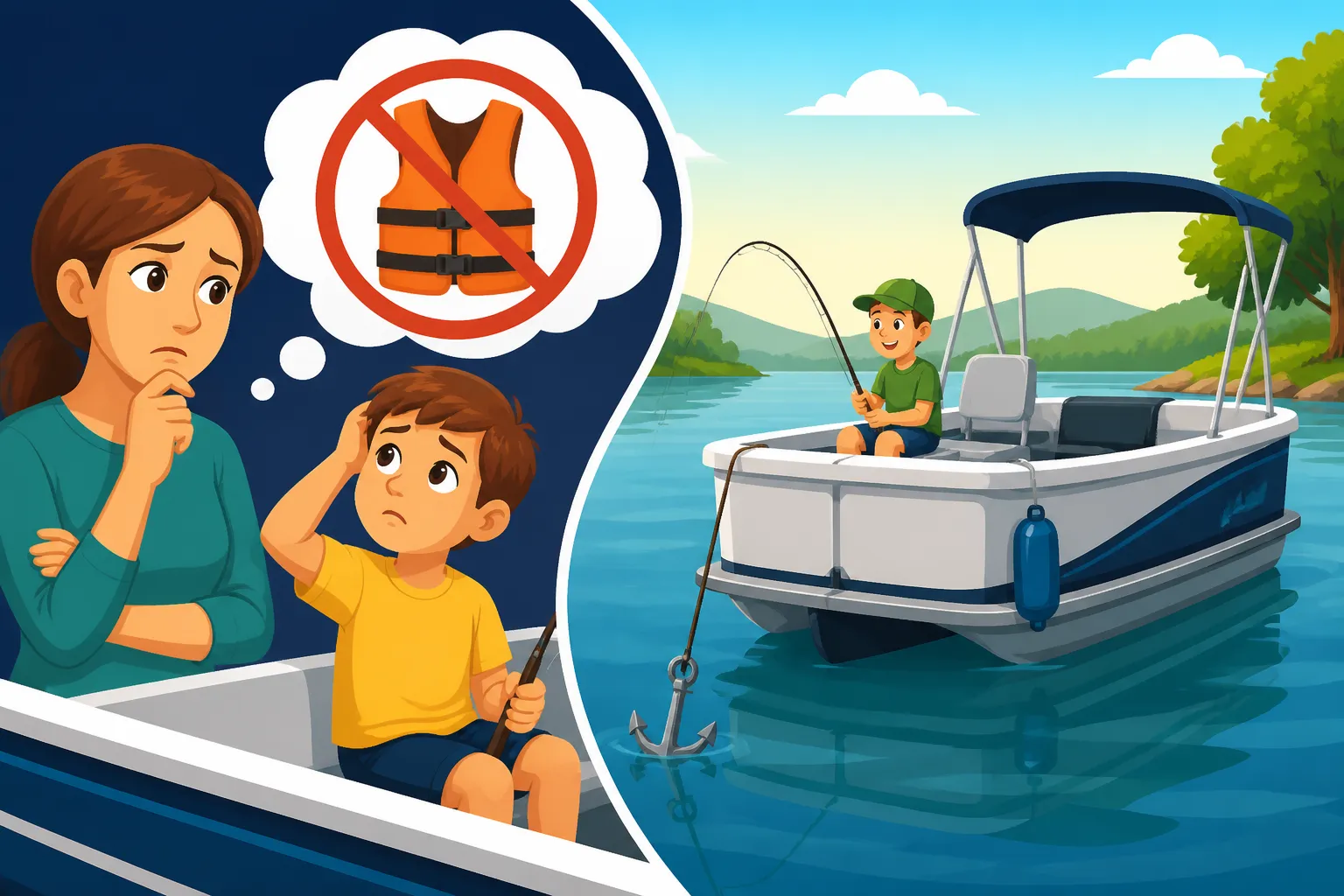
Here's the good news, or at least the clearer answer to your specific question: Generally, children under 13 are NOT required to wear a life jacket when the boat is at anchor, moored, or aground in Tennessee. This is the key distinction from the "underway" rule. When your boat is securely anchored and not moving, the immediate risk of an accidental fall overboard and drifting away is significantly reduced.
The "Readily Accessible" Mandate
However, and this is a huge however, a Coast Guard-approved life jacket must be on board for every person, including children, and must be readily accessible. "Readily accessible" doesn't mean it's stuffed deep in a storage locker under a pile of gear. It means it's immediately available for use. Think of it this way: if an unexpected storm rolls in, a wake from a passing boat swamps your vessel, or someone accidentally falls in, you should be able to grab that life jacket and put it on or throw it to them within seconds.
For children, this usually means their specific, properly fitted life jacket should be right there on the seat next to them, hanging on a railing, or in an easily opened compartment. It's not about being worn, but about being within arm's reach for anyone who might need to quickly deploy it. This includes the life jacket for the child who just decided to take it off because the boat is anchored. The responsibility is on the adult in charge to ensure these PFDs are always accounted for and easily reachable. You can explore this further in Tennessee's Under-12 Life Jacket Rule Explained.
Real-World Scenarios and Practicality
Let's imagine you're fishing for catfish on Kentucky Lake's Best Catfish Waters in Tennessee. You've dropped anchor in a quiet backwater, the current is minimal, and the kids are hot. They've been wearing their life jackets for a while, and the boat isn't going anywhere. In this specific scenario, according to Tennessee law, they can take them off. But, as a responsible boater and parent, you still need to ensure their life jackets are immediately at hand. Maybe they're draped over the cooler, or neatly stacked on an empty seat right next to where they're sitting. The moment you pull that anchor up, or if you decide to even just reposition the boat a few yards with the trolling motor, those life jackets need to be back on your under-13 crew.
Another scenario: you're enjoying a picnic lunch tied up on the shore of Percy Priest Lake Fishing Near Nashville, Tennessee. Again, since the boat is moored (securely tied to the shore), the "underway" rule doesn't apply. Your kids can take off their life jackets while enjoying their sandwiches on deck, as long as the jackets are immediately accessible. This flexibility allows for more comfort and enjoyment on the water, but it's always balanced with the expectation of immediate access to safety gear.
Beyond the Law: Why Safety Always Comes First on Tennessee Waters
While understanding the letter of the law is crucial for compliance, true safety goes beyond just avoiding a ticket. The rules exist because water, even calm, anchored water, can be unpredictable and dangerous. As veteran lifestyle bloggers, we always emphasize that the law is the minimum standard, not necessarily the ultimate goal for safety.
The Unpredictability of Water
Even when anchored, things can go wrong. A child could trip and fall overboard. Another boat could pass too close, creating a massive wake that destabilizes your vessel or even throws someone off. You might unexpectedly need to pull anchor and move due to a sudden change in weather or an emergency. In all these situations, having a life jacket on your child, even if not legally required while anchored, significantly increases their chances of survival and makes a rescue much easier. This is especially true if you're fishing in more remote areas like some parts of Tennessee's Most Remote Fishing Spots.
Think about it from a common-sense perspective. If your child is splashing around near the edge of the boat, even if you're anchored, a life jacket provides an extra layer of protection. Small children, in particular, can slip in a split second, and even strong swimmers can be disoriented or injured upon an unexpected entry into the water. The immediate buoyancy a PFD provides is invaluable.
Setting a Good Example
As adults, we're the role models. If we preach safety but then immediately remove life jackets the second the anchor drops, what message does that send? It teaches kids that rules are flexible when convenience dictates. Instead, consider adopting a "better safe than sorry" approach. For very young or non-swimming children, keeping the life jacket on at all times they are on the boat, regardless of its status, is often the safest bet.
It's also a great opportunity to teach them about water safety. Explain why they wear the life jacket when the boat is moving and why it needs to be accessible when it's still. Engaging them in the safety conversation helps foster a lifelong respect for water and boating regulations. Consider packing extra safety gear, as outlined in Essential Safety Gear Checklist Before a Tennessee Fishing Trip, to be prepared for any eventuality.
Choosing the Right Life Jacket and Staying Compliant
Compliance isn't just about having a life jacket; it's about having the right life jacket for each individual on board, especially kids. A poorly fitting life jacket is almost as useless as no life jacket at all.
Sizing and Types of Life Jackets
Life jackets are sized by weight and chest circumference, not age. It's critical that your child's life jacket fits snugly without riding up over their ears when you lift them by the shoulders of the jacket. For infants and toddlers, look for Type II PFDs, which are designed to turn an unconscious person face-up in the water. For older children who are active, a Type III PFD (like a vest) offers more comfort and freedom of movement, though it may not always turn them face-up. You can find a fantastic selection of Best Coast Guard Approved Life Jackets for Kids at places like Bass Pro Shops or by browsing reputable brands on Amazon. Always check for the Coast Guard approval label.
Make sure you have enough life jackets for everyone on board, and that each one is in good, serviceable condition. This means no rips, tears, or broken straps. Periodically inspect them for signs of wear and tear, especially if they've been stored for a while.
| Age Group | Boat Underway (Moving) | Boat Anchored (Still) | Key Principle |
|---|---|---|---|
| Children < 13 | MUST WEAR PFD | PFD NOT REQUIRED TO BE WORN, but must be accessible | Prevention of immediate drowning/disorientation |
| Children 13-17 | PFD must be accessible | PFD must be accessible | Immediate availability for emergency |
| Adults (18+) | PFD must be accessible | PFD must be accessible | Individual responsibility, emergency access |
Note: Specific activities like towed watersports or PWC operation have additional, stricter requirements for all ages.
Digital vs. Printed Proof
While this isn't directly about life jackets, it's related to compliance: always have your boating safety education certificate (if applicable, typically for those born after a certain date, as detailed in Boating Safety Certificate Rules for Anglers Born After 1989 in Tennessee) and your fishing license readily available. Whether it's a digital copy on your phone or a printed one, a game warden will want to see it. Just like with life jackets, being prepared with documentation shows you're a responsible boater and angler. You can often buy or renew fishing licenses online, which makes it easy to have digital proof ready on your phone if you typically rely on that for convenience.
Remember, a day on the water is meant to be fun and relaxing. By understanding and adhering to Tennessee's life jacket rules, particularly the nuances around anchored boats, you can ensure everyone, especially the youngest members of your crew, stays safe and happy. Happy fishing, y'all!
Disclaimer
This article is for general informational purposes only and does not constitute professional advice. Laws, prices and regulations vary by location and change over time. Consult a qualified professional for guidance on your specific situation.