Best Planer Boards for Tennessee Striper Fishing
Trying to land those elusive striped bass in Tennessee's vast reservoirs can feel like searching for a needle in a haystack, especially when they're scattered across wide-open water. The noise of your boat often spooks them before your lure even gets close. This guide will walk you through how planer boards solve this common frustration, helping you effectively cover more water and present your baits far from your boat, increasing your chances of a successful striper outing.
Why Planer Boards are Essential for Tennessee Striper Fishing
If you've spent any time chasing striped bass on a massive body of water like Kentucky Lake, Norris Lake, or Watts Bar, you know the struggle. These fish are often pelagic, meaning they roam the open water, far from shore or structure. They're also incredibly sensitive to boat noise and shadows. You can motor right over a school of stripers, and by the time your lines are out the back, they've already moved on or hunkered down. This is where planer boards become an absolute game-changer, transforming your fishing experience from a hopeful cast into a strategic, wide-net approach.
The Challenge of Wide-Open Waters and Wary Stripers
Imagine yourself out on a huge reservoir, the kind where you can barely see the opposite bank. You know the stripers are there, lurking in the depths or cruising just under the surface, following baitfish. But how do you reach them? Trolling lures directly behind your boat only covers a narrow path. The propeller wash, the hum of the engine, and the shadow of your vessel all act as natural deterrents, pushing those intelligent stripers away from your offerings. It’s incredibly frustrating to know the fish are present but feel like you're constantly chasing them away. This limitation often leads to anglers only catching fish that are either extremely aggressive or simply unlucky enough to be in the immediate, narrow path of the boat. For a species as powerful and elusive as the striped bass, you need every advantage you can get. This is why techniques like Trolling for Striped Bass become so critical.
Expanding Your Strike Zone and Minimizing Spooking
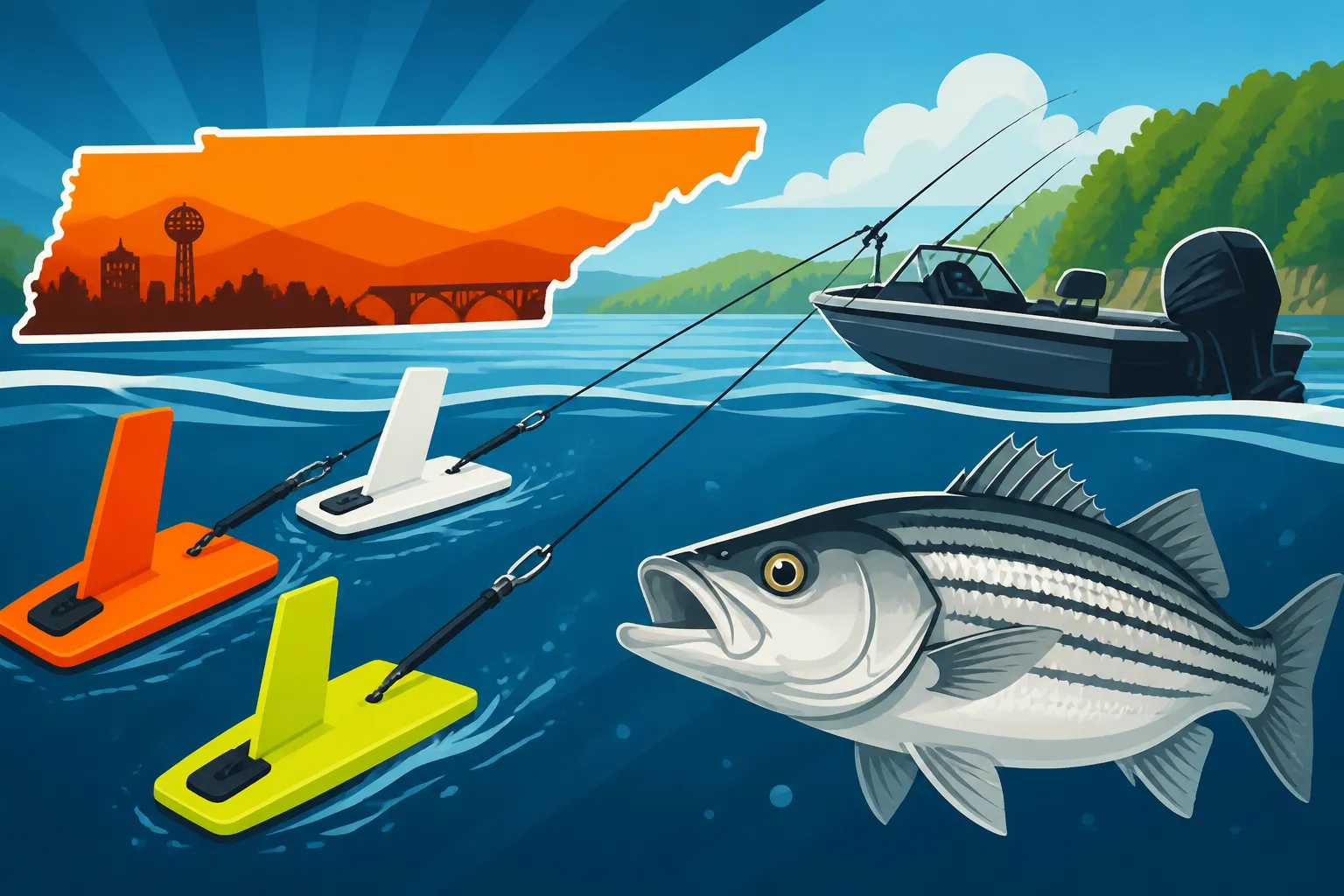
Planer boards are essentially floats that clip onto your fishing line and "plane" out to the side of your boat as you troll. They carry your lure far away from the boat's disturbance, effectively widening your fishing spread by dozens of feet on each side. Instead of presenting baits in a narrow 10-foot path behind your transom, you can easily cover a 50-foot or even 100-foot swathe of water. This dramatically increases your chances of encountering a striper that isn't spooked. Think of it this way: you're not just fishing two lines directly behind you; you're fishing four, six, or even eight lines across a football field-sized area, all without the fish associating the lure with your boat. This ability to present multiple baits at different depths and distances is invaluable when stripers are spread out or holding loosely in open water. It allows you to experiment with different depths and lure colors simultaneously, quickly identifying what the fish are keying in on that day. For effective Tennessee Striped Bass Fishing Techniques, planer boards are almost non-negotiable for serious anglers.
Types of Planer Boards and What Works Best in Tennessee
When it comes to planer boards, you'll generally find two main categories: inline boards and mast systems. Both are designed to achieve the same goal—spreading out your lines—but they accomplish it in different ways and are suited for varying styles of fishing and boat setups. For the vast, sometimes choppy waters of Tennessee's big reservoirs, understanding the nuances of each can make a big difference in your striper success. You can find a fantastic selection of both inline and mast system boards at Bass Pro Shops, where you can physically compare models and talk to staff who know the local waters.
Inline Planer Boards: Versatility for Many Anglers
Inline planer boards are perhaps the most popular choice for many Tennessee anglers, especially those just starting with boards or fishing from smaller boats. These boards clip directly to your main fishing line, usually with a front release clip and a rear pin or clip. Once attached, you let out line, and the board will pull itself out to the side of the boat, carrying your lure with it. When a fish strikes, the front clip often releases, allowing the board to slide down the line towards the fish, or it may remain fixed, giving you a direct fight.
-
Pros:
- Ease of Use: They are generally very user-friendly and can be deployed and retrieved by a single angler. No complicated mast system setup is required.
- Portability: Inline boards are compact and easy to store, making them ideal for boats with limited space or anglers who don't want a permanent setup.
- Cost-Effective: Typically less expensive than a full mast system, making them an accessible entry point into planer board fishing.
- Direct Control: You feel the fight of the fish directly on your rod, as the board can often be reeled in or slide down the line, reducing resistance once hooked.
- Flexibility: You can use as many or as few as you need, easily adapting to changing conditions or the number of anglers on board.
-
Cons:
- Limited Spread: While they offer a significant spread, a single inline board might not pull as far out as a large mast board.
- Line Twist Potential: Some models, especially with certain retrieval methods, can introduce line twist if not managed properly.
- Line Management: Fighting a fish with the board still on your line can be a little cumbersome until you get the hang of it, or if it slides down and bumps the fish.
For targeting stripers, inline boards like those from Offshore Tackle or Yellow Bird are excellent. They can handle a variety of baits, from live shad to umbrella rigs and big crankbaits, making them incredibly versatile for different Deep Water Techniques for Striped Bass. Whether you're trolling shallow flats or targeting deep structure on a lake like Chickamauga, inline boards allow you to present your bait naturally and efficiently.
Mast System Planer Boards: The Serious Striper Hunter's Choice
Mast system planer boards, often called "big boards," are a more robust and complex setup, usually favored by dedicated striper and walleye tournament anglers or those with larger boats. This system involves a mast mounted to the front of the boat, from which a main planer board line extends to large, buoyant boards (the "big boards") that pull far out to the sides. Your fishing lines are then clipped onto this main line with release clips and allowed to slide down to your desired distance behind the board.
-
Pros:
- Maximum Spread: Mast systems offer the widest possible spread, sometimes covering over 100 feet on each side of the boat. This is crucial for heavily pressured fish or when targeting highly scattered schools.
- Multiple Lines: You can run many lines from a single mast system, often eight or more, depending on regulations.
- Heavy Tackle Capability: They can handle much heavier lures and larger baits without affecting the board's tracking.
- Clean Fight: When a fish strikes, the release clip detaches your fishing line from the main board line, allowing you to fight the fish directly without the board interfering.
- Superior Tracking: Large mast boards are generally more stable in rough water and maintain a more consistent spread than many inline boards.
-
Cons:
- Complex Setup: Installing and rigging a mast system requires more time, effort, and typically professional mounting.
- Cost: Mast systems are a significant investment, involving the mast, reels, lines, and the boards themselves.
- Space Intensive: The mast and large boards can take up considerable space on the boat, making them less practical for smaller vessels.
- Crew Needed: Managing multiple lines on a mast system often requires more than one person, especially during deployment and retrieval.
While a mast system is a bigger commitment, it provides unparalleled coverage and efficiency for anglers serious about consistently catching large numbers of stripers. On a lake known for trophy fish, like some parts of Kentucky Lake Fishing on the Tennessee Side, a mast system could truly set you apart. For those who prefer the convenience of shopping from home, Amazon offers a huge variety of planer boards, often with user reviews that can give you insights into their real-world performance.
Here's a quick comparison of the two main types:
| Feature | Inline Planer Boards | Mast System Planer Boards |
|---|---|---|
| Ease of Use | Very easy, single-angler friendly | More complex, often requires two people |
| Deployment | Clips directly to fishing line | Clips to main line from a mast system |
| Spread | Good, typically 10-30 ft per side (each board) | Excellent, 50-100+ ft per side (big board) |
| Number of Rods | 1-2 per side, easily scalable | Many, 4-8+ per side from main line |
| Lure Weight | Best with lighter to medium lures | Handles heavier lures and baits with ease |
| Cost | Lower initial investment | Higher initial investment |
| Storage | Compact, easy to store | Requires dedicated space, mast is permanent |
| Fish Fight | Board may slide down line, some resistance | Clean, direct fight once line is released from main board |
| Best For | Beginner to intermediate, smaller boats, versatile | Serious striper anglers, larger boats, maximum coverage |
Key Features to Look for in a Planer Board for Striper Fishing
Choosing the right planer board isn't just about picking one off the shelf; it's about finding one that can stand up to the rigors of trolling for powerful stripers on expansive reservoirs. There are specific features that can make a world of difference in your experience, from how well the board tracks to how effectively it signals a strike. Overlooking these details can lead to frustration and missed fish.
Durability and Visibility on Tennessee Waters
Tennessee's large reservoirs can be demanding environments. You'll encounter boat wakes, wind chop, and sometimes even debris. A good planer board needs to be built tough. Look for boards made from high-quality, durable plastics or sealed foam that can withstand repeated use and occasional bumps. Cheaper boards might crack or take on water, affecting their performance and lifespan. The hardware, especially the clips and line attachments, should be robust and corrosion-resistant.
Visibility is also paramount. When your boards are running 50 feet or more from your boat, you need to be able to see them clearly, especially in low light conditions (like dawn or dusk, prime striper times) or when facing sun glare. Look for models with bright, highly visible flags, especially if you're out on a sprawling lake like Watts Bar. Fluorescent colors like orange or yellow are excellent. Some boards even come with reflective tape or options for small clip-on LED lights for true night fishing, which can be fantastic for chasing those nocturnal stripers. If you’re often out in open water, visibility is also key for other boaters to see your spread, enhancing safety.
Reliable Release Clips and Ease of Use
The release clip is arguably the most critical component of any planer board system. It's the connection between your fishing line and the board, and its performance directly impacts your hook-up ratio. A good release clip needs to:
- Hold Firmly: It must hold your line securely enough that it won't slip out prematurely from boat movement, current, or small bumps.
- Release Cleanly: When a striper hits your lure, the clip needs to release your line smoothly and consistently, allowing you to fight the fish without unnecessary drag or resistance from the board. Adjustable tension clips are fantastic here, allowing you to dial in the release pressure based on lure weight and fish size. You don't want the clip to release every time a small bluegill nibbles, but you absolutely want it to release on a solid striper strike.
- Be Line-Friendly: The clip's gripping mechanism should not damage your fishing line, especially if you're using thin braids or fluorocarbon leaders. Soft-pad or padded-jaw clips are excellent for this.
Beyond the clips, consider the overall ease of use. Can you easily attach and detach the board from your line? Is the flag system intuitive? Is it balanced and stable when deployed, preventing it from diving or flipping in choppy conditions? Features like an easy-grip handle on inline boards can make retrieval much smoother. Many anglers swear by the adjustability of certain brands of release clips, which you can usually find at Amazon or your local bait and tackle store. Mastering the Rod Holder and Planer Board Setup for Reservoir Striper Trolling will largely depend on the quality of your clips.
Setting Up and Fishing with Planer Boards for Stripers
Alright, you've got your planer boards, you're ready to hit the water, and those Tennessee stripers are calling! But before you just clip them on and go, there's a little finesse involved in setting them up and fishing them effectively. It’s not just about getting lines out; it’s about strategic deployment and knowing how to react when that board suddenly dips or takes off.
The Art of Deployment and Spacing
Proper deployment is key to avoiding tangles and maximizing your spread. Start by selecting your lures and letting out enough line so they are running at their desired depth and distance behind the boat, before you attach the board. For stripers, this might mean a big spoon, a deep-diving crankbait, or a live shad. Once your lure is running true, attach your inline planer board to your main line. Some anglers prefer to attach it near the rod tip and then simply lower the rod and let the board pull itself out. Others let out a bit of extra line and clip it on further back. The trick is to do it smoothly to avoid fouling your lure.
- Stagger Your Spread: If you're running multiple boards on one side (which is common with inline boards), stagger their distances from the boat. For instance, the closest board might be 20 feet out, the next 40 feet, and the furthest 60 feet. This prevents tangles when turning and helps cover different parts of the water column. You can also vary the distance the lure runs behind each board.
- Vary Depths: Don't just run all your lures at the same depth. Use different lure types, line lengths, or even lead core line to present baits at various depths. Stripers could be anywhere in the water column, and presenting options increases your odds. Remember, sometimes those fish are suspended How Water Temperature Affects Fish Activity.
- Turning Considerations: When turning, always turn into the boards you want to bring in closer to the boat. For example, if you have boards out on the port (left) side, turn slowly to port. This will cause the boards on that side to slow down and lag, bringing them closer and preventing the lines from crossing over. If you turn away from them, they'll speed up and spread further, which can lead to tangles. This is a crucial skill for Boat Fishing Rules and License Requirements in Tennessee.
- Trolling Speed: Maintain a consistent trolling speed. Stripers often key into a specific speed, and inconsistent boat movement can make your lures behave unnaturally. Experiment with different speeds; sometimes a very slow creep is best for live bait, while faster speeds trigger reaction strikes from Best Lures for Striped Bass in Open Water. Knowing What Speed Should You Troll for Striped Bass in Tennessee? is crucial.
Common Mistakes and Troubleshooting
Even experienced anglers run into issues with planer boards. Don't get discouraged! Here are some common problems and how to tackle them:
- Board Not Tracking Straight: If your board keeps veering in or out, or flipping, check your line attachment. Ensure the clip is properly secured and the board isn't fouled. Sometimes, a poorly deployed lure can cause inconsistent drag, affecting the board's path. Uneven weighting in the board itself can also be a culprit, though this is less common with quality brands. Make sure your trolling speed isn't too fast or too slow for the specific board design.
- Tangles: Tangles often happen during deployment, retrieval, or sharp turns. Take your time deploying each line one by one, ensuring adequate spacing. When bringing in a fish, clear other lines out of the way, especially those closest to the action. Practice makes perfect here. If using a mast system, it's about carefully spacing your release clips on the main line and staggering lure depths.
- Premature Release: If your release clips are letting go without a fish strike, their tension might be set too light, or they could be worn out. Adjust the tension if possible, or replace old clips. Using heavier lures can also put more strain on the clip, so you might need a clip designed for more holding power.
- Difficulty Fighting the Fish with the Board: With inline boards, when a fish hits, the board typically slides down the line towards the fish. Some anglers prefer to reel in slowly and unclip the board when it gets close to the boat. Others, especially with larger fish, might let the board slide all the way to the fish and then carefully land both the board and the fish. Practice what feels most comfortable and efficient for you.
Planer boards are a powerful tool that, with a little practice and attention to detail, can dramatically improve your success rate when targeting striped bass in Tennessee's incredible reservoirs. Don't be afraid to experiment, and remember that every trip is a learning experience!
Disclaimer
This article is for general informational purposes only and does not constitute professional advice. Laws, prices and regulations vary by location and change over time. Consult a qualified professional for guidance on your specific situation.