Some Tennessee lakes set catch limits that override the statewide defaults
It's incredibly frustrating when you think you've got all your ducks in a row – you've bought your Tennessee fishing license, brushed up on the statewide regulations, and you're ready to hit the water. Then you arrive at your favorite lake, or even a new spot you've been eager to explore, and see a sign that completely contradicts what you thought you knew. This guide is here to untangle that confusion, explaining why some Tennessee lakes have their own unique fishing rules that override the general statewide limits and how you can stay informed and compliant.
Understanding Why Local Lake Regulations Exist
Tennessee is a truly diverse state when it comes to its waterways, from the mighty Tennessee River system to countless small ponds, streams, and tucked-away lakes. While the Tennessee Wildlife Resources Agency (TWRA) works hard to create a comprehensive set of statewide regulations, the reality is that a one-size-fits-all approach simply doesn't work for every body of water. Each lake, river, or stream is its own unique ecosystem, with varying pressures from anglers, different fish populations, and distinct environmental factors.
Conservation Needs for Specific Fisheries
Think about a lake like Chickamauga, renowned for its trophy bass. If it were subject to the exact same statewide bass limits as a smaller, less productive lake, its incredible fishery might quickly be overfished. The TWRA might implement a more restrictive slot limit or a higher minimum size requirement on Chickamauga to protect those larger, breeding fish, ensuring the lake continues to produce giants for generations to come. It’s all about tailoring conservation efforts to the specific needs of that particular body of water and its fish species. These specific rules are designed to maintain healthy fish populations and enhance the quality of fishing.
Managing Unique Aquatic Environments
Some lakes might have specific characteristics that require different management. For instance, a lake that's part of a state park might have regulations aimed at promoting family-friendly fishing, perhaps allowing more liberal panfish limits for kids. Conversely, a highly pressured reservoir near a major city might have stricter limits to distribute the catch among more anglers. These variations are often a direct response to ecological surveys, angler feedback, and the sheer volume of fishing activity on a given water body. It’s not just arbitrary; it’s a science-backed approach to managing our precious natural resources.
How to Find Specific Lake Fishing Rules
The biggest headache for anglers isn't usually a lack of rules, but knowing which rules apply to where you're fishing. It can feel like a scavenger hunt sometimes, trying to cross-reference the general rules with potential local exceptions. Thankfully, there are reliable ways to ensure you're always fishing within the legal bounds, no matter which Tennessee water body you choose to explore.
Consulting the Official TWRA Regulations Digest
Your first, and most important, resource is always the official TWRA fishing regulations digest. You can pick up a physical copy at most bait and tackle shops, TWRA offices, or even download it directly from their website. While the digest starts with statewide regulations, it then dedicates significant sections to "Special Regulations" or "Specific Water Body Regulations." This is where you'll find the exceptions. Always make it a habit to check this section before heading out, especially if you're venturing to a new lake or one known for its trophy potential. It's often updated annually, so ensuring you have the most current version is key. For a broader overview, you can always check the full guide on Tennessee Fishing Regulations Explained.
Checking Lake Signs and Local Bait Shops
When you arrive at a boat ramp or a popular bank fishing access point, take a moment to look for posted signs. Many lakes with special regulations will have clear signage outlining the unique rules. This is particularly common at TWRA-managed lakes, state parks, or reservoirs with very distinct rules. Don't just rush past them in your excitement! Additionally, local bait and tackle shops are goldmines of information. The folks working there often fish those waters daily and can provide invaluable, up-to-date details on any special regulations or recent changes. They often know the nuances that even the official digest might not cover in explicit detail, offering tips on where to buy specialized gear or specific bait needed for a particular lake. You can also learn Where to Buy a Fishing License in Tennessee from these local experts.
Using Online Resources and Apps
In our digital age, convenience is king. The TWRA website is an excellent resource for checking specific lake rules, often providing detailed maps and regulation summaries for popular spots. There are also various fishing apps and online forums where local anglers share information and discuss regulations. While community forums can be great for tips, always cross-reference any regulation information with the official TWRA sources to be safe. Keeping a digital copy of the regulations on your phone can be a lifesaver when you're on the water and have a question. Searching for specific lake guides, like a Norris Lake Fishing Guide, Tennessee's Clearest Water, will often lead you to pages detailing local regulations.
Common Types of Lake-Specific Rule Deviations
It's not just about one rule being different; lake-specific regulations can touch on various aspects of fishing. Knowing the common areas where these rules diverge from the statewide norm can help you anticipate what to look for and avoid an accidental violation.
Altered Size Limits and Slot Limits
One of the most frequent changes you'll encounter is with size limits. For instance, the statewide bass limit in Tennessee is 5 fish per day, with only one largemouth over 18 inches. However, a particular lake might have a more stringent 15-inch minimum for all bass species or implement a "slot limit." A slot limit means you can keep fish below a certain size (e.g., under 13 inches) and above another size (e.g., over 16 inches), but fish within the "slot" (13-16 inches) must be released. This is a powerful conservation tool designed to protect the most productive breeding-size fish. For example, Chickamauga Lake: Tennessee's Top Bass Fishing Destination is well-known for its specific bass regulations designed to foster trophy fish.
Variations in Creel Limits
While the statewide daily creel (catch) limits are set for species like bass, crappie, and trout, some lakes will have different numbers. A smaller, heavily stocked community pond, for example, might have a more generous daily limit for panfish to encourage harvest and prevent overpopulation of smaller fish. Conversely, a lake struggling with a particular fish population might have a reduced daily limit or even a complete catch-and-release mandate for a specific species during certain times of the year. Always compare the standard Statewide Bass Limits for Tennessee Anglers or Crappie Limits Under Tennessee Fishing Rules with the specific lake's rules.
Species-Specific Seasonal Changes
While Tennessee generally has year-round fishing for most species, certain lakes or river sections might have specific seasonal closures or altered periods for particular species, especially trout. A designated trout stream might have a specific "catch and release only" season, or different limits during the spring vs. fall stocking periods. The general Tennessee Trout Limits and Season Rules provide a baseline, but these can change dramatically on specific trout-managed waters. For example, some stretches of the Caney Fork River might have very specific rules regarding tackle and catch limits depending on the season and stocking schedule.
Special Tackle and Bait Restrictions
Beyond fish limits, some lakes or streams may have rules about the type of tackle or bait you can use. Fly-fishing-only sections on certain trout streams, artificial-lure-only regulations, or restrictions on live bait are not uncommon. These rules are often implemented to reduce mortality rates on sensitive fish populations or to enhance the sporting experience. Always check if there are any such restrictions, as showing up with the wrong gear can lead to a wasted trip or a penalty. You can find many specialized lures and baits suitable for different species on Amazon, but always ensure they comply with local regulations.
The Importance of Adhering to Local Regulations
Ignoring lake-specific regulations isn't just a minor oversight; it can have serious consequences, both for you as an angler and for the health of the fishery. It's truly a "know before you go" situation, and the responsibility falls squarely on your shoulders.
Penalties for Non-Compliance
The most immediate consequence of not adhering to local regulations is facing penalties. Fishing without the correct understanding of limits or using prohibited gear can result in fines, confiscation of your catch, and even loss of your fishing privileges. Game wardens are highly trained and familiar with the specific rules for their patrol areas. While a quick search for "fishing regulations" on Amazon might give you a general guide, it won't replace checking official TWRA sources for the precise rules of the water you are on. The penalties for fishing without a license or violating limits are not trivial, and ignorance is rarely accepted as an excuse. This is similar to the Penalties for Fishing Without a License in Tennessee which can be quite steep.
Impact on Fish Populations and Ecosystems
Beyond personal penalties, failing to follow lake-specific rules can directly harm fish populations and the delicate balance of aquatic ecosystems. If a lake has a slot limit to protect breeding-size bass, and anglers are unknowingly keeping fish within that slot, it can quickly deplete the future spawning stock. Overfishing a specific species in a localized area can cascade through the food web, affecting other fish, prey species, and even water quality. These specific regulations are put in place by biologists and conservationists to ensure sustainable fishing for everyone, for many years to come.
Ensuring a Positive Angling Experience for All
Ultimately, respecting and following lake-specific regulations contributes to a better experience for every angler. When fisheries are well-managed and healthy, there are more fish to catch, and the quality of the fishing remains high. Imagine the frustration of visiting a trophy lake only to find it's been overfished due to disregard for its special rules. By doing your part, you're helping to preserve Tennessee's incredible fishing heritage for yourself and for future generations. So, before you cast that first line, take a moment to double-check those local rules!
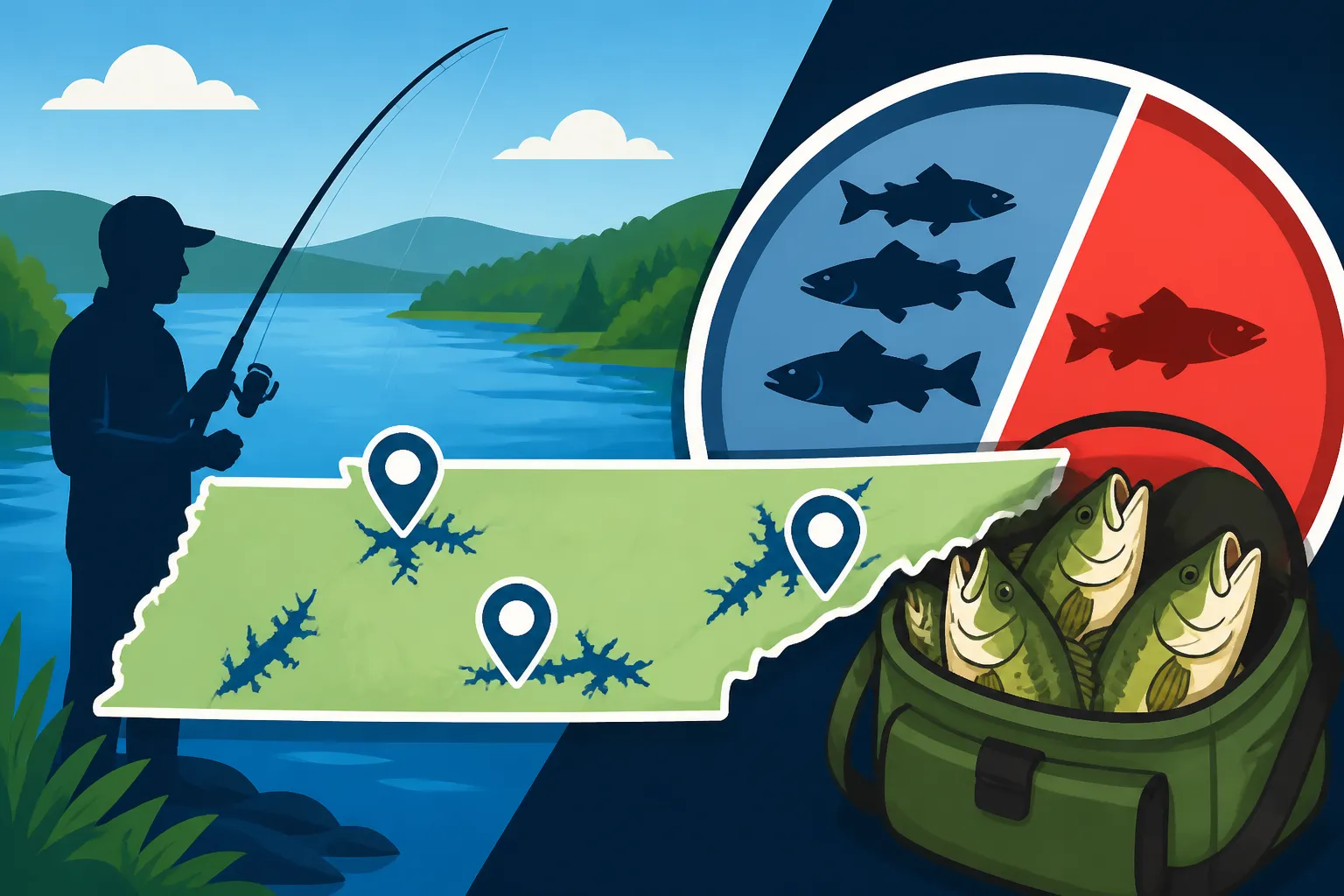
To help you visualize some of these differences, here's a hypothetical comparison of statewide limits versus potential lake-specific rules for two popular Tennessee fish species:
| Species | Statewide Daily Limit | Statewide Size Limit (Minimum) | Hypothetical Lake-Specific Daily Limit (e.g., Lake X) | Hypothetical Lake-Specific Size Limit (e.g., Lake X) |
|---|---|---|---|---|
| Largemouth Bass | 5 fish | 14 inches (only 1 over 18 inches) | 3 fish | 15-inch minimum, no fish between 18-22 inches (slot limit) |
| Crappie | 20 fish | 10 inches | 10 fish | 12-inch minimum |
| Rainbow Trout | 7 fish (March-September) | No minimum | 5 fish | 14-inch minimum (Catch & Release only October-February) |
Note: The "Hypothetical Lake-Specific" examples are for illustrative purposes only and do not represent actual current regulations for any specific Tennessee lake. Always consult the official TWRA regulations for the most accurate and up-to-date information.
Remember, the beauty of fishing in Tennessee lies in its diversity, and that diversity extends to its regulations. While it might seem like an extra step, taking the time to understand the specific rules for the waters you're fishing ensures you're a responsible, ethical angler, and helps preserve these incredible resources for everyone. So, next time you're planning a trip to a spot like Watts Bar Lake, Tennessee's Largest Lake for Fishing or Percy Priest Lake Fishing Near Nashville, Tennessee, double-check those unique regulations and make sure your trip is successful and compliant. Even something as simple as a new fishing line from Amazon could be restricted on certain fly-fishing-only waters.
Disclaimer
The information provided in this guide is for general informational purposes only and is not a substitute for the official regulations issued by the Tennessee Wildlife Resources Agency (TWRA). Fishing regulations, including licenses, seasons, and catch limits, can change frequently. Always consult the most current official TWRA Fishing Guide or visit their website before engaging in any fishing activities to ensure compliance with all applicable laws and regulations.