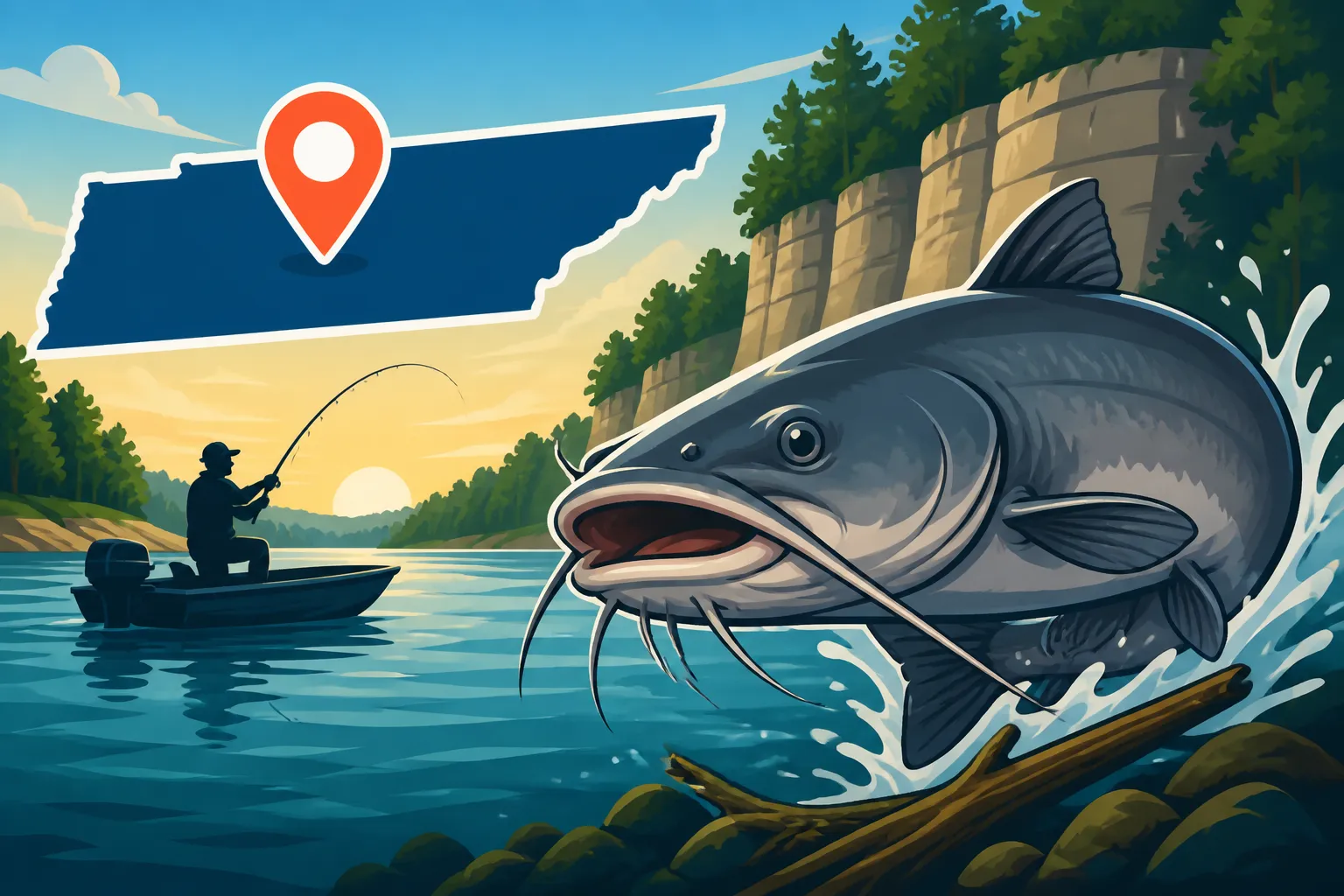
Pickwick Lake Catfish Fishing Spots, Tennessee
Trying to navigate a vast body of water like Pickwick Lake to find those elusive catfish spots can feel overwhelming, especially when you're dreaming of a trophy blue or a hefty flathead. This guide is designed to cut through the confusion, offering a detailed breakdown of the best catfish fishing locations on Pickwick Lake in Tennessee, along with the essential techniques, baits, and seasonal strategies you'll need to turn those dreams into a tangible catch.
Pickwick Lake's Catfish Allure and Key Species
Pickwick Lake, a sprawling reservoir on the Tennessee River, isn't just a pretty face with stunning scenery; it's a true catfish paradise that draws anglers from all over the Southeast. If you've ever felt that thrill of a heavy tug on your line, the kind that makes your reel scream, you'll understand why this lake holds a special place in the hearts of catfish enthusiasts. The sheer size and diversity of its underwater landscape make it an ideal home for an abundance of whiskerfish.
Why Pickwick is a Prime Catfish Destination
What makes Pickwick Lake such a phenomenal spot for catfish? Well, for starters, it's part of the mighty Tennessee River system, meaning it benefits from constant nutrient flow and a robust forage base. This isn't just a stagnant pond; it's a dynamic, ever-changing environment with strong currents, deep channels, and vast shallow flats. This diverse habitat caters to the unique preferences of different catfish species, allowing them to thrive and grow to impressive sizes. From the deep, oxygen-rich waters below the dam to the expansive, food-rich flats, Pickwick offers everything a catfish could ever want. Plus, the Tennessee Valley Authority (TVA) manages the lake levels, which, while sometimes challenging, also creates predictable patterns for fish movement that experienced anglers can learn to exploit. It's truly one of the Best Catfish Lakes in Tennessee.
Identifying Pickwick's Catfish: Channel, Blue, and Flathead
Before you cast a line, knowing your target can make all the difference. Pickwick Lake is home to three primary species of catfish, each with its own quirks and preferred haunts.
-
Channel Catfish: These are the most common and often the easiest to catch. You'll recognize them by their distinct forked tail, spotted sides (especially when young), and relatively smaller heads compared to their bodies. Channel cats are opportunistic feeders, eating almost anything, from insects and smaller fish to prepared baits. They typically range from 1 to 10 pounds in Pickwick, but bigger ones are definitely around. They're excellent table fare and a fantastic species for consistent action. Many anglers love targeting them due to their abundance. If you're wondering How to Identify Channel Catfish, Tennessee's Other State Fish, it's all in the details.
-
Blue Catfish: The giants of Pickwick Lake! Blue cats are known for their massive size potential, often exceeding 50 pounds and sometimes even breaking the triple-digit mark. They have a distinct, somewhat humped back, a deeply forked tail, and a smooth, unspotted, often steel-blue or grey body. Unlike channels, blues are primarily piscivores, meaning they prefer to eat other fish. They roam the main river channel, deep holes, and ledges, constantly searching for schools of baitfish. Catching a blue catfish from Pickwick is an epic battle that every serious catfisherman dreams of. Understanding the Blue Catfish Identification and Habitat in Tennessee is key to targeting these behemoths.
-
Flathead Catfish: These unique catfish are unmistakable with their broad, flattened heads, small eyes, and a slightly rounded, paddle-like tail. Their mottled brown and yellow coloration provides excellent camouflage in the woody cover they prefer. Flatheads are ambush predators that almost exclusively feed on live fish. You won't typically catch them on stink baits. They're a favorite among anglers who enjoy the challenge of targeting a truly wild, aggressive fish. They also grow quite large in Pickwick, often reaching 30-60 pounds, with bigger specimens certainly possible. Learning Flathead Catfish: Identification Tips for Beginners can help you differentiate them from other species.
Unlocking Pickwick's Best Catfish Fishing Spots
Finding the "perfect" spot for catfish on Pickwick Lake is less about a secret X on a map and more about understanding where these fish prefer to live and feed based on the conditions. It's a vast lake, spanning parts of Tennessee, Alabama, and Mississippi, but its Tennessee section offers some truly phenomenal opportunities.
The Productive Tailwaters Below the Dam
One of the most consistently productive areas for catfish on Pickwick Lake is directly below the Pickwick Landing Dam. This area, known as the tailwaters, is a powerhouse of activity. The dam constantly releases water, creating strong currents and highly oxygenated water that catfish absolutely love. This current also churns up baitfish, making it an easy buffet for hungry catfish.
You'll find all three species here, but blue catfish are especially prevalent due to the abundance of shad and other baitfish pushed through the dam. Anglers often target the eddy currents and slack water pockets just outside the main current, as well as the deep holes scoured out by the rushing water. Bottom fishing with heavy weights to hold your bait in place is key here. Be mindful of boat traffic and safety, as these waters can be swift and crowded. Many local guides specialize in fishing these tailwaters, and you might even find an expert through services like FishingBooker who can show you the ropes and point out the exact sweet spots.
River Channel Ledges and Deep Holes
The main Tennessee River channel, which carves its way through Pickwick Lake, is essentially a superhighway for catfish. This is where you'll find the biggest concentrations of blue catfish, especially as they move between feeding and holding areas. The channel is characterized by distinct ledges, sharp drops, and deep holes that can plunge 50 feet or more.
Catfish will often position themselves on the edges of these ledges, waiting to ambush baitfish that swim by. Look for bends in the river channel where the current slows, or areas where smaller creeks merge with the main channel, creating current breaks. Your boat's electronics, like a good fish finder, become invaluable here to identify these subtle depth changes and locate schools of baitfish, which almost always signal the presence of catfish. Anchor upcurrent from a promising ledge or deep hole and present your baits directly on the bottom or slightly above it.
Tributary Mouths and Backwater Creeks
While the main channel is great for big blues, don't overlook the mouths of tributaries and the calmer backwater creeks feeding into Pickwick Lake. Areas like Yellow Creek, Indian Creek, and Bear Creek can be catfish magnets, especially during certain times of the year.
In the spring, as water temperatures rise, channel catfish and sometimes flatheads will move into these warmer, shallower waters to spawn and feed on abundant forage. The mouths of these creeks often feature deeper pockets and channels carved by their flow, providing excellent ambush points. During summer, catfish might retreat into deeper sections of these creeks or seek out shaded areas with submerged timber. The key here is exploring. Look for structure like fallen trees, brush piles, or rock formations, especially where the creek channel narrows or takes a sharp turn. These areas can be fantastic for both boat and bank anglers.
Submerged Timber and Structure
Flathead catfish, in particular, are notorious for loving heavy cover. Submerged timber, stump fields, brush piles, and even old bridge pilings provide not only sanctuary from the current and predators but also prime ambush points for them to surprise their prey.
On Pickwick Lake, vast areas of submerged timber can be found in many of the larger bays and along the river channel, especially in areas that were once flooded forests. While challenging to fish due to the risk of snags, these spots are often home to some of the largest flatheads in the lake. Use stout tackle and be prepared for a tough fight, as these fish will try to bury themselves in the cover. Remember, persistence pays off when targeting these reclusive giants. You might also find great spots by researching Pickwick Lake Bass and Catfish Fishing reports, as bass anglers often find catfish around similar structures.
Mastering Catfish Techniques and Baits on Pickwick
Successfully landing catfish on Pickwick Lake isn't just about finding the right spot; it's about employing the right techniques and using baits that catfish can't resist. Different species and different conditions call for variations in your approach.
Effective Bottom Fishing Strategies
Bottom fishing is, hands down, the most popular and often most effective method for catfish on Pickwick Lake. It simply means presenting your bait directly on or near the bottom, where catfish spend most of their time feeding.
The classic Carolina rig is a staple here. It consists of an egg sinker (or no-roll sinker) sliding freely on your main line, followed by a swivel, and then a leader (usually 18-36 inches long) tied to your hook. This setup allows the fish to pick up the bait without feeling the weight of the sinker, leading to more confident bites. For stronger currents, a three-way swivel rig (also known as a "santee cooper" rig) can be very effective, keeping your bait slightly off the bottom and fluttering in the current. Heavier weights, sometimes as much as 6-8 ounces, might be needed in the dam tailwaters to keep your bait from washing away. This is a fundamental skill covered in Catfish Bottom Fishing Basics.
Drifting, Trolling, and Cover-Water Tactics
When catfish are scattered or actively searching for food across larger flats or along long channel ledges, drifting or slow trolling can be incredibly productive. These methods allow you to cover a lot of water until you encounter a school of active fish.
Drifting involves letting your boat move naturally with the wind or current while dragging your baits behind or alongside. It's crucial to use a drift sock (or sea anchor) if the wind is too strong, to slow your drift down to a manageable speed. Slow trolling, on the other hand, uses your boat's trolling motor (or even a main engine at idle speed) to pull baits at a controlled pace. Both techniques are excellent for locating schools of blue catfish and can be done with multiple rod setups, often using variations of the Carolina rig. Pay close attention to your electronics while drifting or trolling; when you see baitfish or catfish arches, make a mental note or mark a waypoint on your GPS, as that area is likely to produce more bites. This is a great way to find fish in deeper sections, especially during the colder months when they might be more lethargic.
The Best Baits for Pickwick Lake Catfish
Bait selection is paramount for catfish success. What works for a channel cat might not entice a trophy flathead.
- Cut Bait: This is king for blue catfish. Fresh shad (gizzard or threadfin), skipjack herring, or even small pieces of carp or bream are incredibly effective. Cut your bait into chunks that are appropriate for the size of fish you're targeting. For monster blues, a whole skipjack or a large section of it is not too big. Many anglers consider skipjack to be the absolute best bait for blues on the Tennessee River.
- Live Bait: For flathead catfish, live bait is almost always necessary. Small sunfish (like bluegill), shad, or small carp are top choices. Hook them carefully through the back or lips to keep them lively. Flatheads prefer live, struggling prey, so presentation is key.
- Prepared Baits (Stink Baits): These are fantastic for channel catfish. Commercial dip baits, punch baits, or even homemade concoctions with strong odors work wonders. These baits are designed to attract channel cats from a distance with their scent.
- Other Baits: Worms (nightcrawlers) can catch smaller channel cats and panfish. Hot dogs, chicken liver, and shrimp are also popular choices for channel cats, especially for bank anglers or those looking for an easy-to-manage bait. For detailed advice on this, check out Best Bait for Bottom Fishing Catfish.
Essential Gear for Pickwick Lake Catfish
Having the right equipment can make or break your catfish fishing experience on Pickwick. These fish can be incredibly powerful, so your tackle needs to be up to the task.
Rods, Reels, and Line for Heavy Haulers
When it comes to catfish, you need gear that can withstand serious punishment.
- Rods: Look for heavy to medium-heavy action rods, typically 7 to 9 feet in length. Longer rods offer better casting distance and leverage when fighting big fish, especially from a boat. Ugly Stik and Catfish Hunter rods are popular choices known for their durability.
- Reels: A robust baitcasting reel is preferred for larger catfish, offering power and excellent drag systems. Brands like Abu Garcia Ambassadeur or Penn Battle reels are well-regarded. For lighter channel cat fishing, a durable spinning reel in a 4000-6000 size can suffice. Ensure your reel has a smooth, strong drag to handle powerful runs.
- Line: Monofilament line in the 20-50 lb test range is a good all-around choice for its shock absorption. However, many experienced anglers prefer braided line (50-80 lb test) for its incredible strength, small diameter, and lack of stretch, which provides superior sensitivity for feeling subtle bites and incredible hook-setting power. Always use a tough monofilament or fluorocarbon leader to absorb abrasion from sharp teeth and rough structure.
Hooks, Sinkers, and Terminal Tackle
Don't skimp on your terminal tackle, as these are the crucial connections between you and the fish.
- Hooks: For blues and flatheads, use sturdy, sharp circle hooks in sizes 5/0 to 10/0. Circle hooks are fantastic because they almost always hook the fish in the corner of the mouth, reducing gut-hooking and making releases easier. For channel cats, a traditional J-hook or a smaller circle hook (2/0 to 4/0) works well.
- Sinkers: You'll need a variety of sinker weights, from 1-ounce egg sinkers for lighter currents to 8-ounce no-roll sinkers for heavy current conditions below the dam. Always carry an assortment.
- Other Essentials: A heavy-duty swivel to prevent line twist, strong leader material, a good set of pliers, a sharp knife for cutting bait, and a large landing net or lip gripper are absolute must-haves for catfish on Pickwick Lake. Don't forget heavy-duty gloves to protect your hands from spines and rough skin! You'll find more insights into this in guides like Best Rods for Catfish Fishing.
Seasonal Considerations for Peak Catfish Action
Catfish on Pickwick Lake, like most fish, change their behavior and location with the seasons. Understanding these patterns is key to consistent success.
Spring and Summer Catfish Patterns
Spring on Pickwick is a fantastic time for catfish. As water temperatures start to rise (usually from March through May), catfish become more active and begin to move into shallower areas to feed heavily before the spawn. Channel cats will be found in tributary mouths and large flats, while blue cats will follow schools of shad into bays and along main lake points. Flatheads will also become more active, often staging near their preferred log jams and submerged trees. The pre-spawn period is one of the best times to catch large numbers of fish.
Summer (June through August) can be a bit more challenging as catfish move to deeper, cooler, and more oxygenated water during the heat of the day. However, early mornings, late evenings, and especially at night, they will push into shallower flats and channel ledges to feed. Night fishing can be incredibly productive for all three species during the summer months. Look for areas with current, such as below the dam or along the main river channel, as these areas provide cooler water and consistent food flow. Understanding How to Catch Catfish at Night is a game-changer here.
Fall and Winter Deep Water Tactics
Fall (September through November) sees a resurgence of catfish activity. As water temperatures cool down, baitfish become more consolidated, and catfish will gorge themselves in preparation for winter. This is a prime time for targeting big blue cats along the main river channel ledges and deep holes. Drifting or slow trolling cut bait can be highly effective as fish are actively feeding. Flatheads will also be putting on weight, often found in deep timber.
Winter (December through February) is typically the slowest time for catfish, but it can still produce some giants if you know where to look. Catfish will congregate in the deepest, most stable water they can find, often in large schools in deep holes or along the bottom of the main river channel. Your electronics are absolutely essential to locate these wintering schools. Fishing directly over them with heavily weighted baits, often vertical jigging or slowly lifting and dropping, can entice bites from sluggish fish. While cold, patient anglers can be rewarded with some truly massive winter blues. For more on this, consider exploring Watts Bar Lake Tennessee Catfish Season Patterns, as many patterns are similar on other Tennessee River reservoirs.
Here's a quick summary to help you plan your next trip:
| Catfish Species | Prime Spots on Pickwick Lake | Ideal Bait | Key Techniques | Best Season |
|---|---|---|---|---|
| Channel Catfish | Tributary mouths, shallow flats, backwater creeks, tailwaters | Stink baits, cut bait, chicken liver, worms | Bottom fishing, tightlining | Spring, Summer (night), Fall |
| Blue Catfish | Main river channel ledges, deep holes, dam tailwaters | Fresh cut shad/skipjack, live bait | Bottom fishing, drifting, slow trolling | Spring, Fall, Summer (deep/night) |
| Flathead Catfish | Submerged timber, log jams, deep rocky structure, creek channels | Live bluegill/shad | Bottom fishing (live bait), anchoring in cover | Spring, Summer, Fall |
Disclaimer
Fishing regulations can change, and it's always your responsibility to be aware of and adhere to the most current rules set by the Tennessee Wildlife Resources Agency (TWRA). Before heading out on Pickwick Lake, ensure you have the appropriate Tennessee Fishing License Guide and review all current Tennessee Fishing Regulations Explained for specific species, catch limits, and any lake-specific rules.