How to Jig for Crappie
There's nothing quite as frustrating as heading out to your favorite Tennessee lake, all geared up for a day of crappie fishing, only to come up empty-handed while others are pulling in slab after slab. It often feels like there's some secret handshake or hidden knowledge, doesn't it? This comprehensive guide is here to demystify one of the most effective and versatile methods for catching crappie: jigging. We're going to break down everything from the right gear to advanced techniques, helping you fill your cooler with those tasty panfish.
Understanding Crappie Behavior and Habitat
To truly become a successful crappie angler, you have to get inside their heads, so to speak. Crappie aren't just randomly swimming around; they have patterns, preferences, and predictable behaviors influenced by seasons, water temperature, and available structure. Knowing where they're likely to be and why is half the battle won.
Seasonal Movements and Preferred Structure
Crappie are masters of relating to structure, whether it's natural or man-made. In Tennessee lakes like Percy Priest Lake or Watts Bar Lake, you'll find them congregating around submerged timber, brush piles, rock formations, bridge pilings, and even boat docks. These structures offer them cover from predators, ambush points for unsuspecting baitfish, and often, comfortable water temperatures. Their movements are largely dictated by the annual cycle, especially the crucial spawning period.
During the pre-spawn phase in early spring, as water temperatures nudge into the upper 40s and low 50s, crappie start moving from deeper winter haunts to staging areas near shallower spawning grounds. They'll often hold on channel bends or the edges of flats where they can quickly access warmer water. As the water warms further into the mid-50s to low 60s, the Spring Crappie Spawn Timing in Tennessee truly kicks off, and they'll move into very shallow water, often less than 5 feet deep, around cypress trees, lily pads, and submerged bushes to lay their eggs. This is a prime time for anglers, as the fish are concentrated and aggressive.
Recognizing Feeding Habits and Water Conditions
Crappie are primarily sight feeders, which means water clarity plays a significant role in their activity. In clear water, they tend to be more wary and might hold deeper or tighter to cover. In stained or muddy water, they become less cautious and might be found shallower. They prefer calmer water, often shying away from strong currents unless it creates an eddy or slack water pocket where baitfish congregate. Their feeding often involves ambushing small baitfish, minnows, and insect larvae.
They typically feed most actively during low light conditions – dawn, dusk, and cloudy days. However, during the spawn, their territorial nature can make them bite throughout the day. Paying attention to factors like barometric pressure can also give you an edge; stable or rising pressure often correlates with more active fish. Keep an eye on the weather forecast and adjust your fishing times accordingly. Understanding these nuances can drastically improve your chances, turning a slow day into a productive one.
Essential Jigging Gear for Tennessee Waters
Getting the right equipment isn't about having the most expensive stuff, but rather about having the right tools for the job. Crappie jigging is a finesse game, and your gear needs to reflect that. The wrong rod, line, or jig can make a huge difference in your success rate.
Rods, Reels, and Line Selection
For crappie jigging, a lightweight, sensitive rod is paramount. You want something with a fast or extra-fast action and a light or ultralight power. This allows you to feel even the most subtle taps from a crappie and provides the necessary backbone to set the hook without overpowering the fish. Rods in the 5 to 7-foot range are ideal; shorter rods are great for close-quarters jigging around docks or tight brush, while longer rods offer better casting distance and leverage for open water. Brands like Lew's, St. Croix, or BnM offer excellent crappie-specific rods that balance sensitivity with durability.
Pair your rod with a small spinning reel, typically a 500 or 1000 series, which is lightweight and provides smooth drag. You'll be making many casts and retrieves, so a comfortable, balanced setup prevents fatigue. When it comes to line, 4 to 6-pound test monofilament or fluorocarbon is generally sufficient. Monofilament is forgiving, offers good knot strength, and floats, which can be beneficial for certain jigging techniques. Fluorocarbon, on the other hand, is nearly invisible underwater and has less stretch, providing better sensitivity, especially in deeper water. Some anglers even opt for a very light braided line (6-10 lb test) for ultimate sensitivity, often with a fluorocarbon leader for stealth.
Jigs: Types, Colors, and Weights
This is where the magic really happens. Jigs for crappie come in an astonishing array of shapes, sizes, and colors, each designed for specific situations. The two main components are the jig head and the soft plastic or hair body. Jig heads typically range from 1/32 ounce up to 1/8 ounce for most crappie applications in Tennessee, with heavier weights used for deeper water or windy conditions. Popular styles include round heads, stand-up heads, and Weedless options for snaggy cover.
The jig body is what truly entices the crappie. Soft plastic grub tails, tube jigs, and minnow-imitating plastics are classics. Curly-tail grubs, like those from Bobby Garland or Johnson Jigs, are incredibly popular because their tails provide constant action even on a slow retrieve. Tube jigs offer a subtle, darting action, while minnow profiles, often infused with scent, mimic natural forage perfectly. When considering Best Crappie Jigs for Lake Fishing, don't forget the importance of color. Natural colors (green pumpkin, black and chartreuse, white) work well in clear water, while brighter colors (chartreuse, pink, orange) can be deadly in stained water or low light. Always have a variety in your Tackle Box Setup for Crappie Fishing, you can easily find a fantastic selection of jigs on Amazon for any condition.
Here's a quick guide to help you choose:
| Jig Head Weight | Body Type | Recommended Colors | Conditions |
|---|---|---|---|
| 1/32 oz | Micro grubs, tiny tubes | White, chartreuse, pink | Shallow water (0-5 ft), calm, clear water |
| 1/16 oz | Small grubs, tubes, minnows | Black/chartreuse, pearl, natural shad | Mid-depth (5-15 ft), light current, all-around |
| 1/8 oz | Larger grubs, tubes, paddle tails | Chartreuse, blue/white, electric chicken | Deeper water (15+ ft), windy, stained water |
Mastering Basic Crappie Jigging Techniques
Jigging isn't just about dropping a lure in the water; it's an art form with several fundamental techniques that can be adapted to various fishing scenarios. Once you understand these basics, you can start experimenting and developing your own unique approach.
Vertical Jigging and Dropping
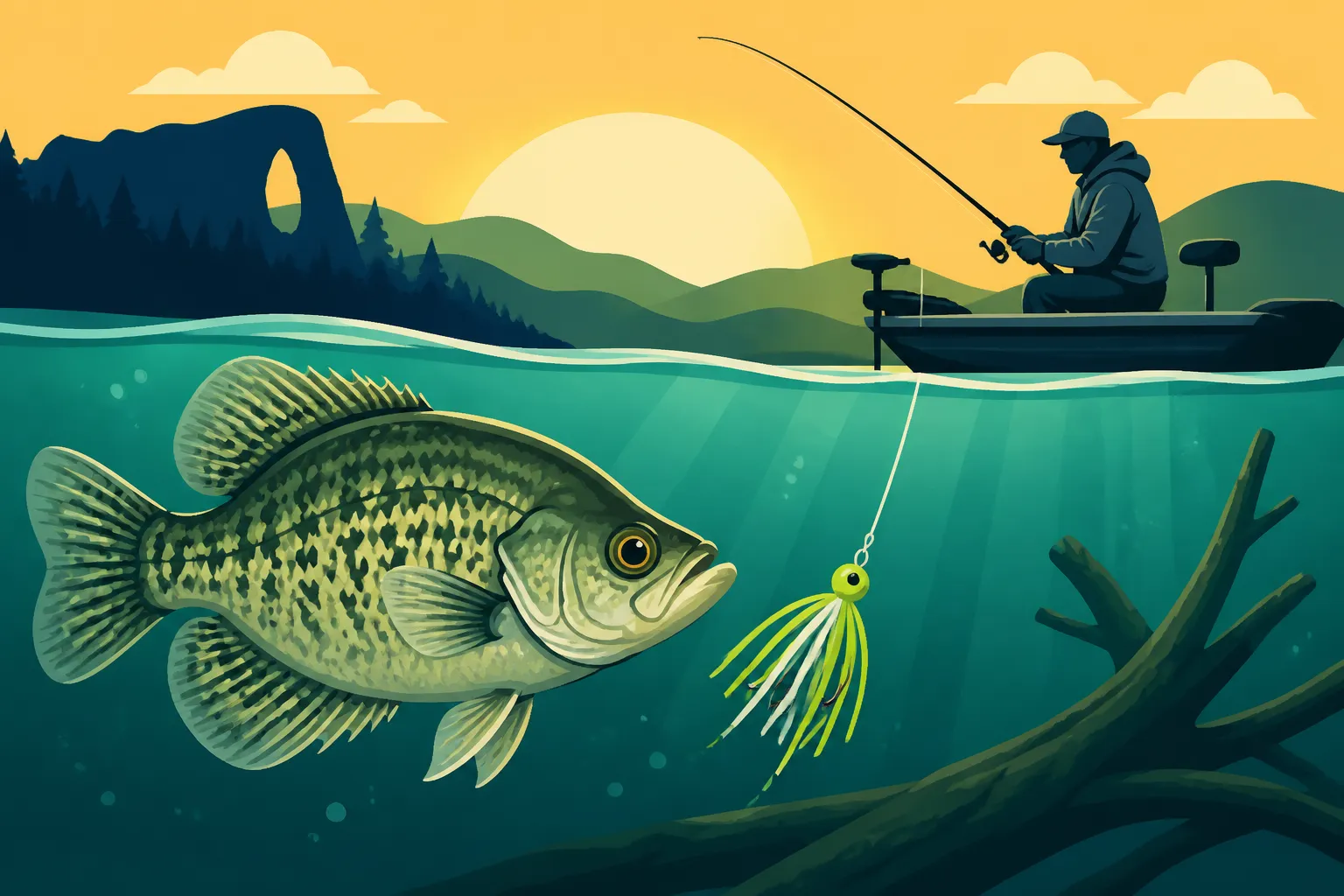
Vertical jigging is perhaps the most straightforward and often the most effective method, especially when crappie are tightly schooled around specific structure or in deeper water. This technique involves positioning your boat directly over the fish, as identified by your fish finder, and lowering your jig straight down to their depth. The key is to present the jig right at or slightly above the crappie's eye level, as they typically feed upwards.
Once your jig reaches the desired depth, you impart action by gently lifting and dropping your rod tip. Think of it as a subtle dance: a slow lift of 6-12 inches, followed by a controlled drop, allowing the jig to flutter naturally. Pause briefly at the top and bottom of each movement. The strike often occurs on the fall, so pay close attention to your line for any twitch, slack, or subtle resistance. This method is incredibly effective when you've pinpointed a brush pile on your sonar screen in a lake like Kentucky Lake and know the crappie are stacked. You're literally putting the bait right in front of their faces.
Casting and Retrieving
When crappie are more scattered, holding along extended ledges, weed lines, or vast flats, casting and retrieving becomes the go-to technique. This allows you to cover a lot more water than vertical jigging. You'll cast your jig out, let it sink to the desired depth, and then begin a retrieve that mimics a fleeing baitfish or insect. There are several popular retrieve variations, and finding the one that works best on a given day is part of the fun.
A common retrieve involves a steady, slow reel with occasional pauses or slight twitches of the rod tip. The goal is to make the jig swim naturally. Another effective method is the "lift and fall," where you lift your rod tip to pull the jig forward a few feet, then drop the rod tip, allowing the jig to free-fall on a semi-slack line. Many strikes happen during this fall. Experiment with retrieve speeds and jig actions until you find what triggers a bite. This technique is also excellent if you're trying to figure out How to Catch Crappie From the Bank, as you can fan-cast to cover a broad area of potential holding spots.
Advanced Jigging Strategies for Tricky Conditions
While the basic techniques are your bread and butter, there will be days when crappie are finicky, spread out, or hiding in difficult-to-reach places. This is when a few advanced strategies can turn a tough day into a triumph. These techniques often require a bit more practice and specialized equipment, but the rewards are well worth the effort.
Spider Rigging and Multi-Rod Approaches
Spider rigging is a highly effective, often boat-based, multi-rod technique that allows you to present multiple jigs at different depths and locations simultaneously. It's particularly popular on large reservoirs like Chickamauga Lake when crappie are scattered across flats or suspended at specific depths over open water. The setup typically involves mounting several rod holders around the boat, usually pointed outward like spokes on a wheel, hence the "spider" name. Each rod is rigged with a jig (or two, in some states where legal), and the boat moves slowly, often using an electric trolling motor, at speeds from 0.5 to 1.5 mph.
The beauty of spider rigging is its ability to quickly ascertain the crappie's preferred depth, bait color, and presentation speed. You can run jigs from 1/16 oz to 1/4 oz, experimenting with different colors and body styles on each rod. This constant experimentation helps you dial in on what the crappie want. Once you get a bite on a particular rod, you can adjust the others to match that successful pattern. This method is especially potent for covering large areas, particularly when crappie are suspended, making them hard to target with single-rod casting.
Dock Shooting and Skippin Jigs
Dock shooting is a specialized, highly effective technique for reaching crappie that hold tight under boat docks, pontoons, and other overhangs where conventional casting is impossible. It involves using the flex of your rod to "shoot" the jig horizontally into these tight spaces. You'll need a short, stiff rod, usually 5-6 feet, with a fast action. The technique involves holding the jig head between your thumb and forefinger, pulling the jig back to bend the rod tip like a bow, aiming, and then releasing the jig while simultaneously letting go of the line from your reel.
When done correctly, the jig will skip across the water's surface, like skipping a stone, deep under the structure where big crappie often lurk. Many seasoned anglers consider dock shooting an essential skill for year-round crappie fishing in busy lakes near cities like Nashville, where docks are prevalent. It takes practice to master the accuracy and distance, but the reward of pulling a slab crappie from beneath a seemingly impenetrable dock is incredibly satisfying. This technique pairs well with a small tube jig or a compact grub.
Targeting Brush Piles and Submerged Timber
Crappie absolutely adore brush piles and submerged timber. These structures provide protection and a haven for baitfish, making them prime ambush points. The challenge, however, is fishing them effectively without constantly snagging. Understanding how to present your jig precisely is crucial. When approaching a brush pile, use your electronics to locate the fish within or around it. Crappie might be on top, in the middle, or just off to the side, depending on the conditions.
For fishing brush, a Weedless jig head can be a lifesaver. You can also rig soft plastics Texas-style, with the hook point embedded in the plastic, to minimize snags. Start by vertically dropping your jig down the edges of the brush pile, then slowly work your way into the densest parts. A slow, controlled retrieve with minimal jigging action is usually best to avoid getting hung up. If you do get snagged, try popping your line directly above the jig, or use a jig retriever to save your lure. Sometimes, a gentle bump against the cover is enough to trigger a strike from a territorial crappie. Knowing how to efficiently fish these spots will pay dividends.
Seasonal Adjustments for Crappie Jigging Success
Crappie don't behave the same way all year round. Their metabolism, feeding patterns, and preferred depths shift dramatically with the seasons. A jigging technique that works wonders in spring might yield nothing in winter. Adapting your approach is key to consistent success.
Spring Spawn Aggression
Spring is arguably the most anticipated season for crappie anglers in Tennessee. As mentioned earlier, the Spring Crappie Spawn Timing in Tennessee brings crappie into shallow waters, making them more accessible and aggressive. During the pre-spawn, focus on transitional areas: creek channel edges leading into spawning flats, secondary points, and even warmer coves protected from the wind. Crappie will stage here, often at depths of 8-15 feet. A slow retrieve with a 1/16 oz jig, allowing it to sink and suspend, can be deadly.
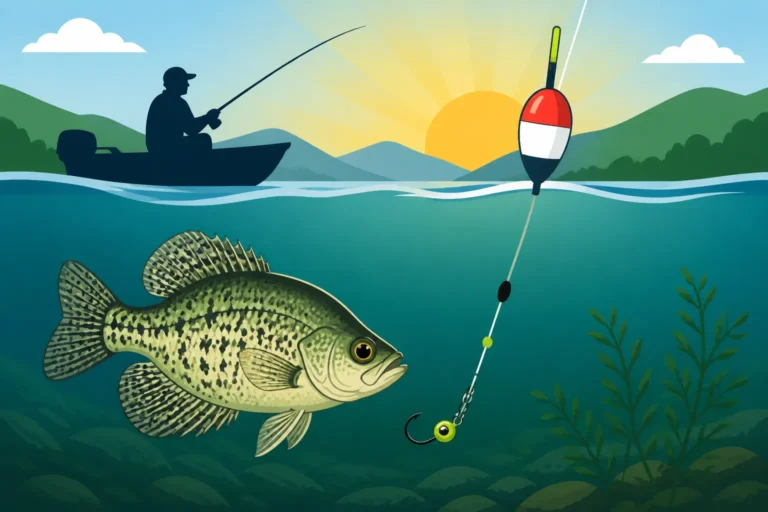
Once the actual spawn hits and water temperatures hover in the mid-50s to low 60s, crappie will be very shallow. Look for visible cover like laydowns, stumps, emergent vegetation, or even old tires. This is a perfect time for casting small 1/32 oz jigs or even tiny tube baits under bobbers. The key here is stealth and precision. Make short, accurate casts, and let the jig sit for a moment before imparting very subtle twitches. Remember, fish are often guarding nests, so they're aggressive but might not chase a fast-moving bait. I've had great luck using a small chartreuse jig under a fixed bobber in about 3-4 feet of water during the Norris Lake Tennessee Crappie Spawn Timing in Spring.
Summer Deep Water Retreat
As the Tennessee summer sun heats up and water temperatures rise into the 70s and 80s, crappie retreat to deeper, cooler, more oxygenated waters. They'll often suspend over creek channels, along sharp breaks, or deep within dense timber and brush piles. This is when knowing How to Find Crappie in Summer becomes critical, and a good fish finder is your best friend. Look for baitfish schools as crappie will often be nearby.
Vertical jigging or spider rigging over deep structure is highly effective in summer. You might need to use heavier jigs (1/8 oz or even 1/4 oz) to get down quickly to depths of 15-30 feet or more, especially if there's current. Slow, methodical jigging is usually best, as crappie are less active due to the heat. Consider using jigs with larger profiles that mimic threadfin shad or other larger baitfish they might be feeding on. Night fishing for crappie under lights can also be fantastic in summer, as the lights attract baitfish, which in turn attract crappie closer to the surface.
Fall Feeding Frenzy
Fall is another fantastic time for crappie fishing in Tennessee. As water temperatures cool, crappie become much more active and aggressive, feeding heavily in preparation for winter. They'll often move back shallower, particularly to creek channels, main lake points, and flats where baitfish are abundant. The fall bite can be a mirror image of the spring bite, but often with more dispersed fish.
This is a great season for covering water with casting and retrieving techniques. Look for areas where baitfish are schooling near drops, ledges, and submerged timber. Crappie will follow these baitfish, often suspending slightly below them. A 1/16 oz or 1/8 oz jig with a shad-imitating plastic or curly tail grub can be incredibly effective. Don't be afraid to experiment with brighter colors as water clarity often declines in fall with turnover. In some larger bodies of water, like those you find in Kentucky Lake Fishing on the Tennessee Side, crappie can stack up in impressive numbers in fall, offering fast and furious action.
Winter Lethargy
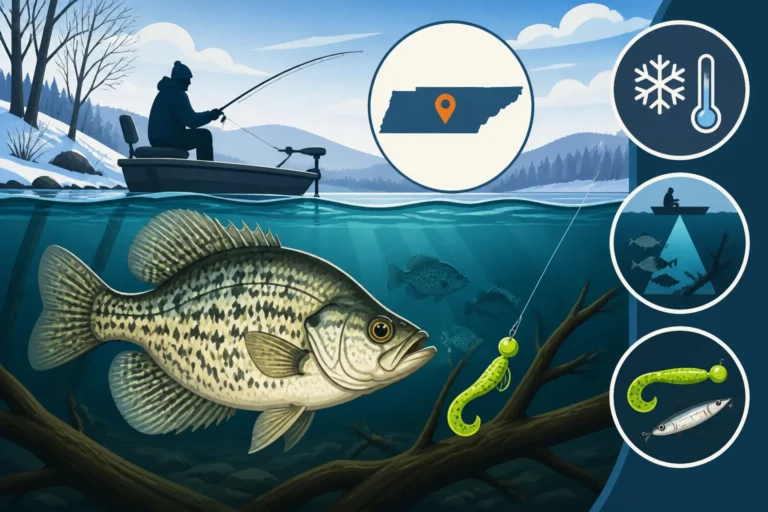
Winter fishing for crappie in Tennessee requires patience and precision. Crappie become lethargic in cold water (below 45-50 degrees F), and their metabolism slows down significantly. They'll usually school tightly in very deep water, often suspending over main lake channels, bluff walls, or in the deepest parts of major creek arms. This is when How to Catch Crappie in Cold Water is paramount, and your electronics are non-negotiable for locating these deep schools.
Vertical jigging is almost exclusively the most productive method in winter. Use light lines (4 lb test fluorocarbon is great for sensitivity) and very small jigs (1/32 oz or 1/16 oz) with subtle actions. The key is to present the jig directly to the fish and impart minimal movement. Think tiny twitches, almost imperceptible lifts, and long pauses. The bite will often be incredibly subtle, feeling like just a little extra weight on your line or a slight mushy sensation. It's a game of patience, but when you locate a winter school, you can often catch several fish from the same spot.
Troubleshooting Common Jigging Problems
Even the most experienced anglers hit snags (sometimes literally!). Crappie fishing, especially with jigs, can be challenging. Knowing how to diagnose and address common problems can save your day and keep your frustration levels down.
When Crappie Aren't Biting
Picture this: you've found what looks like a perfect brush pile, your electronics are showing fish, and you're casting your favorite jig, but nothing. Crickets. This is a common scenario. The first thing to consider is your presentation. Are you jigging too fast or too slow? Are you at the right depth? Crappie often prefer a specific depth, and even being a foot or two off can make all the difference. Try adjusting your depth by a foot at a time, both shallower and deeper, until you get a reaction.
Next, consider your jig choice. If your go-to color isn't working, switch it up. If you're using a curly tail, try a tube jig or a minnow profile. Sometimes, a subtle change in action or profile is all it takes. Experiment with jig head weights – a lighter jig might have a more natural fall, while a slightly heavier one might get down to the fish faster or hold better in current. Remember, crappie are often feeding on small bait, so downsizing your lure can sometimes trigger bites. And don't forget the Best Time of Day to Jig for Crappie might not be when you're currently out there. If all else fails, consider moving to a different spot or changing your retrieve entirely.
Dealing with Snags and Break-offs
Snags are an inevitable part of crappie fishing, especially when you're targeting their preferred habitat of brush piles and submerged timber. The key is to minimize them and know how to deal with them when they happen. Firstly, use Weedless jig heads or Texas-rigged soft plastics whenever possible in dense cover. When fishing open hooks near cover, maintain a tight line so you can feel the structure before your jig gets buried. If you feel resistance that isn't a bite, stop reeling, lighten your line, and try to gently shake the jig free.
If you do get a solid snag, don't just yank. Often, giving slack and then a sharp, quick snap of the rod tip can dislodge the jig. If that doesn't work, try moving your boat to the opposite side of the snag and pulling from a different angle. For truly stubborn snags, a jig retriever (a heavy weight on a cord that slides down your line to knock the jig free) can be an invaluable tool. It's a small investment that can save you a lot of money in lost jigs. Finally, always check your line for nicks and abrasions after fishing in snaggy areas; a weakened line is a recipe for a break-off when you finally hook that big slab.
Crappie Regulations and Conservation
As responsible anglers, it's our duty to understand and adhere to the regulations set forth by the Tennessee Wildlife Resources Agency (TWRA). These rules are in place to ensure healthy fish populations for future generations of anglers. Ignoring them not only harms the resource but can also lead to hefty fines.
Understanding Daily Limits and Size Restrictions
Tennessee has specific regulations for crappie, which can vary by water body. Generally, the statewide regulation for crappie (both black and white crappie) is a daily limit of 20 fish per person. There are usually no statewide size restrictions, meaning you can keep any legal-sized crappie as long as you adhere to the daily creel limit. However, it is absolutely crucial to be aware that certain lakes or specific areas within lakes might have special regulations that override the statewide default. For example, some lakes may have a minimum length limit or a slot limit, where fish within a certain size range must be released.
Always, always check the current Tennessee Fishing Regulations Explained from the TWRA website or guide before you head out. These regulations are updated annually, so what was true last year might have changed. If you're fishing a specific lake like Norris Lake or Center Hill Lake, look for any lake-specific rules. For example, the Crappie Limit in Tennessee is 20 fish per day but always double check if you plan to fish in a lesser-known spot. It’s also good to know that Black Crappie Stocking by TWRA in Tennessee efforts help maintain healthy populations, showing the state's commitment to the fishery.
Practicing Ethical Catch and Release
While crappie are excellent table fare, and keeping your daily limit is often the goal, practicing ethical catch and release for fish you don't intend to keep is vital for sustaining the fishery. Handle fish as little as possible, and always with wet hands to protect their slime coat, which is their primary defense against disease. If a fish is deeply hooked, it's often better to cut the line as close to the hook as possible rather than trying to remove the hook, especially if the fish is destined for release. Circle hooks can also help reduce deep hooking.
Consider the health of the fish. If a crappie is bleeding heavily or appears severely stressed, it's often best to keep it if it's within your legal limit, rather than releasing it only for it to die later. When releasing fish, place them gently back into the water, headfirst if possible, allowing them to swim away on their own terms. These practices, combined with respecting the Crappie Limits Under Tennessee Fishing Rules, ensure that Tennessee's abundant crappie populations remain vibrant for generations of anglers to come.
Disclaimer
Fishing regulations and conditions can change rapidly. Always consult the latest Tennessee Wildlife Resources Agency (TWRA) regulations before heading out on the water. This guide is for informational purposes only and should not replace official sources. Always prioritize safety and environmental responsibility.