How to Catch Crappie From the Bank
It's easy to feel like you need a fully equipped boat and a fancy fish finder to truly master crappie fishing, especially when you see those impressive catches coming off the big reservoirs. But for many of us, getting out on the water means casting a line from the bank, which can sometimes feel like an uphill battle. Don't worry, you absolutely can catch plenty of slab crappie from shore, and this guide is going to walk you through exactly how to do it in Tennessee, transforming those frustrations into successful fishing trips.
Understanding Crappie Behavior Near the Bank
Crappie are fascinating fish, and understanding their habits is your first step to consistent catches, even when you're limited to terra firma. They're not always out in the deep, open water; often, they're much closer than you think, especially when certain conditions are met. Knowing why and when they venture into shallow, accessible areas is key.
Why Crappie Come Close to Shore
Crappie, both black and white, are ambush predators that love structure. Think about it: sunken trees, brush piles, dock pilings, lily pads, rock ledges, even old tires — these are all prime real estate for crappie. From the bank, you're inherently closer to some of this prime habitat. They use these spots for cover from larger predators like bass and to ambush smaller baitfish. In particular, during the warmer months, especially in spring and early summer, crappie will move into shallower areas to spawn, making them highly accessible from the bank.
Imagine a calm cove on a lake like Chickamauga Lake, lined with fallen timber or thick aquatic vegetation. These aren't just pretty scenes; they're bustling crappie neighborhoods. The vegetation provides oxygen, attracts insects, and gives baitfish a place to hide, which in turn draws in crappie. As a bank angler, your advantage is often being able to quietly approach these areas that boaters might overlook or find too shallow to navigate. You're effectively fishing in their living room!
Seasonal Movements and Depths
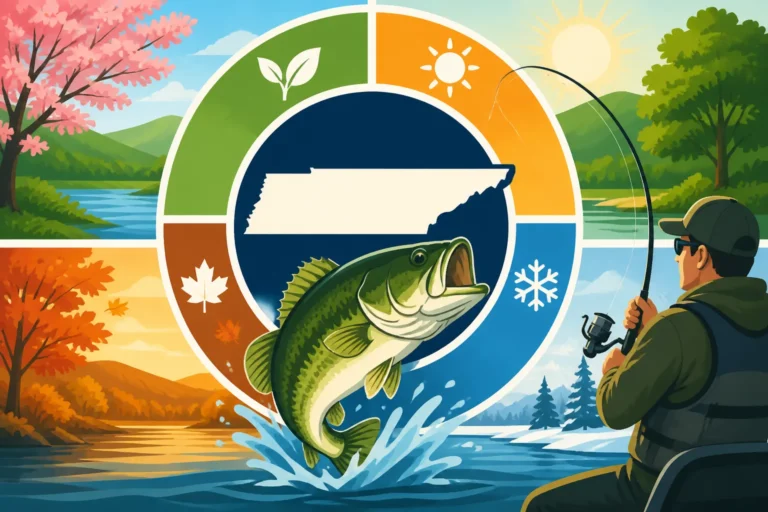
Crappie are very much creatures of season. Their depth and proximity to the bank will vary drastically throughout the year, so it's important to adjust your approach.
- Spring (Pre-Spawn & Spawn): This is arguably the best time to catch crappie from the bank. As the water temperatures rise, usually into the 50s and low 60s Fahrenheit, crappie migrate from deeper staging areas into shallow coves and creek arms. They're looking for firm bottoms, brush, or submerged wood to lay their eggs. During this period, you'll often find them in as little as 1 to 5 feet of water. This is when the action can be furious, and you don't need a boat to be right in the thick of it. Understanding the specific Spring Crappie Spawn Timing in Tennessee for your local waters will give you a huge advantage.
- Summer: Once the spawn is over and water temperatures really heat up, crappie tend to move a bit deeper, seeking cooler, more oxygenated water. However, they'll still relate to deep banks, submerged brush piles, or shady areas like bridge pilings or overhanging trees, especially during dawn and dusk. Night fishing can also be incredibly productive for bank anglers in summer, as crappie move shallower to feed under the cover of darkness. Don't assume they're all out in the middle of the lake; sometimes, just a slightly deeper drop-off near the bank can hold a school. If you're wondering How to Find Crappie in Summer, look for structure in those slightly deeper bank areas.
- Fall: As water temperatures begin to cool, crappie become more active again, often chasing baitfish into shallow coves and along creek channels. This can be another fantastic time for bank fishing, though they might be a bit more scattered than during the spring spawn. They're feeding heavily to build up reserves for winter. Look for baitfish activity along the banks – if you see shad jumping, crappie are likely nearby.
- Winter: This is generally the toughest time for bank fishing for crappie, as they retreat to deeper waters and their metabolism slows. However, it's not impossible. On milder, sunny days, crappie might move up onto deeper, sun-warmed ledges or suspend over deep brush piles near accessible banks. Your presentation needs to be very slow and subtle during these colder months.
Keep in mind that factors like a sudden cold front can dramatically affect fish behavior, pushing them deeper and making them less active. Always adapt your strategy to the conditions.
Essential Gear for Bank Crappie Fishing
You don't need to break the bank to catch crappie from the bank. In fact, some of the most effective setups are quite simple. The key is choosing gear that gives you sensitivity, adequate casting distance, and the ability to detect those light crappie bites. You might be surprised how affordable and effective a quality setup can be, with many great options available on platforms like Amazon.
Rods, Reels, and Line for the Shore
The right rod, reel, and line combination can make all the difference in feeling those subtle crappie nibbles and successfully bringing them to shore.
- Rods: For bank fishing, you generally want a rod with a good balance of casting distance and sensitivity. A light to medium-light action spinning rod, typically between 6 to 8 feet in length, is ideal.
- Length: A longer rod (7-8 feet) helps you cast further, reach over bankside vegetation, and keep your line clear of obstacles close to shore. It also provides a bit more leverage for fighting fish and steering them away from snags.
- Action: A fast or extra-fast action tip will give you the sensitivity to detect light bites and the backbone to set the hook. Crappie often "mouth" the bait before fully committing, so a sensitive tip is crucial. You can find excellent value in brands like Ugly Stik or Berkley, often available for quick delivery from Amazon.
- Reels: A small, lightweight spinning reel (sizes 1000 to 2500) that balances well with your rod is perfect. Smooth drag is more important than sheer power with crappie. You'll be using light lines and small hooks, so a sticky drag can lead to break-offs. Look for reels with a decent retrieve ratio so you can work your jigs effectively.
- Line: This is where many anglers make mistakes. Crappie have excellent eyesight, and heavy line can deter them.
- Monofilament: A good choice for beginners. 4 to 6-pound test monofilament is highly forgiving, has good knot strength, and its stretch can act as a shock absorber. It's also less visible in the water.
- Fluorocarbon: Excellent for its low visibility and sensitivity. It sinks, which can be an advantage when fishing jigs. However, it has less stretch than mono, so you need to be mindful of your drag settings. 4 to 6-pound test is usually sufficient.
- Braided Line: While incredibly sensitive and strong, braided line is highly visible. If you use braid (4-8 pound test), it's highly recommended to tie on a 2-4 foot fluorocarbon leader with an FG knot or a double-uni knot to maintain stealth. The extreme sensitivity of braid can help detect the lightest bites, especially when fishing deep.
Choosing the right combination often comes down to personal preference and the specific conditions you're fishing. For general bank crappie fishing in Tennessee, a 7-foot medium-light spinning rod with a 2000 series reel spooled with 6-pound monofilament is a fantastic all-around setup.
Terminal Tackle: Jigs, Bobbers, and Bait
This is where you put theory into practice. Having a variety of lures and presentation methods ready will increase your chances dramatically.
- Jigs: Small jigs are the undisputed king of crappie lures.
- Size: Think small. 1/32 oz to 1/16 oz jig heads are standard. In extremely clear water or for finicky fish, you might even go down to 1/64 oz.
- Bodies: Soft plastic bodies come in endless varieties: small tubes, grubs, minnow profiles, and spider-style baits. Experiment with different colors and shapes. Chartreuse, white, black/chartreuse, pink, and pearl are perennial favorites. Don't be afraid to try some more natural shad or minnow patterns too. Check out options for Best Jig Colors for Spring Crappie – these colors often work well year-round.
- Presentation: Jig them slowly, often with subtle lifts and drops, mimicking an injured baitfish. Crappie usually hit on the fall, so pay close attention to your line.
- Bobbers: Bobbers aren't just for kids; they are incredibly effective tools for crappie fishing from the bank.
- Fixed Bobbers: Best for shallower water (under 5 feet). These clip directly to your line.
- Slip Bobbers: These are a bank angler's best friend, especially for deeper water or when you need to cast further. The line slides freely through the bobber, stopping at a small bobber stop that you can adjust to any depth. This allows you to cast a rig set to fish 10-15 feet deep without a long, unmanageable leader hanging from your rod tip. Learning How to Use a Slip Bobber for Crappie is a game-changer.
- Live Bait: Sometimes, nothing beats live bait.
- Minnows: Small live minnows, hooked lightly through the lip or dorsal fin, suspended under a bobber or slowly retrieved on a bare hook, are deadly for crappie. They provide natural scent and movement that jigs can't always replicate.
- Worms/Maggots: While less common for crappie, small pieces of red worms or maggots can sometimes tempt stubborn fish, especially in colder water.
- Other Essentials: Don't forget small swivels (to prevent line twist), split shot weights (if not using jig heads), a pair of small pliers for hook removal, nail clippers for cutting line, and a small landing net with a long handle to reach fish from the bank. A tackle bag or backpack can help keep all your gear organized and easily portable when you're moving along the bank.
Effective Techniques for Bank Crappie
Once you have your gear ready, it's time to talk about strategy. Bank fishing for crappie isn't just about casting and hoping; it involves precision, observation, and adaptability.
Casting and Retrieving Strategies
Since you're fixed on the bank, your casting and retrieving techniques become even more critical for covering water and enticing bites.
- Fan Casting: Don't just cast straight out. Make a series of casts, fanning your lure out from left to right (or vice-versa) to cover as much water as possible. Start close to shore and gradually cast further out with each pass, systematically working the area in front of you. This helps you locate schools of crappie that might be scattered.
- Slow Retrieve with Pauses: Crappie are not usually fast chasers. A slow, steady retrieve with occasional pauses and subtle twitches is often most effective. Many times, a crappie will hit during the pause or when the jig is falling. Experiment with different retrieve speeds until you find what the fish are responding to that day. Sometimes, they want a consistent, snail-like crawl; other times, a twitch-twitch-pause retrieve is the ticket.
- Counting Down: When fishing without a bobber, especially with jigs, try counting down after your cast to estimate your lure's depth. If you're consistently getting bites at a count of 5, you know the fish are at that specific depth. This is a simple but effective way to find the strike zone from the bank.
A common scenario: you cast your small tube jig parallel to a brush-covered bank. You let it sink for a count of three, then start a slow retrieve, giving it two small twitches every few seconds. On the third twitch, you feel that familiar tap-tap-tap – crappie on! This systematic approach beats just blindly reeling in.
Using a Slip Bobber Effectively
The slip bobber is truly a bank angler's secret weapon, allowing you to present bait or jigs at precise depths far from shore, overcoming the limitations of a fixed bobber.
- Setting the Depth: First, tie on your bobber stop to your main line. Thread your line through the slip bobber, then tie on your jig or hook. Now, you can slide that bobber stop up or down your line to set the exact depth you want your bait to hang. If you suspect crappie are holding 8 feet deep near a submerged stump, you can set your bobber stop to put your jig right in their faces. This ability to adjust depth easily is invaluable.
- Casting Longer Distances: With a slip bobber, your bait is close to your rod tip when casting, allowing for much longer and more accurate casts than a fixed bobber rig where a long leader can tangle. Once the cast hits the water, the weight of your jig pulls the line through the bobber until it hits the bobber stop, placing your bait at the desired depth.
- Sensitivity and Strike Detection: When a crappie bites, the bobber will usually dip, lay flat, or sometimes even get pulled completely under. Because the line slides freely, there's less resistance for the fish, leading to more confident bites. Pay close attention to any unusual movement or hesitation in the bobber's drift. Even a slight twitch can indicate a bite.
- Drifting with the Wind/Current: A slip bobber rig is also great for allowing your bait to drift naturally with the wind or current, covering more water slowly and enticingly, especially around submerged brush or along natural breaks in the current. This can be especially effective on rivers or larger reservoirs.
Targeting Structure from the Bank
Crappie are synonymous with structure. From the bank, you need to be a detective, looking for clues above the water that point to fish-holding areas below.
- Fallen Trees and Brush Piles: These are crappie magnets. Look for trees that have toppled into the water, especially those with many branches. The tangled limbs provide perfect ambush points and cover. Cast your jig right up against the branches and let it slowly sink, working it through the structure. Be prepared for snags, but also for big crappie!
- Docks, Piers, and Bridge Pilings: Man-made structures are just as good as natural ones. The shade they provide and the barnacles and algae that grow on them attract baitfish, which in turn attract crappie. Fish around the pilings, under the docks, and along any rip-rap or rock walls.
- Aquatic Vegetation: Lily pads, cattails, and submerged grass beds offer cover and food. Work the edges of these beds, casting into pockets or lanes within the vegetation.
- Rock Piles and Ledges: Rocky areas warm up quickly in spring and hold crayfish and other invertebrates. Crappie will cruise these areas. Look for visible rock formations on the bank that continue underwater.
- Depth Changes: Even subtle changes in depth near the bank can hold fish. A small drop-off or a slightly deeper channel running parallel to the shore can be a crappie highway. Use a slip bobber to target different depths along these contours.
Remember, crappie often school, so if you catch one around a specific piece of structure, chances are there are more. Work that area thoroughly before moving on. For general advice on where to cast your line, consider our Best Crappie Fishing Lakes in Tennessee guide.
Best Times and Locations for Bank Crappie in Tennessee
Knowing when and where to cast your line can be just as important as how you cast it. Timing and location are everything, especially when you're limited to bank access.
Prime Seasons and Daily Windows
Getting the timing right significantly boosts your chances of success. Crappie are creatures of habit, and understanding their daily and seasonal rhythms will put you in the right place at the right time.
- Spring (March-May): As mentioned, this is prime time. The Crappie Fishing Season in Tennessee Lakes truly kicks off in spring. Water temperatures between 55-65 degrees Fahrenheit trigger the spawn. Look for stable weather patterns without sudden cold fronts. Overcast days can be particularly productive as crappie feel more comfortable in shallower water. Mornings and evenings are often best, but on cloudy days, fishing can be good all day long.
- Real-life Scenario: You're fishing Percy Priest Lake in April, and the surface temperature is hovering around 60 degrees. Instead of heading straight for open water, you focus on the shallow, brush-filled coves. You arrive at dawn, knowing the fish will be most active, and target submerged logs near the bank with a chartreuse jig under a slip bobber set to about 4 feet.
- Fall (September-November): Another excellent window. As temperatures cool and crappie begin to feed aggressively to fatten up for winter, they move back into shallower coves and creek channels, chasing schools of baitfish. Again, mornings and late afternoons are often most productive.
- Real-life Scenario: On Watts Bar Lake in October, you notice schools of shad flickering near the bank in a protected inlet. You switch to a minnow-imitation jig in white or pearl and cast parallel to the shoreline, letting it sink slowly before a retrieve. The crappie are actively feeding, and you're getting hits almost every cast.
- Summer & Winter (Challenges and Opportunities): While tougher, you can still catch crappie. In summer, target early mornings, late evenings, or even night fishing when crappie move shallower to feed. In winter, look for warmer, sunny days and target slightly deeper banks or areas with dark bottom compositions that absorb more heat. You might not catch as many, but the ones you do catch can be large.
Identifying Productive Bank Fishing Spots
Not all banks are created equal. Learning to "read" the water and identify high-percentage spots is a skill that comes with practice, but there are definite patterns to look for.
- Public Access Areas with Structure: Many Tennessee State Parks and Wildlife Management Areas (WMAs) offer designated bank fishing access. These spots are often chosen because they have good fish habitat nearby. Look for signs of submerged timber, rock outcroppings, or points that extend into the water.
- Creek Mouths and Inlets: These areas are natural funnels for baitfish and nutrients, making them magnets for crappie. The shallower water in these inlets can also warm up faster in spring.
- Rip-Rap and Dam Walls: The rocky edges of dam spillways or bridge abutments often hold crappie. The rocks provide cover, and the turbulent water around them can disorient baitfish, creating easy feeding opportunities. However, be extremely cautious around dam areas as water levels and currents can change rapidly.
- Overhanging Trees and Shaded Areas: Especially on bright, sunny days, crappie will seek refuge in the shade provided by overhanging trees or bridges. The shade also keeps the water a bit cooler. Cast your bait as close to the shadow line as possible.
- Visible Fish Activity: Look for subtle signs. Are baitfish jumping? Are there small schools of fish dimpling the surface? Are birds diving? Any of these can indicate active feeding, and crappie are likely nearby.
- Real-life Scenario: Walking the banks of Kentucky Lake, you spot a large fallen tree with half its canopy submerged just a few feet from shore. You've heard that Best Time of Year to Catch Crappie on Tennessee's Kentucky Lake is spring, so you know this spot has potential. You approach quietly, cast a tiny jig beyond the branches, and slowly work it back through the cover. Within minutes, you're reeling in a fat crappie that was undoubtedly ambushing baitfish from the comfort of the sunken branches.
Remember that crappie have Crappie Limits Under Tennessee Fishing Rules, so always check current regulations before you head out.
| Season | Optimal Water Temp (F) | Typical Depth (Feet) | Best Time of Day | Key Bank Structure to Target | Common Bank Bait/Lure |
|---|---|---|---|---|---|
| Spring | 55-65 | 1-5 | All day (overcast), Morning/Evening (sunny) | Fallen trees, brush piles, rocky banks, shallow coves | Small jigs (chartreuse, pink), live minnows, tube baits |
| Summer | 70-85 | 5-15 (deeper banks) | Early Morning, Late Evening, Night | Bridge pilings, deep drop-offs, shaded areas, submerged brush | Minnows (deeper), curly-tail grubs (white, pearl) |
| Fall | 60-70 | 3-10 | Morning, Late Afternoon | Creek mouths, main lake points, visible baitfish schools, grass edges | Jig-and-minnow combo, soft plastic shad imitations |
| Winter | 40-50 | 10-25+ | Mid-day (sunny) | Deep main lake points, structure near sharp drop-offs, warm current areas | Very slow jigging, vertical presentation with minnows |
Troubleshooting Common Bank Fishing Challenges
Even with the best gear and knowledge, bank fishing comes with its unique set of challenges. It's how you adapt and overcome these hurdles that defines a truly successful angler.
Dealing with Snags and Obstacles
Snags are an inevitable part of fishing, especially when you're targeting crappie around their favorite woody cover. It's frustrating to lose a favorite jig or a fish because you're hung up, but there are ways to minimize the damage.
- Learn to "Feel" the Structure: As you retrieve your lure, pay attention to every bump and scrape. If you feel your jig tap something, pause your retrieve. Often, you can gently lift your rod tip or give a slight slack-line twitch to pop it over an obstruction. This takes practice but can save many lures.
- Retrieve Slowly: A fast retrieve buries your hooks deeper into snags. Slowing down gives you more time to react.
- Use Lure Retrievers: These devices can be incredibly effective. A chain retriever, for example, slides down your line, wraps around your lure, and uses its weight to dislodge it. Many options are available, and they pay for themselves quickly. You can find various models on Amazon, often designed to slide over snags effectively.
- Modify Your Hooks: Some anglers will gently bend the barb of their jig hooks down (crimp it flat). This makes it easier to pull the hook free from a snag, though you might lose a few fish if they throw the hook. Alternatively, using lighter wire hooks that can be straightened out with a firm pull (then bent back into shape) can also save lures.
- The "Line Twist" Technique: If you're hung up and your lure is visible, try this: point your rod tip directly at the snag. Reel down until there's no slack. Then, very slowly and steadily, pull back directly on the rod, keeping the line tight. If the line begins to stretch and feels like it might break, stop and quickly snap your wrist forward, then immediately pull back again. The sudden slack and then snap can sometimes dislodge the lure. If that doesn't work, point the rod at the snag again, keep tension, and give the line a sharp pluck near the reel with your free hand.
When fishing in thick cover, such as where crappie often hold in How to Catch Crappie Around Brush Piles, be prepared for snags and carry extra jigs. It's part of the game!
Adapting to Weather and Water Conditions
The weather and water conditions rarely cooperate perfectly, and crappie respond differently to various environmental cues. Being able to adapt is a hallmark of a good angler.
- Wind: Wind can make casting difficult and make it hard to feel subtle bites.
- Solution: On very windy days, try to find a bank that's sheltered from the wind. If that's not possible, use a heavier jig (e.g., 1/8 oz instead of 1/32 oz) to help with casting distance and keeping your line tight. Cast into the wind or directly with it, avoiding cross-wind casts that create a huge belly in your line. Using a braided main line with a fluorocarbon leader can also help cut through the wind and improve sensitivity.
- Rain: Light, steady rain can sometimes turn crappie on, washing insects and nutrients into the water and providing a low-light advantage. Heavy rain, especially during a cold front, can shut them down.
- Solution: During light rain, continue fishing, perhaps focusing on areas where runoff enters the lake. If it's a heavy downpour, seek shelter. After a heavy rain, the water might become muddy.
- Muddy Water: Crappie rely heavily on sight, so muddy water can make fishing tough.
- Solution: In muddy water, switch to brighter, high-contrast colors like chartreuse, orange, or white, which are more visible. Scented baits or tipping your jig with a small live minnow or a piece of Berkley PowerBait or Gulp! Crappie Nibblers can also help, as crappie will then rely on their sense of smell. Fish slower and closer to the bank, as fish will move closer to shore to find clearer water and ambush prey. Also, focus on areas where clear feeder creeks enter, or where structure provides a strong ambush point.
- Water Temperature: As discussed in seasonal movements, water temperature dictates crappie activity levels.
- Solution: In cold water, slow down your retrieve dramatically. Crappie's metabolism is slower, and they won't chase a fast-moving bait. Use live minnows or jigs with minimal action. In hot water, target deeper, cooler water, or focus on early morning/late evening bites when crappie move shallower. For more details, check out How Water Temperature Affects Fish Activity.
- Current: Rivers and dam tailwaters often have significant current.
- Solution: Crappie will use current breaks as ambush points. Look for eddies, the downstream side of islands, bridge pilings, or large rocks. Cast upstream of these breaks and let your bait drift naturally into the slack water where fish are waiting. Use enough weight to get your bait down but not so much that it just sits on the bottom.
By observing your surroundings, understanding crappie behavior, and adapting your tactics, you can turn a potentially frustrating bank fishing trip into a truly rewarding experience, proving that you don't need a boat to be a successful crappie angler in Tennessee.
Disclaimer
This article is for general informational purposes only and does not constitute professional advice. Laws, prices and regulations vary by location and change over time. Consult a qualified professional for guidance on your specific situation.