A Complete Guide to Tennessee Bass Species
One of the biggest head-scratchers for any angler venturing out onto Tennessee's incredible waterways is often figuring out exactly what kind of bass just hit their line. With several distinct species calling our lakes and rivers home, it's easy to get them confused, especially when they're all putting up a thrilling fight. This comprehensive guide is here to untangle the nuances of Tennessee's diverse bass populations, helping you identify each species, understand their habits, and learn the best ways to target them for a truly successful and informed fishing experience.
The World of Tennessee Bass
Tennessee truly is a bass angler's paradise, offering an incredible variety of environments from the deep, clear waters of the eastern reservoirs to the cypress-lined sloughs of the west. But with such diversity comes a delightful challenge: knowing your bass. While the thrill of the strike is universal, understanding the specific characteristics of each species can transform a good fishing trip into an exceptional one.
Why Bass Fishing Captures Our Hearts
There's something uniquely captivating about bass fishing. Maybe it's the explosive strike, the powerful fight, or the sheer intelligence these fish often display, making them a worthy opponent for even the most seasoned angler. For many of us, it's a blend of all these things, plus the beauty of the Tennessee landscapes we get to enjoy while pursuing them. Every cast holds the promise of a true battle, a moment of pure adrenaline when that line tightens and you know you've hooked into something special. From the strategic selection of the right lure to the careful reading of the water, every aspect of bass fishing engages the mind and the senses, creating an addiction that keeps us coming back for more, season after season. It's not just about catching fish; it's about the entire experience of connecting with nature and testing our skills against these formidable aquatic athletes.
The Initial Confusion: "Is That a Largemouth or a Spotted?"
This is a question I've heard countless times, and honestly, I've asked it myself more than once early in my fishing journey! The truth is, many of Tennessee's bass species share similar body shapes and colorations, making identification a real puzzle for beginners and even some experienced anglers. You might be fishing a lake known for its trophy largemouth, only to pull in a smallmouth that leaves you scratching your head, or vice versa. The distinctions can be subtle, sometimes boiling down to a slight variation in jaw length, a patch of teeth on the tongue, or a particular pattern of spots on their flanks. This initial confusion, while sometimes frustrating, is also part of the learning curve and adds to the richness of our fishing adventures here in Tennessee. Don't worry, we're going to break down those key differences so you can confidently identify your catch.
Largemouth Bass: The Undisputed King of Tennessee's Waters
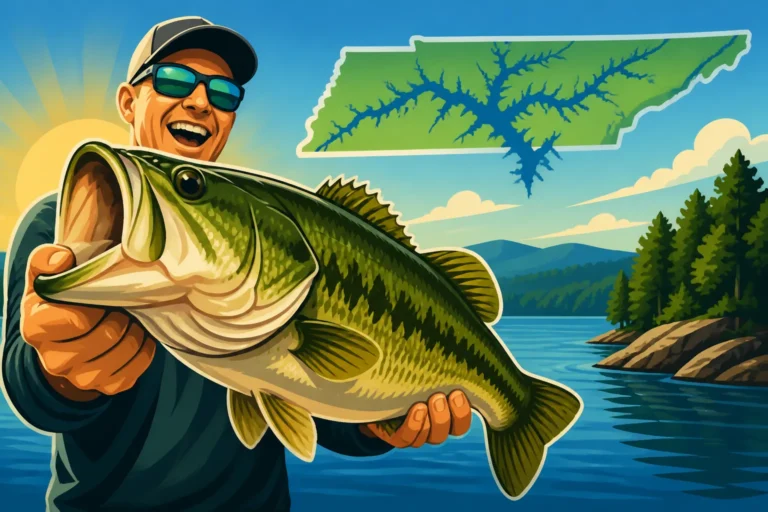
When most folks think about bass fishing in Tennessee, their minds immediately jump to the largemouth bass. And for good reason! This iconic species is abundant across the state, thrives in a wide range of habitats, and grows to impressive sizes, making it a prime target for both recreational anglers and tournament pros alike. Its aggressive nature and powerful fights have cemented its reputation as the "king" of many Tennessee lakes and reservoirs.
Identifying the Iconic Largemouth
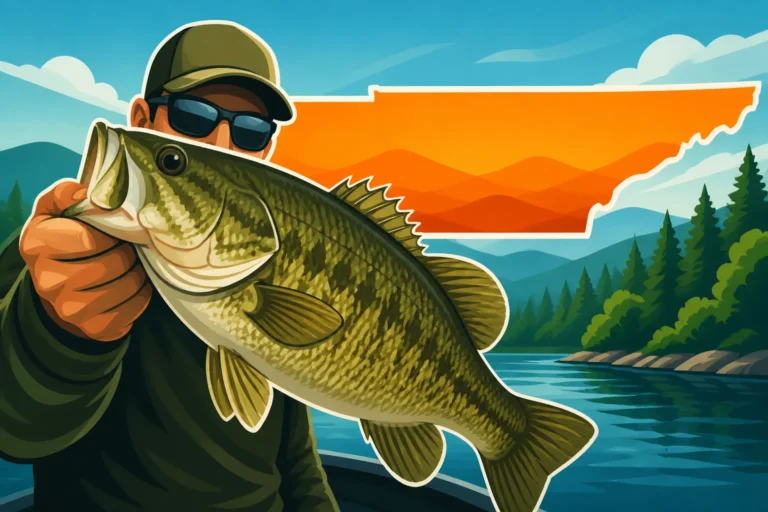
The largemouth bass is perhaps the most recognizable of all bass species, but there are a few key features that really set it apart. The most obvious, as its name suggests, is its mouth. If you gently close its mouth, the corner of the jaw will extend noticeably beyond the back of its eye. This is a pretty foolproof indicator. You'll also typically notice a distinct horizontal dark stripe or blotches along its flanks, though the intensity of this stripe can vary greatly depending on water clarity and habitat. Their bodies are generally robust and greenish-gray to olive on the back, fading to lighter sides and a white belly. Unlike some other bass, the largemouth doesn't have scales on the base of its soft dorsal fin, which can be another helpful identifier for those who really want to get into the weeds of fish anatomy. For a more detailed look at what to watch for, check out Largemouth Bass Identification Tips for Tennessee Anglers.
Where to Find Them: Habitat and Behavior
Largemouth bass are habitat generalists, meaning they can adapt to a wide variety of environments, but they absolutely thrive in warm, vegetated, and somewhat turbid waters. Think shallow coves, lily pad fields, submerged timber, and brush piles in our larger reservoirs like Chickamauga Lake or Kentucky Lake. They love structure and cover, using it for ambush points to surprise their prey. You’ll often find them lurking in the shadows, waiting for an unsuspecting baitfish or crawfish to swim by. During the warmer months, they might move into deeper water during the heat of the day, but they’re almost always associated with some form of cover, whether it’s a drop-off, a stump, or a thick mat of hydrilla. Their behavior changes with the seasons, from aggressive schooling in the fall to hiding out in deeper pockets during winter, but their preference for structure remains consistent.
Gear and Techniques for Largemouth Success
To consistently catch largemouth bass in Tennessee, you'll want to gear up appropriately. A medium-heavy to heavy action casting rod, paired with a baitcasting reel spooled with 12-20 pound fluorocarbon or monofilament line, is a common setup. For lighter presentations, a medium-action spinning rod can be incredibly effective. When it comes to lures, the options are almost endless because largemouth are incredibly opportunistic feeders. Classic choices include crankbaits that dive to different depths, spinnerbaits for covering water, Texas-rigged worms and jigs for punching through cover, and topwater lures like poppers or frogs for explosive surface strikes. If you're just starting your largemouth collection, you can find a fantastic selection of these essential lures and tackle boxes on Amazon, offering everything from beginner kits to specialized tournament gear. Understanding how to present these lures naturally, matching the hatch to what the bass are feeding on, and adapting to changing conditions are all critical for consistent success. Experimentation is key – what works one day might not work the next, keeping us anglers on our toes! If you're looking for a great all-around setup, consider researching Best Rods for Tennessee Largemouth Bass.
Smallmouth Bass: The Fighter of the Flowing Waters
While the largemouth might be king in many stillwater environments, the smallmouth bass is the undisputed champion of Tennessee's cooler, clearer rivers and rocky lakes. Known for their incredible fighting spirit and acrobatic leaps, smallmouth are a favorite target for anglers who appreciate a challenging and rewarding catch. They truly are a jewel of Tennessee's fisheries, so much so that they hold the esteemed title of Smallmouth Bass: Tennessee's Official State Fish.
Spotting the Elusive Smallmouth
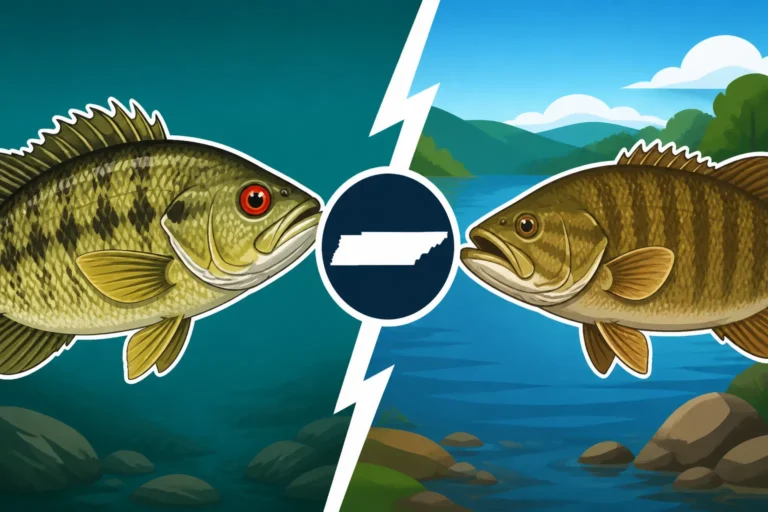
Identifying a smallmouth bass often begins by ruling out the largemouth. The most significant difference is, again, the mouth. When a smallmouth's mouth is closed, the corner of its jaw typically does not extend past the back of its eye; it usually ends directly beneath the eye or even slightly in front of it. Their body coloration tends to be more bronze or golden-brown, often with dark vertical bars or blotches along their sides, rather than a distinct horizontal stripe. These markings can sometimes look like tiger stripes. Smallmouth also possess red eyes, which can be quite striking. Their body shape is generally more streamlined and torpedo-like compared to the bulkier largemouth, built for navigating currents and rocky structures. They also have scales on the base of their soft dorsal fin, a minor but accurate anatomical distinction.
Preferred Haunts: Rivers and Clear Lakes
Unlike their largemouth cousins, smallmouth bass prefer cooler, clearer, and rockier environments. You'll find them in the swift currents of rivers like the Cumberland or Clinch, or lurking around the rocky points, deep drop-offs, and submerged humps of pristine lakes such as Dale Hollow Lake or Norris Lake. They are less fond of heavy vegetation and more drawn to hard bottom structures like gravel, boulders, and bedrock. These areas provide the perfect ambush points for their preferred prey, which includes crawfish, minnows, and insect larvae. Smallmouth are incredibly sensitive to water quality and temperature, often seeking out deeper, cooler water during the scorching summer months and moving shallower during the spring and fall to feed actively. Understanding these habitat preferences is crucial for locating them, as they rarely stray far from the rocky cover they call home.
Tackle and Tactics for Smallmouth Action
Catching smallmouth bass often requires a slightly different approach than largemouth. Because they frequent clearer waters, lighter lines and more subtle presentations are often key. A medium-light to medium action spinning rod and reel combo, spooled with 6-10 pound fluorocarbon or monofilament line, is a popular choice, allowing for longer casts and more sensitive feel. In terms of lures, smallmouth have a particular fondness for anything that mimics a crawfish or a minnow. Small crankbaits, jerkbaits, tubes, grubs, and hair jigs are incredibly effective. Ned rigs and drop shot rigs are also phenomenal for targeting smallmouth holding tight to rocky bottom structures. When fishing rivers, understanding the current and how to present your bait naturally with the flow is paramount. For stillwater lakes, focusing on rocky points, ledges, and humps where baitfish school up will increase your chances. Again, exploring options on Amazon can provide you with a huge array of specialized smallmouth baits and sensitive rods. Take a look at Best Reels for Smallmouth Bass to ensure your setup is dialed in for these fierce fighters. Don't be afraid to experiment with different retrieve speeds and twitching motions to entice a strike; sometimes, the slightest change makes all the difference.
Spotted Bass: The Often Overlooked Challenger
The spotted bass, often affectionately called a "spot" by anglers, is a fascinating and sometimes challenging member of the Tennessee bass family. It's often mistaken for either a largemouth or a smallmouth, leading to some confusion on the water. However, understanding its unique characteristics and habits can open up new opportunities for success, as this feisty fish is more abundant in some waters than you might realize.
How to Differentiate Spotted Bass
The spotted bass is truly the "middle child" of the bass family in terms of appearance, often blending features of both largemouth and smallmouth. The most reliable way to identify a spotted bass is to check its tongue. Unlike largemouth or smallmouth, spotted bass will have a distinct patch of teeth on their tongue, which you can feel with your finger. Another key identifier is their jawline; when its mouth is closed, the corner of the jaw will usually extend to about the middle of the eye, not past it (like a largemouth) or significantly before it (like a smallmouth). Their body typically has a series of dark, diamond-shaped blotches along the lateral line, and beneath that, distinct rows of black spots on their belly. These spots are where they get their name! They also have a more slender body profile than a largemouth but are not quite as streamlined as a smallmouth. Understanding these subtle differences is key, especially if you're trying to figure out Spotted Bass vs Largemouth Bass in Tennessee Lakes.
Their Niche in Tennessee's Ecosystem
Spotted bass occupy a unique ecological niche in Tennessee waters. They tend to prefer habitats that are a blend of what largemouth and smallmouth seek. You’ll often find them in areas with moderate current, like the upper reaches of reservoirs or larger creeks and rivers, but they can also be found in main lake sections, especially around rocky banks, points, and humps. They don't typically venture into the thick, shallow vegetation favored by largemouth, nor do they strictly stick to the swift, cold currents of prime smallmouth rivers. Instead, they thrive in a mix of rock and scattered wood, often in slightly deeper water than largemouth, but warmer than where you’d consistently find smallmouth. They are quite adaptable and can often outcompete other bass species in certain transitional zones, making them a prevalent catch in many of our impoundments, particularly in areas where the water clarity isn't crystal clear but isn't overly turbid either.
Fishing for Spotted Bass: A Rewarding Pursuit
Fishing for spotted bass can be incredibly rewarding because they are often aggressive and plentiful. They are not as finicky as some smallmouth can be, nor are they always hiding in the densest cover like largemouth. Spotted bass respond well to a wide range of lures. Moving baits like small crankbaits, spinnerbaits, and jerkbaits are excellent for covering water and locating active fish. For targeting fish on structure, shaky head jigs, Ned rigs, and drop shots are incredibly effective, especially when fished slowly along rocky bottoms. They have a particular fondness for baits that mimic crawfish or small shad. Since they can sometimes be found in deeper water, understanding how to work vertical presentations can be a game-changer. Don't be surprised if you catch them on the same gear you might use for either largemouth or smallmouth, as their feeding habits often overlap. Many anglers underestimate the spotted bass, but once you figure them out, they can provide nonstop action, making them a fantastic target for a fun day on the water.
The Lesser-Known Bass Species: Redeye and Striped Bass
While largemouth, smallmouth, and spotted bass tend to dominate the conversation, Tennessee is also home to other fascinating bass species that offer unique angling experiences. Delving into these lesser-known or distinctly different fish can broaden your horizons and challenge your skills in new ways. These include the native redeye bass and the powerful striped bass, which, while technically a different genus, is a prized "bass" by many anglers due to its similar sporting qualities.
Redeye Bass: A Small but Mighty Stream Dweller
The redeye bass, also sometimes called the shoal bass or flint River bass, is a smaller, often overlooked species native to certain clear, cool-water streams and rivers in parts of Tennessee, particularly in the eastern and southern regions. They are distinct from the more common black bass species. As their name suggests, they have a prominent red eye, which is a key identification feature. Their bodies are typically olive to dark green with dark vertical bars along the sides, and their fins often have reddish tints. Unlike their larger cousins, redeye bass rarely exceed a few pounds, with a 1-pound fish being considered a good catch. They primarily feed on insects and small minnows. Finding them can be a challenge, as they prefer pristine, rocky streams with good current and plenty of overhead cover from trees and shrubs. If you're looking for a unique stream fishing experience that requires a bit more stealth and finesse, targeting redeye bass can be incredibly rewarding. For more on where to find these gems, explore Redeye Bass Identification and Habitat.
Striped Bass: The Reservoir Powerhouses
Now, let's talk about the striped bass. While technically not a "black bass" (like largemouth, smallmouth, spotted, or redeye), striped bass are a highly sought-after game fish in Tennessee's large reservoirs and are unequivocally referred to as "stripers" or "rockfish" by anglers. These powerful fish are anadromous in nature (meaning they spend part of their lives in saltwater and spawn in freshwater), but landlocked populations thrive in many of our impoundments like Watts Bar, Norris, and Cherokee lakes. Identifying them is usually straightforward: they have a sleek, silvery body with distinct dark horizontal stripes running from head to tail. They can grow to enormous sizes, often exceeding 30-40 pounds, and are renowned for their incredible stamina and brutal fights, often making long, powerful runs. Targeting stripers often involves different tactics than black bass, such as trolling large artificial baits or fishing with live bait like gizzard shad or threadfin shad in open water or deep channels. They are often found in large schools, chasing baitfish in the main lake basins. If you're ready for a true heavyweight fight, Striped Bass Fishing in Tennessee Reservoirs offers a fantastic challenge.
Understanding Bass Regulations and Conservation Efforts
As responsible anglers, it's absolutely vital that we understand and adhere to Tennessee's fishing regulations. These rules aren't just arbitrary guidelines; they are carefully crafted by wildlife agencies, like the Tennessee Wildlife Resources Agency (TWRA), to ensure the long-term health and sustainability of our precious bass fisheries. Ignoring them not only risks hefty fines but also jeopardizes the future of fishing for everyone.
Daily Limits and Size Restrictions Across Species
Each bass species in Tennessee typically has specific daily creel limits (the number of fish you can keep in a day) and often size restrictions (minimum or maximum lengths). For example, while the statewide largemouth bass limit might be five fish per day, there could be a slot limit on a particular lake, meaning you can only keep fish within a certain size range, or only one fish over a certain size. Smallmouth bass often have stricter limits, reflecting their slower growth rates and specific habitat needs. Spotted bass, being more abundant, might have more generous limits in some areas. These regulations can also vary by specific body of water, with certain lakes or rivers having special rules that supersede the statewide default. This is why it's so important to always check the most current TWRA fishing guide for the specific lake or river you plan to fish before you even make your first cast. Ignoring these rules isn't just a minor infraction; it can lead to significant penalties for fishing without a license in Tennessee. Always know your limits, especially when dealing with Tennessee's daily bass limits split by species and by size.
Catch and Release: Protecting Our Fisheries
Beyond simply adhering to the legal limits, many anglers, especially those targeting larger trophy bass or fishing in tournaments, practice catch-and-release fishing. This conservation ethic helps protect larger, older fish that are vital for strong spawning populations, ensuring that future generations can enjoy the same fantastic fishing we do. When practicing catch-and-release, it's crucial to handle fish with care. Minimize their time out of the water, use wet hands when handling them, and employ appropriate tools like needle-nose pliers or de-hookers to remove hooks quickly and cleanly. Avoid "lip-locking" larger fish horizontally, as this can damage their jaw. Instead, support their weight vertically or horizontally with two hands. Properly reviving a fish by holding it gently in the water, facing into the current, until it swims away under its own power is also a mark of a responsible angler. Our actions today directly impact the health of Tennessee's fisheries tomorrow, making catch-and-release a powerful tool in our conservation arsenal.
Choosing Your Bass Target: A Seasonal Approach
Understanding the different bass species is one thing, but knowing when and where to find them throughout the year is the next level of angling expertise. Bass are incredibly sensitive to environmental changes like water temperature, daylight length, and available forage, and their behavior shifts dramatically with the seasons. A smart angler learns to "read the water" and adapt their strategies to these seasonal patterns.
Spring: Pre-Spawn and Spawn Frenzy
Ah, spring in Tennessee! This is arguably the most exciting time for bass fishing. As water temperatures begin to rise from the cold grip of winter, bass start to move from their deeper wintering holes towards shallower spawning areas. This period is often broken down into three phases: pre-spawn, spawn, and post-spawn. During the pre-spawn, as water temps climb into the 50s Fahrenheit, bass are actively feeding to bulk up for the energy-intensive spawning ritual. This is an excellent time for aggressive tactics, often using crankbaits, spinnerbaits, and jerkbaits to cover water and locate hungry fish along secondary points and creek channel bends.
As temperatures reach the 60s, the spawn begins. Largemouth and smallmouth will move into very shallow water, often visible in clear areas, to build and guard their nests. This period can be challenging, as bass are focused on reproduction rather than feeding, but sight-fishing with soft plastics or jigs can be highly effective for those targeting bedding fish. It’s important to remember to minimize disturbance and stress on spawning fish.
Finally, the post-spawn sees bass exhausted from spawning and often retreating to slightly deeper cover to recover. They might be a bit lethargic at first, but soon resume feeding. This is often a good time for finesse presentations or targeting points and humps near spawning flats. Each of these phases requires a slightly different approach, making spring a dynamic and thrilling season for bass anglers. To dive deeper into these patterns, consult Tennessee Bass Fishing Seasons and Patterns.
Summer: Deep Water and Early Morning Bites
Tennessee summers are hot, and so is the fishing—if you know where to look! As water temperatures soar, especially in our large reservoirs, bass tend to move deeper, seeking cooler, more oxygenated water. They'll often relate to offshore structure like humps, ledges, brush piles, and deep points. This is when electronics become invaluable for locating schools of fish and bait. Techniques for summer often involve deep-diving crankbaits, large plastic worms, jigs, and drop shots fished vertically or along contour lines. Early mornings and late evenings, when the sun is less intense, can also offer fantastic topwater action in shallower areas as bass move up to feed before retreating to the depths. Night fishing for bass can also be incredibly productive during the peak of summer, especially for larger fish. The key to summer success is understanding thermal stratification and finding the "comfort zone" where the bass are most active, which often means fishing areas that are less pressured by other anglers due to their depth.
Fall & Winter: Transition and Cooler Water Tactics
As autumn leaves begin to fall and water temperatures start to drop, bass enter a significant feeding frenzy known as the fall transition. They sense the coming winter and aggressively feed to build fat reserves. This is a fantastic time for covering water with spinnerbaits, crankbaits, and ChatterBaits, as bass will often school up and chase baitfish in vast areas. They’ll follow schools of shad into creek arms and onto main lake flats, making for some incredibly active fishing.
Winter fishing in Tennessee can be tough, but also incredibly rewarding for those willing to brave the cold. Bass become much more lethargic in cold water, conserving energy, and their metabolism slows down significantly. They tend to congregate in deep water, often near main lake channels, bluff walls, and deep timber or rock piles. Finesse techniques become paramount: slow-rolling jigs, Ned rigs, blade baits, and suspending jerkbaits fished excruciatingly slowly are often the ticket. The bites can be subtle, sometimes just a slight "thump" or added weight on the line, but catching a big winter bass is a testament to patience and persistence. While less active, bass still need to eat, and if you can find them and present your bait correctly, winter can produce some surprisingly large fish. Always remember to check Tennessee's Fishing Season and Catch Limits for any seasonal adjustments.
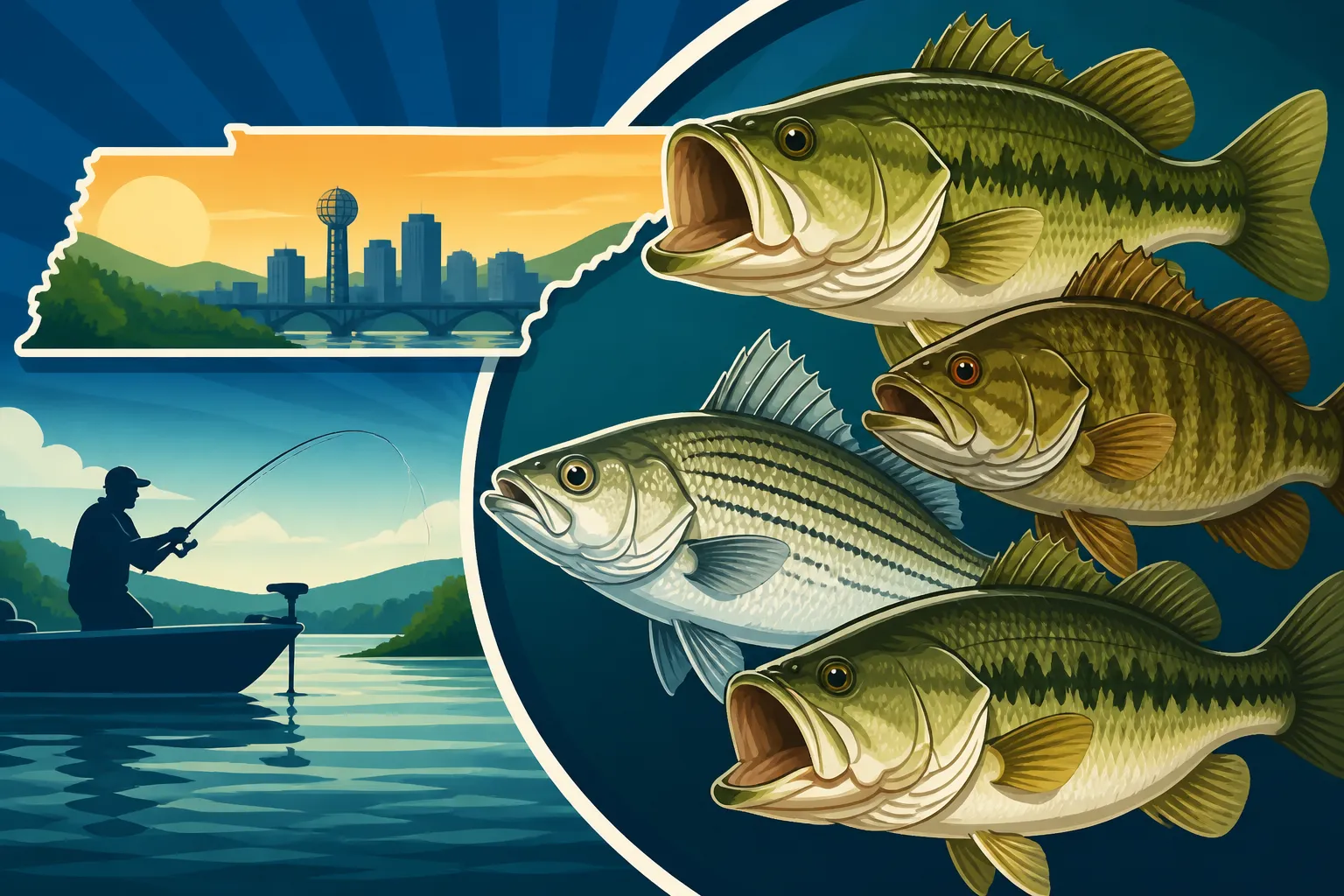
Here's a quick comparison of Tennessee's main bass species to help you tell them apart on the water:
| Feature | Largemouth Bass | Smallmouth Bass | Spotted Bass | Redeye Bass | Striped Bass |
|---|---|---|---|---|---|
| Jaw Extends | Past the back of the eye | To or before the middle of the eye | To the middle of the eye | To or before the middle of the eye | Beyond the eye |
| Tongue Patch | Absent | Absent | Present (rough patch of teeth) | Absent | Absent |
| Coloration | Greenish-grey with distinct horizontal stripe | Bronze/Golden-brown with vertical bars | Olive-green with distinct belly spots | Dark olive with vertical bars, red eye | Silvery with distinct horizontal stripes |
| Body Shape | Bulkier, deeper body | More streamlined, torpedo-like | Intermediate, slender | Compact, stream-adapted | Long, slender, powerful |
| Preferred Habitat | Warm, vegetated, turbid waters; shallow cover | Cool, clear, rocky rivers & lakes; deep structure | Moderate currents, rock/wood, deeper reservoirs | Pristine, cool, rocky streams | Large, open reservoirs; deep channels |
| Max Size | Large (10+ lbs common) | Medium (5-8 lbs common) | Medium (2-5 lbs common) | Small (under 2 lbs) | Very Large (30+ lbs common) |
Disclaimer
This article is for general informational purposes only and does not constitute professional advice. Laws, prices and regulations vary by location and change over time. Consult a qualified professional for guidance on your specific situation.