Striped Bass Fishing in Tennessee Reservoirs
For many anglers, the thought of wrestling with a powerful, hard-fighting fish like a striped bass is the ultimate thrill. But let's be honest, figuring out where these magnificent creatures lurk in Tennessee's vast reservoirs and how to actually get one on the line can feel like cracking a secret code. You've heard the stories of monster stripers, but getting them to bite consistently? That's the real challenge. This comprehensive guide is here to demystify striped bass fishing in Tennessee, covering everything from where to find them to the best techniques and gear, helping you turn those fishing dreams into a reality.
Understanding Striped Bass in Tennessee Reservoirs
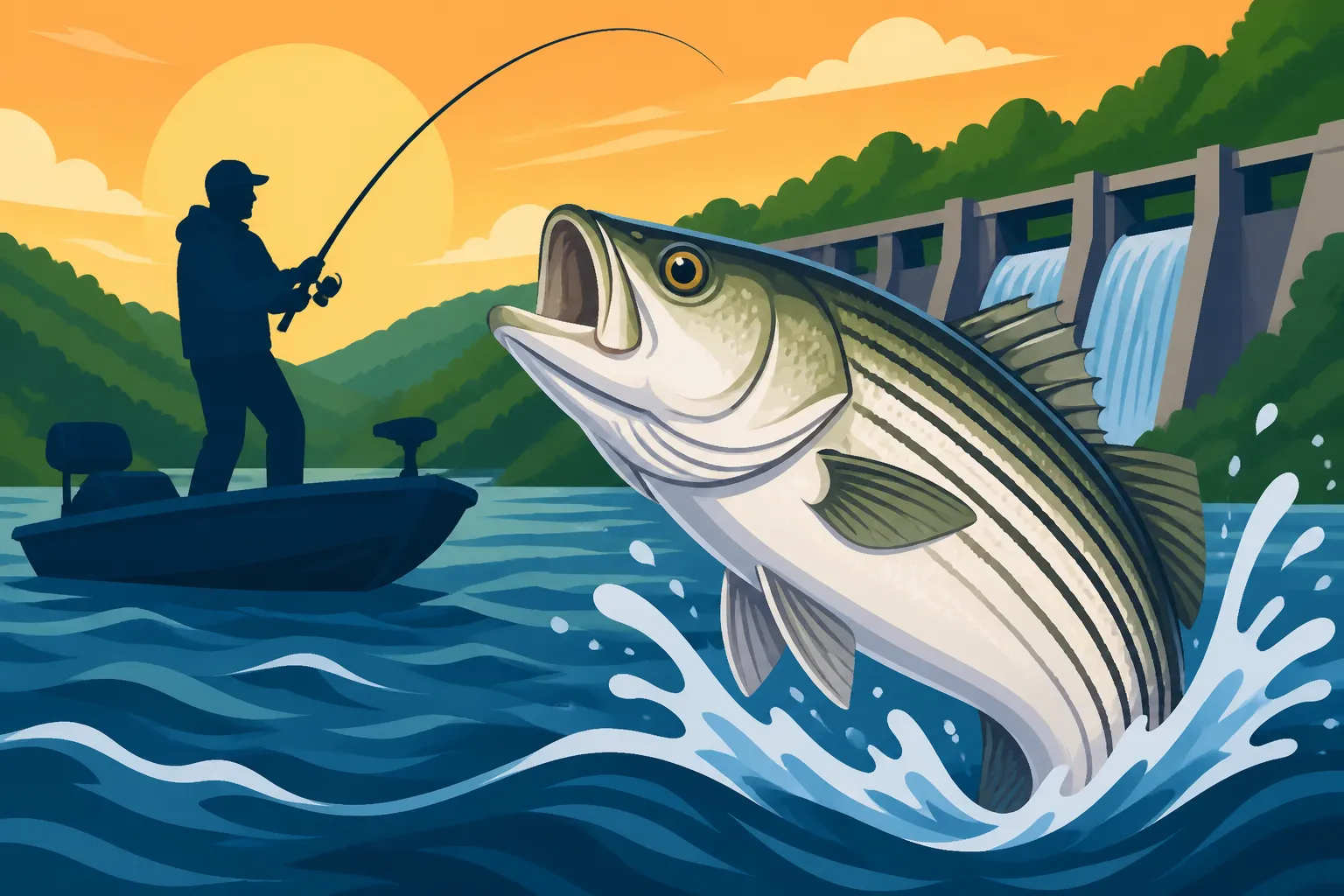
Striped bass, often called "stripers," are incredible game fish that have found a fantastic home in many of Tennessee's large reservoirs. They're known for their impressive size, fierce fighting ability, and the sheer challenge they present to anglers. Unlike some native species, stripers were introduced to these waters, and they've truly thrived, offering a unique and exciting fishing experience.
The Striper Story: Why They Thrive in Tennessee
Originally a saltwater species, striped bass are anadromous, meaning they typically live in saltwater and migrate to freshwater to spawn. However, specific landlocked populations have adapted to living permanently in freshwater, especially in large reservoirs like those found across Tennessee. The Tennessee Wildlife Resources Agency (TWRA) recognized the potential for these powerful fish to become a premier sportfish, and through stocking programs, they've successfully established robust populations. Our deep, nutrient-rich reservoirs with abundant forage, particularly gizzard and threadfin shad, provide the perfect environment for stripers to grow to impressive sizes, often exceeding 30 pounds and sometimes even breaking the 60-pound mark. It’s truly a testament to how adaptable these fish are and how well Tennessee's aquatic ecosystems support them. They become apex predators in these environments, creating an exciting challenge for dedicated anglers.
Identification: Telling Them Apart from Hybrids
It's pretty common for anglers to confuse a purebred striped bass with its cousin, the hybrid striped bass. Both are amazing fish, but they have distinct characteristics that can help you tell them apart, especially if you're trying to adhere to specific regulations. The most reliable way to identify a true striped bass is by looking at its lateral lines, those dark, horizontal stripes running down its body. On a pure striper, these lines are typically continuous and unbroken from head to tail.
Hybrid stripers, on the other hand, usually have broken or interrupted lines. Sometimes, the lines on a hybrid will be wavy or even branch off in places. Also, pure stripers tend to have a sleeker, more torpedo-like body shape, while hybrids can appear a bit thicker or more "stubby" for their length. The head shape can also be a clue, with pure stripers often having a more pointed snout. Paying attention to these subtle differences can save you from a potential infraction and ensure you're correctly identifying your catch. Striped Bass vs Hybrid Striped Bass: What's the Difference? can offer more visual cues.
Their Diet and Behavior
Striped bass are primarily piscivores, which means they love to eat other fish. In Tennessee's reservoirs, their diet is dominated by gizzard shad and threadfin shad, which are abundant forage species. They're also not above eating other smaller fish like bluegill or even crayfish if the opportunity arises. What makes stripers so exciting to target is their schooling behavior and their aggressive feeding habits. They often hunt in coordinated groups, herding baitfish into tight balls before ambushing them. This can create spectacular surface boils where stripers are literally busting the water as they chase their prey.
Their behavior is also heavily influenced by water temperature and the presence of baitfish. In warmer months, they tend to move deeper to find cooler, more oxygenated water, often congregating around thermal breaks or deep structure. In cooler months, they might be found shallower, chasing baitfish that are pushed towards the surface or into creek arms. Understanding these patterns, which often involve following the movements of their primary food source, is key to consistently finding and catching these powerful fish.
Where to Find Striped Bass in Tennessee Reservoirs
Tennessee is blessed with an abundance of large reservoirs, and many of them hold thriving populations of striped bass. Knowing which lakes are prime striper territory and what specific areas within those lakes to target is crucial for a successful trip.
Top Tennessee Reservoirs for Stripers
When it comes to top-notch striped bass fishing in Tennessee, a few reservoirs consistently stand out, offering excellent opportunities for both numbers and trophy-sized fish.
- Norris Lake: Located in East Tennessee, Norris Lake is renowned for its deep, clear waters and fantastic striped bass fishing. Anglers often find success targeting points, humps, and submerged islands, especially those with access to deep water. Norris Lake: A Tennessee Fish Species Overview highlights its diverse fishery.
- Percy Priest Lake: Just outside Nashville, Percy Priest Lake is another excellent striper fishery. While it can get busy, its large expanses of open water and numerous creek channels provide ample habitat. Stripers here often follow vast schools of shad throughout the year.
- Watts Bar Lake: This expansive reservoir on the Tennessee River is a giant in terms of striper potential. With its diverse habitat, including river channels, main lake points, and numerous creek mouths, Watts Bar offers a variety of places for stripers to roam. You might even find Watts Bar Lake Bass and Catfish Species along with the stripers.
- Boone Lake: Although it faced challenges with water levels in the past, Boone Lake has historically been a strong producer of stripers and continues to be a good option as it recovers and matures. Its clear, cooler waters are ideal for stripers, especially in the deeper sections.
- Cherokee Lake: Known for its fertile waters and abundant shad, Cherokee Lake offers excellent opportunities, particularly in the lower lake areas and main channel.
- Melton Hill Reservoir: While smaller than some of the other major reservoirs, Melton Hill is unique as a cool-water release fishery from Norris Dam, making it a great place to find stripers that prefer cooler temperatures.
Each of these lakes offers its own unique challenges and rewards, but they all share one thing in common: the potential for a truly memorable striped bass encounter.
Key Habitat: Depths, Structure, and Current
Striped bass are masters of their environment, and their whereabouts are often dictated by a few critical factors: depth, structure, and current.
- Depth: During warmer months, stripers seek out cooler, more oxygenated water, which means they'll often be found in the deeper sections of the reservoir. This could be 40, 50, or even 80 feet down, depending on the lake and time of year. In cooler months, they might move shallower, especially if baitfish are congregated in shallower creek arms or on flats.
- Structure: They love to relate to underwater structure. This includes long points that extend into the main channel, submerged humps, ledges, creek channels, and even standing timber. These features provide ambush points and act as highways for baitfish. Think of them as underwater highways and intersections where food traffic is heavy.
- Current: Stripers are highly attuned to current. In river-run reservoirs, current created by dam generation can be a huge factor, often concentrating both stripers and their prey. They'll position themselves just out of the main current to conserve energy, waiting for bait to be swept past them. Fishing during periods of generation can be incredibly productive, as the stripers become much more active. Learning to "read" the water and identify these current breaks is a skill that can dramatically improve your success.
Finding Baitfish Schools
The golden rule for finding striped bass is simple: find the bait, find the stripers. Stripers are constantly on the move, chasing their food source, primarily gizzard and threadfin shad. Without a doubt, a good fish finder is your best friend in this pursuit. You'll want to spend time idling over likely areas—main lake points, creek mouths, river channels—watching your electronics for large schools of baitfish.
When you spot a dense bait ball, especially one with larger arches (the stripers themselves) lurking beneath or within it, you're in the right zone. Often, if you see birds diving, particularly gulls or herons, it's a dead giveaway that baitfish are being pushed to the surface, and stripers are likely beneath them. These "bird plays" can lead to some of the most exciting and fast-paced striper action you'll ever experience. Don't be afraid to cast into the commotion.
Best Seasons and Times to Target Striped Bass
Striped bass can be caught year-round in Tennessee, but their patterns and preferred depths change dramatically with the seasons. Understanding these shifts is vital for consistently putting fish in the boat.
Spring and Fall: Peak Action
Many anglers consider spring and fall the absolute prime times for striped bass fishing in Tennessee. The milder water temperatures during these seasons make the stripers more active and willing to chase.
- Spring: As water temperatures begin to rise in early spring, usually from late March through May, stripers will move shallower, often into the backs of major creeks and tributaries where baitfish are congregating and preparing to spawn. This is a fantastic time for casting artificial lures, as stripers are actively feeding. You might find them cruising along rocky points or submerged humps, especially during overcast days or early mornings. This period offers exciting topwater action if you hit it just right, as fish are often aggressive.
- Fall: Fall, particularly from September through November, sees water temperatures cooling down, which really gets the stripers fired up. They go on a major feeding binge, trying to pack on weight before winter. Like spring, they'll often push baitfish into shallow coves and creek arms, creating those exhilarating surface boils. Trolling and live bait fishing can be incredibly effective during this time, especially as schools of shad are moving. This "fall run" is something every serious striper angler looks forward to, as the fish are strong, healthy, and feeding aggressively.
Summer Deep-Water Strategies
When the scorching Tennessee summer arrives, typically from June through August, striped bass will seek refuge in the cooler, deeper waters of the reservoirs. This means your tactics need to change significantly.
- Thermo-cline Fishing: Stripers will often suspend along the thermocline, a layer of water where the temperature changes rapidly, offering both cooler temperatures and oxygen. Identifying this depth on your fish finder is key. They'll be found anywhere from 30 to 80 feet deep, often suspended over old creek channels, river bends, or deep points.
- Downriggers and Planer Boards: This is where specialized gear truly shines. Downriggers allow you to present live bait or artificial lures at precise depths, keeping them in the striper's strike zone for extended periods. Planer boards can help you spread out your baits, covering a wider swath of water and keeping them away from the boat, which can be crucial in clear summer waters. Deep Water Techniques for Striped Bass are a must-learn for summer success. Early mornings and late evenings are still often the most productive, even in summer, but deep-water strategies can yield fish throughout the day.
Winter Opportunities
Don't hang up your striper rods when the cold weather hits! Winter fishing, typically from December through February, can be incredibly productive, especially for trophy-sized fish, though the bites might be fewer.
- Slow and Deep: Stripers are less active in colder water, so your presentation needs to be slower and more methodical. They'll often school tightly in deep main lake basins or river channels, often near sources of warmer water like power plant discharges, if available.
- Live Bait Dominance: Live bait, particularly large gizzard shad or trout, fished slowly on downriggers or free-lined with minimal weight, is often the most effective method. Fish will hug the bottom more, and it takes patience to wait for that slow, deliberate winter bite. The key is finding those concentrated schools of fish and presenting a tempting, easy meal.
Daily Patterns: Dawn, Dusk, and Night
Striped bass are often most active during low-light conditions, making dawn, dusk, and night fishing prime times.
- Dawn and Dusk: These periods offer cooler temperatures and reduced light, making stripers more comfortable moving into shallower water to feed. Topwater action can be explosive in the first hour or two after sunrise and the last hour before sunset. These are also excellent times for casting large swimbaits or crankbaits along points and ledges.
- Night Fishing: Many serious striper anglers swear by night fishing, especially during the warmer months. Stripers are often less wary under the cover of darkness and will come much shallower to feed. Live bait fished under lights that attract baitfish, or slowly trolled artificials, can be incredibly effective. Make sure you have the right safety gear and navigation lights if you venture out after dark. Night Fishing Techniques for Catfish also share some similarities with striper night fishing tactics in terms of low-light presentations.
Effective Techniques for Catching Striped Bass
There's no single "best" way to catch a striped bass; success often comes from adapting your techniques to the specific conditions and the fish's behavior. However, a few methods consistently produce results in Tennessee's reservoirs.
Trolling: Covering Water and Lure Choices
Trolling is arguably one of the most consistent ways to catch striped bass in Tennessee, especially when trying to cover large expanses of water and locate scattered fish. It allows you to present multiple baits at varying depths and speeds, imitating a school of baitfish.
- Gear Setup: You'll typically use stout trolling rods paired with conventional reels spooled with heavy monofilament or braided line. Downriggers are essential for precise depth control, particularly in deeper water or during the summer. Planer boards help spread your lines out, preventing tangles and covering a wider area. Setting up an Rod Holder and Planer Board Setup for Reservoir Striper Trolling can be a game-changer.
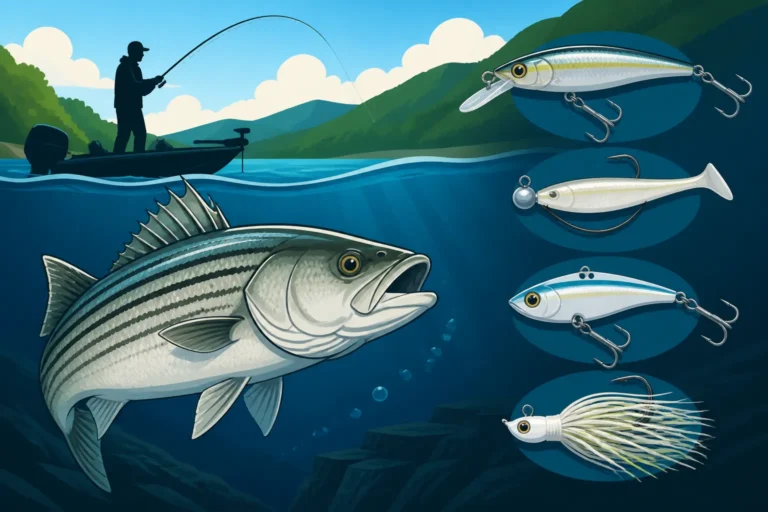
- Lure Selection: When trolling, popular choices include large crankbaits, swimbaits, and umbrella rigs. Crankbaits like those from manufacturers known for deep-diving models are excellent for hitting specific depths. Umbrella rigs, which mimic a school of baitfish, can be deadly, especially when pulled behind a downrigger. The key is to match the hatch, using lures that resemble the size and color of the local shad population. Experiment with different colors and sizes until you find what the stripers are keying in on.
- Speed and Depth: Vary your trolling speed until you find the sweet spot, typically between 2.5 and 3.5 miles per hour, but sometimes slower or faster depending on fish activity. Adjust your downrigger depths based on your electronics readings of baitfish and stripers. Don't be afraid to experiment with different depths until you find where the fish are holding.
Live Bait Fishing: Shad, Herring, and More
For many seasoned striper anglers, nothing beats live bait. The natural movement and scent of live bait can be irresistible to even the most finicky stripers.
- Baitfish Species: The go-to baits in Tennessee are gizzard shad and threadfin shad. These are the primary forage for stripers, so presenting a lively one is often met with aggressive strikes. Other options include blueback herring, especially in lakes where they are present, and even larger baits like trout in certain situations for trophy fish. Catching your own bait with a cast net is often the most effective way to ensure you have fresh, lively bait.
- Rigging Techniques: There are several ways to rig live bait. One common method is to free-line a single bait with a large circle hook through its nose or back, allowing it to swim naturally. Adding a small split shot or an egg sinker can help get the bait down a bit, or you can use a balloon or float to keep it at a specific depth or away from cover. When fish are deep, a Carolina rig with a heavier sinker or a three-way swivel rig can be effective for presenting bait near the bottom. Maintaining a good livewell to keep your bait fresh and lively is absolutely crucial for success.
Casting Artificials: Topwater, Jigs, and Swimbait
While trolling and live bait are mainstays, casting artificial lures can be incredibly exciting, especially during active feeding periods or when stripers are busting the surface.
- Topwater Lures: There's nothing quite like a striper exploding on a topwater lure! Large walking baits, poppers, and prop baits can be deadly when stripers are actively chasing bait on the surface, particularly during dawn, dusk, or overcast days in spring and fall. Cast these lures into the commotion and work them aggressively to imitate a fleeing baitfish.
- Jigs and Swimbait: Sinking lures like bucktail jigs, large soft plastic swimbaits, and lipless crankbaits are versatile and effective. Bucktail jigs can be fished vertically in deep water or cast and retrieved with a rhythmic jigging motion. Large paddle-tail swimbaits on heavy jig heads are excellent for imitating shad and can be slow-rolled along points or through baitfish schools. These can be particularly effective when fish are suspended or holding tightly to structure. You can find a fantastic selection of these lures on Amazon to stock your tackle box.
- Retrieval: The key with artificials is to match your retrieval speed and action to what the fish are doing. If they're aggressive, a fast, erratic retrieve might trigger a strike. If they're lethargic, a slower, more deliberate presentation might be needed. Don't be afraid to experiment with different retrieves until you find what the stripers respond to.
Essential Gear for Striped Bass Fishing
Having the right equipment can make all the difference when targeting powerful striped bass. You'll need gear that can handle the sheer force of these fish and withstand the demands of fishing in large reservoirs.
Rods, Reels, and Line: The Right Setup
The battle with a striper is often a test of strength and endurance, so your rod, reel, and line setup needs to be up to the task.
- Rods: For trolling or live bait fishing, you'll want heavy to medium-heavy action rods, typically 7 to 8 feet long. These rods need enough backbone to handle heavy weights, control a powerful fish, and absorb the shock of a strike. If you're casting artificials, a medium-heavy fast-action spinning or baitcasting rod, around 7 feet, offers a good balance of casting distance and fish-fighting power. Durability is key; look for rods designed for saltwater or heavy freshwater applications. Best Rods for Tennessee Largemouth Bass might overlap a bit in strength, but stripers usually demand something beefier.
- Reels: Depending on your preferred technique, you'll need different reels. For trolling and live bait, conventional reels (like a Penn or Shimano conventional reel) with a good drag system and high line capacity are essential. They need to handle the sustained pressure of a big fish. For casting, heavy-duty spinning reels or baitcasting reels with strong drags and ample line capacity (200+ yards of 20-30lb line) are necessary. Smooth, reliable drag is non-negotiable; a sticky drag will lose you fish.
- Line: Line choice is critical. Many anglers opt for 20-30 pound test monofilament for its shock absorption and abrasion resistance, especially when trolling. However, braided line in 30-65 pound test has become incredibly popular due to its thin diameter, incredible strength, and sensitivity. If using braid, consider a 20-40 pound fluorocarbon leader for abrasion resistance and invisibility. The right line can truly make or break your fight with a monster striper. Best Line Weight for Tennessee Striped Bass Trolling can help you decide.
Electronics: Fish Finders and GPS
In the vastness of Tennessee's reservoirs, electronics are not just a luxury; they are a necessity for consistently finding striped bass.
- Fish Finders (Sonar): A high-quality fish finder is your window into the underwater world. Look for units with clear, high-resolution screens and powerful sonar capabilities, including traditional 2D sonar, Down Imaging, and Side Imaging. These technologies allow you to pinpoint bait balls, identify suspended stripers, and locate underwater structure like ledges, humps, and creek channels. Being able to distinguish baitfish from game fish, and understanding how fish relate to structure, is a learned skill that your fish finder will help you develop. Many top brands offer excellent options; you can browse various models on Amazon.
- GPS/Chartplotters: Integrated GPS is invaluable for marking productive spots, navigating safely, and tracking your trolling paths. You can save waypoints for specific humps, points, or schools of bait that you've found to be productive. Chartplotters with detailed lake maps help you understand the underwater topography, showing creek channels, depth contours, and potential structure before you even get there. This combination of sonar and GPS allows you to not only find the fish but also return to them time and time again. Best Fish Finders for Tennessee Reservoir Fishing offers more guidance.
Terminal Tackle and Baits
Having a well-stocked tackle box with the right terminal tackle and a variety of baits is crucial for any striped bass angler.
- Hooks: You'll need strong, sharp hooks capable of penetrating the tough mouths of stripers. Circle hooks are often preferred when live bait fishing, as they promote jaw hookups, which are better for the fish if you plan to release them. Sizes typically range from 5/0 to 9/0, depending on the size of your bait. For artificials, ensure your treble hooks are heavy-duty to prevent them from straightening out on a big fish.
- Swivels and Leaders: Quality barrel or ball-bearing swivels are important to prevent line twist, especially when trolling. Heavy-duty snap swivels allow for quick lure changes. As mentioned, fluorocarbon leaders are great for adding invisibility and abrasion resistance when using braided main line.
- Weights: An assortment of egg sinkers, bullet weights, and split shot will allow you to adjust your bait's depth and presentation. For deep-water live baiting or bottom fishing, you might need sinkers ranging from 1 to 8 ounces or more, especially if there's current.
- Lure Diversity: Beyond your primary trolling and live bait options, keep a variety of artificials on hand. This includes various crankbaits (deep-divers, shallow-divers), bucktail jigs, large soft plastic swimbaits, topwater plugs, and perhaps some spoons. Different conditions call for different presentations, and having options allows you to adapt.
Regulations and Conservation for Striped Bass
Fishing for striped bass in Tennessee is an incredible privilege, and it comes with the responsibility of understanding and adhering to regulations, as well as practicing sound conservation ethics. These rules are in place to ensure healthy fish populations for future generations of anglers.
Current Catch Limits and Size Restrictions
The Tennessee Wildlife Resources Agency (TWRA) sets specific regulations for striped bass to manage the fishery responsibly. These regulations can change, so it's always critical to consult the most current TWRA fishing guide before each season. Generally, you'll find regulations dictating:
- Daily Creel Limit: This specifies the maximum number of striped bass you can keep in a single day. For many Tennessee reservoirs, the daily limit for striped bass is two fish.
- Size Restrictions: Often, there's a minimum length requirement, meaning any striped bass caught below that length must be immediately released. In some cases, there might also be slot limits or maximum size limits to protect larger, spawning fish. For instance, you might be allowed to keep two fish, but only one of them can be over a certain length, such as 30 or 34 inches, depending on the specific lake.
- Lake-Specific Rules: It's absolutely vital to remember that some individual lakes or river sections may have specific regulations that differ from the statewide general rules. Always check the TWRA guide for the particular body of water you plan to fish. Tennessee Fishing Regulations Explained provides a great overview, but always double-check the fine print for your chosen lake. Ignoring these rules, even unintentionally, can lead to Penalties for Fishing Without a License in Tennessee or for exceeding catch limits.
Importance of Responsible Angling
Beyond simply following the rules, responsible angling practices are essential for the long-term health of Tennessee's striped bass populations. These fish can live for many years and grow to impressive sizes, making their preservation a priority.
- Catch and Release Best Practices: If you're releasing fish, especially larger ones, handle them with care. Avoid touching their gills, support their body horizontally, and get them back into the water as quickly as possible. Consider using circle hooks, which tend to hook fish in the jaw, reducing gut-hooking mortality. Heavy tackle can also help you land fish faster, reducing stress on the fish during a long fight.
- Respecting the Resource: Don't waste your catch. If you decide to keep fish within the legal limits, ensure you utilize them. Striped bass make excellent table fare, especially when fresh. However, larger, older stripers can sometimes have a stronger, oilier taste, and some anglers prefer the taste of smaller fish.
- Report Violations: If you witness illegal fishing activity, such as exceeding catch limits or fishing without a license, report it to the TWRA. This helps protect the resource for everyone.
Remember, fishing for striped bass is a journey, not just a destination. Each trip offers a chance to learn more about these incredible fish and the dynamic waters they call home. By understanding their habits, using effective techniques, and respecting the regulations, you'll greatly increase your chances of success and contribute to the enduring legacy of Tennessee's striped bass fishery.
| Reservoir | Primary Forage | Common Depths (Summer) | Key Features for Stripers | Best Seasons |
|---|---|---|---|---|
| Norris Lake | Shad | 40-80 ft | Deep humps, points, clear water | Spring, Fall, Winter |
| Percy Priest Lake | Shad | 30-60 ft | Main lake points, creek channels | Spring, Fall, Night |
| Watts Bar Lake | Shad, other baitfish | 30-70 ft | River channel, ledges, coves | Year-round |
| Boone Lake | Shad | 20-50 ft | Old riverbed, submerged timber | Spring, Fall |
| Cherokee Lake | Shad | 30-60 ft | Lower lake, main channel, points | Spring, Fall |
| Melton Hill Res. | Shad | 20-40 ft | Cool water discharge, channel | Year-round |
Disclaimer
This article is for general informational purposes only and does not constitute professional advice. Laws, prices and regulations vary by location and change over time. Consult a qualified professional for guidance on your specific situation.