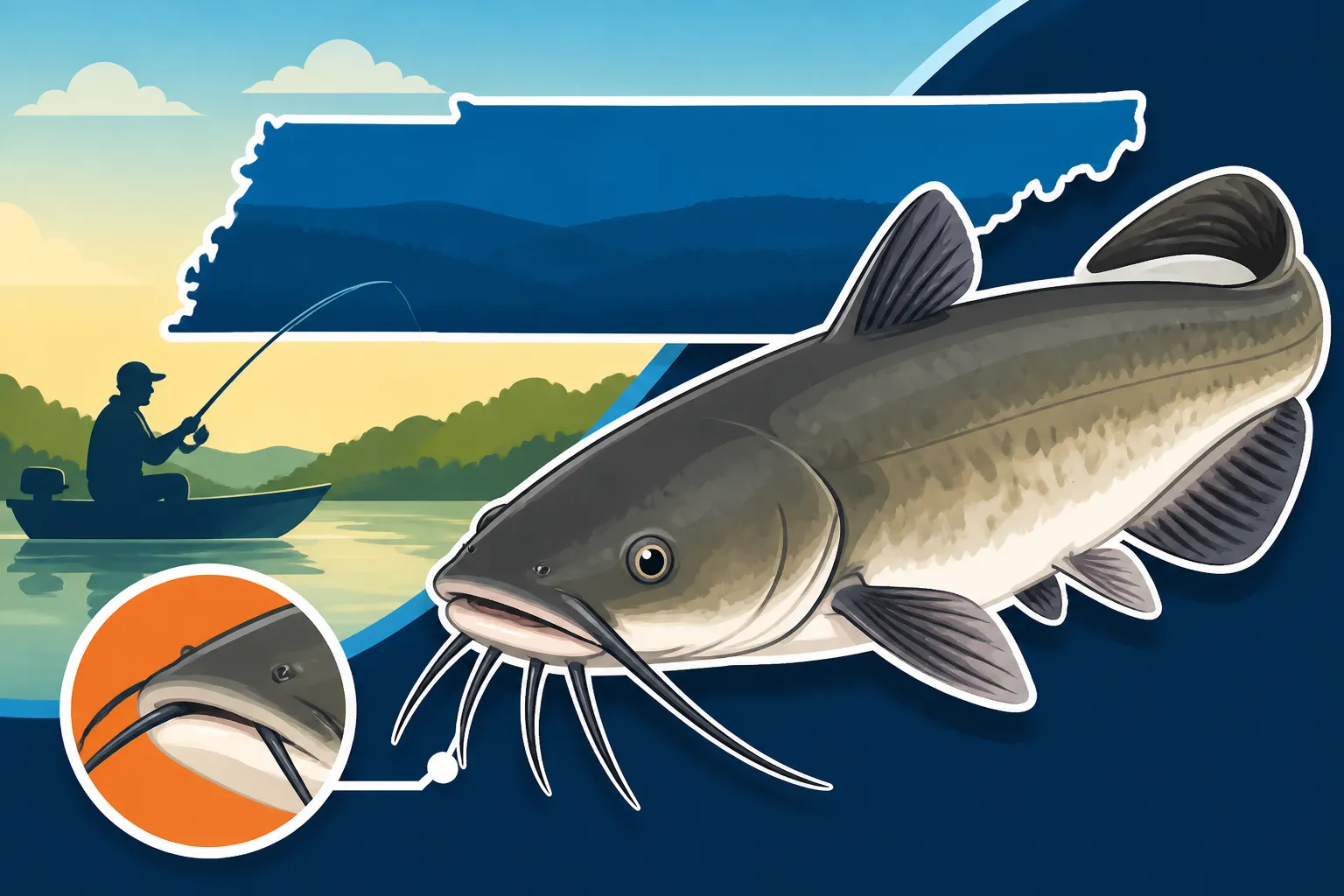
How to Identify Channel Catfish, Tennessee’s Other State Fish
Have you ever reeled in a catfish in Tennessee, convinced you had one species, only to realize later it was another entirely? It's a common scenario for many anglers, especially with the subtle differences between our various whiskered friends. This guide is here to untangle the confusion, helping you confidently identify the Channel Catfish – officially one of Tennessee's state fish – and understand why knowing your cat from your cat matters.
Why Correct Catfish Identification Matters for Tennessee Anglers
Getting your fish identification right isn't just about bragging rights (though those are nice!). It's a fundamental part of responsible and successful angling in Tennessee. Our waters are home to a diverse array of fish, and while many species share similarities, their individual regulations can differ significantly. For catfish, in particular, a mistaken identity can lead to unintended consequences, both for your fishing trip and for the health of our aquatic ecosystems.
Understanding Limits and Regulations
Imagine you're out on Kentucky Lake, known for its incredible catfish population, and you're having a fantastic day. You're catching one "channel cat" after another. But what if some of those were actually Blue Catfish? The daily creel limits and even size restrictions can vary between species, and adhering to these rules is absolutely crucial. Misidentifying a fish could inadvertently put you in violation of state regulations, which nobody wants. The Tennessee Wildlife Resources Agency (TWRA) sets these rules to ensure sustainable populations for generations to come, and as anglers, it's our duty to respect them. Knowing the difference between Channel Catfish: Tennessee's Other Official State Fish and its cousins can save you a headache and contribute to healthier fisheries.
Protecting Other Species
Beyond the legal aspect, accurate identification plays a vital role in conservation. Sometimes, a species might have a stricter limit because its population is more sensitive, or it might be undergoing a recovery effort. By correctly identifying your catch, you ensure that you're only keeping what's permitted and that you're not accidentally overharvesting a more vulnerable species. For instance, while Channel Catfish are abundant in many Tennessee waters, other species might not be as widespread or prolific. Our commitment as anglers to learn and practice proper identification helps protect the broader aquatic community and ensures that we all have fantastic fishing opportunities for years to come. It’s all part of being a good steward of Tennessee's incredible natural resources.
Key Features for Identifying Channel Catfish
So, how do you tell a Channel Catfish apart from the crowd? It comes down to a few distinct features that, once you know them, make identification much easier. You don't need a biology degree, just a keen eye and a bit of practice. Think of these as your personal field guide markers when you pull one into the boat or up on the bank.
Distinctive Body Shape and Coloring
The first thing you'll often notice about a Channel Catfish is its body shape. They tend to have a more slender, elongated body compared to the bulkier build of a Blue Catfish or the flattened head of a Flathead. Think of it as a sleek, torpedo-like form. When it comes to coloring, Channel Cats are typically olive-brown to slate-gray on their backs, fading into silvery-white on their bellies. This coloration can vary, though, depending on the water clarity and type of bottom they inhabit. Fish caught in muddy water might appear darker, while those from clearer streams can have a lighter, almost greenish hue. One of the most telling features, especially on younger or medium-sized Channel Catfish, is the presence of small, irregular dark spots along their sides. These spots are a classic hallmark, though they can fade or disappear entirely on very large or older fish. For an even deeper dive into How to Identify Channel Catfish, Tennessee's Other State Fish, keep these color and shape cues in mind.
The Fin Story: Dorsal, Adipose, and Caudal
Let's talk fins, because they tell a big part of the story when it comes to catfish identification.
- Dorsal Fin: The dorsal fin, the one on the top of their back, typically has a sharp, spine-like ray at its front. This spine can be quite stiff and is part of their defense mechanism.
- Adipose Fin: This is a small, fleshy fin located between the dorsal fin and the tail. It doesn't have any rays or spines, and it's present on all true catfish species. While not unique to Channel Cats, its presence confirms it's a member of the catfish family.
- Caudal Fin (Tail Fin): This is perhaps the most defining fin for the Channel Catfish. Their tail is distinctly deeply forked, almost like a swallow's tail. This is a crucial characteristic that immediately separates it from the more rounded or slightly notched tails of Blue and Flathead Catfish. If you've got a deeply forked tail, you're almost certainly looking at a Channel Cat.
Barbels: The Whisker Clues
Those iconic whiskers on a catfish are called barbels, and they're highly sensitive organs that help the fish detect food in murky water. Channel Catfish typically have eight barbels: four around the mouth (two nasal, two maxillary) and four on the chin (two mandibular). While all catfish have barbels, the placement and relative length can offer subtle clues, though the tail fin is usually a stronger indicator for initial identification. These barbels are often quite long and prominent on Channel Cats, giving them that classic whiskered appearance. When you're fishing in low light or on particularly dark bottom, these barbels are often the first thing you feel as the fish takes your bait.
Spots: A Common (But Not Universal) Trait
As mentioned earlier, the spots are a big giveaway for Channel Catfish, especially in younger fish. These are typically dark, irregularly shaped spots scattered along their sides. They aren't always perfectly symmetrical or evenly distributed, which is part of their charm. However, it's important to remember that these spots can fade with age, and very large or old Channel Catfish might have few to no visible spots at all. This is where relying on the other features, particularly the deeply forked tail and overall body shape, becomes critical. Don't let a spot-free large cat throw you off your identification game! If you're looking for a good field guide to help with Freshwater Fish Identification Guide for Anglers, checking for spots is usually one of the first things a book or app will tell you to do for channel cats.
Common Look-Alikes: Channel Catfish vs. Blue and Flathead Catfish
It’s easy to get excited when you hook a big cat, but sometimes that excitement can lead to a quick, incorrect identification. In Tennessee, the most common catfish you’ll encounter are Channel, Blue, and Flathead, and while they all have barbels and a general "catfishy" look, they have critical differences. Knowing these distinctions is not just good for bragging rights, but also for ensuring you're following regulations and respecting the unique biology of each species. This comparative analysis is key to confidently identifying Catfish Species Found in Tennessee Waters.
Channel Catfish vs. Blue Catfish
These two are probably the most frequently confused species, and for good reason—they share many similarities in habitat and diet, and both can grow quite large. However, there are a few key characteristics that will help you tell them apart every time.
First, let's revisit that tail fin. The Channel Catfish has a distinctly deeply forked tail, almost like a swallow's. The forks are usually pointed and well-separated. In contrast, the Blue Catfish has a slightly less-forked tail, often described as having a shallower or straighter fork. It’s still forked, but not nearly as dramatically as the Channel Cat. If you were to draw a line across the bottom of the fork, the Channel Cat’s would be much deeper.
Next, consider the anal fin (the fin on the underside of the fish, behind the vent). This is a definitive identification marker. The Channel Catfish typically has a rounded anal fin with 24-29 rays. If you look closely, you’ll see the edge of the fin is curved. The Blue Catfish, on the other hand, has a straight-edged anal fin with a higher ray count, usually 30-36 rays. The straight edge often looks almost clipped or square. Counting fin rays might seem tedious, but it’s a foolproof method.
Finally, think about their heads and bodies. Blue Catfish tend to have a more prominent "hump" on their backs just behind the head, giving them a more robust, heavier-set appearance. Their heads are also generally broader and flatter than the Channel Cat’s more rounded profile. And remember those spots on Channel Catfish? Blue Catfish very rarely have any spots, typically presenting a uniform slate-blue to gray color, hence their name. While some larger Channel Cats lose their spots, the combination of the tail, anal fin, and overall body shape should clarify the distinction. For a quick reference, check out Blue Catfish vs Channel Catfish Identification.
| Feature | Channel Catfish | Blue Catfish | Flathead Catfish |
|---|---|---|---|
| Tail Fin | Deeply forked | Moderately (less) forked | Slightly notched to square/rounded |
| Anal Fin | Rounded edge, 24-29 rays | Straight edge, 30-36 rays | Rounded edge, 15-17 rays |
| Body Shape | Slender, torpedo-like | Robust, often with a "hump" | Blocky, flattened head, slender tail |
| Coloring | Olive-brown to gray, often with dark spots (esp. young) | Uniform slate-blue to gray, no spots | Mottled brown/yellow/green, dark blotches |
| Head Shape | More rounded | Broader, flatter | Very wide, flat head, protruding lower jaw |
Channel Catfish vs. Flathead Catfish
Flatheads are a whole different beast, both in appearance and behavior, making them relatively easier to distinguish once you know what to look for. They are truly unique among the main Tennessee catfish species.
The most obvious difference is the head. The Flathead Catfish lives up to its name with a remarkably broad, flat head that looks almost duck-billed from above. Their eyes are usually small and set further back on their head compared to the other two species. Channel Catfish, as we know, have a more rounded head profile. This head shape difference is so pronounced that it's often the first thing people notice.
Next, let's look at the jaw. Flathead Catfish have a distinctly protruding lower jaw, giving them a perpetual underbite. Their mouth is also quite large, perfect for ambushing prey. Channel Catfish typically have upper and lower jaws that are more even, or the upper jaw might slightly extend beyond the lower.
Now, for that all-important tail fin. While Channel Catfish have a deeply forked tail and Blue Catfish a moderately forked tail, the Flathead Catfish has a straight or slightly notched tail, often appearing almost square or rounded. It lacks any significant fork whatsoever. This is another unmistakable identification point.
Finally, their coloring and patterning are also quite distinct. Flathead Catfish are usually a mottled mix of yellow, brown, and green, often with dark blotches or patterns that give them excellent camouflage in their preferred snag-laden habitats. They don't have the distinct spots of a young Channel Cat or the uniform blue-gray of a Blue Cat. They blend in perfectly with logs and rocks. Understanding Flathead Catfish: Identification Tips for Beginners can really help prevent confusion.
Habitat and Behavior: Where to Find Channel Catfish in Tennessee
Knowing how to identify a Channel Catfish by its physical features is incredibly useful, but understanding where and how they live can give you a significant advantage in finding and catching them. In Tennessee, Channel Cats are incredibly widespread and adaptable, making them a favorite target for many anglers. But even within their broad range, they have preferences. Learning these habits is like getting an insider's tip on their daily routines, whether you're fishing a sprawling reservoir or a quiet stream.
Preferred Waters and Bottom Types
One of the great things about Channel Catfish is their versatility. You can find them in nearly every major body of water across Tennessee, from the vast expanses of Kentucky Lake and Chickamauga to smaller rivers, creeks, and even farm ponds. They truly are adaptable! However, they do have certain preferences.
Channel Cats generally prefer warm, slow-moving to moderately flowing water. This is why you'll find them in abundance in many of Tennessee's large reservoirs like Percy Priest Lake, Old Hickory Lake, and Watts Bar Lake, where they can thrive in the open waters as well as the deeper channels. While they don't shy away from clearer waters, they are also perfectly at home in slightly turbid or stained environments, thanks to those highly sensitive barbels that help them "smell" and "taste" their surroundings.
When it comes to the bottom, Channel Catfish are often associated with soft, silty, or sandy bottoms. They love areas where they can root around for food, often near drop-offs, submerged structure like brush piles, log jams, or old creek channels. In rivers, look for them in slower pools, eddies, and deeper runs, especially those with some overhead cover from trees or undercut banks. They aren't as tightly bound to hard, rocky bottoms or dense timber as, say, a Flathead Catfish might be, making them accessible in a wider variety of fishing scenarios. If you're looking for more details on Where Channel Catfish Are Found in Tennessee Streams, understanding their preferred bottom types is key. For example, if you're exploring new spots, a quick search on Amazon for a portable depth finder can help you quickly identify those prime channel cat habitats without needing a full-sized boat.
Feeding Habits and Active Times
Channel Catfish are opportunistic omnivores, meaning they'll eat just about anything they can get their mouths around, from insects and small fish to crustaceans, mussels, and even plant matter or decaying organic material. This diverse diet is why so many different baits work for them! They have an excellent sense of smell, making stink baits, cut bait, chicken livers, and nightcrawlers incredibly effective. They're also known to hit artificial lures, especially jigs and crankbaits, particularly when they're actively feeding on baitfish.
They are most active during the dawn, dusk, and nighttime hours, especially during warmer months. During the day, particularly on bright, sunny days, they tend to retreat to deeper, cooler waters or seek cover under submerged structures, waiting for conditions to become more favorable for feeding. This makes night fishing a popular and often highly productive way to target them, especially on large reservoirs. However, they can still be caught during the day, particularly during cooler periods or if there's overcast weather, when they might move into shallower areas to forage. Knowing their feeding patterns means you can adjust your fishing times for the best chance of success. If you're gearing up for night fishing, you can find a wide array of headlamps and glow sticks on Amazon to light up your setup.
Understanding these habitat preferences and feeding behaviors isn't just academic; it directly translates to more successful fishing trips. By putting yourself in the right place at the right time, armed with the right bait, you'll greatly increase your chances of landing one of Tennessee's prized Channel Catfish.
Conclusion
Successfully identifying the Channel Catfish is a skill that will serve you well on every fishing trip in Tennessee. By paying close attention to that deeply forked tail, the rounded anal fin with its particular ray count, and the presence of spots (especially on younger fish), you'll quickly become an expert. Remember, the head shape and overall body profile are also important clues that distinguish them from their Blue and Flathead cousins.
Armed with this knowledge, you're not just better equipped to follow regulations; you're also deepening your connection to Tennessee's rich aquatic environment. Every time you correctly identify a fish, you're contributing to conservation efforts and ensuring that our waters remain healthy for all to enjoy. So grab your rod, your favorite bait (maybe some chicken liver from a quick stop on your way, or even some specialized catfish attractant you found on Amazon), and head out to those productive waters. Happy fishing, and may your next Channel Cat be easily identified and celebrated!
Disclaimer
This article is for general informational purposes only and does not constitute professional advice. Laws, prices and regulations vary by location and change over time. Consult a qualified professional for guidance on your specific situation.