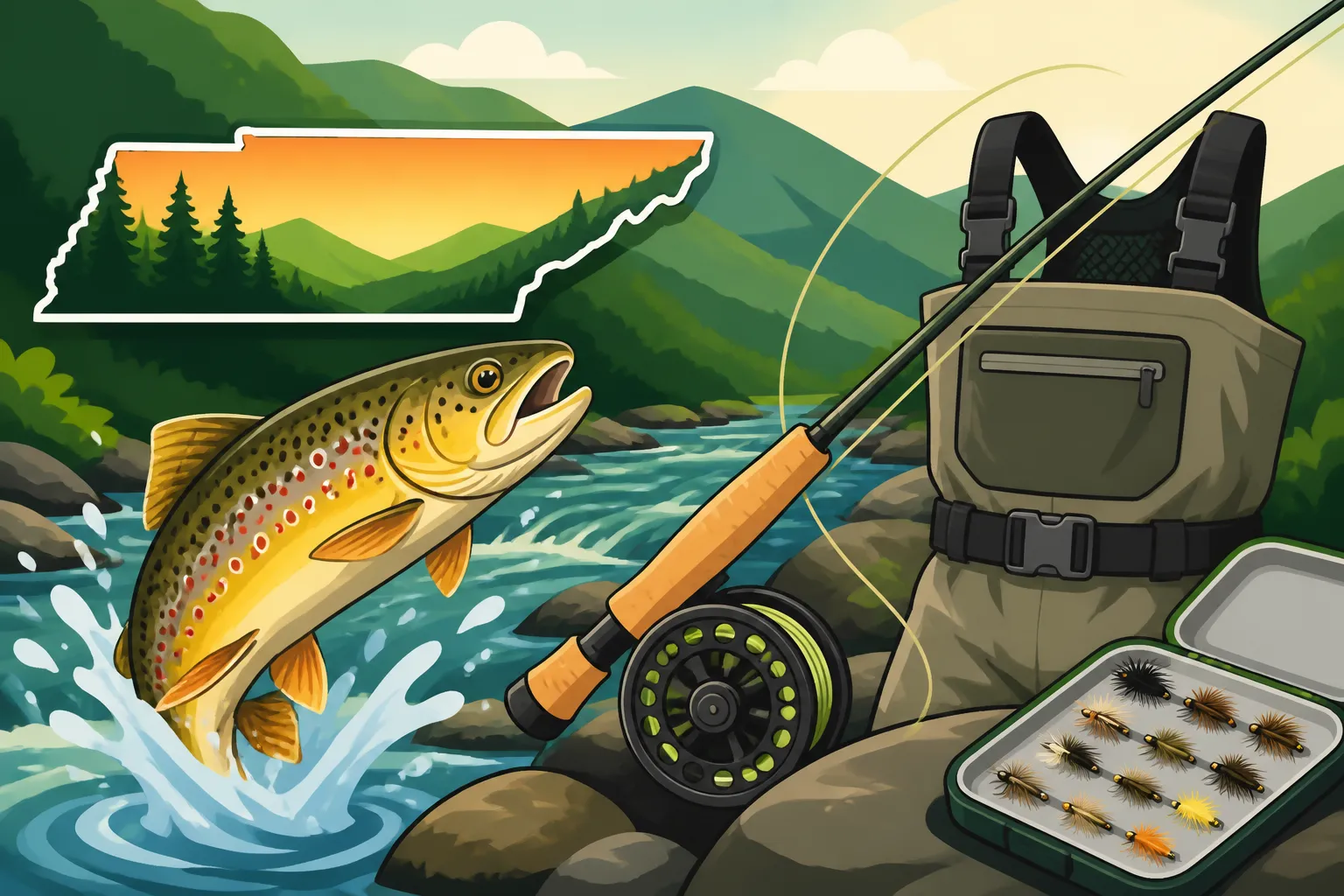
Best Fly Rods and Waders for Tennessee Trout Streams
The world of fly fishing in Tennessee offers some truly incredible experiences, from the wild, winding streams of the Great Smoky Mountains to the powerful, nutrient-rich tailwaters below our massive dams. But for many anglers, especially those just starting out or looking to upgrade, the sheer variety of fly rods and waders available can feel overwhelming. It's a common frustration to stand in a sporting goods store, staring at rows of gear, wondering what on earth is actually going to perform best when you're knee-deep in a cold Tennessee stream. This comprehensive guide is here to cut through the confusion, helping you understand the nuances of fly rod and wader selection so you can choose the perfect setup for your specific Tennessee trout fishing adventures, ensuring comfort, performance, and safety on the water.
Understanding Tennessee's Trout Stream Landscape
Before you even think about picking up a fly rod or trying on a pair of waders, it's absolutely crucial to understand the diverse environments you'll encounter when trout fishing in Tennessee. This isn't a one-size-fits-all state, and your gear choices should reflect that reality.
The Diversity of Tennessee's Trout Waters
Tennessee is blessed with an incredible array of trout waters, each presenting its own unique challenges and requiring slightly different approaches. You've got the high-gradient, often rocky, freestone streams winding through the Great Smoky Mountains National Park, where canopy cover is thick, casts are short, and the fish, while beautiful, aren't usually giants. These streams, like the Little River or Abrams Creek, demand finesse and stealth. Then, you have the larger, powerful tailwaters, like the Clinch River below Norris Dam or the Caney Fork River below Center Hill Dam. These are often broad, deep, and can have strong currents, requiring longer casts, heavier lines, and a different kind of wading strategy.
The difference between these environments is stark. Trying to wield a long, powerful rod designed for big tailwaters in a tiny, overgrown mountain stream will lead to nothing but snagged flies and frustration. Conversely, a delicate, short rod built for small streams will be utterly outmatched on a wide-open tailwater where you need to punch a heavy nymph rig through the wind. It's this geographical and hydrological diversity that makes thoughtful gear selection so important; ignoring it is a recipe for a less-than-stellar day on the water.
Understanding these distinctions allows you to make informed decisions. Are you primarily a small stream enthusiast who loves the challenge of wild brook trout? Or do you gravitate towards the big browns and rainbows of the tailwaters, often encountered while Trout Fishing in the Great Smoky Mountains, Tennessee? Your answer to these questions will be the first, and perhaps most important, filter in your gear search.
Common Trout Species and Their Habits
Tennessee is home to three main species of trout: rainbow, brown, and the native brook trout. While all are beautiful and exciting to catch, they often exhibit different sizes and fighting characteristics, which can subtly influence your rod choice. For a more in-depth look, check out our Tennessee Trout Guide: Rainbow, Brown, and Brook Trout.
Rainbow trout are perhaps the most common, especially in stocked waters, and are known for their acrobatic fights and willingness to hit a variety of flies. Browns can grow considerably larger, often exhibiting a more elusive nature and a powerful, dogged fight, especially when hooked in strong currents. Native brook trout, found primarily in the higher elevation, pristine streams of the Smokies, are typically smaller but are prized for their vibrant colors and the wild, remote environments they inhabit.
While you won't necessarily buy a rod just for brook trout versus rainbow trout, the typical size of the fish you encounter will play a role. If you're consistently targeting trophy-sized brown trout in a big river, a slightly heavier rod might give you more leverage and fighting power. Conversely, for those dainty brook trout, an ultralight setup maximizes the fun and challenge. It’s about matching the tool to the task, and the fish themselves are a big part of that equation.
Ultimately, the species you primarily target helps refine your selection, moving you towards a rod that feels appropriately matched to the average size and fighting spirit of the fish you're most likely to connect with. This isn't about overpowering the fish, but about enjoying the fight and minimizing stress on the fish during the catch and release process.
Decoding Fly Rod Selection for Tennessee
The fly rod is your primary tool, an extension of your arm, and choosing the right one for Tennessee's diverse waters is paramount. There are several key factors to consider beyond just how pretty it looks.
Rod Weight and Length: Finding Your Sweet Spot
The "weight" of a fly rod refers to the corresponding fly line weight it's designed to cast, and it's a critical component of your setup. In Tennessee, a range of rod weights and lengths are popular, each suited to different fishing scenarios.
For the tiny, brush-lined streams of the high country, a 2-weight or 3-weight rod is often ideal. These rods are short, typically 6'6" to 7'6" in length, and are designed for delicate presentations, short casts, and enhancing the fight of smaller trout. The lighter line doesn't spook wary fish in clear, shallow water, and the shorter length helps immensely when casting in tight quarters with overhanging branches. Think of the wild brook trout streams where finesse is everything.
Stepping up, a 4-weight rod, usually 8'0" to 9'0" long, is arguably the most versatile "all-around" choice for many Tennessee anglers. It's light enough for good presentation on medium-sized creeks but has enough backbone to handle larger trout and some wind on broader waters. If you're looking for a single rod that can do a bit of everything—from drifting dries on a smaller river to light nymphing on a tailwater—a 4-weight is a fantastic starting point. A 9'0" 4-weight can handle most situations you'll encounter on the smaller to medium rivers like the Hiwassee or portions of the Caney Fork.
For the larger tailwaters like the Clinch or the lower sections of the Cumberland, where longer casts, heavier nymph rigs, and bigger fish are common, a 5-weight or even a 6-weight rod (typically 9'0" long, sometimes 9'6" or 10'0" for specialized nymphing) might be more appropriate. These rods offer the power to cast larger, heavier flies, manage heavy indicator rigs, and provide better control over larger fish in strong currents. The added length can also be a huge advantage for line mending, allowing you to control your drift over greater distances. Many anglers will choose a 9' 5-weight as their first all-purpose rod, as it truly can handle a vast majority of freshwater trout situations, and even some smallmouth bass fishing.
Rod Action: Fast, Medium, or Slow?
Beyond weight and length, a rod's "action" describes where and how much it flexes when casting. This characteristic profoundly impacts your casting style and the kind of presentation you can achieve.
A fast-action rod bends mostly in the tip section. These rods are powerful, allowing for high line speed, tight loops, and long casts, even in windy conditions. They excel at quickly generating power to cast heavy nymph rigs or large streamers. However, they can be less forgiving for beginners, offering less "feel" and requiring precise timing. For experienced anglers tackling large tailwaters or needing to punch flies long distances, a fast-action rod can be a significant advantage.
Medium-action rods, sometimes called mid-flex, bend further down into the blank, offering a good balance between power and feel. They are often considered the most versatile action, suitable for a wide range of casting styles and fishing situations. They provide enough power for reasonable casting distances while still offering good sensitivity for delicate dry fly presentations. For a general-purpose Tennessee trout rod, a medium-fast or medium action is an excellent choice for many anglers, especially if you're still developing your casting stroke.
Slow-action rods bend deeply into the butt section, creating a much softer, more flexible feel. They are fantastic for delicate presentations, short casts, and protecting light tippets. They load easily with minimal line, making them superb for small stream dry fly fishing where precision and softness are key. However, they lack the power for long casts, heavy flies, or fighting large fish in heavy current. Think of a classic bamboo rod feel, which tends to be slow-action. For chasing those wild brook trout in a high-elevation stream, a slow-action 2-weight can be an absolute joy.
Materials and Construction: Graphite, Fiberglass, and Bamboo
The material your fly rod is made from significantly influences its performance, feel, and cost. While graphite dominates the modern market, other materials have their place.
Most contemporary fly rods are made from graphite (carbon fiber). Graphite rods are highly responsive, lightweight, and can be engineered to achieve various actions, from ultra-fast to moderate. They offer an excellent strength-to-weight ratio, making them durable yet sensitive. The vast majority of rods you'll find at retailers like Bass Pro Shops or on Amazon will be graphite, and for good reason—they perform exceptionally well across the board. The technology has advanced to a point where graphite rods are both powerful and incredibly light.
Fiberglass rods experienced a resurgence in popularity thanks to advancements in materials. Modern fiberglass rods are typically medium to slow action, offering a delightful, forgiving feel that loads easily and excels at delicate presentations. They're often heavier than graphite but offer a unique "soulful" casting experience, making even small fish feel like titans. Many anglers choose fiberglass for small stream fishing or when they want a rod that prioritizes feel and fun over raw power.
Bamboo rods are the traditional choice, handcrafted masterpieces known for their classic aesthetics and exceptionally smooth, slow action. They are typically the heaviest and most expensive option, requiring significant care. While not a practical choice for every angler, a well-made bamboo rod offers an unparalleled casting experience, particularly for dry fly purists. For most Tennessee trout fishing, especially if you're covering a lot of ground or planning on nymphing, a graphite or fiberglass rod will be more practical.
Regardless of material, look for quality components like robust reel seats, durable guides, and comfortable grips. A rod is an investment, and good construction ensures it will stand up to the rigors of the stream environment.
Wader Wisdom: Staying Dry and Comfortable
Your waders are your second skin on the water, and comfort, mobility, and dryness are paramount. The wrong waders can quickly turn a beautiful day into a miserable one.
Breathable vs. Neoprene: When to Choose Which
The climate and conditions in Tennessee dictate that you'll likely want to consider different wader materials for different times of the year.
Breathable waders are by far the most popular and versatile choice for modern fly fishing, especially in a state like Tennessee that experiences warm summers and mild shoulders seasons. Constructed from multi-layered, waterproof, yet permeable fabrics (like Gore-Tex or similar proprietary materials), they allow perspiration to escape while preventing water from entering. This keeps you much drier and more comfortable during active wading, long hikes to the stream, or on warmer days. For most of the year in Tennessee, especially from late spring through early fall, breathable waders are the absolute go-to. They are lighter, pack down smaller, and drastically reduce the clammy feeling that can ruin a day.
Neoprene waders, made from the same material as wetsuits, offer excellent insulation and are incredibly warm. They are ideal for extremely cold water conditions, such as deep winter fishing, or for anglers who spend a lot of time stationary in frigid currents. However, they don't breathe at all, meaning you'll get very hot and sweaty if you're hiking or actively wading on even a moderately warm day. If you plan to do a lot of winter trout fishing on a tailwater like the Clinch, where the water temperature is consistently cold, a good pair of neoprene waders can be a lifesaver. Otherwise, for general year-round use in Tennessee, breathable waders are the more practical and comfortable choice.
Given Tennessee's distinct four seasons, many dedicated trout anglers opt to own both types or rely heavily on layering underneath breathable waders during colder months. For a deeper dive into cold-weather options, check out our guide on Waders for Smoky Mountains Trout Fishing.
Bootfoot vs. Stockingfoot: Mobility and Support
Another critical decision when buying waders is whether to choose bootfoot or stockingfoot. Each style has its advantages and disadvantages in the context of Tennessee's diverse streams.
Stockingfoot waders are the most common choice among serious fly anglers. These waders have neoprene "socks" at the bottom, which require you to wear separate wading boots over them. The primary advantage here is versatility: you can choose wading boots that offer the best fit, support, and traction for your specific needs. This allows for superior ankle support, which is critical when navigating slippery, uneven river bottoms or scrambling over rocks along the bank. You can also customize your boot choice based on the type of traction you prefer (felt, rubber, or studded). If you're going to be doing a lot of hiking into remote sections of streams or wading in swift, rocky currents, stockingfoot waders paired with quality wading boots are generally the superior choice for safety and comfort.
Bootfoot waders have the boots permanently attached to the wader body. Their main advantage is convenience and warmth. There are no separate boots to put on, making them quicker to get into and out of, and the sealed connection eliminates potential entry points for grit or cold water. They can also be warmer in very cold conditions because there's no gap between the wader and boot. However, the fit of the integrated boot can be a compromise, as it's harder to get a perfect fit compared to separate boots. They also tend to be bulkier and less comfortable for long hikes, and if the boot wears out, you usually have to replace the entire wader. While some anglers prefer them for specific conditions, for the active, varied wading often required in Tennessee, stockingfoot waders generally offer more advantages in terms of support, traction, and long-term comfort.
Key Wader Features for Comfort and Durability
Beyond material and style, a few specific features can greatly enhance your wader experience and ensure they hold up to the demands of Tennessee fishing.
Look for waders with reinforced knees and seat. Wading involves kneeling, sitting on rocks, and general abrasion against rough surfaces. Extra layers of material in these high-wear areas can significantly extend the life of your waders, preventing frustrating leaks. Some waders also offer articulated knees, which improve mobility and reduce strain when bending or climbing.
Pocket configurations are another practical consideration. Chest pockets, internal flip-out pockets, and hand-warmer pockets add convenience for storing essentials like fly boxes, tippet spools, and a warm place for your hands on a chilly morning. Adjustable suspenders are also crucial for a comfortable and customizable fit, preventing sagging and allowing for layering underneath.
Finally, gravel guards are essential for stockingfoot waders. These are cuffs that go over your wading boots, preventing sand, gravel, and other debris from entering your boots and abrading the neoprene sock of your waders. Good gravel guards, often with a sturdy hook to attach to your laces, are non-negotiable for protecting your investment and keeping you comfortable. Always ensure your chosen waders fit well – too tight and they restrict movement and can be prone to stress leaks; too loose and they can chafe and collect water inside, making you cold and heavy. Trying them on, perhaps even at a store like Bass Pro Shops, is highly recommended.
Essential Complementary Gear for Tennessee Trout Anglers
A fly rod and waders are the foundation, but a few other pieces of gear are absolutely essential for a successful and safe day on Tennessee's trout streams.
Wading Boots: Grip and Ankle Support are King
If you opt for stockingfoot waders (which most serious anglers do), your wading boots are arguably one of the most critical pieces of safety gear you own. Tennessee's rivers and streams are notoriously slippery, with algae-covered rocks, slick bedrock, and shifting gravel. Good grip and ankle support are paramount to prevent falls, which can range from inconvenient to genuinely dangerous in swift currents.
When choosing wading boots, you'll generally decide between felt soles and rubber soles (often with the option to add studs). Felt soles offer exceptional grip on slick, algae-covered rocks, making them a favorite for many anglers on tailwaters. However, they can perform poorly on muddy banks or snow and can unfortunately harbor invasive species (check local regulations, as felt might be prohibited in some areas). Rubber soles, on the other hand, offer better traction on mud, snow, and dry land, and when combined with tungsten carbide studs, they can provide a very effective grip on slippery rocks while also being easier to clean and less prone to transporting invasives. Consider the terrain you'll be fishing most often. If you’re regularly in the Great Smoky Mountains where stream crossings are frequent and rocks abound, good boots are non-negotiable.
Beyond sole material, prioritize ankle support. Many falls result from twisted ankles on uneven stream bottoms. Boots with good lacing systems and supportive uppers will help protect your ankles and keep you stable, especially when wading through swift currents or navigating tricky access points. Don't skimp on wading boots; they are truly an investment in your safety and enjoyment. Many experienced anglers agree that good wading boots, along with a pair of Best Waders for Smoky Mountains Trout Streams, are foundational for comfort and safety.
Fly Reels and Lines: Matching Your Rod
While the rod is the engine of your cast, the fly reel and fly line are its crucial partners. For most trout fishing, the fly reel primarily serves as a convenient storage device for your line and backing, and for balancing the rod in your hand. Unlike conventional fishing, where the reel provides the casting weight, a fly reel's drag system only truly comes into play when fighting larger fish that make strong runs. For average Tennessee trout, a reliable, smooth drag is beneficial but not usually tested to its limits. Look for a reel that balances well with your chosen rod weight and has a solid, corrosion-resistant construction.
The fly line is where the real magic happens. It's the weight of the fly line, not the lure, that you cast in fly fishing. Therefore, it's absolutely critical to match your fly line weight to your rod's recommended weight (e.g., a 5-weight line for a 5-weight rod). Beyond weight, different tapers exist: weight-forward (WF) lines are common and versatile, featuring a heavier front section for easier casting and distance. Double-taper (DT) lines are excellent for delicate presentations and roll casts, making them popular for small stream dry fly fishing. Choose a high-quality line appropriate for your chosen rod and fishing style. For more details on line choices, consult our guide on Best Fly Fishing Line Weight for Trout.
Don't forget backing, a thinner line spooled onto the reel before your fly line, providing extra yardage in case a large fish makes a long run. Finally, your leader and tippet connect your fly line to your fly. These are clear, tapered lines designed to be nearly invisible to the fish and to provide a delicate presentation. Carrying a variety of tippet sizes is essential for adapting to different fly sizes and water conditions.
Vests, Packs, and Accessories
Once you have your core gear, a system for carrying your essential accessories is next. The choice between a fishing vest, chest pack, sling pack, or backpack often comes down to personal preference and how much gear you like to carry.
A traditional fishing vest offers numerous pockets for organizing fly boxes, tippet spools, floatant, and tools. They distribute weight evenly and keep everything easily accessible. Chest packs offer similar accessibility but keep all the gear on your chest, leaving your back clear for wading or movement. Sling packs are popular for their ability to swing around to your front for access and then out of the way on your back. For those long hikes into remote streams or if you carry camera gear or extra layers, a backpack system might be more appropriate. Many backpack designs now feature integrated chest or hip packs for essentials while keeping the bulk of your gear stowed away. For insights into maximizing your carry capacity, explore Best Fly Fishing Vests for Wade Fishing.
Beyond the carrying system, don't forget the small but mighty accessories:
- Nippers: For cleanly cutting leader and tippet.
- Forceps/Hemostats: Essential for safely removing flies from fish, especially if you're practicing catch and release.
- Floatant: For keeping your dry flies riding high on the water.
- Tippet spools: Carry a range of sizes to match your flies and conditions.
- Net: A quality landing net (often with a rubberized mesh to protect fish) is crucial for safely landing and releasing fish.
- Thermometer: To check water temperature, which heavily influences fish activity.
- First Aid Kit: A small one for minor cuts and scrapes, especially when fishing in remote areas.
- Water/Snacks: Staying hydrated and fueled is crucial for long days on the water.
Having these items organized and accessible will make your time on the water much more enjoyable and productive, allowing you to focus on the fishing rather than fumbling for gear.
Where to Find Your Gear (and Why Quality Matters)
So, you've done your research, you know what you're looking for. Now, where do you actually buy it, and why should you consider quality over the cheapest option?
Shopping Local vs. Online
When it comes to purchasing fly fishing gear, you generally have two main avenues: local fly shops or online retailers. Each has distinct advantages.
Local fly shops are invaluable resources. These are typically run by passionate anglers who have intimate knowledge of the local waters—the same Tennessee trout streams you're planning to fish. They can offer personalized advice on rod and wader selection, let you physically try on waders to ensure a proper fit, and even let you "wiggle" a few rods to get a feel for their action. The ability to touch, feel, and try on gear, especially waders and boots, is a huge advantage, as fit is so critical for comfort and preventing leaks. Plus, buying local supports the community and often gives you access to real-time fishing reports and insights. You can ask them specific questions about Tennessee's Best Trout Streams or Clinch River Trout Fishing in East Tennessee.
Online retailers, such as Amazon or dedicated fly fishing websites, offer an unparalleled selection and often competitive pricing. You can browse countless brands and models from the comfort of your home, read reviews, and compare specifications. If you know exactly what you want or are reordering a tried-and-true item, online shopping is incredibly convenient. However, the downside is the inability to physically interact with the gear, which can be problematic for items like waders where fit is paramount. While you might find some great deals, the lack of immediate expert advice and the inability to test fit can sometimes lead to suboptimal purchases, especially for bigger ticket items like a new rod or waders.
A hybrid approach often works best: do your initial research online to understand options and features. Then, if possible, visit a local fly shop to try on waders, feel different rods, and get expert advice. You can then make an informed decision, whether you ultimately purchase from that shop or find a comparable deal online.
Investing in Durability: The Long-Term View
It's tempting to opt for the cheapest fly rod and waders you can find, especially when you're just starting out. However, with fly fishing gear, particularly waders, skimping on quality is often a false economy.
Fly fishing in Tennessee involves navigating rugged terrain, wading through currents, and exposing your gear to bumps, scrapes, and punctures. Cheaper waders are often made with less durable fabrics and inferior seam construction, making them far more prone to leaks and tears after just a few outings. There's nothing worse than having your day cut short (or made miserable) by cold, wet legs. Investing in a reputable brand with a good warranty can save you money and headaches in the long run. Quality waders might cost more upfront, but they're built to withstand the abuse of the stream and will keep you dry for many seasons.
The same principle applies to fly rods. While you don't need the most expensive rod on the market, a quality mid-range rod will offer better performance, a more enjoyable casting experience, and greater durability than a rock-bottom budget option. Better components, superior blank construction, and often better warranty support from established brands mean your investment will last and perform reliably. Think of it as investing in your enjoyment and comfort on the water; a piece of gear that fails prematurely or performs poorly can actively detract from your fishing experience. The adage "buy once, cry once" often rings true in the world of fly fishing gear.
Disclaimer
This article is for general informational purposes only and does not constitute professional advice. Laws, prices and regulations vary by location and change over time. Consult a qualified professional for guidance on your specific situation.