Largemouth Bass Identification Tips for Tennessee Anglers
Oh, the joy of a good fishing trip in Tennessee! There's nothing quite like the tug on your line, the splash, and the sheer excitement of reeling in a beautiful fish. But let's be honest, sometimes, in the heat of the moment, distinguishing one bass from another can feel like a real head-scratcher. You've got that fish in hand, and you're wondering, "Is this a largemouth, a smallmouth, or even a spotted bass?" This guide is here to untangle that confusion, offering clear, empathetic, and truly helpful tips for confidently identifying largemouth bass across our beautiful Tennessee waters.
Why Accurate Largemouth Bass Identification Matters in Tennessee
It might seem like a minor detail when you're out there, enjoying the peace and quiet of a lake, but knowing exactly what kind of bass you've caught goes way beyond just bragging rights. In Tennessee, accurate fish identification is incredibly important, not only for staying on the right side of the law but also for doing your part to protect our precious aquatic ecosystems. Trust me, it’s a skill every angler, from the seasoned veteran to the enthusiastic beginner, should absolutely cultivate.
Navigating Tennessee's Diverse Fishing Regulations
One of the biggest reasons to be spot-on with your identification is compliance with fishing regulations. The Tennessee Wildlife Resources Agency (TWRA) sets specific length and creel limits for different bass species, and these limits can vary significantly. For example, the daily limit for largemouth bass might be one thing, while for smallmouth or spotted bass, it could be entirely different. Imagine you've had a fantastic day on the water, only to realize back at the dock that you've accidentally kept too many of one species because you misidentified them. That's a mistake no one wants to make, potentially leading to fines or even the loss of your fishing privileges. It's not about being a killjoy; it's about being a responsible angler who respects the rules designed to maintain healthy fish populations for everyone. You can always check the official TWRA guide for specific details on Tennessee Largemouth Bass Season and Limits to avoid any mishaps.
Understanding these nuances is crucial, especially when you consider that some lakes might even have special, lake-specific rules that override the statewide defaults. What's legal on Chickamauga Lake might be different on Watts Bar. It's a lot to keep track of, and sometimes the pressure of a great bite can make you forget to double-check. That's why having the core identification down pat is your first line of defense against unintentional violations. It gives you peace of mind, allowing you to focus on the pure enjoyment of the sport rather than constantly second-guessing your catch.
The Role of Species Conservation and Ecosystem Health
Beyond regulations, accurate identification plays a vital role in conservation. Each bass species has its own unique niche within the ecosystem, and understanding their populations helps wildlife biologists manage them effectively. When anglers can correctly identify and report their catches (especially during surveys or if they're tagging fish), they contribute valuable data that helps ensure these species thrive for generations to come. Misidentification can skew data, leading to less effective management strategies.
Consider the delicate balance of our Tennessee lakes and rivers. Some bass species might be more susceptible to environmental changes or fishing pressure than others. By knowing what you're catching, you're better equipped to participate in catch-and-release practices for vulnerable populations, or to understand why certain areas might have specific restrictions. It's about being an informed steward of our natural resources, recognizing that every fish, whether it's a Largemouth Bass Size Chart: How Big Do They Get? or a plump panfish, plays an important part in the bigger picture. When we respect and understand the fish we pursue, we help guarantee that the next generation of anglers will have just as many, if not more, opportunities to enjoy the sport we love.
Unmistakable Physical Hallmarks of a Tennessee Largemouth
When you pull a fish out of the water, there are a few tell-tale signs that scream "largemouth bass!" Knowing these key physical features will make you a pro at identification, even if you’re just getting started. It's all about paying attention to the details, and once you know what to look for, it becomes second nature.
The Signature Mouth and Jaw Structure
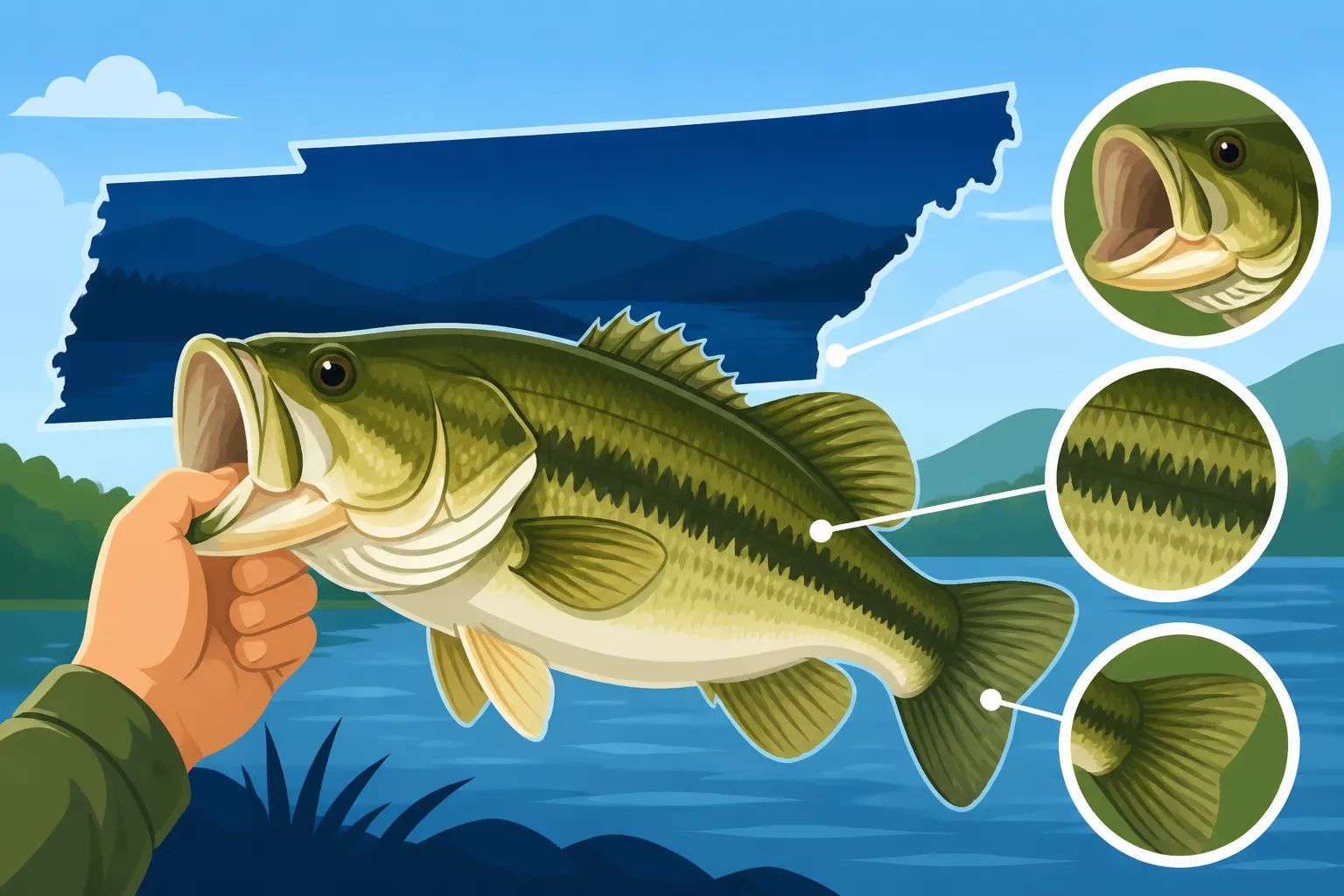
The most famous, and frankly, the easiest way to identify a largemouth bass is right there in its name: its mouth. When you close the fish's mouth, the hinge of its jaw – that's the maxillary bone – extends well past the back of its eye. Seriously, grab a Largemouth (carefully, of course!), close its mouth, and look at how far back that jawline goes. It's usually quite pronounced, giving the fish a somewhat "gaping" appearance even when its mouth is closed. This is a crucial distinction from other bass species, which often have jaws that don't extend nearly as far.
Think of it this way: if you can imagine drawing a vertical line straight down from the back of the fish's eye, and the jaw joint falls behind that line, you're almost certainly holding a largemouth. This massive mouth allows them to swallow surprisingly large prey, from smaller fish to frogs and even small birds or rodents. It's a true predatory feature. Keep this visual in your head – the "big mouth" isn't just a nickname; it's a defining anatomical feature that's hard to miss. Many anglers find it helpful to compare with pictures in a good field guide, which you can often find readily available on Amazon.
Lateral Line, Coloration, and Body Shape
While the mouth is a dead giveaway, the largemouth bass also has a distinct lateral line and coloration pattern that helps with identification. Most largemouth bass in Tennessee exhibit a prominent, dark, somewhat uneven horizontal stripe or series of blotches running along their sides, from their gill plate to their tail. This lateral line isn't perfectly straight; it can appear broken or mottled, especially on larger, older fish. The overall body color can vary widely depending on the water clarity, bottom composition, and vegetation where the fish lives. Fish from clear, rocky lakes might be lighter, almost olive green, while those from stained, weedy waters can be very dark green or even brownish.
Beyond the color, their body shape is also distinctive. Largemouth bass tend to have a more elongated, somewhat torpedo-shaped body compared to the chunkier, more compact build of some other bass species. Their backs are usually arched, leading down to a fairly deep body that tapers towards the tail. If you were to look at a fish like a football, a largemouth would be more like a prolate spheroid (the longer, thinner kind), whereas other bass might be more like a stout rugby ball. When trying to learn How to Identify a Largemouth Bass in Tennessee, pay close attention to this combination of features.
The Critically Separated Dorsal Fin
Here’s another key feature that often goes overlooked but is incredibly helpful: the dorsal fin. The largemouth bass has two dorsal fins, but they are clearly, almost completely, separated. The first, spiny dorsal fin will have sharp, rigid rays, and it will be distinctly separated from the second, soft-rayed dorsal fin. There's a noticeable, deep notch or gap between the two sections. You can almost put your finger down in that space without hitting any fin rays.
This separation is a critical identifier. Other bass species, particularly the spotted bass, have dorsal fins that appear much more connected, with only a shallow notch between the spiny and soft-rayed sections. When you run your finger (carefully!) along the top of a largemouth's back, you'll feel that distinct dip and separation. It’s a subtle but consistent characteristic that can help confirm your identification, especially when other features might be less obvious due to varying color patterns or minor injuries. This is a very reliable feature to check if you're ever in doubt, particularly if the fish is thrashing and you can't get a good look at its mouth.
Decoding Differences: Largemouth vs. Other Tennessee Bass Species
Sometimes, a fish looks almost like a largemouth, but something just feels off. That's usually when you've encountered one of Tennessee's other fantastic bass species. Knowing the subtle (and sometimes not-so-subtle) differences between largemouth, smallmouth, and spotted bass is key to accurate identification and a deeper understanding of our fisheries.
Head-to-Head: Largemouth vs. Smallmouth Bass
These two are perhaps the most commonly confused bass, especially for anglers new to Tennessee's waters. While both are fantastic sport fish, their identification hinges on a few crucial distinctions. As we discussed, the largemouth's jaw extends past the back of its eye when its mouth is closed. For a smallmouth bass, that jaw typically stops before or directly under the middle of the eye. This is probably the most reliable visual cue. Smallmouth also tend to have a more uniform bronze, brown, or olive green coloration, often with vertical bars or blotches on their sides rather than the distinct horizontal stripe of a largemouth.
Beyond the mouth, smallmouth bass generally have redder eyes and a more compact, muscular body shape. They're built like little powerhouses, adapted for fighting currents in rivers and deeper, cooler sections of lakes. The dorsal fin separation on a smallmouth is usually less pronounced than a largemouth, though it is still present. When you're fishing in clear, rocky rivers like the Clinch or parts of the Cumberland, you're more likely to encounter smallmouth. But in the larger reservoirs, especially near submerged timber or weed beds, largemouth are king. If you want to dive deeper into these differences, check out Smallmouth Bass vs Largemouth Bass: What's the Difference?.
Largemouth vs. Spotted Bass: Identifying the Subtle Markers
The spotted bass, often called a "spot" or "Kentucky bass," is perhaps the trickiest one to differentiate from a largemouth. They share many similarities, including a generally green coloration and a lateral line pattern that can sometimes resemble a largemouth's. However, there are two key features that set them apart. First, the spotted bass’s jaw, like the smallmouth, usually doesn't extend past the back of its eye. It falls more in line with the middle of the eye.
Second, and this is a definitive marker, run your finger along the fish's tongue. If you feel a small, rough patch of teeth on the tongue, it's a spotted bass. Largemouth bass do not have this tooth patch. It's a subtle feel, but once you know what you're looking for, it's unmistakable. Additionally, spotted bass often have distinct rows of small black spots on their lower sides, below the lateral line, which are usually absent or very faint on largemouth. Their dorsal fins also show less separation than a largemouth's, appearing more connected with only a shallow notch. Understanding these nuances is especially important because Spotted Bass vs Largemouth Bass in Tennessee Lakes can inhabit similar waters and share similar forage.
A Quick Comparative Guide to Tennessee Bass
To really solidify these differences, here's a handy table outlining the primary characteristics to look for when you're trying to tell Tennessee's popular bass species apart. Keep this in mind when you're on the water!
| Feature | Largemouth Bass | Smallmouth Bass | Spotted Bass (Kentucky Bass) |
|---|---|---|---|
| Jaw Extension | Extends past the back of the eye | Extends to or before the middle of the eye | Extends to or before the middle of the eye |
| Dorsal Fin | Deeply separated into two distinct parts | Partially separated, shallow notch | Partially separated, shallow notch |
| Lateral Line | Prominent, often broken/blotchy dark stripe | Vertical bars or mottled pattern | Prominent lateral line, often with distinct spots below |
| Tongue Tooth Patch | Absent | Absent | Present (feel for a rough patch) |
| Body Shape | More elongated, somewhat deep-bodied | More compact, muscular, football-shaped | Similar to largemouth, but often sleeker |
| Eye Color | Typically dark | Often reddish-brown | Typically dark |
| Coloration | Varied green/olive, distinct horizontal stripe | Bronze, brown, olive with vertical bars/blotches | Green/olive, rows of spots below lateral line |
This table should be your quick reference guide whenever you're in doubt. You can even find laminated versions of these charts, perfect for tossing into your tackle box, on sites like Amazon.
Where and How to Find Largemouth: Habitat and Behavioral Traits
Identifying a largemouth bass isn't just about what it looks like; it's also about knowing where to find it and how it behaves. Understanding their preferred habitats and feeding strategies in Tennessee waters can greatly increase your chances of hooking into these fantastic game fish, and often gives you a "pre-identification" clue based on your fishing location.
Favorite Haunts: Structure and Cover Preferences
Largemouth bass are ambush predators, and their preferred habitats reflect this. They love cover and structure – anything that offers them a place to hide, wait for prey, or feel secure. In Tennessee's vast reservoirs and lakes, this means you'll typically find them around submerged timber (like fallen trees and brush piles), docks, lily pads, hydrilla beds, rock piles, and points. Basically, if it's got shade, a break in the current, or something to hide behind, a largemouth bass is probably interested. They are masters of camouflage and will often position themselves right in the thickest cover, ready to dart out and ambush an unsuspecting baitfish.
Think about a hot summer day: where would you want to be? Probably in the shade, right? Largemouth are no different. They'll often seek out the shade lines of docks, overhanging trees, or the dense canopy of submerged vegetation. This not only offers them a comfortable temperature but also breaks up their outline from above, making them invisible to prey. Learning Where to Catch Trophy Largemouth Bass in Tennessee often comes down to knowing these prime structural elements on your local lake. Knowing their preferred "neighborhoods" can narrow down the identification process even before you get a visual on the fish.
Feeding Strategies and Prime Strike Zones
Largemouth bass are opportunistic feeders, meaning they'll eat just about anything they can get their big mouths around. Their diet largely consists of smaller fish (like shad, bluegill, and sunfish), crayfish, frogs, and insects. They are primarily visual predators, relying on their keen eyesight to spot prey. Their feeding strategy is often an explosive ambush, where they'll dart out from cover, engulf their prey, and quickly retreat.
The "strike zone" for a largemouth can be incredibly tight, sometimes just inches away from their nose. This is why precise lure placement is so critical when targeting them, especially in heavy cover. They're not usually going to chase a lure across open water for a long distance unless they are in an aggressive schooling frenzy. Instead, they'll wait for prey to come to them. Understanding this behavior helps you choose the right Best Bait for Largemouth Bass Fishing and present it effectively. Whether it's a topwater frog skittering across lily pads or a soft plastic jig punched through thick weeds, you're trying to mimic a meal that has wandered too close to their hideout.
Understanding Seasonal Movements and Spawning Rituals
Just like humans, largemouth bass change their routines with the seasons. Their behavior, including where they hang out and how aggressively they feed, is heavily influenced by water temperature and the annual spawning cycle. In early spring, as water temperatures rise, largemouth will move from their deeper wintering holes into shallower, warmer coves and flats, preparing for the spawn. This pre-spawn period is often one of the best times for anglers, as the fish are actively feeding to bulk up for the energy-intensive spawning process.
During the spawn itself, which typically occurs when water temperatures are consistently in the mid-60s, male largemouth will guard nests in shallow water. They become very aggressive and will strike at anything perceived as a threat to their eggs or fry. Post-spawn, they might be a bit lethargic before moving back to slightly deeper, but still cover-rich, areas. As summer progresses, they'll often go deeper during the day to find cooler water, moving shallower again during dawn and dusk to feed. In fall, as temperatures drop, they'll again feed aggressively, preparing for winter. Understanding Tennessee's Bass Fishing Seasons and Patterns is like having a secret roadmap to finding these fish throughout the year.
Mastering Field Identification and Continued Learning
Becoming truly proficient at identifying largemouth bass, or any fish for that matter, is a journey. It takes time, observation, and a willingness to learn. But with the right approach, you'll soon be able to confidently tell your largemouth from your smallmouth with hardly a second thought, even when you're knee-deep in water and the adrenaline is pumping.
Practical Tips for On-the-Water Verification
The best classroom for fish identification is the water itself. Every time you catch a fish, take a moment to really examine it before releasing it. Don't just focus on getting the hook out. Gently hold the fish (wet hands are best to protect their slime coat) and visually check the jaw extension, the dorsal fin separation, and look for any unique patterns or spots. If you're with a fishing buddy, compare notes! Two sets of eyes are always better than one.
One trick I often use is to take a quick, clear photo. Later, you can zoom in on the picture and analyze the features without the pressure of a flopping fish in your hands. This is especially helpful if you're trying to learn Largemouth Bass Identification Tips for Tennessee Anglers and still building your confidence. A small, waterproof camera or your phone in a protective case is an invaluable tool for this. Make it a habit, and you'll find your identification skills sharpening quickly. Remember, the goal is to be certain before you decide whether to keep the fish or release it, ensuring you adhere to all the relevant Tennessee Fishing Regulations Explained.
Utilizing Field Guides and Online Resources
You don't have to carry a textbook with you on the boat. There are numerous excellent, compact fishing guides available that specifically cover the fish species found in Tennessee. These guides often feature detailed illustrations or photos, highlighting the key identification markers we've discussed. Keep one in your tackle box or boat. They are fantastic for a quick reference when you're stumped. Many anglers find a good field guide to be an essential piece of gear, right up there with their favorite rod and reel, and they're easy to find on platforms like Amazon.
Beyond physical guides, the internet is a treasure trove of information. The Tennessee Wildlife Resources Agency (TWRA) website is an excellent, authoritative source for fish identification, regulations, and even local stocking reports. There are also countless forums, YouTube channels, and fishing blogs dedicated to helping anglers identify their catches. Don't be shy about posting a picture of a fish you're unsure about in a reputable online fishing group; most anglers are more than happy to help a fellow enthusiast learn. The more resources you tap into, the more robust your knowledge base will become.
The Rewards of Persistent Observation and Practice
Like any skill worth having, confident fish identification comes with practice. The more you fish, the more fish you catch, and the more you consciously observe their features, the better you'll become. Soon, you won't even need to consciously think about the jawline or the dorsal fin; your eyes will just know. It becomes an instinctive part of the catch. This mastery not only makes you a more knowledgeable and compliant angler but also enhances your overall enjoyment of the sport.
Imagine the satisfaction of pulling in a magnificent fish, instantly knowing it's a prime largemouth, and being confident that you're within all the legal limits before you even think about the camera or the livewell. That confidence allows you to fully appreciate the moment, the fight, and the beauty of the fish itself. It connects you more deeply to the waters you fish and the amazing creatures that inhabit them. So, keep casting, keep learning, and keep observing – the rewards are well worth the effort.
Disclaimer
This article is for general informational purposes only and does not constitute professional advice. Laws, prices and regulations vary by location and change over time. Consult a qualified professional for guidance on your specific situation.