Best Kayak Paddles for Fishing
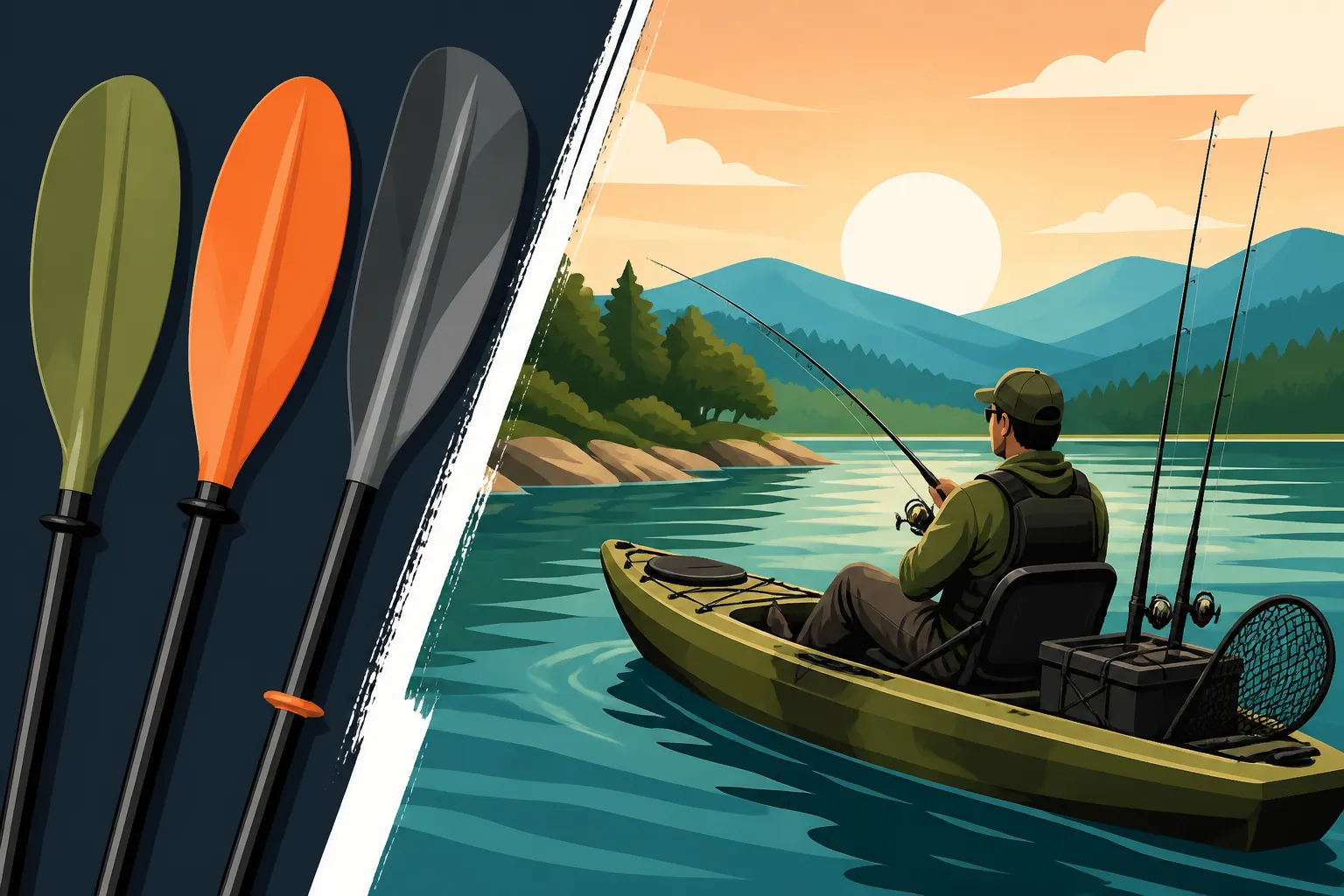
There's nothing quite like the serenity of kayak fishing on a glassy Tennessee lake, but that peace can quickly turn to frustration if you're battling an ill-suited paddle all day long. A paddle isn't just a tool to move you; it's an extension of your arm, impacting your energy, stealth, and overall enjoyment on the water. This comprehensive guide will cut through the noise to help you understand what makes a great fishing kayak paddle and how to choose the best one for your Tennessee adventures.
Why Your Paddle Is Your Most Important Kayak Fishing Tool
Many anglers spend countless hours agonizing over the perfect rod, reel, lure, or bait, and rightly so. Those are critical components of a successful fishing trip. However, often overlooked is the humble kayak paddle, which can make or break your day on the water, especially when you're targeting specific spots on sprawling reservoirs like Chickamauga Lake or navigating the currents of the Cumberland River. Your paddle isn't just about propulsion; it's about efficiency, control, stealth, and, ultimately, how long you can comfortably stay out there chasing fish.
Imagine you’re out on a long day of fishing on Kentucky Lake Fishing on the Tennessee Side. You’ve paddled a few miles, battling a slight headwind, and you’re starting to feel it in your shoulders and back. If your paddle is too heavy, too short, or simply inefficient, every stroke becomes a chore, eating away at your energy reserves. This isn't just about physical discomfort; it directly translates to less time fishing, less precise boat positioning, and a higher chance of calling it a day earlier than you planned. A good paddle helps you conserve energy, allowing you to focus on the actual fishing rather than the struggle of getting around.
Beyond just covering distance, a quality paddle is indispensable for precise boat control, which is crucial for successful kayak fishing. Picture yourself trying to hold position against a gentle current while casting to a submerged brush pile, or subtly moving to stay on top of a school of bass. A paddle with the right blade shape and a comfortable grip allows for delicate, nuanced movements that a clunky, ill-fitting paddle simply cannot provide. This precision is what enables you to work a prime piece of structure effectively or adjust quickly when a fish strikes.
Finally, let’s talk about stealth. Fish are incredibly sensitive to vibrations and sudden movements. A paddle that's noisy, either from water dripping, scraping against the kayak, or clanking as you try to stow it, can spook fish before you even get a cast in. Lightweight, well-designed paddles often move through the water with less disturbance and can be managed more quietly. This quiet approach can be the difference between catching that wary smallmouth bass in a clear stream or watching it dart away before it ever sees your bait. Investing in a quality paddle truly is investing in your overall fishing experience.
Essential Features to Consider for Fishing Kayak Paddles
When you start looking for a fishing kayak paddle, the sheer variety can be overwhelming. It's not just about picking one that looks good; it's about understanding the specific features that will impact your performance and comfort on the water. From the overall length to the shape of the blade and the material it's made from, each element plays a role in how efficiently you paddle, how much fatigue you experience, and how well you can maneuver your craft.
Paddle Length for Optimal Performance
The length of your paddle is arguably the most critical factor for kayak fishing, and it's heavily dependent on two things: the width of your kayak and your height as an angler. A paddle that's too short will force you to reach awkwardly wide, making you work harder and potentially splashing water into your lap with every stroke. Conversely, a paddle that's too long will feel cumbersome and inefficient, creating unnecessary drag and tiring you out faster. Fishing kayaks, especially sit-on-top models, tend to be wider and have higher seats than recreational kayaks for stability, meaning they often require longer paddles.
To get a general idea, you can use a quick guide. For kayaks that are around 23-28 inches wide, a paddle of 220-230 cm might be appropriate for an average-height angler. For wider fishing kayaks, say 29-33 inches wide, you might need a paddle in the 240-250 cm range. If your kayak is even wider, perhaps a stable fishing platform nearing 34-36 inches, a 250-260 cm paddle or even longer could be necessary. Your own height also plays a role; taller paddlers generally benefit from a slightly longer paddle. Many experienced anglers find that adjustable-length paddles offer the best flexibility, allowing you to fine-tune the length for different conditions or if you switch between kayaks. These are readily available from retailers like Bass Pro Shops or various options can be found online through Amazon.
Blade Shape and Material
The shape of your paddle blade directly affects how it moves through the water, impacting both power and efficiency. Generally, there are two main categories: low-angle and high-angle blades, though many fishing-specific paddles fall somewhere in between, offering a blend of both. Low-angle blades are typically longer and narrower, designed for a more relaxed, horizontal stroke that conserves energy over long distances. High-angle blades are shorter and wider, allowing for more powerful, vertical strokes that generate quick bursts of speed and precise maneuvering. For kayak fishing, where a mix of long-distance paddling and quick, controlled movements is common, a versatile blade shape that offers a good balance is often preferred.
Paddle material influences weight, durability, and cost. Aluminum paddles are usually the most budget-friendly, but they can be heavy, cold to the touch in winter, and less durable over time. Fiberglass paddles strike a good balance, offering decent weight savings and improved durability without breaking the bank. They tend to be more comfortable to hold and absorb vibrations better than aluminum. Carbon fiber paddles are the premium choice, being incredibly lightweight, stiff, and highly efficient. This reduced weight can significantly lessen fatigue during a full day on the water, making them a favorite among serious anglers who spend hours on big waters like Watts Bar Lake, Tennessee's Largest Lake for Fishing. However, they come with a higher price tag.
Ferrule Systems and Adjustability
The ferrule system is the mechanism that connects the two halves of your paddle. This is where adjustability comes in. Many paddles come with a fixed-angle ferrule, meaning the blades are set at a predetermined feather angle (the offset between the blades). While simpler, this offers no flexibility. For kayak fishing, an adjustable ferrule system is often a game-changer. These systems allow you to change the feather angle, which can be beneficial for different paddling styles, wind conditions, or if you're sharing a paddle with another angler.
More advanced ferrule systems also offer length adjustment, allowing you to extend or shorten the paddle by a few centimeters. This is incredibly useful for fine-tuning your paddle to your specific kayak and fishing conditions. For example, if you're fishing a narrow stream like the Caney Fork River Trout Fishing where you need more precise control and less reach, you might shorten your paddle. If you then move to a wide-open lake for Deep Water Techniques for Striped Bass, you might extend it for more powerful strokes. Look for robust ferrule systems that are easy to use, don't accumulate sand or grit, and provide a secure, wobble-free connection between the paddle halves. A good ferrule system adds versatility and comfort, ensuring your paddle is truly adaptable to whatever Tennessee waters you decide to explore.
Selecting the Right Paddle for Your Kayak and Fishing Style
Choosing the perfect kayak paddle isn't a one-size-fits-all situation. It truly depends on the type of kayak you're using, the kind of fishing you typically do, and your personal preferences for comfort and performance. Just like you wouldn't use a fly rod for catfishing, you shouldn't expect a recreational paddle to perform optimally for a dedicated fishing kayak on a challenging day. Matching your paddle to your gear and technique is paramount for maximizing your enjoyment and success on the water.
Sit-on-Top vs. Sit-in Kayaks
The fundamental difference in kayak design — sit-on-top (SOT) versus sit-in (SIT) — has a huge impact on paddle choice. Most dedicated fishing kayaks are sit-on-top models, designed for stability, easy access to gear, and often a higher seating position. This higher seating and wider beam mean you'll almost always need a longer paddle than you would for a comparable length sit-in kayak. If you try to use a shorter paddle on a wide SOT, you'll constantly be reaching out, putting strain on your shoulders and back, and hitting the sides of your kayak.
Sit-in kayaks, on the other hand, often have lower seating and narrower profiles, requiring shorter paddles. While less common for dedicated fishing, some anglers prefer them for protection from the elements or for navigating colder waters. Always measure your kayak's width and consider your seating height when determining paddle length. An adjustable paddle can be particularly helpful if you own both types of kayaks or if you frequently change your seating position in a sit-on-top, perhaps moving from a low deck seat to a high-rise fishing seat.
Matching to Your Fishing Techniques and Environment
Your primary fishing techniques and the environments you fish in also heavily influence paddle selection. If you’re a bass angler spending long days paddling across large impoundments like Chickamauga Lake: Tennessee's Top Bass Fishing Destination or Norris Lake Fishing Guide, Tennessee's Clearest Water, covering significant distances to reach different coves and structure, a lightweight, efficient paddle with a low-angle blade design made of fiberglass or carbon fiber will be a godsend. It minimizes fatigue, allowing you to save your energy for casting and fighting fish.
Conversely, if your fishing primarily involves navigating tight streams, maneuvering through dense cover, or holding precise positions while sight fishing for trout in the Clinch River Trout Fishing in East Tennessee, a paddle that allows for quick, powerful, and precise strokes might be more beneficial. A high-angle blade, perhaps slightly shorter, can provide that immediate power and control needed for delicate adjustments or quick turns. Even if it's a bit heavier, the ability to control your kayak exactly where you want it often outweighs the minor weight penalty for these types of specific, short-burst paddling needs.
For anglers who employ trolling techniques, such as Trolling for Striped Bass on Tennessee's bigger lakes, a paddle is still essential for getting to your trolling grounds and for making minor steering corrections when the trolling motor is running. Here, a robust and durable paddle is needed, perhaps one with a strong fiberglass shaft and durable blades. The overall weight might be less critical if most of your propulsion comes from a motor, but maneuverability and the ability to quickly pull yourself out of trouble (or chase a fish) remain important.
Ergonomics and Comfort
Don't underestimate the importance of ergonomics and comfort. You'll be holding this paddle for hours on end, so it needs to feel good in your hands. Look for a paddle with a comfortable grip, especially where your hands typically rest. Some paddles feature ovalized shafts for a more natural hand fit, reducing strain. Drip rings are also a small but mighty feature; they prevent water from running down the shaft and into your lap, keeping you drier and more comfortable, especially on chilly mornings.
The ferrule system's ease of use is also part of comfort. Can you easily adjust the length or feather angle with cold, wet hands? Does it offer multiple feather angles, allowing you to find what feels most natural to your wrists and shoulders? Trying out a paddle, even just by holding it and performing some dry strokes in a store like Bass Pro Shops, can give you a better feel for its ergonomics. Reading user reviews on sites like Amazon can also provide valuable insights into real-world comfort and durability from other kayak anglers. Remember, a comfortable paddle is a paddle you'll actually want to use, making your fishing trips much more enjoyable.
Understanding Paddle Materials and Their Impact
When you're sifting through the options for fishing kayak paddles, one of the biggest factors that influences performance, weight, and price is the material it's made from. Each material type has its own set of characteristics that make it suitable for different kinds of anglers and budgets. It's not just about what looks good; it's about what will serve you best on the water, whether you're navigating the serene backwaters or tackling a windy day on a major reservoir.
Aluminum Paddles: The Budget-Friendly Workhorse
Aluminum paddles typically represent the entry-level option in the kayak paddle market. They are widely available and often come at a very attractive price point, making them a popular choice for beginners or those who only go out kayak fishing occasionally. The main advantage of aluminum is its cost-effectiveness, allowing anglers to get on the water without a significant upfront investment. They are generally quite durable against bumps and scrapes, which can happen frequently when launching from rocky banks or fishing around submerged timber.
However, aluminum paddles do come with some notable drawbacks. They are usually the heaviest option, and that weight can really add up over a full day of paddling, leading to increased fatigue in your arms, shoulders, and back. The material also conducts temperature very well, meaning an aluminum paddle can feel uncomfortably cold in your hands on a crisp fall morning and quite hot in the peak of summer. While they get the job done for short trips on calm waters or for anglers whose primary propulsion is a trolling motor, they are less efficient and can be more prone to corrosion in saltwater environments, though this is less of a concern for most Tennessee freshwater anglers. If you're planning an extended trip to a big lake like Percy Priest Lake Fishing Near Nashville, Tennessee, a heavier aluminum paddle might leave you wishing you had something lighter by the end of the day.
Fiberglass Paddles: The Mid-Range Sweet Spot
Fiberglass paddles are often considered the sweet spot for many kayak anglers, offering a significant upgrade in performance and comfort over aluminum without the premium price tag of carbon fiber. They strike an excellent balance between weight, durability, and cost. Fiberglass paddles are noticeably lighter than aluminum, which makes a huge difference in reducing fatigue over prolonged paddling sessions. This allows you to paddle longer, cover more water, and have more energy left for the actual fishing.
In terms of feel, fiberglass paddles are generally warmer to the touch than aluminum and offer a more forgiving flex, absorbing some of the shock from each stroke. They are also quite durable, holding up well to the rigors of regular kayak fishing. You'll find a wide range of fiberglass paddles at various price points, often with different blade shapes and ferrule systems to suit specific needs. For an angler who is serious about kayak fishing but doesn't want to break the bank on gear, a fiberglass paddle is an outstanding investment. Many brands offer great fiberglass options that you can find at most outdoor retailers or online, like through Amazon's extensive selection. They provide that crucial boost in efficiency and comfort needed for more demanding trips, like exploring the expansive waters of Old Hickory Lake Fishing Spots.
Carbon Fiber Paddles: The Performance Enthusiast's Choice
Carbon fiber paddles sit at the top tier of performance and price. They are the lightest and stiffest paddles available, designed for maximum efficiency and minimal fatigue. The inherent rigidity of carbon fiber means that almost all of your paddling energy is transferred directly into propulsion, with very little flex or wasted motion. This makes carbon fiber paddles incredibly efficient, allowing you to cover more distance with less effort and maintain speed more easily. For anglers who spend countless hours on the water, especially in competitive settings or on vast bodies of water where covering ground quickly is essential, the weight savings and efficiency of carbon fiber are truly invaluable.
While they come with a higher price tag, the investment in a carbon fiber paddle can pay dividends in terms of reduced physical strain and increased endurance. They are also highly durable, though they can be more susceptible to impact damage (like a direct hit on a sharp rock) than fiberglass or aluminum. However, with proper care, a carbon fiber paddle will provide years of top-tier performance. For the dedicated kayak angler seeking the ultimate edge in comfort and efficiency, especially when targeting trophy bass on a lake renowned for its size and potential, like Tennessee's Top Bass Fishing Lakes, a carbon fiber paddle is often the ultimate choice. They are premium tools for a premium experience.
Here's a quick comparison of the paddle materials:
| Feature | Aluminum | Fiberglass | Carbon Fiber |
|---|---|---|---|
| Weight | Heaviest | Medium | Lightest |
| Durability | Good (dent/scratch resistant) | Very Good (flexible, impact resist) | Excellent (stiff, efficient) |
| Stiffness | Moderate | Good | Excellent (minimal flex) |
| Efficiency | Lowest | Good | Highest |
| Temperature Feel | Cold in winter, hot in summer | Neutral | Neutral |
| Cost | Lowest | Mid-range | Highest |
| Best For | Beginners, occasional use | Regular anglers, good all-rounder | Serious anglers, long trips, performance |
Maintenance and Care for Your Fishing Kayak Paddle
Just like any other piece of fishing gear, your kayak paddle benefits greatly from proper maintenance and care. A well-maintained paddle will last longer, perform better, and ensure you're never caught off guard by a faulty piece of equipment when you're miles from the launch. Taking a few extra minutes after each trip can save you frustration and money in the long run, ensuring your paddle is always ready for your next Tennessee fishing adventure.
Post-Trip Cleaning and Inspection
After every outing, especially if you've been in murky water or have gotten a lot of mud on your paddle, it's a good practice to give it a quick rinse with fresh water. This is particularly important for any adjustable ferrule systems. Sand, grit, and dissolved minerals can accumulate in the locking mechanisms, making them stiff, difficult to adjust, or even causing them to fail over time. A simple rinse and wipe down will remove these abrasive particles. Pay close attention to the blades – inspect them for any nicks, cracks, or deep scratches that could indicate structural damage. Small nicks on the edges of plastic or fiberglass blades are common and usually harmless, but any significant damage should be addressed.
While cleaning, check the shaft for any signs of wear, especially if it's an aluminum paddle prone to slight bending, or a carbon fiber paddle that could show stress fractures if it's been severely impacted. Also, ensure your drip rings are still in place and functional. These small rubber rings are vital for keeping water off your hands and out of your kayak, and they can sometimes slide out of position or even get lost. A quick check allows you to reposition or replace them if necessary, ensuring your next trip is as comfortable as possible.
Proper Storage Techniques
How you store your paddle between trips is just as important as how you clean it. Never store your paddle standing upright by leaning it against a wall with the blade on the ground. This can put undue pressure on the blade tips, especially for delicate carbon fiber, and can lead to warping or damage over time. The best practice is to store your paddle horizontally, either by hanging it on hooks in a garage or shed, or by laying it flat on a shelf or across two supports. This distributes the weight evenly and prevents any stress points.
If your paddle comes apart into two pieces, consider storing it disassembled, especially if it helps reduce the stored length or allows the ferrule system to air out more thoroughly. When storing, try to keep it out of direct sunlight for prolonged periods. UV rays can degrade certain materials, especially plastics and some resins used in fiberglass, making them brittle over time. A cool, dry place out of the elements is ideal. Proper storage ensures the integrity of the paddle materials and prevents unnecessary wear and tear.
Addressing Minor Wear and Tear
Even with the best care, paddles will eventually show signs of wear. For minor issues, sometimes you can perform small repairs yourself. For instance, if you have a plastic or fiberglass blade with some rough edges from scraping against rocks, you can often smooth these down with fine-grit sandpaper. This isn't about structural repair, but about removing burrs that might affect water flow or catch on things.
If your ferrule system starts to feel sticky, a thorough cleaning followed by a tiny amount of silicone lubricant (never petroleum-based lubricants, as they can degrade plastics and rubber) can often restore smooth operation. For more significant damage, such as a crack in a carbon fiber blade or a major bend in an aluminum shaft, it's often best to consider replacement. While some advanced repairs are possible, they often require specialized knowledge and materials, and for safety, a compromised paddle is not something you want to rely on when you're out on the water. Always prioritize your safety and the reliable performance of your gear when making these decisions.
Disclaimer
This article is for general informational purposes only and does not constitute professional advice. Laws, prices and regulations vary by location and change over time. Consult a qualified professional for guidance on your specific situation.