Where to Catch Crappie on Pickwick Lake, Tennessee
Trying to pinpoint the best spots to catch crappie on a vast and diverse body of water like Pickwick Lake can feel like searching for a needle in a haystack. With its sprawling main channel, numerous creeks, and ever-changing water levels, anglers often struggle to consistently locate those prized slabs, especially when seasons shift or conditions get tough. This comprehensive guide is here to unravel the mysteries of Pickwick Lake's crappie haunts, helping you understand their patterns, identify key locations, and ultimately improve your crappie fishing success.
Understanding Pickwick Lake's Unique Crappie Habitat
Pickwick Lake, part of the Tennessee River system, isn't just one big body of water; it's a complex ecosystem with diverse underwater landscapes that appeal to crappie at different times of the year. Understanding these habitats is the first step to consistently finding fish.
The Lay of the Land: Deep Channels and Shallow Flats
Pickwick Lake is renowned for its deep main river channel, which serves as a highway for crappie during colder months and as a sanctuary from the summer heat. This channel, running through the heart of the lake, provides stable temperatures and deeper cover that crappie instinctively seek out. You'll find ledges, drops, and humps along this channel that create ideal ambush points and holding areas for schools of crappie. Learning to read your sonar and identify these subtle changes in depth is crucial for channel fishing.
Beyond the main channel, Pickwick also boasts extensive shallow flats, particularly in its many creek arms and bays. These flats, often ranging from 5 to 15 feet deep, come alive during the warmer seasons. They’re prime feeding grounds where crappie move in to chase baitfish and prepare for spawning. The transition areas between these shallow flats and deeper creek channels are often goldmines, as crappie will stage here, moving back and forth depending on feeding activity and comfort levels. Don't underestimate the power of knowing both the deep and the shallow game on Pickwick.
One of the most defining characteristics of Pickwick Lake is its constant current, a result of the Tennessee Valley Authority (TVA) managing the flow from Wilson Dam upstream. This current dictates where baitfish congregate and, consequently, where crappie will position themselves. During periods of heavy generation, crappie will often tuck behind current breaks, such as submerged points, large rock piles, or eddy lines, to conserve energy while still having access to food. Conversely, when the current is minimal, crappie might scatter more widely across flats or suspend in open water, requiring a different approach.
Structure is Key: Submerged Timber and Brush Piles
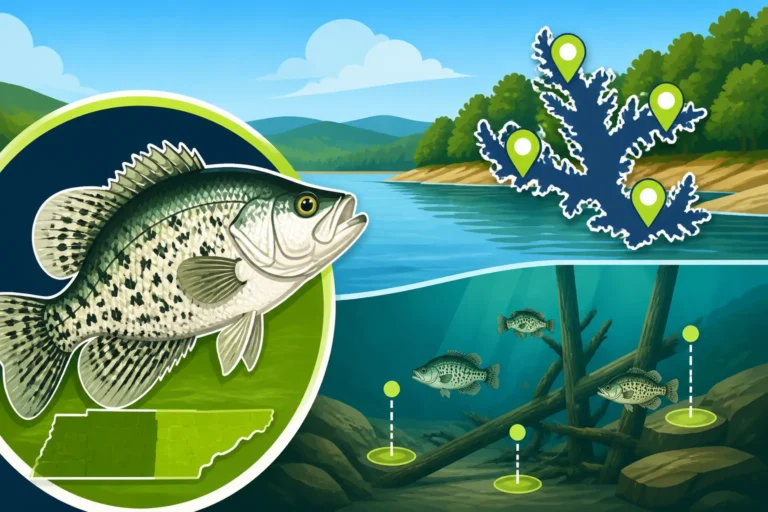
Crappie are masters of camouflage and leverage submerged structure for protection, ambush points, and spawning grounds. On Pickwick Lake, natural and man-made structures are abundant and absolutely essential for locating fish. Submerged timber, a relic from when the lake was impounded, is perhaps the most famous crappie magnet. These underwater forests of standing trees, stumps, and fallen logs provide countless nooks and crannies where crappie feel secure.
Local anglers and the Tennessee Wildlife Resources Agency (TWRA) often enhance these natural offerings by deploying artificial brush piles. These can range from simple Christmas trees weighted down to elaborate PVC structures. These man-made structures are purposefully placed in strategic locations, often near channel swings, ledges, or flats, and act as community centers for crappie, attracting baitfish and providing excellent cover. Many of these brush piles are mapped and publicly known, making them fantastic starting points. A quick check with local bait shops or online forums can often reveal coordinates for some of these fish attractors.
However, don't just blindly drop anchor over a brush pile. The crappie might be holding on the top, in the middle, or tight to the bottom, depending on the season, time of day, and water temperature. A good fish finder is invaluable for dissecting these structures, allowing you to see where the fish are holding relative to the cover. Remember, crappie are often schooled tightly, so once you find one, there are likely many more nearby.
Seasonal Movements: Where Crappie Go When
Crappie movements on Pickwick Lake are heavily influenced by the seasons, primarily driven by water temperature and their reproductive cycle. Understanding these patterns is key to year-round success.
In spring, as water temperatures climb into the 50s and 60s Fahrenheit, crappie begin their annual migration from deeper winter haunts towards shallower spawning grounds. This is often heralded as the best time for sheer numbers of fish. They'll stage in creek channels, around submerged grass beds, and near hard bottom areas in 5-15 feet of water, feeding aggressively before moving onto actual beds in even shallower water when temperatures hit the mid-60s. During the spawn, they’ll be found in very shallow water, sometimes only a few feet deep, making them accessible to bank anglers too. This is when you can target them in places like Bear Creek and Yellow Creek, which are famous for their spring crappie. You can learn more about Spring Crappie Spawn Timing in Tennessee to refine your strategies.
Summer fishing can be more challenging as crappie retreat to deeper, cooler water. They'll often suspend over the main river channel, especially around thermo-clines, or seek refuge in the deepest parts of creek channels where they can find oxygen and cooler temperatures. Trolling with multiple lines at various depths, or vertically jigging around deep brush piles and bridge pilings, becomes the preferred method. Night fishing can also be incredibly productive in summer, as crappie will move shallower under the cover of darkness to feed.
As fall approaches and water temperatures begin to drop, crappie become more active again. They'll start moving back into the creek channels and onto the deeper ends of flats, feeding heavily to build up reserves for winter. This is a fantastic time for both numbers and size. Crappie might be scattered initially, but as temperatures continue to fall, they'll begin to school up more tightly, often around the same structures they used in spring, but in slightly deeper water. The baitfish they feed on also move in predictable patterns, following the warming and cooling trends.
Finally, winter crappie fishing on Pickwick often means targeting fish in deep, stable environments. The main river channel, especially its numerous drops, ledges, and submerged timber, becomes prime real estate. Crappie will often school tightly here, making them easier to pinpoint with electronics. Vertical jigging or slow-trolling deep with minnows are highly effective techniques. While bites might be subtle in the cold water, the rewards can be substantial, with many anglers landing some of their largest crappie of the year. For a more detailed look at the year-round patterns, consider exploring a Tennessee Crappie Fishing Guide by Season.
Top Crappie Hotspots on Pickwick Lake
Pickwick Lake offers a plethora of prime crappie fishing spots, but a few areas consistently stand out due to their unique features and fish concentrations.
Bear Creek and Yellow Creek Embodiments
These two major creek arms are arguably the most famous crappie destinations on Pickwick Lake, especially during the spring spawn. Bear Creek (the one bordering Mississippi and Alabama) is a vast and diverse fishery itself, with numerous secondary creeks, bays, and coves. Its upper reaches offer extensive shallow flats with plenty of submerged timber, perfect for spawning crappie. As you move closer to the main lake, the creek becomes deeper, offering excellent channel fishing and staging areas. Anglers often find success here by slowly trolling jigs or minnows along creek bends and submerged contour lines, or by spider rigging multiple rods from a boat.
Yellow Creek (located entirely within Mississippi, but easily accessible from the Tennessee side) is another crappie paradise, known for its extensive network of backwater sloughs and shallow flats. Like Bear Creek, it offers a mix of deep channels and shallow spawning grounds. The numerous feeder creeks within Yellow Creek create fantastic habitat, especially after a good rain when fresh water flows in, attracting baitfish and consequently, crappie. Both creeks are heavily populated with submerged brush piles and standing timber, making them ideal for vertical jigging or casting small jigs. Many anglers use services like FishingBooker to find local guides who specialize in these areas, as their intimate knowledge of the nuanced honey holes can make all the difference.
During the pre-spawn and spawn, these creeks can become quite busy with boat traffic, a testament to their productivity. However, with their size, there’s usually enough water for everyone. Focus on areas with a mix of cover—logs, stumps, and aquatic vegetation—and watch for subtle changes in bottom composition, often visible on your electronics, as crappie prefer hard bottoms for spawning.
The Main Lake Flats and River Channel Bends
While creek arms get a lot of attention, don't overlook the main lake flats and river channel bends, particularly during the post-spawn, summer, and winter months. The main lake features vast, relatively shallow flats (10-25 feet deep) that often hold scattered crappie, especially where they intersect with submerged humps or old riverbeds. These areas can be excellent for slow-trolling jigs or crankbaits to cover a lot of water and locate scattered fish. The key here is patience and thorough exploration, as crappie might be spread out rather than tightly schooled.
The numerous bends and oxbows along the main Tennessee River channel itself are also significant hotspots. These bends often create deeper pools and eddy lines where current-averse crappie can hold. Look for pronounced drops, ledges, and breaks in the current. Bridge pilings and old railway trestles that span the main channel also provide vertical structure that crappie will suspend around, especially when baitfish are holding close to the columns. A good example is the area around the Highway 128 bridge, where crappie will stack up in impressive numbers.
These main lake areas demand good electronics. A quality fish finder with side-imaging or down-imaging can reveal submerged timber, brush piles, and even schools of crappie holding along ledges that might otherwise go unnoticed. Understanding the river's current flow from the upstream dams is also paramount, as crappie will always position themselves strategically relative to it. Knowing when the TVA is generating power can give you a significant advantage in predicting fish behavior in these main lake regions.
Bays, Coves, and Feeder Creeks
Beyond the major creek arms, Pickwick Lake is dotted with countless smaller bays, coves, and feeder creeks, each offering potential crappie havens. These often shallower, more protected areas are particularly important during the early spring and fall.
In early spring, when the water is still chilly, these smaller, shallower coves will warm up faster than the main lake or larger creek arms. This makes them attractive to crappie looking for warmer water and easy meals before the main spawn. Look for areas with dark, mucky bottoms that absorb sunlight, or coves with plenty of deadfall and natural brush. These areas can be excellent for sight fishing or casting small jigs to visible cover.
Conversely, in the fall, these same coves can hold baitfish escaping the cooling main lake, drawing crappie in to feed aggressively. The entrance to a cove, where it meets a slightly deeper channel, is often a prime transition zone. Consider casting smaller jigs or very light spinnerbaits around any available cover. For those looking for more specific guidance on these localized spots, booking a trip through platforms like FishingBooker can connect you with experienced local guides who know these tucked-away gems intimately. They can offer insights into the specific crappie limits under Tennessee Fishing Regulations Explained and help ensure you're compliant with local rules.
Even during the summer, if these smaller coves have a decent depth, say 15-20 feet, and some deep water brush piles or standing timber, they can still hold scattered crappie seeking refuge from the relentless sun. The key is to explore and not be afraid to try new, less pressured spots. Sometimes, the best crappie fishing is found where others aren't looking.
Essential Techniques and Baits for Pickwick Crappie
To consistently catch crappie on Pickwick Lake, you need a versatile approach that adapts to the conditions and the fish's behavior. It’s not just about finding them; it's about presenting something they want to eat in a way that entices a strike.
Jigging and Live Bait Strategies
Jigging is perhaps the most popular and effective technique for crappie on Pickwick, especially when targeting specific structures like brush piles, standing timber, or ledges. The beauty of jigging is its precision. You can present a lure directly to where fish are holding, whether they're suspended on a tree limb or tight to the bottom of a brush pile. Small jigs, typically 1/32 oz to 1/8 oz, are the go-to. Colors vary with water clarity and light conditions, but chartreuse, white, black/chartreuse, and various shad patterns are consistently productive. You can use a single jig, or employ a "double rig" where two jigs are tied a foot or so apart, which allows you to present two different colors or sizes, or fish two depths simultaneously. For those just starting out, mastering How to Jig for Crappie is a fundamental skill.
Live bait, primarily minnows, remains a classic and highly effective option. A lively minnow suspended under a bobber or fished vertically on a tight line is often irresistible to crappie, especially when they are finicky or in colder water. Many anglers will tip their jigs with a minnow for an added attractant, combining the flash and action of a jig with the natural scent and movement of live bait. When fishing live bait, it’s important to use light line (4-6 lb test) and small, sharp hooks (Aberdeen style hooks are popular as they are thin and less likely to snag). Whether you're using jigs or minnows, a sensitive rod is crucial to detect those often subtle crappie bites.
When vertically jigging or tightlining with minnows, pay close attention to the depth where you get bites. Crappie often suspend at a very specific depth, and once you find that depth, you can replicate it across different spots. A good rule of thumb is to start slightly above where you see fish on your sonar and work your way down. Sometimes, raising your bait above a school can trigger a bite, as crappie are often more willing to swim up for food than down.
Trolling for Scattered Crappie
When crappie are scattered across flats or suspending in open water, particularly in the main lake or larger creek sections, trolling becomes a highly efficient way to cover ground and locate schools. There are several trolling techniques, but "spider rigging" is a favorite on Pickwick. This involves using multiple long rods (often 10-16 feet) spread out from the bow of the boat, each rigged with a jig or a jig-and-minnow combination, allowing you to present baits at various depths and distances simultaneously.
Slow-trolling jigs or small crankbaits is another effective method. You'll want to move at a very slow speed, typically 0.5 to 1.5 miles per hour, letting your lures work their magic. Using a GPS-enabled trolling motor is a game-changer here, as it allows you to maintain a precise speed and direction, even in windy conditions. Pay attention to how the current affects your lure presentation and adjust your speed accordingly. The goal is to present your lure naturally, mimicking a baitfish. For those interested in mastering the art of multi-rod presentations, techniques like Tightlining Techniques for Crappie can be especially useful.
Understanding the right depth for trolling is paramount. Crappie will often suspend at specific depths, and getting your lures into that strike zone is critical. Using lead weights, trolling sinkers, or even small diving crankbaits can help you achieve the desired depth. Experiment with different depths until you start getting bites, then focus your efforts there. Trolling is a fantastic search tool, and once you find a concentration of fish, you can switch to a more stationary jigging approach to pick them apart.
Understanding Water Conditions and Crappie Behavior
Crappie, like all fish, are incredibly sensitive to their environment. Water temperature, clarity, and current all play a significant role in their behavior and where you'll find them.
Water Temperature: As mentioned, temperature drives seasonal movements. Crappie are generally most active in water temperatures between 55-75°F. Outside of this range, their metabolism slows down, and they become less aggressive. In cold water, slow presentations are key. In warmer water, they might be more willing to chase. Monitoring water temperature with a thermometer or your fish finder can help you anticipate where crappie will be and how aggressively they might feed.
Water Clarity: Pickwick Lake's water clarity can vary significantly, especially after heavy rains, which can churn up sediment and bring in stained water. In clearer water, crappie tend to be more wary and might prefer natural colors (shad, grey, clear) or smaller baits. In stained or muddy water, brighter colors like chartreuse, orange, or hot pink tend to perform better, as they provide a better silhouette and visibility. The amount of light penetration also dictates how deep crappie will hold. In murky water, they might be shallower, while in clear water, they might retreat to deeper cover.
Current: Pickwick is a river system, so current is a constant factor. Crappie will use current breaks to ambush prey without expending too much energy. Look for eddies, the backside of points, submerged humps, or bridge pilings that break the flow. When the current is strong, crappie will often position themselves facing upstream, waiting for food to be washed past them. Adjust your boat positioning and lure presentation to account for the current, ensuring your bait drifts naturally into their strike zone. Considering the Best Time of Day to Catch Crappie also involves understanding how factors like current and light influence their feeding.
Planning Your Pickwick Crappie Fishing Trip
A successful crappie trip to Pickwick Lake involves more than just knowing where to cast. Proper planning, appropriate gear, and leveraging local resources can significantly enhance your experience.
Best Times to Visit for Crappie Success
While Pickwick Lake offers year-round crappie fishing, some periods stand out for their exceptional productivity.
Spring (March-May): This is undeniably the peak crappie season. As the water warms, crappie move shallow for the spawn, making them very accessible. Both numbers and size can be excellent. The mild weather also adds to the enjoyment. However, expect crowded boat ramps and popular fishing spots, especially on weekends. Early mornings or weekdays can offer a bit more solitude.
Fall (September-November): Many seasoned crappie anglers consider fall to be a close second to spring. As temperatures cool, crappie become highly active again, feeding heavily in preparation for winter. They often school up well, making them easier to locate, and the boat traffic is typically much lighter than in spring. The cooler air and beautiful autumn foliage also make for a very pleasant fishing experience.
Winter (December-February): For those willing to brave the cold, winter can offer some of the largest crappie of the year. Fish are often concentrated in deep water, around specific structures, making them predictable once located. While bites might be slower, the rewards can be significant, and you'll often have vast stretches of the lake to yourself.
Summer (June-August): Summer can be challenging due to high temperatures and crappie retreating to deeper water. However, early mornings, late evenings, and night fishing can be very productive. Targeting deep, suspended crappie or those holding tight to deep cover requires patience and good electronics, but it can still yield impressive catches.
Gear and Licensing Considerations
Before you even think about hitting the water, make sure you're properly equipped and licensed. For Tennessee Fishing License Guide information, you'll need a valid Tennessee fishing license. If you're a non-resident, the state offers various options, including short-term licenses perfect for a fishing trip. You might also need a trout permit if you plan to fish in designated trout waters, although crappie fishing typically doesn't require one.
Essential gear includes a sensitive rod and reel combo, preferably a light or ultralight spinning setup with 4-6 lb test line. A variety of jigs (1/32 to 1/8 oz) in different colors, small plastic grubs, and a supply of minnows are a must. Don't forget bobbers, sinkers, and an assortment of hooks. A pair of pliers for hook removal, a tape measure to check legal sizes, and a cooler with ice to keep your catch fresh are also critical.
If you're fishing from a boat, ensure it's registered and equipped with all necessary safety gear, including life jackets for everyone on board. For detailed information, consult the Boat Fishing Rules and License Requirements in Tennessee. A good quality fish finder is invaluable on Pickwick Lake, especially when targeting deep structure or scattered fish. Modern units with side-imaging or down-imaging can literally show you submerged trees and crappie hiding within them. If you're considering electronics, exploring options for Fish Finders and Electronics for Tennessee Reservoirs can guide your choice. Lastly, a reliable trolling motor will allow you to navigate silently and precisely, which is crucial for crappie fishing. Consider a brand like Minn Kota or MotorGuide for dependable performance.
Leveraging Local Expertise and Resources
No matter how much research you do, there's no substitute for local knowledge. Start by visiting local bait and tackle shops in towns like Savannah, Counce, or Pickwick Dam, Tennessee. The folks working there live and breathe Pickwick Lake fishing, and they can provide invaluable, up-to-the-minute reports on what's biting, where, and on what bait. They can tell you about recent stocking efforts, water levels, and any specific crappie limits under Crappie Limits Under Tennessee Fishing Rules that might be in effect.
Consider hiring a local fishing guide, especially if it's your first time on Pickwick or if you want to accelerate your learning curve. A guide knows the lake's nuances, where the brush piles are, and how crappie react to different conditions. They can save you hours, even days, of searching. Platforms like FishingBooker are excellent resources for finding reputable, experienced crappie guides on Pickwick Lake. These guides often provide all the necessary gear and baits, making your trip hassle-free.
Joining online fishing forums or local crappie fishing groups on social media can also connect you with experienced anglers who are often willing to share tips and reports. Just remember to be respectful and contribute to the community. Finally, don't underestimate the power of simply observing other successful anglers on the water. While respecting their space, you can often pick up on patterns, techniques, and even locations that might lead you to your next crappie hotspot.
Disclaimer
Fishing conditions and regulations in Tennessee are subject to change. Always consult the latest Tennessee Wildlife Resources Agency (TWRA) regulations before heading out on the water. This guide is for informational purposes only and should not replace official sources.