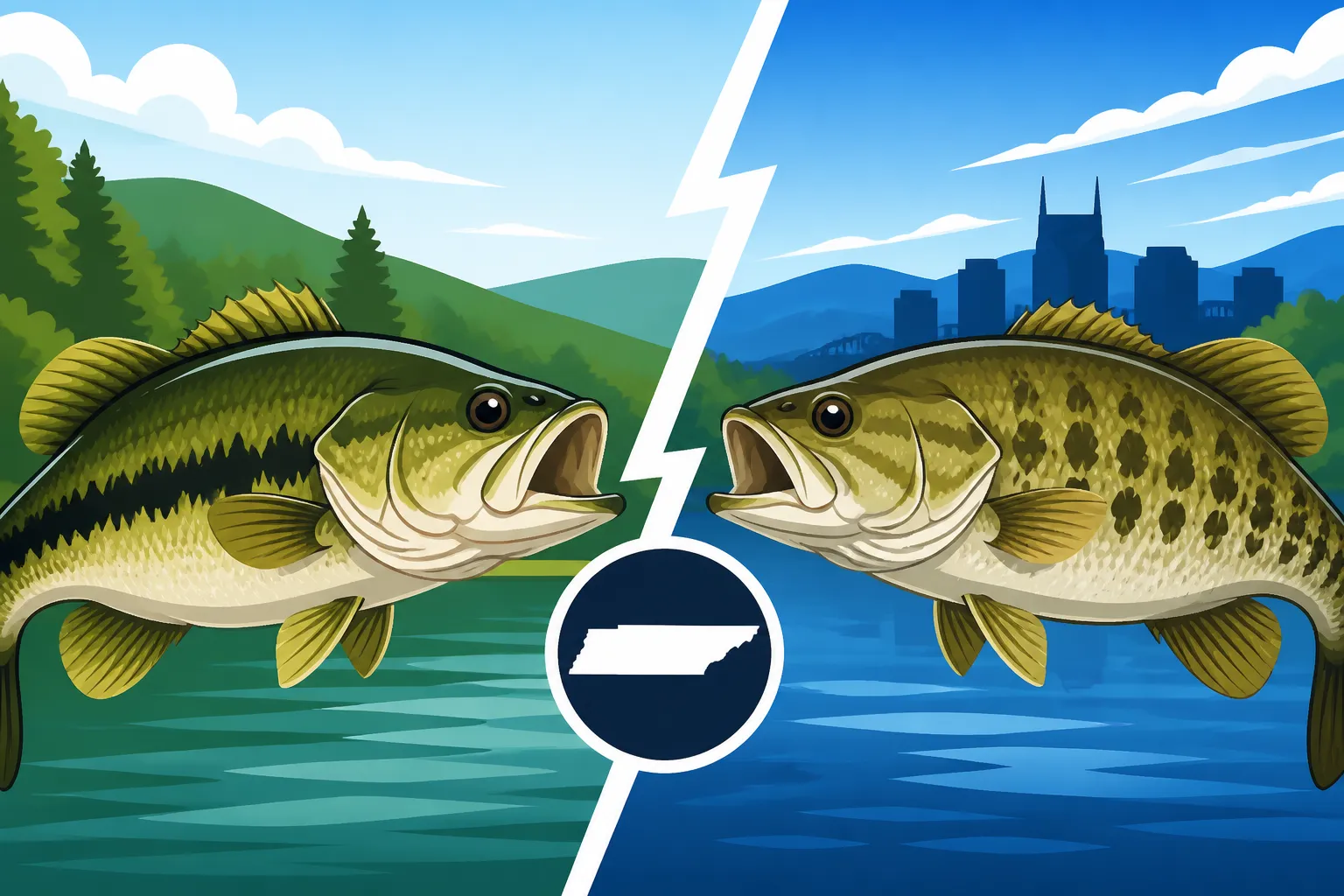
Largemouth Bass vs Spotted Bass: How to Tell Them Apart
It's happened to all of us: you're out on a beautiful Tennessee lake, you hook into a great bass, and as you reel it in, that nagging question pops up. Is it a largemouth or a spotted bass? They look so similar, especially when they're flopping around in the bottom of your boat. This guide is here to untangle the confusion, helping you confidently identify the differences between these two popular Tennessee game fish.
The Initial Glance: Why It's Tricky to Distinguish Them
When you're out on the water, whether it's the vast expanse of Kentucky Lake or a smaller impoundment like Percy Priest, the initial appearance of a largemouth and a spotted bass can be remarkably similar. Both are robust, green-hued fish with a dark lateral line that runs down their sides. They share that characteristic "bass" look, making it tough to tell them apart without a closer inspection, especially if you're excited about a catch. This shared aesthetic is a big reason why so many anglers, even seasoned ones, find themselves pausing to wonder.
Overlapping Habitats and General Appearance
One of the main reasons for this confusion is that both species thrive in many of the same Tennessee waters. You can find both largemouth and spotted bass inhabiting reservoirs, rivers, and even larger creeks across the state. They'll often share the same stretches of water, chasing the same baitfish, which means you're just as likely to hook one as the other on any given cast. Their bodies are similarly proportioned, typically a dark green fading to a lighter belly, and they both feature distinct dark blotches or spots along their sides, which only adds to the identification challenge. From a distance, or even in low light, these shared traits can easily lead to a misidentification.
The Common Misconception and the "Spotted Bass" Myth
For years, many anglers, myself included, simply thought "spotted bass" were just smallmouth bass or even a variant of largemouth, especially if they had a slightly more pronounced spot pattern. The truth is, spotted bass are their own distinct species, and they have characteristics that set them apart from both largemouth and smallmouth. The term "Kentucky Spotted Bass" is often used interchangeably, highlighting their prevalence in states like Tennessee and Kentucky, but they are a true black bass species. Understanding this fundamental difference is the first step in accurate identification; it's not just a largemouth with more spots, it's a completely separate fish with its own unique traits and habits. Many fishing guides available on retailers like Amazon might touch on this, but a hands-on understanding is key.
Key Anatomical Differences for Sure Identification
Once you've got a fish in hand, there are several reliable anatomical clues that can help you distinguish between a largemouth and a spotted bass. These aren't just subtle nuances; they are consistent features that, once you know what to look for, make identification much clearer. Don't worry, you don't need a biology degree, just a keen eye and a bit of practice. Knowing these differences can sometimes even influence your Tennessee Largemouth Bass Season and Limits or other species-specific regulations.
The Jawline Test: Beyond the Eye
This is perhaps the most common and often the easiest way to differentiate the two, though it requires opening the fish's mouth slightly. With the fish's mouth closed, pay attention to where the corner of its jaw extends in relation to its eye.
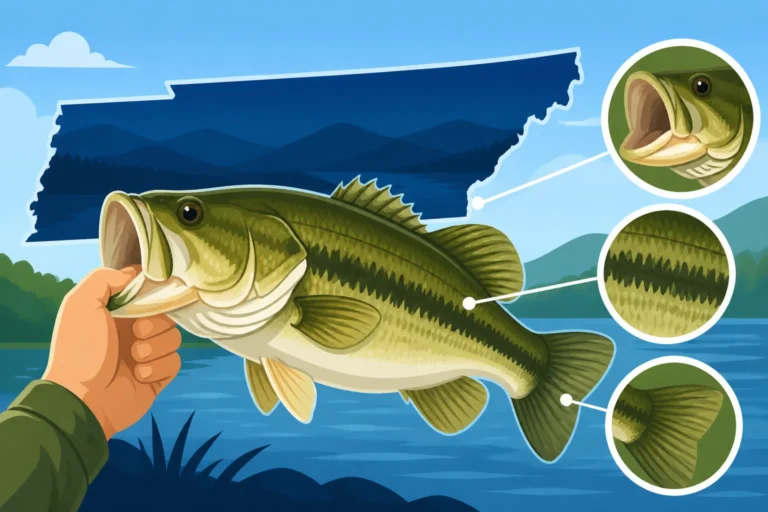
- Largemouth Bass: The corner of a largemouth's jaw will extend noticeably beyond the rear edge of its eye. Think of it as a long, almost oversized mouth, hence the "largemouth" moniker. This is usually very distinct and a primary How to Identify a Largemouth Bass in Tennessee tip.
- Spotted Bass: For a spotted bass, the corner of the jaw typically extends no further than the middle or rear edge of its eye. It's a more proportionate, shorter jawline compared to its largemouth cousin. This is a crucial detail for How to Identify Spotted Bass in Tennessee Reservoirs.
It might seem small, but this jaw extension is a consistent and reliable indicator that anglers use all the time.
Lateral Line and Scale Patterns
Both species have a distinct lateral line, but the appearance of the scales and the patterns around this line can offer further clues.
- Largemouth Bass: While they have a dark lateral line, the scales below this line are generally smooth and lack any distinct dark spots. The overall pattern on their flanks is often more blotchy or marbled, rather than individually spotted.
- Spotted Bass: This is where the "spotted" name truly comes into play. If you run your finger along the scales below the lateral line, you'll feel and see distinct rows of small, dark spots, often appearing as if someone drew them with a fine-tipped pen. These spots are usually arranged in neat, horizontal rows. This is one of the more intuitive Spotted Bass vs Largemouth Bass in Tennessee Lakes differences. You can even find field guides on Amazon that show detailed illustrations of these patterns.
The Dorsal Fin Gap: A Subtle but Telling Clue
The dorsal fin—that prominent fin running along the fish's back—is actually made up of two parts: a spiny front section and a soft-rayed rear section. The connection, or lack thereof, between these two sections is another tell-tale sign.
- Largemouth Bass: The spiny dorsal fin and the soft-rayed dorsal fin are almost completely separated by a deep notch or indentation. You can often lay the spiny part flat without affecting the soft-rayed part. It almost looks like two distinct fins.
- Spotted Bass: The spiny and soft-rayed dorsal fins are connected, forming one continuous fin, though there might still be a slight dip or shallow notch. It's a much less pronounced separation than what you'd see on a largemouth. This subtle difference becomes obvious once you know what to look for and offers another layer of confidence in your identification.
Tongue Patch: The Definitive Check
If you're still uncertain after checking the jaw, lateral line, and dorsal fin, the tongue patch is the ultimate, almost foolproof, identifier. This requires gently depressing the tongue of the fish.
- Largemouth Bass: A largemouth bass will have a completely smooth tongue. There will be no rough patch of teeth or cartilage on it.
- Spotted Bass: A spotted bass, on the other hand, will have a distinct, rough patch of small teeth (sometimes called a "tooth patch" or "raspy patch") right on the center of its tongue. This feels like sandpaper. This feature is almost exclusive to spotted bass among the common black bass species in Tennessee and is a dead giveaway.
Here's a quick summary table to help you keep these distinctions straight:
| Feature | Largemouth Bass | Spotted Bass |
|---|---|---|
| Jaw Extension | Extends beyond the rear edge of the eye | Does not extend beyond the middle or rear edge of the eye |
| Lateral Line | Dark lateral line, scales below are mostly clear | Dark lateral line, distinct rows of dark spots below the line |
| Dorsal Fin | Deep, almost complete separation between spiny and soft sections | Connected dorsal fins with only a shallow notch (if any) |
| Tongue | Smooth tongue, no rough patch or teeth | Rough patch of small teeth (raspy patch) on the center of the tongue |
Behavioral Tendencies and Preferred Habitats
Beyond the physical characteristics, largemouth and spotted bass also tend to exhibit different behavioral patterns and prefer slightly varied habitats within the same bodies of water. Understanding these tendencies can not only help you predict which species you're likely to encounter but also refine your fishing strategy. For more on how environment affects fish, check out How Water Temperature Affects Fish Activity.
Largemouth: The Cover-Oriented Predator
Largemouth bass are known for being ambush predators. They love to hide and wait for their prey to come to them. This dictates their preferred habitat:
- Heavy Cover: Think thick aquatic vegetation, fallen trees, brush piles, submerged stumps, and docks. If there's dense cover, a largemouth is likely lurking nearby.
- Shallow Water: They often frequent shallower areas, especially during feeding times or the spawn, seeking the warmth and abundant cover.
- Structure: Any kind of structure, natural or man-made, that provides shade, concealment, or a current break is a prime largemouth spot. This could be rock piles, bridge pilings, or even boat ramps.
When you're targeting largemouth, you're usually casting into or very near these dense cover areas, trying to draw out a strike. They're often less nomadic than spotted bass, preferring to stake out a territory. Guides like Best Bait for Largemouth Bass Fishing delve into specific lure presentations for these areas.
Spotted Bass: The Open-Water Roamer
Spotted bass, while they will use some cover, tend to be more comfortable in slightly different environments and often exhibit more schooling behavior than largemouth.
- Rocky Banks and Bluff Walls: They have a strong affinity for rocky areas, steep banks, and bluff walls. These features provide plenty of cracks and crevices for cover but also access to deeper water.
- Deep Water Access: Spotties are often found where deep water is easily accessible, preferring areas that drop off quickly. They're comfortable suspending in open water over structure.
- Current-Oriented: In rivers and areas with current, spotted bass will position themselves strategically to ambush baitfish being carried by the flow.
- Schooling Behavior: Unlike the more solitary largemouth, spotted bass frequently school up, especially when actively feeding on baitfish. If you catch one spotted bass, there's a good chance more are nearby.
When fishing for spotted bass, you might find yourself targeting rocky points, humps, ledges, or simply searching for schools of baitfish in open water. They're less shy about open water than a largemouth might be.
What This Means for Your Fishing Strategy in Tennessee
Knowing the differences between largemouth and spotted bass isn't just for bragging rights; it can significantly influence how you approach a day of fishing on Tennessee's incredible waters. From the lures you choose to the spots you target, tailoring your strategy to the dominant species (or the one you prefer to catch) can lead to more successful outings.
Gear and Lure Adjustments
While both species will hit a wide variety of baits, certain lures and gear setups tend to be more effective for one over the other. This isn't a hard and fast rule, but general preferences exist.
- For Largemouth: Given their affinity for heavy cover, largemouth often respond well to bulkier, weedless presentations. Think Texas-rigged plastics, jigs, spinnerbaits, and topwater frogs. If you're punching through mats or pulling fish out of heavy brush, you'll want heavier rods, stronger lines (like braided line), and robust reels. You can find excellent selections of these types of lures and gear on Amazon. For specific recommendations, check out Best Lures for Pre-Spawn Bass Fishing or Best Lures for Post-Spawn Bass Fishing.
- For Spotted Bass: Since spotties are often found in more open, rocky water or suspending in schools, they tend to be susceptible to baits that mimic small baitfish. Jerkbaits, crankbaits, swimbaits, grubs, and finesse worms on shaky heads are often highly effective. Lighter lines and medium-action rods can be advantageous for presenting these baits subtly and detecting lighter bites. They're also notorious for hitting moving baits aggressively. Best Bait for Spotted Bass Fishing might give you more ideas.
Practical Tips for Anglers on Tennessee Waters
When you're out on the water, try to think about the fish's habits as much as its appearance. If you're fishing a thick weed bed, chances are you're going for a largemouth. If you're working a deep, rocky point, be ready for a spotted bass.
- Observe Your Catch: Every time you land a bass, take a moment to identify it using the jawline test or by checking for the tongue patch. This practice will quickly make you an expert identifier.
- Vary Your Approach: Don't limit yourself to one strategy. If you're catching mostly largemouth in a certain area, but want to target spotted bass, move to a different type of structure or depth. Similarly, if you find yourself in a mixed bag fishery, have different rods rigged up with appropriate baits for both species.
- Check Local Regulations: Always remember that regulations, including Statewide Bass Limits for Tennessee Anglers, can sometimes differ slightly between species or even specific lakes. Knowing what you've caught ensures you stay compliant. Some lakes have unique rules that can override the general statewide limits, so checking those specifics for your fishing destination is always a good idea. For instance, Chickamauga Lake, Tennessee's Top Spot for Record Largemouth Bass might have unique dynamics that affect both species.
By understanding these key differences and adjusting your approach, you'll not only become a more knowledgeable angler but also increase your chances of success on Tennessee's diverse fishing grounds.
Disclaimer
This article is for general informational purposes only and does not constitute professional advice. Laws, prices and regulations vary by location and change over time. Consult a qualified professional for guidance on your specific situation.