Channel Catfish vs Blue Catfish: How to Tell Them Apart
It’s a classic scenario on Tennessee waters: you reel in a feisty catfish, and as it breaks the surface, your mind races. Is it a Channel Catfish, or did you just hook into a powerful Blue Catfish? For many anglers, especially those just getting into the fantastic world of catfishing here in our beautiful state, telling the difference can be genuinely perplexing. This comprehensive guide is here to untangle that confusion, providing you with all the vital clues and nuances to confidently identify whether you’ve landed a Channel Cat or a Blue.
The Tale of Two Whiskers: Why Differentiating Matters
Let's be honest, when you've got a fish on the line, the adrenaline is pumping, and sometimes all you see is "catfish!" But for those of us who spend a lot of time on Tennessee's rivers and lakes, knowing exactly what kind of catfish you've caught isn't just about showing off a fancy fish ID; it's genuinely important. These two species, while both fantastic fighters and delicious table fare, have distinct characteristics that influence everything from where you find them to the legal limits on your catch.
Initial Confusion: They Look So Similar!
It’s completely understandable why these two often get mixed up. Both Channel Catfish and Blue Catfish are found throughout Tennessee, from the mighty Tennessee River system to many of our larger reservoirs like Kentucky Lake and Chickamauga Lake. They share that characteristic "catfish" look: no scales, long barbels (whiskers) around the mouth, and a generally sleek, powerful body. To the untrained eye, or even a seasoned angler focused purely on the fight, the subtle differences can easily blend together.
Think about it: you're out there, maybe it's getting dark, or the fish is flopping around in the bottom of the boat. You're trying to unhook it, keep it calm, and perhaps snap a quick photo. Taking the time to meticulously examine fin rays or the curve of a tail might not be your top priority. But missing these details can lead to misidentification, which can have consequences we'll dive into shortly. The frustration is real when you feel like you should know, but the fish just isn't cooperating with your identification efforts.
Why Identification Isn't Just for Bragging Rights
Beyond the satisfaction of knowing your fish, there are some very practical reasons why accurate identification of Channel Catfish versus Blue Catfish is crucial for anglers in Tennessee. First and foremost, fishing regulations, particularly daily creel limits and sometimes even length limits, can vary between species. Imagine spending a glorious day on the water, only to realize you've kept too many of one species because you mistook it for another. That's a headache no one wants. Tennessee Fishing Regulations Explained can give you a deeper dive into these rules, but for now, just know that different catfish species can have different rules.
Secondly, knowing which species you're catching can inform your fishing strategy. Are you consistently hooking smaller, spotty catfish? You might be on a school of Channel Cats. Are you battling larger, powerful fish in deeper, swift currents? That's often a tell-tale sign of Blue Cats. Understanding the species helps you refine your baits, locations, and techniques for future trips. It's about becoming a more effective and knowledgeable angler, which ultimately leads to more enjoyable and successful outings.
Deciphering the Details: Key Identification Features
Okay, let's get down to brass tacks. While they might seem similar at first glance, Channel Catfish and Blue Catfish have several distinct physical characteristics that, once you know what to look for, make them quite easy to tell apart. Think of it like a detective looking for clues; each feature is a piece of the puzzle.
The Dorsal Fin and Anal Fin: Your First Clue
The fins are arguably the most reliable indicators when trying to differentiate between these two catfish species. Pay close attention to the dorsal fin (the one on its back) and, more importantly, the anal fin (the fin on its underside, behind the anus).
The Channel Catfish typically has a shorter, more rounded anal fin. The key here is to count the rays – those bony spines and soft rays that support the fin. A Channel Catfish will generally have somewhere between 24 to 29 rays in its anal fin. The fin will also look somewhat convex or rounded along its free margin. Often, the dorsal fin will be noticeably taller and more triangular than that of a Blue Catfish. You might also notice that the dorsal fin on a Channel Catfish has a single, stout spine at its leading edge, followed by several soft rays.
Now, compare that to the Blue Catfish. This is where the difference truly shines. A Blue Catfish boasts a much longer, straighter anal fin. If you count the rays, you'll find a significantly higher number: typically 30 to 35 rays, sometimes even more. The free margin of the anal fin will appear much straighter, almost like a knife edge, giving it a longer, more uniform look. The dorsal fin on a Blue Catfish, while still present, tends to be less prominent and sometimes a bit more rounded than a Channel Cat's. This anal fin length is often the most critical distinguishing feature, and once you see it side-by-side, it's hard to unsee. For a more detailed look at one, check out How to Identify Channel Catfish, Tennessee's Other State Fish.
Tail Shape: Forked vs. Straighter
Another excellent visual cue, and usually one of the easiest to spot, is the shape of the fish's tail, or caudal fin.
Channel Catfish are famous for their deeply forked tails. Imagine a swallow's tail or a sharp 'V' shape. The two lobes of the tail will be distinctly separated, and the fork will be quite pronounced. This deeply forked tail gives them their characteristic powerful bursts of speed.
The Blue Catfish, while still possessing a somewhat forked tail, has one that is notably less deeply forked, often appearing straighter or even slightly emarginate (meaning it has a slight indentation rather than a deep fork). Sometimes, especially on very large Blue Cats, the tail can even appear almost straight across or only very gently curved, rather than that sharp 'V' you see on a Channel Cat. It’s more of a subtle curve than a dramatic split. This difference in tail shape is a pretty reliable indicator and often the first thing people notice, even before counting fin rays.
Body Shape and Coloration: More Than Just "Gray"
While fin rays and tail shape are definitive, body shape and coloration offer additional, albeit sometimes more variable, clues.
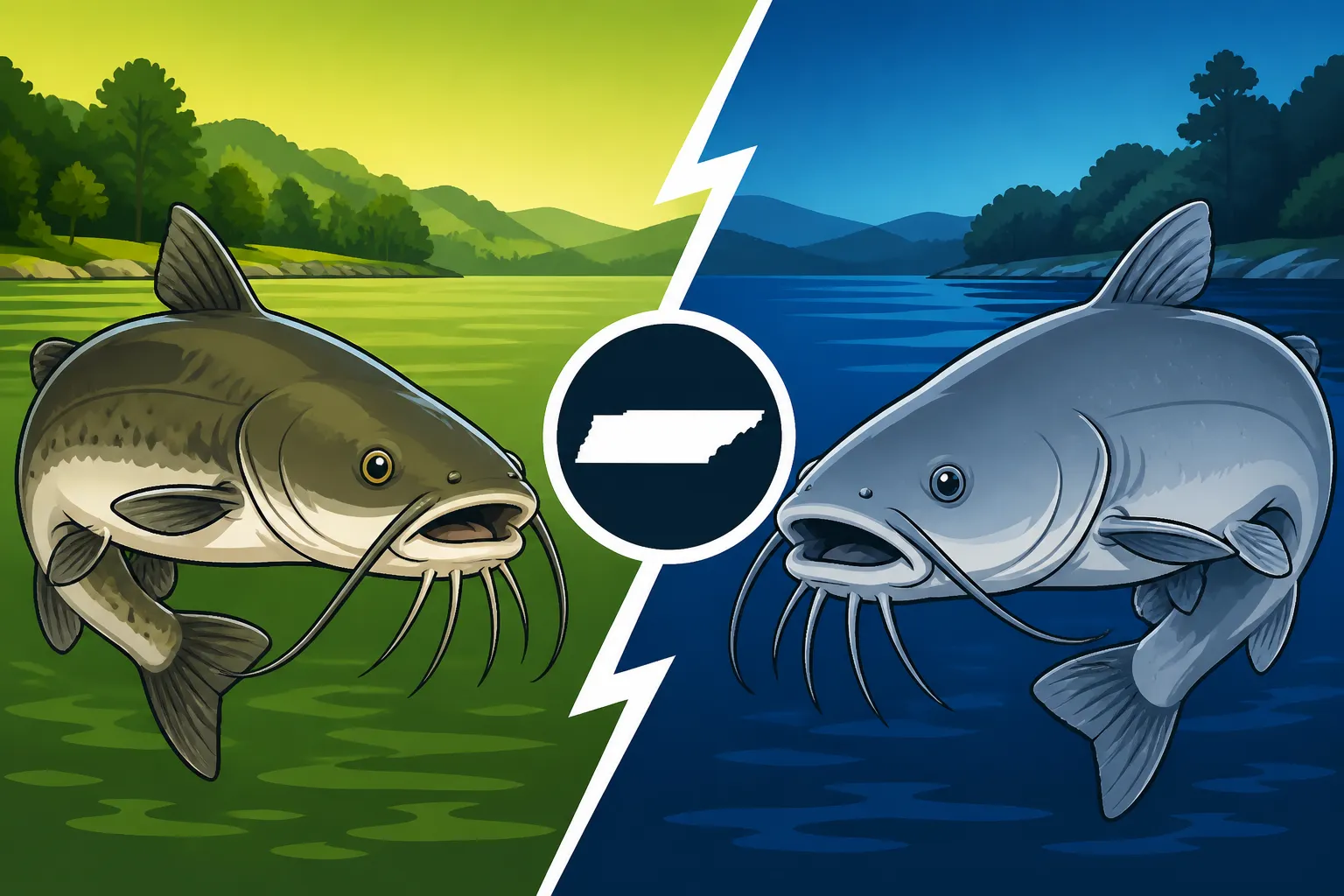
Channel Catfish typically have a more slender, elongated body profile compared to a Blue Catfish of similar length. Their coloration can vary quite a bit depending on the water they come from, but generally, they range from an olive-green to gray on their backs, fading to silvery sides and a white belly. Here's a crucial point: younger Channel Cats, especially those under 10-15 pounds, often have distinct black spots on their body. These spots tend to fade as the fish gets older and larger, but their presence is a strong indicator of a Channel Cat. This is why some anglers call them "speckled cats."
Blue Catfish, on the other hand, tend to have a stockier, more robust build, especially as they grow larger. Their body is generally a slate blue or gray on the back, fading to lighter blue-gray sides and a white belly, without the distinct spots found on younger Channel Cats. The coloration is usually more uniform. They tend to have a higher back, giving them a slightly humped appearance, especially just behind the head, which is particularly noticeable on larger specimens. This more powerful build is one reason why they're known for their incredible fighting power. You can learn more about their look and where they prefer to hang out in Blue Catfish Identification and Habitat in Tennessee.
Barbels and Mouth Structure: The Finer Points
Finally, let's look at the "whiskers" and the mouth.
Both species have eight barbels around their mouth (two on the snout, two near the corners of the mouth, and four under the chin). However, the Channel Catfish typically has barbels that are dark, matching its back and sides. Its upper jaw might also slightly protrude beyond the lower jaw, or they might be even.
The Blue Catfish usually has barbels that are often paler or whitish, sometimes even a dirty white, contrasting with its darker back. The mouth of a Blue Catfish is typically straight across, or its upper jaw might protrude slightly more prominently than a Channel Cat's, giving it a somewhat "underbite" appearance, though this can be subtle. Also, Blue Catfish tend to have a longer, more tapered head.
Here's a handy table summarizing these key differences:
| Feature | Channel Catfish | Blue Catfish |
|---|---|---|
| Anal Fin Rays | 24-29 (shorter, rounded, convex margin) | 30-35+ (longer, straighter, uniform margin) |
| Tail (Caudal Fin) | Deeply forked, distinct "V" shape | Less deeply forked, straighter, subtle curve |
| Body Shape | More slender, elongated | Stockier, robust, often slightly humped back |
| Coloration | Olive-green to gray, often with spots (younger fish) | Slate blue to gray, uniform, no spots |
| Barbels | Dark, matching body coloration | Often paler or whitish, contrasting with body |
| Head/Mouth | Upper jaw even with or slightly beyond lower | Longer, tapered head, upper jaw often slightly beyond lower (subtle underbite) |
Size, Habitat, and Behavior: Beyond Physical Traits
While physical characteristics are the most definitive way to tell these two apart, understanding their typical size, preferred habitats, and general behaviors can provide supporting evidence and help you anticipate which species you're likely to encounter. This knowledge is not just academic; it directly influences your fishing strategy and where you choose to drop your line.
Growth Potential and Record Sizes in Tennessee
When it comes to size, there's a pretty significant difference in their potential, especially here in Tennessee.
The Channel Catfish is a fantastic sport fish and a popular target for many anglers. They typically range from smaller pan-sized fish up to good-sized fighting machines of 10-20 pounds. While larger ones are certainly caught, a Channel Catfish over 30 pounds is considered a truly exceptional specimen. Tennessee has produced some very respectable Channel Catfish, but they generally don't reach the colossal sizes of their Blue Cat cousins. If you're consistently catching catfish in the 5-15 pound range, especially with those tell-tale spots, you're almost certainly on Channel Cats.
The Blue Catfish, on the other hand, are the true giants of the freshwater catfishing world. These fish have an incredible growth potential and are capable of reaching immense sizes. It's not uncommon to hear of Blue Cats being caught in the 50, 60, or even 80+ pound range in Tennessee's major river systems like the Cumberland and Tennessee Rivers, and especially in large reservoirs like Kentucky Lake and Watts Bar Lake. There are even documented Tennessee Blue Catfish records that push well into the triple digits! If you're battling a fish that feels like you've hooked a Volkswagen, and it's taking all your strength to bring it in, the odds are very good it's a Blue Cat. Tennessee Blue Catfish Record Catches offers a fascinating look at some of the monsters pulled from our waters. This difference in potential maximum size is a huge clue.
Preferred Haunts: Rivers, Lakes, and Their Nuances
Where you fish also provides a strong indication of which species you're likely to find. Both are adaptable, but they do have preferences.
Channel Catfish are incredibly widespread and tolerant of various conditions. You'll find them in almost every significant body of water in Tennessee: large rivers, smaller rivers, creeks, reservoirs, farm ponds, and even many state park lakes. They tend to prefer warmer, slower-moving water but are comfortable in moderate currents as well. They often hang around structure like submerged timber, rock piles, drop-offs, and even weed lines. They are a common species for bank anglers and those fishing smaller boats. If you're fishing a smaller lake or a slower section of a river, you're probably going to encounter more Channel Cats. Catfish Species Found in Tennessee Waters can provide a broader overview of all our whiskered friends.
Blue Catfish have a stronger preference for larger, deeper, and often more turbulent water. They thrive in the major river channels and vast expanses of Tennessee's largest reservoirs. Think about the main channels of the Tennessee River, the Cumberland River, and big impoundments like Chickamauga, Kentucky Lake, and Watts Bar. They gravitate towards areas with strong currents, deep holes, humps, ledges, and major river bends. While you can catch them in shallower areas at certain times, their primary domain is typically the deeper, open water of these grand systems. Anglers targeting trophy Blue Cats often employ boat fishing techniques, drifting or anchoring over deep structure in these big waters. Best Catfish Lakes in Tennessee highlights some of the prime locations for these behemoths.
Feeding Habits and How They Influence Your Catch
Their diets are similar, but with subtle differences that impact what bait you might use.
Channel Catfish are opportunistic feeders and true omnivores. They'll eat almost anything: insects, worms, crayfish, smaller fish, snails, clams, and even vegetation. This is why a wide variety of baits work for them, from chicken liver, worms, and stink baits to cut bait and dough balls. They have a keen sense of smell, which makes those potent stink baits so effective. Best Bait for Channel Catfish Fishing explores some of the top choices for enticing these fish.
Blue Catfish, especially larger ones, are predominantly piscivorous, meaning they primarily eat other fish. While they'll occasionally take other offerings, their diet consists mainly of shad, skipjack herring, bluegill, and other smaller forage fish. This makes fresh cut bait, particularly oily fish like shad, an exceptionally effective bait for them. They are also powerful predators and will actively hunt. This preference for fish is why many dedicated trophy Blue Cat anglers focus heavily on presenting large pieces of fresh cut bait in prime locations. Best Bait for Blue Catfish Fishing dives deeper into the specifics for landing these giants.
Putting Your Knowledge to the Test: Practical Tips for Anglers
Now that you're armed with all this knowledge about distinguishing Channel Catfish from Blue Catfish, let's talk about how to apply it on the water. After all, fishing is about putting theory into practice, and knowing your catch can make your overall experience better and keep you on the right side of the regulations.
Double-Checking Your Catch on the Water
The moment of truth usually happens boat-side or bank-side. When you pull in a catfish, take a breath before you unhook it. Gently lay the fish on a wet surface or in a shallow net where you can get a good look at it.
First, quickly check the anal fin. Is it short and rounded, or long and straight? If you can easily distinguish the length and shape, that's often enough. Next, look at the tail. Is it deeply forked, or more subtly curved? These two features alone will usually tell you what you've got. Then, consider the color and presence of spots. If it's a smaller fish with black spots, it's almost certainly a Channel Cat. If it's a large, uniformly gray or blue fish with a straighter tail and a long anal fin, you're holding a Blue Cat.
It's a good idea to have a simple ruler or tape measure with you. While size isn't a definitive identification tool, it can certainly lean you one way or the other. A field guide specific to Tennessee fish species can also be incredibly helpful; you can often find great ones on Amazon or at local sporting goods stores. Make it a habit to observe these features on every catfish you catch, and with practice, identification will become second nature.
Catch Limits and Regulations: Getting It Right
This is where precise identification becomes non-negotiable. The Tennessee Wildlife Resources Agency (TWRA) sets specific regulations for different fish species, including catfish. While sometimes the limits are general for "catfish," there can be specific regulations for Channel Catfish or Blue Catfish, particularly concerning size limits or daily creel limits in certain bodies of water. For example, some lakes might have a slot limit for Blue Catfish to protect larger breeders.
It's your responsibility as an angler to know and abide by these rules. Ignorance of the law is never an excuse. Always, always check the latest TWRA fishing guide for the specific body of water you are fishing before you cast your first line. You can often download a digital copy from the TWRA website, or pick up a physical copy at bait shops or license vendors. Having the correct identification skills will ensure you don't inadvertently break a rule and face a fine. Don't let a simple ID mistake ruin your fishing trip!
Gear Considerations for Each Species
While both fish are catfish and can be caught with similar setups, understanding their differences can help you optimize your gear, especially if you're targeting one species over the other.
For Channel Catfish, a medium-action rod paired with a spinning or baitcasting reel spooled with 10-20 pound test line is often sufficient. They put up a good fight, but typically won't strip hundreds of yards of line or pull your rod out of the holder like a trophy Blue Cat might. Terminal tackle can include anything from a simple slip sinker rig with a small hook for worms to a larger hook for chicken liver or cut bait. You can find a vast array of catfish-specific baits and tackle on Amazon, perfect for tempting Channel Cats.
When targeting Blue Catfish, especially the larger ones, you'll want to step up your game. A heavy-action rod, a robust baitcasting reel with a reliable drag, and 30-80 pound test monofilament or braided line are more appropriate. You might even want to consider an entire catfish specific setup, which often includes sturdy circle hooks (size 7/0 to 10/0) and heavy sinkers (2-8 ounces) to hold your bait in strong currents. The fight from a big Blue Cat can be brutal, testing both your gear and your endurance. Investing in quality gear for Blue Catfish is a smart move if you're serious about pursuing them, and many reliable brands are available through online retailers like Amazon and specialized tackle shops. Understanding their fighting power and habitat preference will inform your gear choices, making your angling experience more effective and enjoyable. If you're looking to target a specific species, knowing its unique attributes, including its growth potential, is key. Perhaps you're wondering about Flathead Catfish: Identification Tips for Beginners for another type of catfish that grows large. Or, you might be curious about Tennessee's Official State Fish: Channel Catfish and Smallmouth Bass to better understand the recognition these fish receive in our state.
Disclaimer
This article is for general informational purposes only and does not constitute professional advice. Laws, prices and regulations vary by location and change over time. Consult a qualified professional for guidance on your specific situation.