Wild vs Stocked Trout: What’s the Difference in Tennessee?
It can be confusing, stepping up to a pristine stream in the Tennessee mountains, wondering if the beautiful trout you just spotted is a true wild fish, a resilient survivor born right there, or one that was recently introduced by the Tennessee Wildlife Resources Agency (TWRA). Many anglers share this experience, trying to understand the subtle (and sometimes not-so-subtle) differences that shape their fishing experience. This guide aims to clear up that mystery, helping you understand the world of wild versus stocked trout in Tennessee.
What Exactly is a Wild Trout?
When we talk about "wild trout" in Tennessee, we're referring to fish that have completed their entire life cycle – from egg to adult – without human intervention in their natural habitat. These are the descendants of generations of trout that have adapted to the specific conditions of their stream or river. They are truly native or naturalized populations that sustain themselves through successful spawning, usually in the pristine, cold headwaters of our mountain streams.
Characteristics of Tennessee's Wild Trout
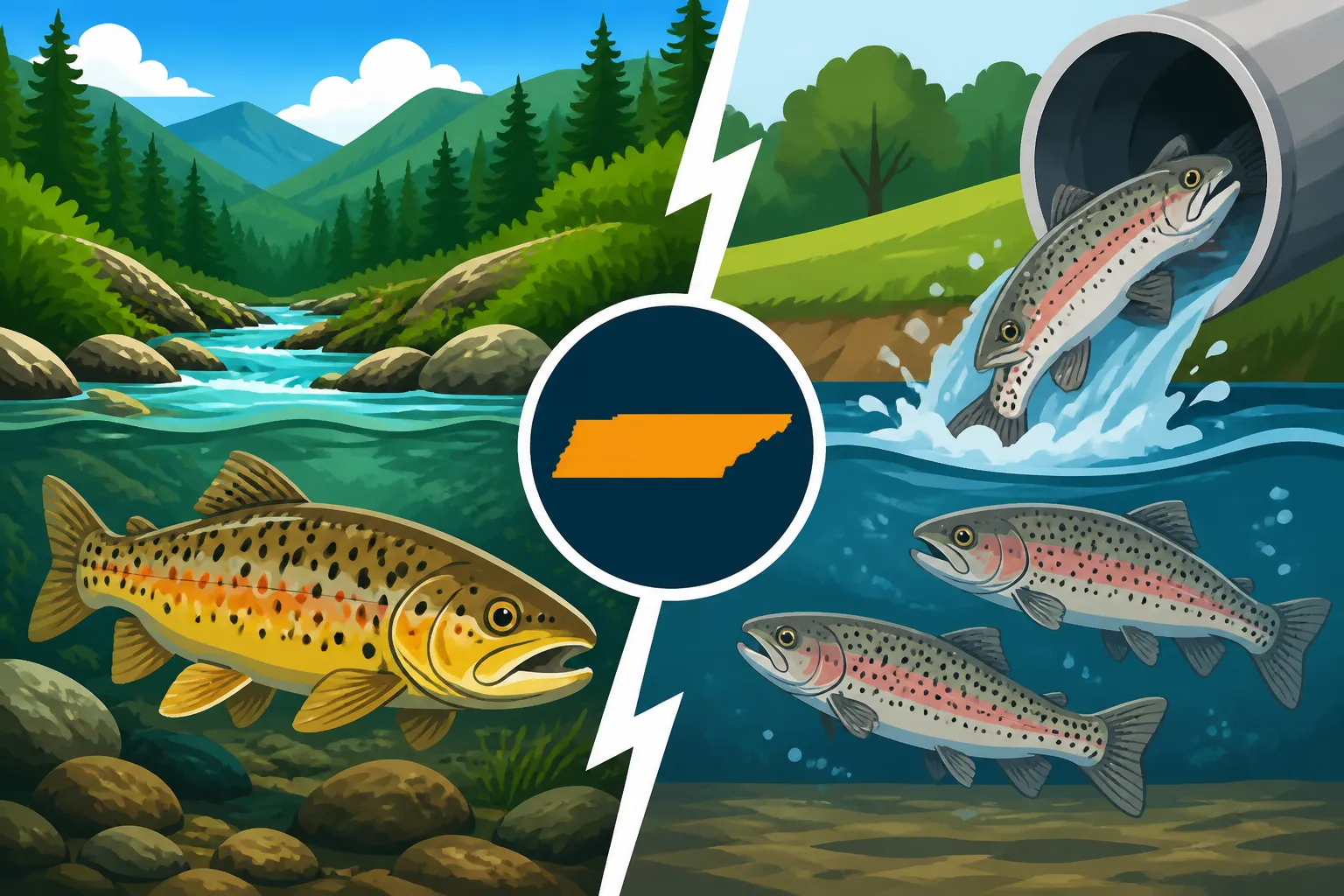
Wild trout often display distinct characteristics that set them apart. Their coloration tends to be more vibrant and camouflage-oriented, perfectly matching the gravel, rocks, and shadows of their home waters. Think about the stunning patterns on a brook trout, Tennessee's only native salmonid, or the subtle olive and gold hues of a wild rainbow or brown trout. They are lean, muscular, and incredibly strong for their size, a testament to their constant fight for survival against swift currents and predators. Their fins are typically perfect, without any nicks, wear, or deformities that can sometimes be seen on fish raised in hatcheries. You'll notice their bodies are streamlined, built for speed and agility in challenging environments.
These fish are also incredibly wary. Having survived purely on instinct, they are highly sensitive to vibrations, shadows, and any unusual movements on the bank or in the water. Approaching a wild trout stream requires stealth, light tackle, and a keen eye, as these fish aren't accustomed to an easy meal and are quick to dart for cover.
The Habitat of Wild Trout in Tennessee
Wild trout thrive in specific conditions found primarily in the higher elevations and protected areas of East Tennessee, particularly within the Great Smoky Mountains National Park and other designated wilderness areas. They demand cold, highly oxygenated water year-round, which is why you'll find them in fast-flowing streams fed by mountain springs. These streams typically have gravel bottoms crucial for spawning, plenty of natural cover like fallen logs, undercut banks, and large boulders, and a healthy insect population to provide food. Areas with dense canopy cover also help keep water temperatures low, which is absolutely vital for trout survival.
The health of these wild trout populations is often a direct indicator of the overall ecological health of a watershed. Factors like sedimentation from erosion, pollution, and increased water temperatures due to deforestation can devastate wild trout habitats. That's why conservation efforts in places like the Tellico River basin or specific stretches of the Watauga River are so critical. It's not just about the fish; it's about the entire ecosystem.
Understanding Stocked Trout in Tennessee
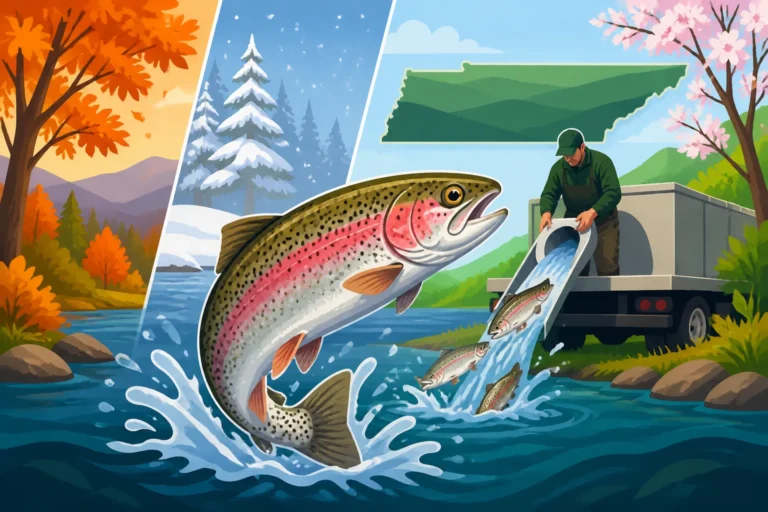
In contrast to their wild counterparts, stocked trout are fish that have been raised in hatcheries and then released into public waters by the TWRA or other organizations. The primary purpose of stocking is to enhance fishing opportunities in areas where wild populations can't naturally sustain high fishing pressure, or in waters where conditions aren't ideal for natural reproduction but can still support adult trout for a period. This allows a much broader segment of the angling public to enjoy trout fishing, even in locations closer to urban centers.
The Role of Hatcheries and Stocking Programs
The TWRA operates several trout hatcheries across the state, such as the Dale Hollow National Fish Hatchery or the Buffalo Springs Hatchery, that are responsible for raising hundreds of thousands of trout annually. These facilities meticulously control the breeding, feeding, and growth of trout, primarily rainbow trout, but also brown and brook trout for specific programs. The fish are raised in raceways or large tanks, fed commercial pellets, and carefully monitored for disease.
Stocking schedules are typically announced by the TWRA, often occurring regularly throughout the cooler months, especially in fall, winter, and spring when water temperatures are more favorable for trout survival. Streams and lakes are stocked based on accessibility, angler demand, and the ability of the water body to temporarily hold fish. This means you might find stocked trout in some Tennessee State Park Fishing Spots or popular tailwaters below dams that might not otherwise support a robust trout fishery. For instance, you can often find information on the Tennessee Trout Stocking Schedule and Season directly from the TWRA website, letting you plan your trips around fresh deliveries of eager fish.
Behavior and Appearance of Stocked Trout
Stocked trout often look and behave differently than wild trout. They can sometimes appear less vibrant, with slightly paler colors, and their fins might show signs of wear or clipping (which is sometimes done for identification purposes). They might also have a slightly different body shape, often a bit more rounded or "chunky" due to their consistent, easy diet in the hatchery.
When first introduced, stocked trout can be much less wary than wild fish. They're accustomed to being fed and seeing people, so they often bite more readily and aren't as easily spooked. This makes them a fantastic target for beginner anglers or families looking for a more relaxed fishing experience. However, after some time in the wild, they can become "stream smart," adapting to their new environment and becoming more challenging to catch. They learn to find natural food sources, avoid predators, and seek out cover, which is a testament to their natural instincts. This transition from hatchery-raised to "naturalized" can be fascinating to observe for dedicated anglers.
Key Differences: Wild vs. Stocked Trout
Understanding the distinctions between wild and stocked trout isn't just an academic exercise; it deeply influences where you choose to fish, what gear you bring, and the techniques you employ. It's about respecting the fish and the environment they inhabit.
Identification at a Glance
For the experienced eye, telling the difference between a wild and stocked trout can often be done with a quick look:
- Fins: Wild trout almost always have perfect, fully formed fins, especially their dorsal and caudal (tail) fins. Stocked trout, especially those recently released, might have rounded, frayed, or even clipped fins due to crowded hatchery conditions. You can often see scars or missing portions of fins.
- Coloration: Wild trout boast richer, deeper, more vibrant colors, often with distinct parr marks (vertical bars) on their sides that blend into their surroundings. Stocked fish can appear duller, more uniform, and sometimes have a tell-tale "washed out" look.
- Body Shape: Wild fish are torpedo-shaped, lean, and muscular, built for navigating strong currents. Stocked fish can sometimes be a bit heavier-bodied or "pot-bellied" from their pellet diet, and their overall shape might be less refined.
- Mouth/Snout: While not always definitive, wild trout often have perfectly formed mouths. Stocked fish, particularly those that have bumped around raceways, might have slightly deformed or worn mouths.
Let's put this in a table for an easy overview:
| Feature | Wild Trout | Stocked Trout |
|---|---|---|
| Fins | Perfect, well-formed, sharp edges, no fraying | Often frayed, worn, rounded, or even clipped |
| Coloration | Vibrant, deep, camouflaged, distinct parr marks | Paler, duller, more uniform, sometimes washed out |
| Body Shape | Lean, muscular, streamlined, often slender | Can be heavier-bodied, rounder, less refined |
| Behavior | Extremely wary, stealthy, fight hard | Less wary initially, may become stream-smart |
| Diet | Natural insects, minnows, crustaceans | Hatchery pellets, then natural food as they adapt |
| Growth | Slower, dictated by natural food availability | Faster, uniform growth in hatchery |
| Reproduction | Natural spawning in suitable habitat | Primarily from hatchery, limited natural spawn |
Ecological Impact and Fishing Pressure
The difference extends beyond appearance to ecological impact. Wild trout populations are sensitive barometers of environmental health. Overfishing, habitat degradation, and pollution can quickly decimate them. Therefore, many wild trout streams are managed under catch-and-release regulations or with very strict limits and gear restrictions to protect these fragile populations. When you're fishing for wild brook trout in a remote mountain stream, you're experiencing a truly wild ecosystem.
Stocked trout, on the other hand, absorb a significant portion of the recreational fishing pressure. They are essentially a renewable resource managed to provide angling opportunities. This often means higher catch rates in stocked waters, which is great for building confidence, especially for beginners. The presence of stocked fish can also help alleviate pressure on wild fisheries by diverting anglers to more accessible, heavily stocked locations. However, poorly managed stocking can sometimes introduce disease or genetic issues if stocked fish interbreed with wild populations, which is why the TWRA carefully plans its stocking efforts.
Fishing Strategies for Both Wild and Stocked Trout
Approaching a wild trout stream is a different ball game compared to targeting a freshly stocked pond. Your gear, approach, and patience levels will all need to adjust.
Targeting Wild Trout: The Art of Stealth and Finesse
When you're after wild trout, especially those elusive brook trout in high-elevation creeks, stealth is paramount. These fish are incredibly wary, as their survival depends on it.
Gear and Approach
You'll want light tackle – often an ultralight spinning rod or a sensitive fly rod. For spinning gear, a 2-4 lb test line is often sufficient, possibly even fluorocarbon to reduce visibility. For fly fishing, a 2-5 weight rod with a matching reel and a tapered leader is ideal. Presentation is everything; you want your bait or fly to drift naturally, as if it's just another morsel floating downstream. Often, the best flies imitate the local insect hatches, so a bit of entomology research can go a long way. Small nymphs, dry flies, and emergers are typically very effective. You can find excellent books on local fly patterns on Amazon, or at your local fly shop.
Your approach to the water should be slow and deliberate. Avoid casting shadows over the water, and try to stay low, using stream-side vegetation for cover. Make your first cast count, as wild trout often spook after one or two errant presentations. Target classic trout lies: behind boulders, in deep runs, under undercut banks, and at the head of pools. These fish are often holding in spots where they can conserve energy while waiting for food. Remember, a wild trout fight is often less about sheer power and more about quick, darting runs and head shakes, especially in tight stream quarters. When you hook one, it's an incredible feeling – a true reward for your patience and skill. If you're new to this, learning How to Fly Fish for Trout for Beginners or How to Spin Fish for Trout can really improve your chances.
Catch and Release Ethos
For most wild trout fisheries, especially in the Great Smoky Mountains National Park, catch and release is not just a suggestion, it's often a regulation. Handle these fish with extreme care: wet your hands before touching them, minimize their time out of water, and use barbless hooks to ensure an easy release. The goal is to ensure these precious populations can continue to thrive for future generations.
Fishing for Stocked Trout: Accessibility and Opportunity
Stocked trout waters generally offer a more accessible and often more immediately rewarding experience, making them perfect for family outings or those just starting their trout fishing journey.
Gear and Bait
You can often use slightly heavier tackle here, though a medium-light spinning rod with 4-6 lb test line is still a good choice. Stocked trout are typically less selective about what they eat, especially right after stocking. Popular baits include corn, salmon eggs, powerbait, and worms. For lures, small inline spinners like a Rooster Tail or Panther Martin, spoons, or small soft plastics can be incredibly effective. The key is to present something enticing that stands out. You can find a huge variety of these baits and lures on Amazon, which is convenient for stocking up your tackle box. For specific lure recommendations, check out resources like Best Lures for Stocked Rainbow Trout.
Locating and Engaging
Unlike wild trout that require a calculated approach, stocked trout often congregate in more open areas, around bridges, deeper pools, or even near where they were initially released. Look for areas with current breaks or deeper pockets where they can rest. They might not be as wary, but they still have instincts. Cast to different areas, vary your retrieve, and experiment with different baits until you find what they're hitting. Sometimes, simply watching other anglers can give you clues about the successful presentations or baits of the day.
While some stocked waters might have more liberal harvest limits, it's always important to check current TWRA regulations. Even with stocked fish, responsible angling practices, such as not taking more than your limit and properly disposing of trash, ensure a pleasant experience for everyone. If you're interested in keeping some for the frying pan, make sure you understand Tennessee Trout Limits and Season Rules for the specific water you're fishing.
Ultimately, whether you're chasing the elusive beauty of a wild brook trout or enjoying a successful day with recently stocked rainbows, Tennessee offers incredible trout fishing opportunities. Knowing the difference helps you appreciate the unique challenges and rewards each type of fishing presents, and perhaps even inspires you to contribute to conservation efforts that protect both worlds.
Disclaimer
This article is for general informational purposes only and does not constitute professional advice. Laws, prices and regulations vary by location and change over time. Consult a qualified professional for guidance on your specific situation.