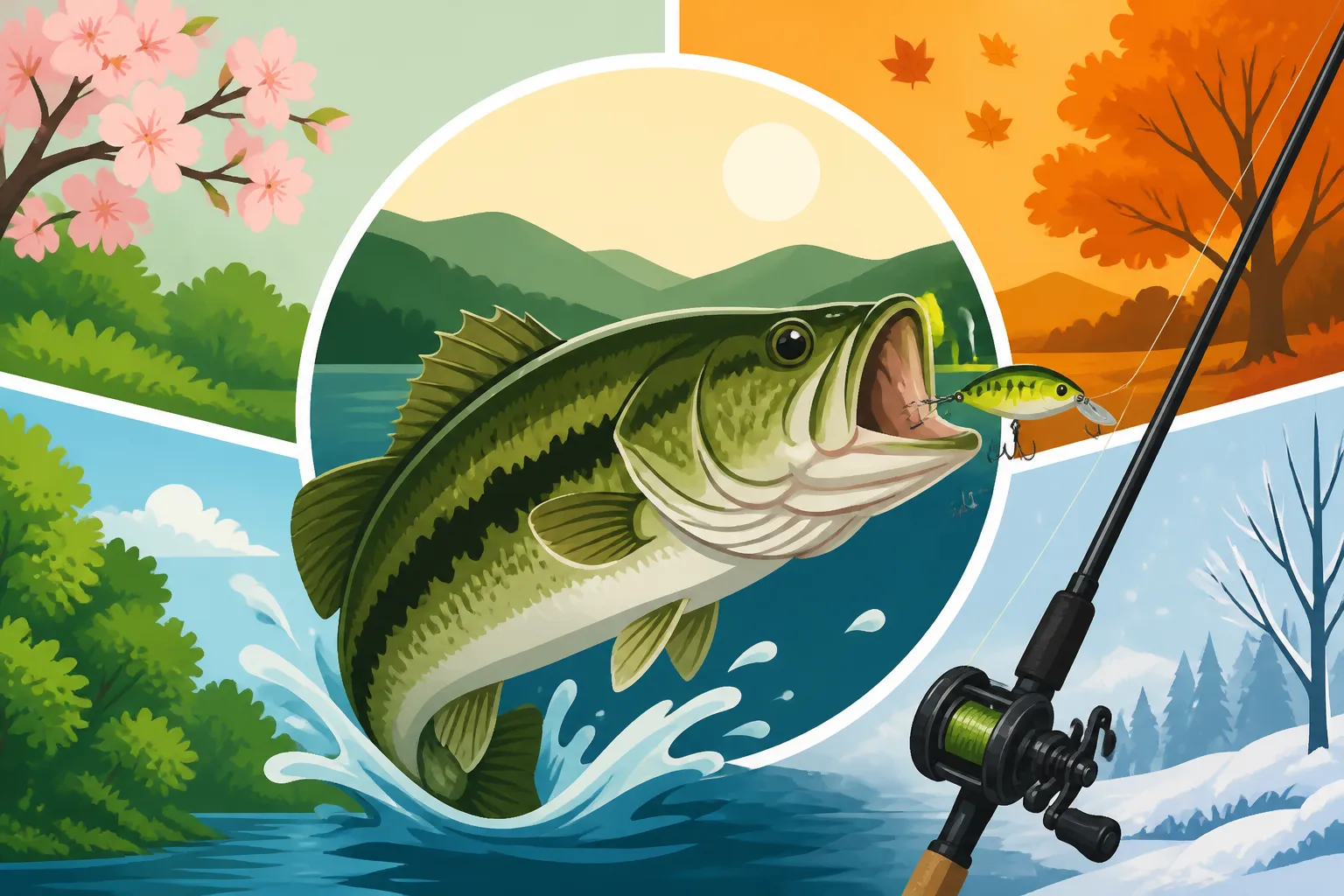
Tennessee Bass Fishing Seasons and Patterns
The quest to consistently catch bass in Tennessee can feel like chasing a phantom sometimes. One day they're shallow, the next they've vanished into the depths, leaving you scratching your head. This comprehensive guide is designed to demystify the ever-changing world of Tennessee bass fishing, breaking down the seasonal patterns and behaviors of these beloved game fish so you can spend less time guessing and more time reeling them in.
Understanding Tennessee's Bass Species
Tennessee is blessed with a fantastic array of black bass species, each with its own preferred habitat and behavior patterns. Knowing which bass you're targeting and where they typically live can dramatically improve your success rate. It's not just about "bass fishing" here; it's about understanding the nuances of largemouth, smallmouth, and spotted bass.
Largemouth Bass in Tennessee
The largemouth bass is arguably the most popular sport fish in the Volunteer State, and for good reason. These aggressive eaters are widely distributed across Tennessee's vast reservoir system, from the famed Chickamauga Lake: Tennessee's Top Bass Fishing Destination to Percy Priest Lake near Nashville. Largemouths thrive in warmer, often stained waters, preferring areas with abundant cover like submerged timber, grass beds (hydrilla, milfoil), boat docks, and brush piles. They are ambush predators, often holding tight to cover, waiting for an unsuspecting meal to swim by.
Throughout the year, their location will shift dramatically. In spring, you'll find them moving into shallow coves and flats to spawn. As summer heats up, they'll retreat to deeper ledges, humps, and submerged structure to find cooler, more oxygenated water. Come fall, they'll move back shallower, following schools of baitfish, and in winter, they'll often stack up on deep, vertical structure. Understanding these macro movements is crucial for success. Their preferred diet consists of shad, bluegill, crawfish, and anything else they can fit into their large mouths.
Smallmouth Bass: The State's Pride
Tennessee is home to some of the best smallmouth bass fishing in the country, so much so that the smallmouth is one of Tennessee's official state fish. Unlike their largemouth cousins, smallmouth bass prefer cooler, clearer water with rocky bottoms, gravel points, and bluff walls. You'll find them in abundance in lakes like Dale Hollow Lake Smallmouth Bass Fishing, Norris Lake, and many of the state's rivers like the Cumberland and Holston. Smallmouths are known for their powerful fights and acrobatic jumps, making them a thrilling target for any angler.
Their seasonal patterns are distinct. In spring, they'll spawn on rocky banks and gravel flats. During summer, they often school up offshore on deep humps, points, and ledges, making them a challenge to locate but incredibly rewarding once found. Fall sees them migrating back to shallower rocky areas, often gorging on crawfish and shad. In winter, they'll gather in deep holes and rock piles, becoming less active but still catchable with the right finesse techniques. They are truly an incredible fish to target in Tennessee.
Spotted Bass and Alabama Bass
Often overlooked or misidentified, spotted bass, and in some waters, Alabama bass, are another significant part of Tennessee's bass fishery. These species share characteristics of both largemouth and smallmouth, often inhabiting areas with moderate clarity and depth. You'll frequently find them alongside largemouths in reservoirs, especially those with less dense cover. Spotted Bass vs Largemouth Bass in Tennessee Lakes details some of the key differences. They tend to school more readily than largemouths, making them a fun target once a school is located.
Spotted bass don't typically grow as large as largemouths or smallmouths, but they are incredibly aggressive fighters pound for pound. Their seasonal movements mirror largemouths to some extent, moving shallow in spring for the spawn and deeper in summer. However, they are often more willing to suspend in open water over deep structure. Lures and techniques that work for largemouths will often entice spots as well, especially finesse baits and smaller crankbaits.
Spring Bass Fishing: The Pre-Spawn and Spawn Frenzy
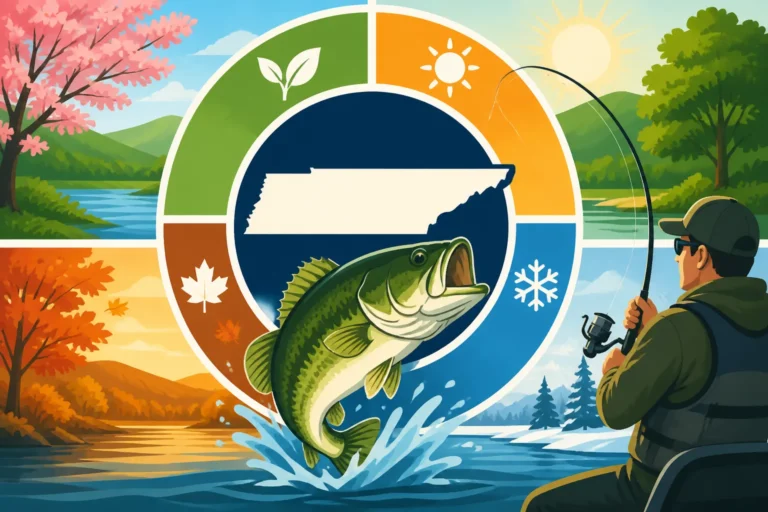
Spring in Tennessee is a magical time for bass fishing. As the days lengthen and water temperatures begin to climb, bass stir from their winter doldrums and begin one of the most predictable migrations of the year: the journey to their spawning grounds. This period offers some of the most exciting and productive fishing opportunities.
Early Spring: Pre-Spawn Preparations
The pre-spawn phase is all about the bass bulking up, preparing for the rigors of spawning. Water temperatures typically range from the mid-40s to low 60s Fahrenheit. During this time, bass will stage in areas adjacent to their shallower spawning flats. Think secondary points, creek channel swings, channel banks, and the mouths of coves. They're looking for baitfish and crawfish to feed heavily, and they're often grouped up, meaning if you find one, you're likely to find more.
Anglers often find success with moving baits that cover water efficiently. Lipless crankbaits, jerkbaits, and spinnerbaits are excellent choices for locating active fish. For those bass holding a bit tighter to structure, a jig or a shaky head worm can be incredibly effective. The bass are still somewhat lethargic in the colder water, so a slower presentation or a lure that can be worked patiently, like a suspending jerkbait, can often trigger strikes. Don't be afraid to experiment with different retrieve speeds until you find what they want.
The Bass Spawn in Tennessee
The true bass spawn kicks off when water temperatures consistently hold in the mid-60s, usually from late March through May in most Tennessee lakes, though it can vary by a few weeks depending on the specific body of water and region. Largemouths will seek out shallow, protected coves, pockets, and flats with hard bottoms (sand, gravel, or even matted grass) to build their nests. Smallmouths prefer rockier areas, often on main lake points or gravel bars exposed to wave action, in slightly deeper water than largemouths.
During the actual spawn, bass can be notoriously difficult to catch if you're not targeting them directly on their beds. Many anglers opt for sight fishing, using polarized sunglasses to spot bass guarding their nests. Soft plastics like lizards, tubes, or small worms are often pitched onto the beds to annoy the bass into striking. For those not sight fishing, blind casting to known spawning areas with soft plastics or jigs can still be productive. It's important to remember that bass are focused on reproduction, so strikes are often territorial rather than feeding strikes. Always practice catch and release, especially for bedding fish, to ensure future generations of bass. You can learn more about Pre-Spawn and Post-Spawn Bass Fishing Patterns in our detailed guide.
Post-Spawn Recovery and Feeding
Once the spawn is complete, usually by late May or early June, bass transition into a post-spawn phase. The males stay on the beds longer to guard fry, while the females retreat to slightly deeper water to recover from the strenuous spawning process. They're often exhausted and finicky right after spawning, but after a short recovery period, they'll resume feeding, though usually not with the same intensity as the pre-spawn.
During this period, bass are often found on secondary points, main lake points, and deeper grass lines or brush piles adjacent to their spawning flats. They'll start to follow baitfish out into slightly deeper water. Topwater baits can be incredibly effective early in the morning or late in the evening as bass look for an easy meal. Reaction baits like square bill crankbaits or spinnerbaits worked along grass edges can also trigger strikes. This is a great time to experiment with different presentations as bass begin to spread out and resume more normal feeding patterns.
Summer Bass Fishing: Deep Water and Early Morning Bites
As the scorching Tennessee summer sun bears down, bass fishing shifts dramatically. The consistent warm temperatures push bass out of the shallows they occupied during spring and into deeper, more stable environments. This means anglers need to adjust their strategies, often going deep or targeting low-light conditions.
Battling the Summer Heat
When water temperatures climb into the 80s, bass metabolism slows down, and they seek refuge in cooler, more oxygenated water. This typically means deep ledges, humps, creek channels, and the deepest sections of grass beds in major reservoirs like Kentucky Lake or Watts Bar Lake. The thermocline, a layer of water where the temperature changes rapidly, becomes a critical zone. Bass will often suspend just above or within this layer, finding their ideal comfort zone.
Understanding lake topography becomes paramount. Using contour maps, modern fish finders, and even side-imaging sonar is invaluable for locating these deep-water haunts. Look for schools of baitfish, as bass will often follow their food source. Areas with current, such as river sections of reservoirs or tailwaters below dams, can also hold active bass because the moving water often brings cooler temperatures and more oxygen. The bass might not be as active during the heat of the day, but they are there, and they can be caught.
Techniques for Summer Bass
Catching summer bass often requires slower, more methodical presentations in deep water. A heavy jig, a Carolina rig with a long leader, or a drop-shot rig are all excellent choices for probing deep structure. Deep-diving crankbaits are fantastic for covering large ledges and finding active schools of fish. Once you get a bite, it's often a good idea to slow down and work the area thoroughly, as bass tend to school tightly during the summer. You might even find some schooling hybrid striped bass mixed in, especially in larger reservoirs.
Beyond the deep-water game, don't discount the power of low-light conditions. Early mornings and late evenings offer a brief window when bass may push back into shallower water, particularly around main lake points, docks, or sparse grass beds, to ambush baitfish. This is prime time for topwater lures like poppers, walking baits, and buzzbaits. Fishing around docks with Texas-rigged worms or jigs can also produce bites, as docks offer shade and cover. Many of these effective lures can be easily found on Amazon. For more detailed insights, check out How to Fish for Bass in Summer Heat.
Night Fishing for Summer Bass
When the daytime heat is unbearable, night fishing truly shines for summer bass. As the sun sets and surface temperatures cool, bass become much more active and willing to move into shallower feeding areas. The cover of darkness provides them with an advantage over their prey, and they often become less wary of boat traffic and human presence.
Dark-colored lures are often the most effective at night, as they create a strong silhouette against the moonlit sky or ambient light. Large jigs, Texas-rigged worms, buzzbaits, and even topwater plugs like Jitterbugs or Whopper Ploppers can be deadly. Focus your efforts on main lake points, dock lights (which attract baitfish), submerged humps, and any shallow cover adjacent to deeper water. Work your lures slowly, allowing the bass to track them in the dark. A good headlamp with a red light setting is essential for tying knots without spooking fish. Night fishing can be incredibly productive and a fantastic way to beat the heat while still enjoying some serious bass action.
Fall Bass Fishing: The Feeding Frenzy Returns
As summer fades and autumn colors begin to paint the Tennessee landscape, a renewed energy sweeps through the bass population. Fall is often characterized by falling water temperatures, lake turnover, and a massive migration of baitfish, triggering a second major feeding spree for bass.
The Fall Turnover and Baitfish Migration
The first significant event in the fall fishing calendar is often the "turnover." As surface waters cool and become denser, they sink, mixing with the deeper, less oxygenated water below. This process can sometimes disorient fish and make fishing tough for a week or two, as bait and bass scatter throughout the water column. However, once the lake stabilizes, it's game on.
Post-turnover, baitfish like shad will school up and move into shallower bays, creeks, and main lake points in search of warmer water and available forage. Bass, instinctively knowing that winter is approaching, will follow these baitfish relentlessly. This creates an exciting "wolf pack" mentality where bass actively chase and ambush schools of shad, often busting the surface in spectacular feeding frenzies. Finding these schools of baitfish is the absolute key to locating active fall bass.
Aggressive Fall Tactics
Because bass are actively chasing baitfish, aggressive, reaction-style baits are often the most productive in the fall. Crankbaits that mimic shad, lipless crankbaits, spinnerbaits, and jerkbaits are all excellent choices. Focus your efforts on main lake points, creek channel swings, and large flats where baitfish are congregating. If you see birds diving or bass busting the surface, get a bait in there quickly!
Another highly effective technique is working swimbaits, either on an Alabama rig or as a standalone presentation, through schools of bait. The goal is to imitate a struggling or wounded baitfish, making it an easy target. Don't be afraid to experiment with retrieve speeds; sometimes a fast, erratic retrieve triggers a strike, while other times a slower, more deliberate retrieve is preferred. For more tips, check out How to Catch Bass in Fall. You'll want a good selection of these baits, and many anglers stock up on their favorite brands through Amazon.
Late Fall Slow Down
As late fall transitions into early winter, water temperatures continue to drop, eventually reaching the low 50s and even into the 40s. While bass are still feeding, their metabolism slows significantly, and they become less inclined to chase fast-moving baits. The aggressive feeding frenzies of early and mid-fall begin to wane.
During this period, bass will start to congregate on deeper main lake points, ledges, and creek channel bends, often around vertical structure like bluff walls or submerged timber. Slower, finesse presentations become more effective. Jigs, finesse worms on shaky heads, and drop-shot rigs worked meticulously through these deep areas can still produce quality bites. The key is patience and a very thorough approach, dissecting small sections of structure. While you might not get as many bites as earlier in the fall, the ones you do get can often be larger, healthy fish preparing for winter.
Winter Bass Fishing: Finesse and Deep Structure
Winter bass fishing in Tennessee presents a unique challenge, but it can be incredibly rewarding for the patient and observant angler. While the bite may be slower, the fish caught are often healthy, robust bass that have successfully navigated the colder months.
Cold Water Bass Behavior
When water temperatures dip into the low 50s and below, bass become much more lethargic. Their metabolism slows down significantly, meaning they don't need to feed as often or as aggressively. They tend to school up tightly on deep, isolated structure in the main lake or major creek channels. This could be a submerged hump, a rock pile, a deep bluff end, or a channel swing near a sharp drop-off. They're looking for stable water temperatures and nearby access to deep water.
Locating these winter congregations is paramount. Without the aid of advanced electronics like a good fish finder with down imaging or side imaging, it can feel like looking for a needle in a haystack. Once located, however, these schools can provide excellent action, as bass will often stack up in predictable locations. Understanding how water temperature affects bass behavior is critical for success in colder months.
Finesse Techniques for Winter
Given their slower metabolism, winter bass are rarely going to chase down a fast-moving bait. This is where finesse fishing truly shines. Drop-shot rigs with small worms or minnow imitations are incredibly effective, allowing you to present a bait vertically right in front of a suspended bass. Jigging spoons are another classic winter lure, often dropped directly onto a school of fish and jigged subtly to trigger reaction strikes. Small jigs, shaky heads, and Ned rigs with a slow, bottom-hopping retrieve can also produce bites.
The key to winter finesse fishing is patience and an almost excruciatingly slow retrieve. Bass will often just "tick" the bait or put slight pressure on the line, rather than deliver a bone-jarring strike. Pay close attention to your line for any unusual movement. Using light line, typically fluorocarbon for its low visibility and sensitivity, is often beneficial. Remember, you're trying to coax a bite, not trigger an aggressive chase. Detailed strategies can be found in our Winter Bass Fishing Techniques guide.
Locating Winter Bass
As mentioned, electronics are your best friend in winter. Start by idling over deep points, channel swings, and humps, meticulously scanning for baitfish schools and arcs (individual bass) or tight clusters of fish near the bottom. Once you pinpoint a promising area, use your trolling motor to stay on top of the school. Look for areas where the main lake channel brushes up against a flat or a bluff wall, creating a natural funnel for baitfish and a holding area for bass.
Warm water discharges, such as those found near power plants, can also be winter hotspots. The slightly warmer water can keep bass more active and concentrated. While less common in Tennessee's smaller waters, larger rivers and reservoirs often have these areas. Remember that winter bass will often position themselves up in the water column if baitfish are present, even if they're over 40 feet of water. Don't assume they're always glued to the bottom.
Key Factors Influencing Tennessee Bass Patterns
Beyond the general seasonal shifts, several environmental factors play a huge role in dictating where bass are, how active they are, and what they're willing to bite. A successful angler understands these nuances and adjusts accordingly.
Water Temperature and Clarity
These two factors are arguably the most critical determinants of bass behavior. Water temperature directly influences a bass's metabolism. In cold water, bass are sluggish; in warm water, they're more active. However, extremely hot water can also make them lethargic as they seek cooler depths. Every major seasonal transition is primarily triggered by changes in water temperature. For example, the spring spawn won't happen until temperatures reach a certain threshold. Understanding How Water Temperature Affects Bass Feeding is vital.
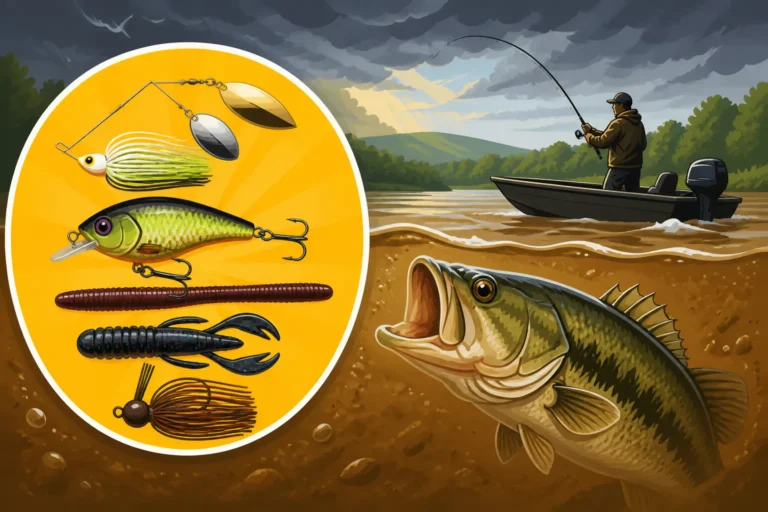
Water clarity also dictates where and how bass feed. In clear water, bass rely more on sight and are often warier, requiring longer casts and more subtle presentations. Natural bait colors and finesse techniques tend to excel here. In stained or muddy water, bass rely more on their lateral line (which detects vibrations) and scent. Brighter, more vibrant lure colors, noisier baits (like bladed jigs or rattling crankbaits), and baits that displace a lot of water often perform better. Bass in dirty water will also hold much tighter to cover, making them easier to target.
Weather Changes and Fronts
Ah, the dreaded cold front! Anyone who's fished for bass knows how quickly a sharp weather change can shut down a bite. High-pressure systems following a cold front often bring clear skies and calm winds, but they also tend to push bass deeper and make them less active. They might suspend or bury themselves in cover, refusing to bite anything. During these challenging times, ultra-finesse techniques and extreme patience are required.
Conversely, a stable period of warm, cloudy weather with a low-pressure system can lead to incredibly aggressive feeding. Bass tend to move shallower, feed actively, and are less particular about lure choice. Wind can also be a significant factor. A moderate chop on the water can break up the surface, making bass feel more secure in shallower water and more willing to chase bait. It also concentrates baitfish. However, extremely strong winds can make boat control difficult and scatter bait. Always check the forecast before hitting the water and have a plan for how you'll adjust to changing conditions.
Forage Base and Habitat
What bass eat and where they live are intrinsically linked. In Tennessee, the primary forage for bass includes various species of shad (gizzard, threadfin), crawfish, and smaller panfish like bluegill and sunfish. Understanding the prevailing forage in a particular lake or river can help you choose the right lure profile, size, and color. If bass are feeding heavily on threadfin shad, a small silver crankbait or swimbait will likely outperform a large green pumpkin jig.
Habitat diversity is another crucial element. Tennessee's reservoirs offer a wide range of cover:
- Grass Beds (Hydrilla, Milfoil): Excellent for holding largemouth bass year-round, offering cover, ambush points, and cooler water in summer.
- Submerged Timber and Brush Piles: Man-made or natural, these are bass magnets, especially on deeper ledges and creek channels.
- Rock and Gravel: Preferred by smallmouth bass, found on points, humps, and bluff walls.
- Docks and Boat Houses: Offer shade, structure, and often attract baitfish, making them great year-round targets.
- Bluff Walls: Provide deep, vertical cover, often holding bass in winter or during post-spawn.
The best fishing spots are often where several of these habitat types converge, creating an irresistible sanctuary and feeding ground for bass. Identifying these key features on your electronics and maps will give you a significant advantage.
Essential Gear and Techniques for Each Season
Having the right tools for the job is crucial when tackling Tennessee's diverse bass fisheries. While a basic rod and reel can catch fish, optimizing your gear for specific seasons and techniques will undoubtedly lead to more consistent success.
Rods, Reels, and Line for Tennessee Bass
Matching your rod and reel to the technique and the fish you're targeting makes a huge difference. For instance, when throwing a heavy jig in dense cover, you'll want a stout, fast-action casting rod with a high-gear ratio reel and strong braided line. This setup allows for powerful hooksets and the ability to pull fish out of thick vegetation. Conversely, for finesse techniques like a drop-shot in clear water, a sensitive spinning rod with a slower gear ratio reel and light fluorocarbon line provides better feel and presentation.
Most bass anglers will have a selection of rods covering different actions and powers. A medium-heavy, fast-action casting rod is a great all-around choice for many applications. For topwater and reaction baits, a rod with a more moderate action can help keep fish hooked. When shopping for gear, whether at a local tackle shop or on Amazon, look for brands known for durability and performance. Consider a Best Rods for Largemouth Bass and Best Rods and Reels for Tennessee Smallmouth Bass to match your target species.
Seasonal Lure Selection
Your tackle box should be a dynamic entity, changing with the seasons.
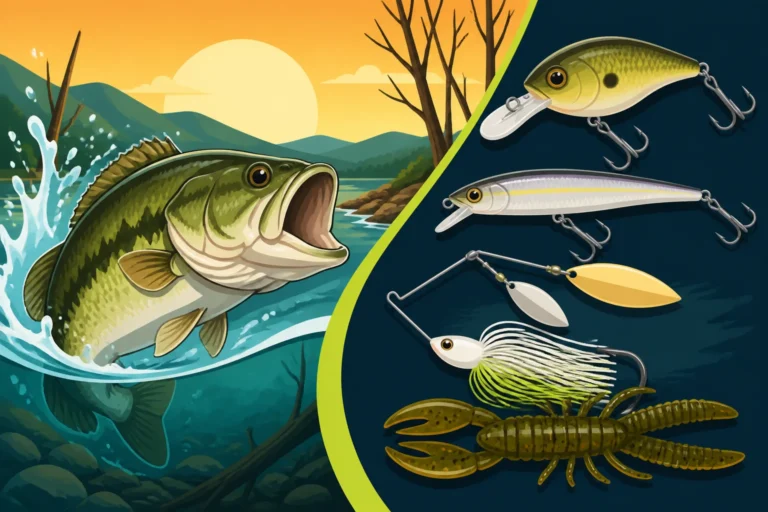
- Spring: Focus on lipless crankbaits (like a Strike King Red Eye Shad), jerkbaits (Rapala X-Rap, Megabass Vision 110), spinnerbaits, jigs (½ oz to ¾ oz in crawfish colors), and soft plastics like lizards or creature baits for bed fishing.
- Summer: Shift to deep-diving crankbaits (Strike King 6XD, Norman DD22), Carolina rigs with worms or lizards, drop-shot rigs with small finesse worms (like a Roboworm Straight Tail), and football jigs. For early morning/evening, bring poppers and walking baits.
- Fall: Emphasize shad-imitating lures: crankbaits (square bills, medium divers), lipless crankbaits, spinnerbaits with willow leaf blades, swimbaits (Keitech Swing Impact FAT), and topwater lures when bass are busting bait.
- Winter: Go small and subtle: jigging spoons (Kastmaster, Acme Little Cleo), blade baits (Damiki Vault), Ned rigs, shaky heads with small worms, and small jigs. Patience is key with these smaller, slower presentations.
Always have a variety of colors, too. Natural colors (green pumpkin, black and blue) work well in clear water, while brighter colors (chartreuse, white) are often better in stained or muddy conditions.
Reading the Water and Electronics
Becoming a successful bass angler in Tennessee isn't just about having the right gear; it's about learning to "read the water." This means observing current, water color, surface activity (jumping baitfish, diving birds), and identifying visible cover like docks, laydowns, or weed lines. These visual cues can tell you a lot about where bass might be holding.
Beyond the visible, modern marine electronics are indispensable, especially for offshore and deep-water fishing. A good fish finder with high-definition 2D sonar, down imaging, and side imaging can help you locate baitfish schools, individual bass, and submerged structure that's invisible from the surface. GPS mapping allows you to mark waypoints of productive spots and navigate confidently. Understanding how to interpret what your fish finder is telling you is a skill that develops over time, but it's one that will drastically improve your catch rate. Look for devices from brands like Humminbird, Lowrance, or Garmin, many of which are readily available on Amazon. The more you use your electronics, the better you'll become at identifying prime bass habitat.
| Season | Water Temperature | Typical Depths | Best Lure Categories | Key Techniques |
|---|---|---|---|---|
| Spring (Pre-Spawn) | 45-60°F | 5-20 ft | Lipless Crankbaits, Jerkbaits, Spinnerbaits, Jigs | Covering water, targeting secondary points |
| Spring (Spawn) | 60-68°F | 1-8 ft | Soft Plastics (Lizards, Tubes, Worms), Jigs | Sight fishing, pitching to beds, shallow casting |
| Spring (Post-Spawn) | 65-75°F | 5-25 ft | Topwater, Squarebill Crankbaits, Spinnerbaits, Texas Rigs | Targeting main lake points, recovering females |
| Summer | 75-90°F+ | 15-40+ ft | Deep Crankbaits, Jigs, Carolina Rigs, Drop-shots | Deep ledge fishing, early/late topwater, night fishing |
| Fall (Early) | 60-75°F | 5-25 ft | Crankbaits, Spinnerbaits, Jerkbaits, Swimbaits, Topwater | Following baitfish, covering main lake points |
| Fall (Late) | 50-60°F | 15-35 ft | Jigs, Finesse Worms, Blade Baits, Spoons | Slower presentations, targeting creek channels |
| Winter | 35-50°F | 20-60+ ft | Jigging Spoons, Blade Baits, Drop-shots, Small Jigs | Finesse, vertical presentations, targeting deep structure |
Disclaimer
Fishing conditions and regulations in Tennessee can change. Always consult the latest Tennessee Wildlife Resources Agency (TWRA) guidelines and local lake-specific rules before heading out. This guide provides general information and should not be considered a substitute for official regulations or professional advice.