How to Fish a Carolina Rig for Largemouth Bass
We’ve all been there: you head out to your favorite Tennessee lake, expecting a banner day of bass fishing, only to find the largemouth are playing hard to get. They’re not chasing topwater, they’re ignoring your shallow crankbaits, and you can practically feel them hunkered down deep, refusing to budge. It’s frustrating, right? But don't despair – that's precisely when a Carolina Rig becomes your secret weapon. This guide will walk you through everything you need to know to master this incredibly effective technique, helping you pull those finicky bass out of their hiding spots in the deep.
Understanding the Carolina Rig's Anatomy and Why It Works
The Carolina Rig is a staple in many an angler's arsenal for good reason. It offers a unique presentation that can tempt even the most reluctant largemouth, especially when they're staging offshore or feeling the pressure. Understanding its components and the mechanics behind its success is the first step to becoming a Carolina Rig master on Tennessee's vast reservoirs.
The Components of a Classic Carolina Rig
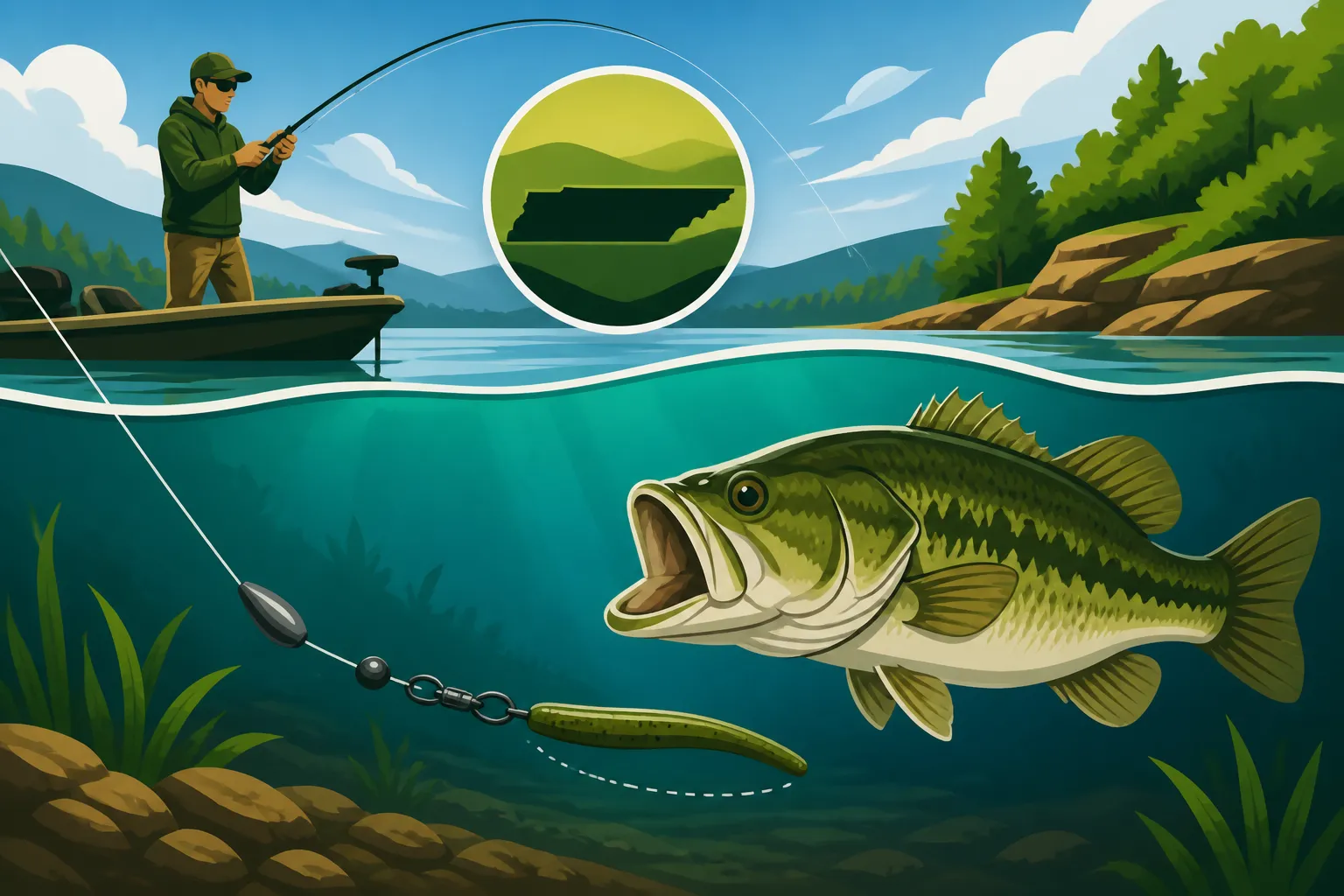
At its core, a Carolina Rig is ingeniously simple yet incredibly effective. You start with your main line, which is typically a heavier fluorocarbon or braided line. This main line is threaded through a weight, usually an egg sinker or a specialized Carolina Rig weight. Following the weight, you’ll typically add a bead, often made of glass or plastic, which serves two main purposes: protecting your knot from the weight and, when paired with a hard weight, creating an enticing "clacking" sound as it moves along the bottom. Next comes a swivel, which connects your main line to a lighter, longer leader. Finally, at the end of that leader, you tie your hook, to which you'll rig your soft plastic bait. The magic truly happens in the separation—your weight drags along the bottom, but your bait is free to float or swim just above it, presenting a very natural, unencumbered appearance to the fish.
When it comes to weights, you have choices, each with its own advantages. Lead weights are traditional and readily available, but many seasoned anglers prefer tungsten weights. Tungsten is significantly denser than lead, meaning a smaller weight can achieve the same sink rate, providing a more compact profile and, crucially, much better sensitivity. You can feel every pebble, stick, and subtle bite with a tungsten weight, which is a huge advantage when fishing deep. You can find a wide variety of both lead and tungsten weights on platforms like Amazon, making it easy to experiment with different sizes and materials to find what works best for the specific depths and bottom compositions you're targeting.
The leader is another critical component, and its length and material can dramatically impact your presentation. Most anglers opt for a fluorocarbon leader, typically 12-20 pound test, which is virtually invisible underwater and highly abrasion-resistant—a must when dragging through rocks and shell beds. As for length, it can range anywhere from 18 inches to 6 feet, depending on how active the fish are and how much freedom you want your bait to have. A shorter leader offers more control and a quicker response to bites, while a longer leader gives your bait a more natural, flowing action, which can be irresistible to bass that are just nipping at the bait.
Finally, your hook and bait selection complete the rig. For soft plastics, a wide gap (EWG) hook is often preferred, as it allows for a weedless presentation while still providing excellent hook-up ratios. Straight shank hooks can also be used, especially with certain baits like lizards. The type of soft plastic bait you choose is where you can really customize your presentation. Lizards, creature baits, straight-tail worms, and even soft jerkbaits are all popular choices, and we'll dive deeper into specific bait recommendations for Tennessee later in this guide. The key is that the bait is free to move independently of the weight, giving it a subtle, tempting action that's hard for a bass to ignore.
When and Why the Carolina Rig Shines for Tennessee Largemouth
The Carolina Rig truly comes into its own when conditions are tough, or when largemouth bass are holding in specific types of structure or depth ranges on our Tennessee lakes. It's not necessarily a power fishing bait, but rather a finesse-style presentation that allows you to methodically cover water and coax bites from bass that might otherwise be uncatchable.
This rig excels in deeper water, typically anywhere from 10 to 30 feet, making it perfect for targeting offshore humps, ledges, submerged roadbeds, and vast main lake points on big fisheries like Watts Bar Lake or Kentucky Lake. When bass pull off the banks after the spawn or retreat to cooler, deeper water during the heat of summer, the Carolina Rig is often the most productive way to reach them. It also shines when bass are pressured; the subtle, natural presentation of the bait floating behind the weight can often trick wary fish that have seen every other lure in the box. Many anglers find it particularly effective during the post-spawn and late summer periods, when bass are suspended or cruising along deeper contours, but aren't actively chasing fast-moving baits.
The real genius of the Carolina Rig lies in that "separation" effect we mentioned. Because the weight is several feet ahead of the bait, your soft plastic is free to drift, float, and undulate naturally with the slightest current or movement from your rod tip. This means it presents as an easy, vulnerable meal, rather than a hard-hitting, aggressive lure. Imagine a baitfish casually swimming along just above the bottom, completely unaware of the heavy lead dragging a few feet in front of it—that's the illusion the Carolina Rig creates. This subtle action is often key to enticing lethargic or suspended bass that might ignore more direct presentations. It's a fantastic choice when you need to slow down and meticulously pick apart an area, probing for those deeper-holding fish.
While other rigs, like a Texas Rig or a Drop Shot, also target deeper fish, the Carolina Rig offers a distinct advantage in its ability to cover water more efficiently while maintaining a natural presentation. A Texas Rig is fantastic for punching through heavy cover, but its weight is directly on the bait, limiting its independent movement. A Drop Shot excels at vertically presenting a bait in a very localized zone, but it's not designed for covering long stretches of bottom. The Carolina Rig, by contrast, allows you to drag a bait across vast areas of structure, feeling for subtle changes in bottom composition and detecting sparse cover, all while your bait trails along, looking alive and enticing. This makes it a versatile tool for finding fish on new water or for thoroughly exploring known offshore haunts.
Setting Up Your Carolina Rig for Success on Tennessee Lakes
Getting your Carolina Rig set up correctly is crucial for maximizing its effectiveness. From choosing the right rod and reel to selecting the perfect soft plastic, every component plays a role in how well your rig performs and how many bites you ultimately get.
Choosing the Right Rod, Reel, and Line
When it comes to Carolina Rig fishing, your rod is your primary tool for feeling the bottom, detecting subtle bites, and executing a powerful hook set. You'll want a rod that's sensitive enough to transmit every bump and grind from the bottom, yet powerful enough to drive a hook through tough bass jaws, often at the end of a long cast. A medium-heavy to heavy power rod, typically 7 to 7.5 feet in length, is ideal. Look for a fast or extra-fast action, which means the tip is flexible enough for sensitivity but the backbone quickly transitions to power. This combination allows for long casts, excellent feel, and the leverage needed for those sweeping hook sets. Brands like Ugly Stik offer durable options, while Fenwick rods can provide excellent sensitivity.
Your reel choice also plays a significant role. A baitcasting reel with a moderate to high gear ratio (around 6.4:1 to 7.1:1) is generally preferred. The moderate ratio gives you good torque for retrieving fish, while a higher ratio can help you pick up slack quickly after a long drag or a bite. Smoothness is paramount, as you'll be constantly reeling up slack and feeling for subtle movements. Ensure your reel is well-maintained and has a reliable drag system, as you'll often be fighting larger bass in deeper water. Many quality baitcasting reels can be found on Amazon, offering a wide range of options for every budget and preference.
Line selection for a Carolina Rig often involves a bit of a hybrid approach. For your main line, many anglers opt for 15-20 pound fluorocarbon, known for its low stretch, incredible sensitivity, and near-invisibility underwater. This direct connection to the weight maximizes your ability to feel what’s happening on the bottom. Alternatively, some anglers prefer 30-50 pound braided line as their main line, especially when fishing in areas with abrasive cover or when needing to make extremely long casts. If you go with braid, you absolutely need to use a fluorocarbon leader, as braid is highly visible underwater. Connecting your braid main line to a fluorocarbon leader (typically 12-17 pound test) via a strong knot like a double uni knot or an FG knot gives you the best of both worlds: the casting distance and strength of braid, combined with the stealth of fluorocarbon near your bait. It’s important to match the leader strength to the size of the fish you expect and the cover you’re fishing.
Step-by-Step Assembly of Your Carolina Rig
Assembling a Carolina Rig is straightforward once you know the sequence. Here’s a detailed breakdown to ensure your rig is tied correctly and efficiently, minimizing snags and maximizing your time fishing.
First, gather all your components: your main line (already spooled on your reel), your chosen weight (e.g., a 3/4 oz tungsten bullet weight), a glass or plastic bead, a quality barrel swivel (a small, strong one like a #7 or #8 will do), a fluorocarbon leader (around 3 to 4 feet long for general purposes), and your preferred wide gap hook (such as a 3/0 or 4/0 EWG). Having everything laid out and within reach will make the process much smoother, especially if you’re trying to tie a new rig on the water.
Next, take your main line and slide your weight onto it. The tapered end of the weight should face towards your rod tip. Following the weight, slide your bead onto the main line. This bead acts as a cushion, preventing the weight from repeatedly banging against and weakening the knot you're about to tie to your swivel. It also creates that subtle "clacking" sound when the weight slides against it, which can sometimes attract curious bass.
Now, tie your barrel swivel to the end of your main line. A Palomar knot is a fantastic choice here due to its strength and ease of tying, or you can use a basic improved clinch knot. It’s crucial that this knot is strong and cinched down properly, as the swivel is the lynchpin connecting your main line to your leader and bait. After tying, trim any excess tag line cleanly to prevent it from snagging or becoming visible.
With the swivel securely attached, it's time to connect your fluorocarbon leader. Tie one end of your leader to the other eye of the barrel swivel, again using a strong knot like a Palomar or improved clinch. As mentioned earlier, the length of this leader can vary, but a good starting point for most Tennessee waters is around 3 to 4 feet. This length provides enough separation for the bait to have a natural action while still allowing for decent casting and hook setting. For specific applications, like when fishing very clear water or when bass are extremely lethargic, you might extend it to 5 or 6 feet, while a shorter 18-inch leader can be useful for more aggressive presentations or when fishing in areas with lots of current.
Finally, tie your hook to the tag end of your fluorocarbon leader. Again, a Palomar knot is an excellent, reliable choice for this connection. Once your hook is tied, you're ready to rig your soft plastic bait. We’ll discuss bait choices in more detail shortly, but for most soft plastics used on a Carolina Rig, you'll want to Texas-rig them. This means inserting the hook point into the nose of the bait, bringing it out the bottom, sliding the bait up to the hook eye, then rotating the hook and re-inserting the point back into the body of the bait so it's flush and weedless. This ensures your bait glides smoothly through cover and significantly reduces snags.
Recommended Baits for Tennessee Largemouth on a Carolina Rig
The beauty of the Carolina Rig lies in its versatility with soft plastics. Almost any soft plastic bait can be fished on a Carolina Rig, but some stand out as consistent producers for Tennessee largemouth. Your choice often depends on the season, water clarity, and the forage the bass are keying on.
One of the all-time classic Carolina Rig baits is a lizard. The Zoom Lizard, in particular, has been responsible for countless tournament wins and recreational catches. Its legs and tail offer a tantalizing action as it drifts behind the weight, mimicking a salamander or other bottom-dwelling prey. These are especially effective during the pre-spawn and post-spawn periods, when bass often associate with lizards as a food source or even a threat to their beds. Another highly effective category is creature baits. These multi-appendage soft plastics, like those from Big Bite Baits, Strike King, or Berkley, offer a more bulky profile and lots of subtle action. Their flaps, claws, and tails shimmy and shake with every movement, creating a disturbance that draws bass in. Straight-tail worms, like a Zoom Trick Worm or a similar finesse worm, can also be deadly, especially in clear water or when bass are particularly finicky. Their subtle, natural action is hard to beat. Soft jerkbaits or flukes, such as a Zoom Fluke, are excellent for imitating baitfish that are stunned or struggling, particularly useful when bass are feeding on shad or other schooling baitfish.
Color choices are just as important as bait shape. A good rule of thumb is to match the hatch or match the conditions. In clear water, natural colors like green pumpkin, watermelon, or shades of brown and black with flake are usually excellent choices. These mimic crawfish, bluegill, or other natural forage. If the water is stained or muddy, or on overcast days, you might opt for more vibrant colors that offer better contrast and visibility, such as junebug, black and blue, or even chartreuse patterns. It’s always a good idea to have a range of colors in your tackle box from a brand like Bass Pro Shops, allowing you to adapt to whatever the bass prefer on a given day. Sometimes, a subtle change in color can make all the difference between getting bites and getting skunked.
Regardless of the bait shape or color, rigging it weedless is absolutely essential for a Carolina Rig. Since you’ll be dragging this rig along the bottom, often through sparse cover like stumps, rocks, or grass lines, having the hook point tucked into the bait prevents snags. This Texas-style rigging involves burying the hook point flush with the plastic, ensuring it only exposes itself when a bass bites down. This technique not only saves you from frustrating hang-ups but also allows you to confidently present your bait in areas where bass are likely to be hiding. Always check your rigging after a few casts or after catching a fish, making sure the hook point is still neatly tucked away and your bait is running straight.
Mastering the Retrieve and Presentation Techniques
Once your Carolina Rig is tied and your bait is chosen, the real art comes in the retrieve and presentation. Unlike a crankbait you simply reel in, or a jig you hop, the Carolina Rig requires a specific, often subtle, retrieve to unlock its full potential.
The Classic Drag and Pause Retrieve
The most common and effective retrieve for a Carolina Rig is a slow, methodical drag and pause. This isn't about reeling with your handle; it's about using your rod tip to move the rig. Start by making a long cast to your desired target area. Let the weight sink all the way to the bottom. Once it hits, you'll feel a slack in your line, or the line will stop paying out. Now, point your rod tip towards the water, typically at about the 9 or 10 o'clock position if you imagine a clock face.
To move the rig, sweep your rod tip horizontally, from the 9 or 10 o'clock position to about the 1 or 2 o'clock position, keeping it low to the water. This sweeping motion drags the weight along the bottom, and your bait trails behind, fluttering and swimming. Crucially, as you sweep, do not reel. Once you've completed your sweep, pause. This pause is vital. During the pause, your weight settles back to the bottom, but your unweighted soft plastic bait continues to drift and float downwards, often for several seconds, mimicking a wounded baitfish or crawfish. This is often when a bass will strike, as the bait is in a vulnerable, natural free-fall. After the pause, reel in the slack created by your rod sweep, then repeat the process: sweep, pause, reel slack, repeat. This patient, deliberate retrieve allows the bait to spend maximum time in the strike zone, giving hesitant bass plenty of opportunity to investigate and commit.
It’s an active retrieve, but one that requires immense patience and feel. You're constantly feeling for the bottom composition – whether it's soft mud, gravel, shell beds, or rocks. Each texture tells you something about the area. If you start to feel grass or weeds, adjust your retrieve slightly to lift the weight over it, then let it fall back down. The subtle nuances of the retrieve, like how long you pause or how vigorously you sweep, can be adjusted based on fish activity and water temperature. On colder days or when fish are lethargic, longer pauses are often more effective, letting the bait linger. This technique is often key when bass are in their Post-Spawn Bass Fishing Patterns in late spring or early summer, as they regroup in deeper water.
Detecting Bites and Setting the Hook
One of the biggest challenges, and most rewarding skills, in Carolina Rig fishing is accurately detecting bites. Since you're fishing in deeper water and the bait is separated from the weight, bites can be incredibly subtle. It's rarely a violent strike that rips the rod out of your hand. Instead, you'll often feel a light "tick," a mushy sensation, or simply a sudden increase in weight or slack in your line.
Sometimes, a bass will "peck" at the bait, feeling like a rapid series of small taps. Other times, it's a distinct "thump" as a fish inhales the bait. The most common sign, however, is often a sudden heaviness or sponginess on your line where there was none before, or your line simply stops moving when it should still be dragging. If you're dragging your rig along, feeling the bottom, and suddenly everything goes quiet or feels different, set the hook! Bass often pick up the bait and simply swim off with it, creating that heavy or mushy feeling. Don't wait to "feel" the fish clearly; by then, they might have dropped the bait. This is where the sensitivity of your rod and line, especially a good fluorocarbon mainline, really pays off. Learning to differentiate between a snag (which usually feels like a solid, unmoving stop) and a bite takes practice, but the more time you spend with the Carolina Rig, the better you'll become.
Once you detect a bite, the hook set is crucial. Unlike a jig where you might snap the rod straight up, a Carolina Rig hook set is more of a long, sweeping motion. Point your rod tip back towards the fish, reel down any slack until you feel tension, and then deliver a powerful, long sweep of the rod, from low to high, or horizontally, pulling the rod across your body. This sweep maximizes your chances of driving the hook home, especially with a long leader. Remember, you're often setting the hook in deeper water, sometimes with a lot of line out, so a strong, deliberate sweep is necessary to overcome line stretch and get that hook into the fish's mouth. Don't be afraid to lean into it! After the hook set, maintain steady pressure and begin to fight the fish, letting your reel's drag do its job.
Targeting Key Structures and Depths in Tennessee Waters
Knowing where to cast your Carolina Rig is just as important as how you retrieve it. Tennessee's major reservoirs, like Chickamauga Lake: Tennessee's Top Bass Fishing Destination, Kentucky Lake, and Norris Lake, offer an abundance of prime Carolina Rig real estate. This rig excels at probing offshore structures and transition areas where largemouth bass tend to congregate, especially when they aren't actively cruising the shallows.
Focus your efforts on offshore humps, ledges, points, and submerged roadbeds. These are classic deep-water bass holding areas. Humps are elevated areas on the bottom, often surrounded by deeper water, providing bass with ambush points. Ledges are essentially underwater cliffs or drop-offs, where bass will stage along the contour lines, moving up and down to feed. Main lake points that extend far out into the lake are also fantastic, particularly those with hard bottom transitions from rock to gravel to mud, or those with scattered cover like stumps or brush piles. Submerged timber lines, old creek channels, and even large patches of sparse hydrilla or milfoil in deeper water are also prime targets. Think about where baitfish would congregate and where bass would intercept them—those are your Carolina Rig zones.
The typical depth range for fishing a Carolina Rig in Tennessee waters is anywhere from 10 to 30 feet, but don't limit yourself strictly to these numbers. In late fall or early spring, you might find fish shallower, or in the dead of summer, they might be even deeper, pushing 40 feet. This is where modern electronics, specifically a good fish finder, become invaluable. Use your sonar to locate these structures, identify schools of baitfish, and mark any arcs that indicate individual bass. A good side-imaging unit can help you scout vast areas quickly, revealing unseen humps, brush piles, or old foundations that hold fish. Once you identify a promising spot, use your boat's trolling motor to precisely position yourself for effective casting and dragging. Many anglers rely on advanced units that can be found at retailers like Amazon.
Identifying prime Carolina Rig spots also involves understanding baitfish movements and seasonal patterns. Bass will often follow baitfish, so if you see schools of shad on your fish finder, there's a good chance bass are nearby. Also, consider water temperature and clarity. In clearer water, bass might hold slightly deeper, and the stealthy presentation of a Carolina Rig is even more critical. In stained water, they might be a bit shallower, but the rig's ability to cover ground and present a natural profile remains effective. Pay attention to how Water Temperature Affects Bass Feeding throughout the year, as this will influence their depth and activity levels, guiding your Carolina Rig choices. By systematically dissecting these offshore structures, you’ll unlock a whole new dimension of bass fishing.
Carolina Rig Variations and Common Mistakes to Avoid
While the basic Carolina Rig setup is incredibly effective, there are situations where subtle variations can make a big difference. Moreover, even seasoned anglers can make common mistakes that hinder their success with this rig. Understanding both will help you fine-tune your approach and increase your catch rate.
Customizing Your Rig for Different Conditions
The beauty of the Carolina Rig is its adaptability. You can make small tweaks to better suit the specific conditions you're facing on any given day on Tennessee's diverse waterways.
One of the easiest adjustments is changing your weight size. For shallower water (under 10 feet) or when bass are extremely inactive and you want a very slow fall, a lighter weight like 1/2 oz or even 3/8 oz might be more effective. This allows the bait to flutter down more slowly and naturally. Conversely, for deeper water (20-30+ feet), windy conditions that create bow in your line, or when you need to fish quickly, bumping up to a 3/4 oz or even 1 oz weight will help you maintain bottom contact and feel. The heavier weight drops faster and is less affected by current, ensuring your bait gets to the strike zone efficiently. Experimenting with different weights from a brand like Bass Pro Shops can make a huge difference in effectively working various depths and current flows.
Leader length is another critical variable. A standard 3 to 4-foot fluorocarbon leader is a great starting point, but don't be afraid to adjust. If fish are aggressive or you're covering water quickly, a shorter leader (18-24 inches) provides more direct control and a faster retrieve. This can be beneficial when fishing over sparse grass or when bass are actively chasing. On the other hand, if the water is exceptionally clear, the fish are pressured, or they're just not committing, lengthening your leader to 5 or even 6 feet can give your bait a more natural, subtle presentation, allowing it to glide and swim with maximum freedom away from the weight. This increased separation can often tempt those wary bass into biting.
Finally, consider your bead choices. Most Carolina Rigs use a single glass or plastic bead to protect the knot and create sound. A glass bead against a tungsten weight creates a sharper, louder "clack," which can be an attractor in stained water or when fish are aggressive. However, in extremely clear water or highly pressured situations, some anglers opt for no bead, or a soft plastic bead, to maintain ultimate stealth and minimize any unnatural sounds. Sometimes, a more subtle approach is key to coaxing a bite from a shy largemouth.
Common Carolina Rig Mistakes and How to Fix Them
Even with the perfect setup, a few common mistakes can lead to frustration and missed fish when Carolina Rigging. Being aware of these pitfalls can significantly improve your success rate.
One of the most frequent errors is not truly feeling the bottom. If you can't feel the weight dragging, bumping, and pausing, you're not fishing the rig effectively. This could be due to too light a weight for the depth or current, or simply not enough sensitivity in your rod and line. The fix: try a heavier weight, upgrade to a more sensitive rod (look for a good medium-heavy power, fast action rod from a reputable brand on Amazon), or switch to a fluorocarbon main line or braided main line with a fluoro leader for better sensitivity. You need to be intimately connected to the bottom to understand the structure and detect those subtle bites.
Another common issue is poor hook sets. Many anglers are used to a sharp, upward snap for a jig or Texas Rig, but with a Carolina Rig, especially with a long leader, that short snap often doesn't generate enough power to drive the hook home. The result is often a missed fish or a lost bait. The solution, as discussed earlier, is a long, sweeping hook set. Keep your rod low, reel down any slack, and then sweep the rod horizontally or upwards in a long, powerful motion, almost like you're clearing space behind you. This allows for maximum force to be applied, ensuring a solid hook-up.
Line twist can also be a real headache with a Carolina Rig. If your bait spins as you retrieve it, it can twist your leader and even your main line, leading to tangles and frustrating re-ties. This is often caused by a bait that isn't rigged perfectly straight, or by a swivel that isn't doing its job. Ensure your soft plastic is Texas-rigged as straight as possible, with the hook point perfectly centered. Also, use a high-quality barrel swivel, which is designed to minimize line twist. If you notice your bait spinning, take a moment to re-rig it or replace your swivel.
Finally, incorrect bait choice or presentation for the conditions can be a major factor. If fish aren't biting a creature bait, try a straight-tail worm or a lizard. If you're dragging over heavy cover, make sure your bait is rigged completely weedless. If bass are suspended, try longer pauses or a slightly lighter weight to allow your bait more hang time. Always consider the Tennessee Bass Fishing Seasons and Patterns and adjust your bait and retrieve accordingly. The Carolina Rig is a versatile tool, but it requires you to be observant and willing to adapt.
Combining the Carolina Rig with Tennessee Fishing Strategy
The Carolina Rig isn't usually a "search bait" – it's designed for methodical fishing once you've located fish or identified a high-potential area. It fits perfectly into a broader Tennessee fishing strategy, especially during those periods when bass are staging or moving between shallow and deep water.
Think about how you approach a lake. You might start by covering water with a quicker search bait, like a crankbait or a swimbait, to find active schools of fish. Once you get a few bites or mark fish on your electronics over a specific structure, that's when you slow down and pick apart the area with a Carolina Rig. It excels at methodically working those humps, ledges, and points where bass might be grouped up but are less inclined to chase. For example, on a sprawling reservoir like Kentucky Lake, you might spend time trolling with crankbaits to identify productive ledges, and then anchor up and cast Carolina Rigs to really dissect that sweet spot.
Understanding Pre-Spawn and Post-Spawn Bass Fishing Patterns is key for maximizing the Carolina Rig. In the pre-spawn, bass often stage on deeper points and humps adjacent to spawning flats, making them perfect Carolina Rig targets. After the spawn, as bass recover and move offshore, they'll congregate on similar structures, often suspended or hugging the bottom, and again, the Carolina Rig becomes a top producer. Even during the heat of summer, when bass are seeking cooler, deeper water, the Carolina Rig allows you to present a tempting meal to them without having to chase them down with a fast-moving lure.
The Carolina Rig can also be effectively paired with other finesse techniques. If you're fishing a deep ledge and getting bites on a Carolina Rig, but they're subtle, it might be worth trying a drop shot or a shaky head in the same area to see if a slightly different presentation can convert more of those hesitant bites. The beauty is that once you've located fish with the Carolina Rig, you have the flexibility to experiment with other presentations to truly dial in what they want. It’s a foundational technique that helps you capitalize on offshore fish that might otherwise be out of reach.
| Carolina Rig Component | Common Options | Ideal Use Case |
|---|---|---|
| Weight Material | Lead, Tungsten | Tungsten: High sensitivity, smaller profile, better feel. Ideal for deep water, subtle bites, feeling sparse cover. Lead: Economical, good for general purpose, less sensitive. |
| Weight Size | 1/2 oz, 3/4 oz, 1 oz | 1/2 oz: Shallower water (under 15 ft), less current, slower fall for inactive fish. 3/4 oz: General purpose, most common, 15-25 ft. 1 oz: Deep water (25+ ft), heavy current, strong wind, quick retrieve. |
| Leader Length | 18 inches to 6 feet | 18-36 inches: Aggressive fish, quicker retrieve, better control, less hang time. 3-5 feet: Most common, natural action, good balance. 5-6 feet: Finicky fish, clear water, very natural float, maximum hang time. |
| Leader Material | Fluorocarbon (12-20lb) | Near-invisible, abrasion-resistant, low stretch for sensitivity. Essential for stealth near the bait. |
| Hook Type | EWG (Extra Wide Gap), Straight Shank (3/0-5/0) | EWG: Excellent for Texas-rigging most soft plastics weedless, great hook-up ratio. Straight Shank: Good for worms, lizards, sometimes offers better penetration. |
| Bead | Glass, Plastic, None | Glass: Louder "clack" against weight (attractor), more durable. Plastic: Muted sound, protects knot. None: Ultimate stealth. |
Disclaimer
Fishing conditions and regulations in Tennessee can change. Always consult the latest rules and regulations from the Tennessee Wildlife Resources Agency (TWRA) before heading out on the water. This guide is for informational purposes only and does not constitute legal advice or guarantee fishing success.