Boat Trailer and Ramp Guide for Tennessee Lakes
There's nothing quite like the feeling of heading out to your favorite fishing spot on a beautiful Tennessee lake, boat in tow, the anticipation building with every mile. But for many of us, the journey to the water can be fraught with a unique set of worries, especially when it comes to boat trailers and navigating those often-challenging boat ramps. From the dread of a flat tire on I-40 to the sheer panic of backing up a trailer on a busy Saturday morning ramp, it can feel like a high-stakes obstacle course before you even make your first cast. This guide is here to unravel those complexities, offering a comprehensive, realistic look at everything you need to know about boat trailers and ramps to ensure your Tennessee fishing adventures start and end smoothly.
Understanding Tennessee's Boat Trailer Regulations
Before you even think about hitting the road, it's absolutely crucial to understand the legalities surrounding boat trailers in Tennessee. Ignoring these rules isn't just a minor oversight; it can lead to hefty fines, safety hazards, and put a real damper on your fishing trip. Many anglers, especially those new to boat ownership, assume their car's rules apply, but trailers have their own specific set of regulations designed for safety on our busy highways and rural roads.
Registration Requirements for Trailers in Tennessee
Just like your boat itself, and your tow vehicle, your boat trailer needs to be properly registered in Tennessee. This isn't just a suggestion; it's a legal mandate. The process is generally straightforward, but it requires attention to detail. You'll typically register your trailer at your county clerk's office, much like you would a car or truck. You'll need proof of ownership, like a title or manufacturer's certificate of origin, and you'll pay a registration fee based on the trailer's weight.
Think about it this way: that trailer is a separate vehicle on the road, albeit one without its own engine. It's carrying a significant load, often hundreds or thousands of pounds, and it needs to be identifiable and accountable. Keeping your registration current means you're complying with state law and contributing to road safety. Without it, you could face tickets and delays, or even have your trailer impounded if you run into an inspection or accident scenario.
Sometimes, people move to Tennessee from another state and forget that trailer registration needs to be updated too. Don't let your out-of-state plate be an oversight. Get it transferred over to Tennessee registration as soon as you establish residency to avoid any issues down the line. It's a small task that prevents big headaches.
Legal Requirements Beyond Registration: Lights, Brakes, and Tires
Registration is just the beginning. Your boat trailer also needs to meet specific operational safety standards. Think about all the parts that make your car safe to drive; many of those apply to your trailer too. First and foremost, working lights are non-negotiable. This includes taillights, brake lights, turn signals, and often side marker lights, especially on longer trailers. If your trailer's lights aren't mirroring your tow vehicle's, you're not just breaking the law, you're creating a serious hazard for other drivers who can't see your intentions.
Brakes are another critical component, especially for heavier boats. Trailers with a gross vehicle weight rating (GVWR) above a certain threshold (often around 1,500 pounds, but always check current state guidelines) typically require their own braking system. These can be surge brakes, which activate as your tow vehicle slows, or electric brakes, which require a controller in your vehicle. Proper braking prevents your trailer from pushing your tow vehicle, which can lead to jackknifing or loss of control, particularly in emergency stops or on steep grades like those around Center Hill Lake Fishing Guide.
Finally, let's talk tires. Just like your car, your trailer tires need to be in good condition with adequate tread and proper inflation. Underinflated tires can lead to blowouts, especially on long hauls to places like Kentucky Lake Fishing on the Tennessee Side, and overloaded tires are a recipe for disaster. Always check the tire pressure before each trip, and inspect them for cracks, bulges, or excessive wear. A spare tire, mounted and ready, is also a highly recommended (though not always legally required) piece of insurance against roadside woes.
Towing Laws and Safety Guidelines in Tennessee
Towing a boat isn't like driving a regular car; it changes everything about how your vehicle handles. Tennessee has specific laws to ensure everyone's safety on the road when you're pulling a significant load. One key aspect is speed limits. While you might be able to cruise at the posted highway speed in your car, many states have reduced speed limits for vehicles towing trailers. Always be aware of these limits, as they're put in place to give you more time to react and stop.
Another critical safety guideline revolves around vehicle weight ratings. Your tow vehicle has a maximum towing capacity, and your trailer and boat combined must not exceed it. Overloading your vehicle puts undue strain on the engine, transmission, and brakes, making it harder to control and potentially causing severe mechanical failure. Always know your gross vehicle weight rating (GVWR) for your truck or SUV and the gross combined weight rating (GCWR) for the total setup. Distributing the weight correctly on the trailer, with adequate tongue weight (usually 10-15% of the total trailer weight), is also crucial for preventing sway and maintaining stability.
Lastly, practice makes perfect when it comes to towing. If you're new to it, find an empty parking lot and spend some time practicing turns, stopping, and most importantly, backing up. It's a skill that takes time to master, and getting comfortable before you're under pressure at a busy boat ramp will save you a lot of stress (and maybe a few scrapes). Remember to use your mirrors constantly, anticipate turns wide, and always allow for significantly more braking distance when you have a trailer attached.
Choosing the Right Boat Trailer for Tennessee Lakes
Selecting the correct boat trailer is as important as choosing the right boat itself. A poorly matched or inadequate trailer can lead to endless frustration, safety concerns, and even damage to your prized vessel. Tennessee's diverse lakes, from the wide expanses of Kentucky Lake to the tighter coves of Dale Hollow, mean you need a trailer that can handle varied conditions and transport your boat securely, whether it's a bass boat or a pontoon.
Types of Trailers: Bunk, Roller, and Personal Watercraft
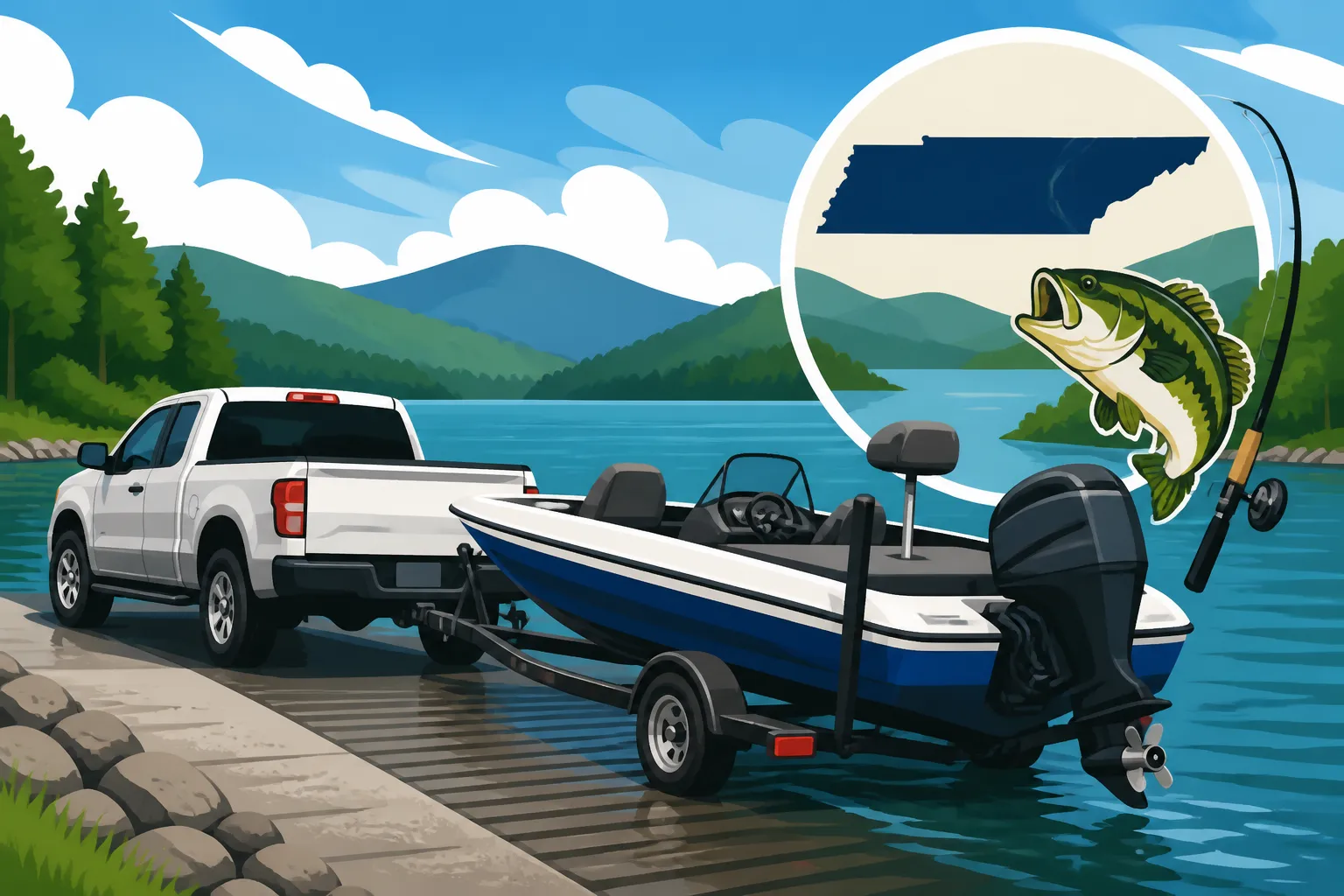
When you start looking at boat trailers, you'll quickly notice there are a few main types, each with its own advantages and disadvantages. The most common for fishing boats are bunk trailers. These trailers support the boat's hull on carpeted wooden bunks, which run the length of the boat. They offer excellent support for the hull, distributing the boat's weight evenly, and are generally more affordable. The downside is that they require the boat to float on and off the bunks, meaning you often need to back the trailer deeper into the water at the ramp. This can be a challenge on shallower ramps or if you're not comfortable backing far into the water.
Roller trailers, on the other hand, use a series of rollers to support the hull. They make launching and retrieving significantly easier, especially on shallow ramps or if you prefer not to back your tow vehicle directly into the water. You can often roll the boat off and on with minimal effort. However, roller trailers concentrate the boat's weight on smaller points, which some argue isn't as good for the hull in the long term, and they tend to be more expensive than bunk trailers. They're often favored by those who frequently launch in varied conditions or who might need to dry-launch.
Finally, you have personal watercraft (PWC) trailers. These are smaller, lighter versions of bunk or roller trailers, specifically designed for jet skis or smaller kayaks and canoes. They typically feature a single or double cradle system and are much easier to maneuver and tow. If you're just hauling a couple of kayaks to Percy Priest Lake Fishing Near Nashville, Tennessee, a dedicated PWC or utility trailer designed for small craft is exactly what you need.
Material Matters: Aluminum vs. Galvanized Steel
The material your trailer is made from plays a huge role in its longevity, weight, and cost. The two main contenders are aluminum and galvanized steel. Galvanized steel trailers are typically heavier and more robust. They're constructed from steel that has been hot-dipped in zinc, creating a protective coating that resists rust and corrosion. This makes them a great choice for freshwater use, and they're often more affordable upfront. However, the galvanization can chip or wear over time, especially in saltwater environments (though less of a concern for Tennessee's inland lakes), eventually leading to rust.
Aluminum trailers are lighter, which can be a significant advantage. A lighter trailer means less strain on your tow vehicle, better fuel economy, and easier maneuverability. Aluminum naturally resists corrosion, making it an excellent choice for any environment, and it maintains its appearance better over time. The trade-off is often a higher initial cost. While aluminum doesn't rust, it can still oxidize, so occasional cleaning is a good idea. Many serious anglers who want the best long-term solution, particularly for larger bass boats that frequent places like Chickamauga Lake: Tennessee's Top Bass Fishing Destination, will opt for aluminum.
Here's a quick comparison to help you weigh your options:
| Feature | Galvanized Steel Trailer | Aluminum Trailer |
|---|---|---|
| Weight | Heavier | Lighter |
| Corrosion | Resists rust (galvanized coating) | Highly corrosion-resistant (natural property) |
| Cost | Generally more affordable upfront | Typically higher initial cost |
| Durability | Very strong, robust | Strong, but can dent more easily |
| Maintenance | Inspect for chips/rust, especially if used in brackish water | Less prone to visible degradation from elements |
| Fuel Economy | Can slightly reduce fuel economy due to weight | Better fuel economy due to lighter weight |
Matching Your Trailer to Your Boat and Tow Vehicle
This is where many people make crucial mistakes. Your trailer isn't a one-size-fits-all piece of equipment; it needs to be perfectly matched to your boat's size, weight, and hull type, and your tow vehicle's capacity. First, check your boat's total weight (dry weight plus engine, fuel, gear, and anything else you carry). Then, choose a trailer with a Gross Vehicle Weight Rating (GVWR) that exceeds that total weight by a comfortable margin, usually 15-20%. Never buy a trailer that's rated exactly for your boat's weight; you need that buffer for safety and longevity.
The length and width of the trailer also need to match your boat. The bunks or rollers should fully support the hull from stern to bow, without excessive overhang or inadequate support. The winch post should be positioned correctly for easy loading and proper tongue weight. A well-matched trailer means your boat rides securely and doesn't bounce excessively, preventing damage during transport, especially on less-than-perfect Tennessee backroads.
Finally, consider your tow vehicle. Just because you have a truck doesn't mean it can tow anything. Every vehicle has a manufacturer-specified towing capacity. Exceeding this capacity is dangerous and can void your warranty. Factor in the trailer's weight itself, not just the boat's. If you have a larger boat, you'll need a truck or a heavy-duty SUV with the appropriate engine, transmission, and hitch rating. Don't forget proper hitch class and ball size; these must match between your trailer and your vehicle for safe coupling. Taking the time to do this right means safer travels to destinations like Watts Bar Lake, Tennessee's Largest Lake for Fishing.
Navigating Tennessee's Boat Ramps
Ah, the boat ramp. For some, it's a smooth transition to the water; for others, it's a source of cold sweats and muttered curses. Tennessee is blessed with countless fantastic fishing spots, and with them come a wide variety of ramps – from pristine, multi-lane concrete giants to rustic, single-lane dirt paths. Knowing what to expect and how to behave can make all the difference in your ramp experience.
Finding Public and Private Boat Ramps on Tennessee Lakes
Tennessee boasts an incredible array of lakes and rivers, and fortunately, there are many access points. Public boat ramps are typically maintained by the Tennessee Wildlife Resources Agency (TWRA), state parks, local municipalities, or the Tennessee Valley Authority (TVA). These are generally free or require a small day-use fee, and they are usually well-marked. You can often find comprehensive lists and maps of these ramps on the TWRA website or through detailed lake guides, which can help you pinpoint suitable access for places like Dale Hollow Lake Smallmouth Bass Fishing.
Private ramps are another option, often found at marinas, campgrounds, or private resorts. These usually come with a launch fee, but they can sometimes offer amenities like fuel, bait shops, or less crowded conditions, especially during peak season. It's always a good idea to call ahead to private ramps to confirm hours, fees, and current accessibility. Sometimes, a private ramp can be a real lifesaver if you're fishing a specific, less-accessible area, or if the public ramps are just too chaotic.
Regardless of whether it's public or private, always do a little reconnaissance before you go. Google Maps with satellite view can give you a good idea of the ramp's layout, parking availability, and general slope. Websites like Amazon also offer various maps and guidebooks that detail fishing spots and access points. Nothing's worse than arriving at a ramp with a big boat only to find it's a tiny, unpaved launch not suitable for your rig!
Understanding Ramp Conditions: Depth, Angle, and Surface
Not all ramps are created equal, and understanding their conditions is paramount for a safe and successful launch or retrieval. Depth is a major factor. Some ramps are incredibly shallow, meaning you'll have to back your trailer quite far into the water to float your boat off (especially with a bunk trailer). Others are very deep, which can be tricky if you're not used to seeing your trailer disappear beneath the waves. Knowing the typical water levels of the lake you're visiting, and how they affect the ramp, is crucial. Seasonal changes, especially after heavy rains or droughts, can dramatically alter ramp depths.
The angle of the ramp also plays a huge role. A very steep ramp means your boat will slide off easily, but it can make it harder to get traction when retrieving, especially if the ramp is wet or slimy. A very shallow angle means you'll need a lot more water depth to float your boat. Then there's the surface. Most modern public ramps are concrete, offering good traction, but even these can be slick with algae or silt. Older or more rustic ramps might be gravel, dirt, or even just compacted earth, which can lead to tire spin, getting stuck, or even damaging your trailer's suspension.
Always approach an unknown ramp with caution. Walk down to the water's edge if possible to inspect the surface for debris, drop-offs, or slick spots. Look at how other anglers are launching and retrieving. If the ramp looks sketchy, it might be worth finding another access point, even if it means a longer drive. Your safety and the integrity of your boat and trailer are worth the extra effort.
Boat Ramp Etiquette: Being a Considerate Angler
Boat ramps can quickly become chaotic, especially on weekends or during popular fishing tournaments. Good ramp etiquette isn't just about being polite; it's about efficiency and safety for everyone. The golden rule is simple: be prepared before you get to the ramp itself. This means having your drain plug in, all your gear loaded, tie-downs removed, engine trim up, and lines ready while you're still in the parking lot.
When it's your turn, don't dilly-dally. Get your boat in the water, get your tow vehicle and trailer out of the way, and move to a courtesy dock or designated area to finish preparing your boat. The same goes for retrieval: be ready to back down when your boat approaches, load it quickly, and pull forward to finish securing it in the parking lot. Nothing causes more frustration than someone holding up the line while they put their tackle away or adjust their motor at the bottom of the ramp.
Be mindful of others, particularly those who might be less experienced. Offer help if someone is struggling, but don't criticize. Keep your music at a respectful volume. Don't block the ramp or access roads. If the ramp has multiple lanes, use the one that's open and appropriate for your boat. Remember, we're all out there to enjoy Tennessee's fantastic waters, and a little courtesy goes a long way to making everyone's experience better. Consider familiarizing yourself with Boat Ramp Access on Tennessee's Major Lakes to avoid unnecessary queues.
Launching and Retrieving Your Boat Like a Pro
The actual act of launching and retrieving your boat can be daunting for even seasoned anglers. It's a dance between your vehicle, trailer, and boat, often under the watchful eyes of others. But with a bit of practice and some smart techniques, you can master the ramp and glide onto the water (or back onto the trailer) with confidence.
Pre-Launch Checklist: Getting Ready Before the Water's Edge
This is probably the single most important step to a smooth ramp experience. The goal is to do everything you possibly can before your tires touch the ramp itself. This saves time, reduces stress, and prevents that embarrassing scramble while a line of impatient boaters forms behind you. Start by finding a staging area in the parking lot, away from the immediate ramp access.
First, ensure your drain plug is securely in place. You'd be surprised how often this gets overlooked, leading to a frantic dash back to shore with a sinking boat. Next, remove all your boat's tie-downs, stern straps, and the safety chain from the bow, leaving only the main winch strap attached. Raise your outboard motor or outdrive to the trimmed-up position to avoid hitting the bottom. Make sure your boat's bumpers (fenders) are out and ready to protect the hull if you tie up to a courtesy dock. Get your lines (bow and stern ropes) ready and accessible. If you're going with a buddy, have them hop in the boat and start the engine (if it's safe to do so) to check systems, but don't crank it until it's in the water unless it's designed for that. Finally, grab your personal floatation devices and any last-minute items you want in the boat. A well-organized tackle box, perhaps purchased from Bass Pro Shops, should be ready to transfer.
Smooth Launching Techniques: Backing Down and Unloading
Now for the main event: backing down the ramp. This is where many people get flustered. The key is to take your time and make small corrections. Start by aligning your tow vehicle and trailer perfectly straight with the ramp. Use your side mirrors, not just your rearview, to guide you. If you need to turn the trailer to the left, turn your steering wheel to the right (and vice-versa). Small adjustments are better than big ones. If you get really out of alignment, don't be afraid to pull forward and straighten out.
As you back down, keep an eye on how deep the trailer is going. For bunk trailers, you typically want about two-thirds of the bunks submerged to allow the boat to float off easily. For roller trailers, you might only need the rear rollers to touch the water. Once the boat is floating, or can easily be pushed off, unhook the winch strap from the bow eye. Your partner can then gently push the boat off the trailer, or if you're solo, you can push it off, secure it to a courtesy dock, and then quickly park your vehicle. Remember to consider the boat ramp angle mentioned in Best Trailer Ramp Angle for Launching at Chickamauga Lake for optimal execution.
A common mistake is backing in too fast or too deep, causing the boat to shoot off the trailer uncontrollably. Another is not backing deep enough, which leaves you struggling to push a heavy boat off dry bunks. It's a balance you'll learn with experience, but starting slow and observing the water level is always the best approach. Don't forget to take advantage of available practice areas if you're new to the game; even an empty field can simulate the backing up process.
Effortless Retrieval: Loading Your Boat Back Onto the Trailer
Retrieving your boat is essentially the reverse of launching, but it has its own nuances. Again, preparation in the staging area is key: ensure your trailer lights are working, and anything you don't want in the boat during transit is transferred to the tow vehicle. When it's your turn at the ramp, back your empty trailer down, aiming to submerge it to the same depth you did for launching, or slightly less for bunk trailers to ensure the bow eye meets the winch post correctly.
Have your partner slowly guide the boat onto the submerged bunks or rollers. If you're solo, you'll need to approach the trailer slowly with your boat, align it, and then power it onto the trailer using your boat's motor (with extreme caution and minimal throttle) or hand-crank it if it's a smaller boat. Once the boat is centered on the trailer, pull it forward out of the water. As soon as you're clear of the immediate ramp area, stop in a designated staging spot in the parking lot.
Now, it's time to secure everything. Reattach the winch strap to the bow eye and crank it tight. Attach the safety chain. Lower your outboard motor and attach all your stern tie-downs and any other straps to prevent the boat from shifting during transport. Don't forget to pull your drain plug to allow any water to empty out; this is particularly important to prevent invasive species transfer between lakes. Do a quick check of your trailer lights before you head out, and you're good to go. This whole process, with good practice, should take only a few minutes, minimizing impact on other waiting anglers.
Trailer Maintenance for Longevity and Safety
Your boat trailer is exposed to harsh conditions – road salt, fresh and brackish water, sun, and vibration. Neglecting its maintenance is a surefire way to encounter costly breakdowns, frustrating delays, and potential safety hazards. Just like your car, your trailer needs regular check-ups and preventative care to keep it running smoothly and safely for years of Tennessee fishing adventures.
Wheel Bearings: The Heart of Your Trailer's Mobility
If there's one component on your trailer that demands constant attention, it's the wheel bearings. These small, often overlooked parts allow your wheels to spin freely, and when they fail, they fail spectacularly, often seizing up, melting, or even causing a wheel to detach from the axle. This is an all-too-common roadside breakdown for boaters. Water ingress, especially when backing into lakes, is the primary enemy of wheel bearings.
You should regularly inspect your wheel bearings for signs of wear or damage. Before each long trip, especially to a distant lake like Reelfoot Lake Fishing, Tennessee's Cypress Swamp Lake, feel the hubs after a few miles of driving. If they're excessively hot to the touch (too hot to hold your hand on), it's a sign of friction and potential bearing failure. Many modern trailers come with bearing protectors (like Bearing Buddies) that allow you to grease the bearings easily, pushing out old grease and water. You should do this according to the manufacturer's recommendations.
Even with protectors, a full wheel bearing inspection, cleaning, and repacking with fresh marine-grade grease should be done annually or every few thousand miles, whichever comes first. If you don't feel comfortable doing this yourself, any reputable marine service center or trailer repair shop can perform this critical maintenance. It's a small investment that can save you from a major roadside catastrophe.
Tire Care: Pressure, Tread, and Spares
Trailer tires are different from car tires; they're designed to handle heavy loads and often sit for long periods. Proper tire care is non-negotiable for safe towing. First, always maintain the correct tire pressure, which is usually listed on the tire's sidewall or on a sticker on your trailer. Over-inflation can lead to excessive wear in the center of the tread and a harsh ride, while under-inflation causes wear on the edges, increases rolling resistance, and builds up heat, dramatically increasing the risk of a blowout. Check pressure before every trip, especially after the trailer has been sitting.
Next, inspect the tread for wear, uneven patterns, or embedded debris. Uneven wear can indicate alignment issues or improper inflation. Look for cracks in the sidewalls, especially if your trailer sits outside in the sun for extended periods; UV exposure can degrade the rubber. Don't forget the age of your tires. Trailer tires can dry rot even with good tread, so many experts recommend replacing them every 3-5 years, regardless of mileage.
Finally, a spare tire is not just a nice-to-have; it's an absolute necessity. Imagine being stranded on the side of a highway with a flat tire, your boat still attached, with no spare in sight. Ensure your spare is properly inflated and accessible, and that you have the correct jack and lug wrench for your trailer. You can find quality trailer tires and accessories at stores like Bass Pro Shops or order them online from Amazon for convenience.
Lights and Wiring: Keeping Your Signals Clear
Trailer lights are your communication to other drivers, signaling your intentions and making your large, trailing load visible. Malfunctioning lights are a frequent cause of roadside stops and potential accidents. Before every trip, do a quick walk-around and test all your lights: running lights, brake lights, and turn signals. Have a helper watch, or back up to a reflective surface to check them yourself.
Problems with trailer lights often stem from wiring issues. Connections can corrode, especially where they're exposed to water at the ramp, or wires can get pinched, frayed, or come loose. Inspect the wiring harness from your tow vehicle to the trailer, looking for any visible damage. Pay close attention to the connections at the trailer's lights themselves. Corrosion on the contacts is very common and can be cleaned with a wire brush or electrical contact cleaner. Using dielectric grease on connections can help prevent future corrosion.
If you frequently back your trailer deep into the water, consider investing in sealed, submersible LED lights. These are much more durable and resistant to water damage than older incandescent styles. If you're handy, replacing faulty wiring or lights isn't too difficult, but if electrical issues are a mystery to you, it's best to take it to a professional. Ensuring your lights are always in top working order is a basic safety measure that protects you and everyone else on the road.
Troubleshooting Common Trailer and Ramp Issues
Despite your best efforts at maintenance and preparation, things can still go wrong. It's the nature of equipment that gets used hard and exposed to the elements. Knowing how to diagnose and address common trailer and ramp issues can turn a potential disaster into a minor setback, keeping your fishing trip on track rather than ending prematurely.
Dealing with Flat Tires and Blown Wheel Bearings on the Road
A flat tire on a boat trailer is a common, frustrating occurrence. If you're lucky, it happens when you're inspecting it in your driveway. If you're like most of us, it happens on the highway, often miles from civilization. The first step is to get to a safe location off the road. Turn on your hazard lights, and if possible, find a spot that's level and provides ample space to work away from traffic.
Changing a trailer tire is similar to changing a car tire. Use your jack to lift the axle, remove the lug nuts, swap the tire, and tighten everything back down. However, trailer axles are sometimes harder to jack, and you need to ensure the boat is secure on the trailer so it doesn't shift. Make sure you know where your jack points are. If you don't have a spare, your options are limited: call roadside assistance, or if you're lucky enough to be near a town, try to find a tire shop.
A blown wheel bearing is often more dramatic. You might hear a grinding or squealing noise, feel vibration, or even see smoke coming from the wheel hub. If this happens, pull over immediately. Driving on a blown bearing can quickly destroy the spindle, necessitating a much more expensive repair (and potentially leaving you stranded for days). If you have a spare hub with a pre-packed bearing (some serious boaters carry these), you might be able to swap it out roadside. Otherwise, it's a tow truck situation. Preventative maintenance, as discussed earlier, is truly your best defense here.
Stuck on the Ramp: Traction and Recovery Tips
Few things are as universally embarrassing and frustrating as getting stuck on a boat ramp. It usually happens when the ramp is wet, slimy with algae, or covered in loose gravel, and your tow vehicle's tires simply lose traction. The first thing to do is remain calm. Panicking will only make it worse.
If your tires are spinning, stop applying power. Sometimes, letting off the gas for a moment and then very gently trying again in a higher gear (if your vehicle allows) can help. If you have four-wheel drive, now is the time to engage it. If that doesn't work, consider reducing tire pressure slightly in your drive wheels (just enough to increase the contact patch, and reinflate immediately after getting unstuck). Some people carry traction aids like old floor mats, gravel, or purpose-built traction boards that can be placed under the spinning tires. Best Trailer Ramp Angle for Launching at Chickamauga Lake highlights how ramp steepness can contribute to these issues.
If all else fails, you'll need assistance. This could mean asking another boater with a more powerful truck for a gentle tow, or in extreme cases, calling a professional towing service. To prevent this, always assess the ramp condition before backing down. If it looks slick, try to find a less-used section, or if possible, choose a different ramp. Avoid sudden accelerations on the ramp. And remember, good tires on your tow vehicle with proper tread are critical for ramp traction.
Electrical Gremlins: Fixing Trailer Light Problems
"My trailer lights aren't working!" This is a cry heard at ramps across Tennessee every weekend. Electrical problems are notoriously frustrating because they can be intermittent and difficult to diagnose. As mentioned, the first step is always to check the connections. Ensure the vehicle's connector is fully seated in the trailer's receptacle and that both are clean and free of corrosion. A shot of electrical contact cleaner can sometimes magically solve the problem.
If the connection is good, check your vehicle's fuses. Your tow vehicle has dedicated fuses for trailer lights, and these can blow. Consult your owner's manual for their location. If the fuses are good, the problem likely lies in the trailer's wiring. Look for obvious breaks, pinches, or frayed wires. Test the lights with a circuit tester if you have one, working your way back from the lights themselves to the main harness connection. Sometimes, a ground wire has simply come loose or corroded. A solid ground connection is essential for all trailer lights to work.
If you have incandescent bulbs, check if they're simply burnt out or if the filaments are broken. LED lights are more robust but can still fail. If you've got a multi-meter, you can trace the voltage to pinpoint exactly where the power is stopping. For those who aren't electrically inclined, a marine mechanic or trailer repair shop can usually diagnose and fix light issues relatively quickly. This is where having a basic toolkit, perhaps compiled from items on Amazon, can really come in handy.
Advanced Tips for Challenging Ramps and Conditions
While most Tennessee boat ramps are fairly standard, you'll occasionally encounter a launch point that presents unique challenges. Whether it's an unusually steep incline, strong currents, or going it alone, having a few advanced tricks up your sleeve can turn a stressful situation into a manageable one.
Steep or Slippery Ramps: Techniques for Tricky Situations
Steep ramps, like those found on some deeper reservoirs or older state park access points, can be intimidating. The boat slides off easily, but getting it back on and pulling out can be a struggle, especially if the ramp is also covered in slick algae or loose gravel. When dealing with a steep ramp, consider these tips:
First, controlled speed is paramount. When backing down, go extra slow. You don't want your boat to free-fall off the trailer. When retrieving, apply just enough power to get the boat onto the trailer without excessive speed. If the ramp is slippery, avoid slamming on your brakes when backing down or accelerating abruptly when pulling out. Gentle, consistent pressure is key to maintaining traction.
For retrieval on a steep, slippery ramp, especially with a heavier boat, engaging four-wheel drive (if your vehicle has it) is highly recommended. You want all the traction you can get. If your vehicle still struggles, a common technique is to have someone stand on the rear bumper or in the bed of your truck (safely!) to add weight over the drive wheels, increasing traction. This is a last resort but can sometimes provide just enough grip to get out of a tight spot. Always ensure your tow vehicle is in excellent condition, with good tires, when tackling these kinds of ramps, particularly in areas near Clinch River Trout Fishing in East Tennessee where ramps can be rustic.
High Winds and Strong Currents: Launching in Adverse Weather
Mother Nature doesn't always cooperate with our fishing plans, and sometimes you find yourself at the ramp facing strong winds or a surprising current. These conditions add a layer of complexity to launching and retrieving.
When launching in high winds, the biggest challenge is keeping your boat from blowing away from the trailer or courtesy dock once it's in the water. Try to orient your boat so the bow faces into the wind as much as possible, if practical for the ramp layout. Have extra-long lines ready to quickly secure the boat. Your partner on the boat will need to be very proactive in using the trolling motor or even the main engine (briefly) to hold the boat against the wind while you park the trailer. If you're solo, this can be extremely challenging; try to find a sheltered part of the ramp or a less windy day.
Strong currents, which can be an issue on larger rivers or tailwater fisheries like the Caney Fork River Trout Fishing, present similar challenges. The current will constantly try to push your boat downstream. Again, have your lines ready. When launching, try to push your boat off the trailer and immediately point the bow upstream, using minimal power to hold it in place while you park. When retrieving, approach the trailer from upstream, letting the current help align your boat with the trailer. Be prepared for faster adjustments than usual. In both windy and current-heavy situations, communication with your boating partner is absolutely essential. Don't be afraid to abort and try again if things feel unsafe.
Solo Launching and Retrieval: Doing It All Yourself
Launching and retrieving solo adds another layer of difficulty, but it's entirely doable with practice and the right setup. The key is to minimize the amount of time you're away from either the boat or the tow vehicle.
For solo launching, perform your pre-launch checklist meticulously. Once at the ramp, back your trailer down to the appropriate depth. You'll then need to quickly exit your tow vehicle, head to the bow of the boat, unhook the winch strap, and push the boat off. The goal is to get the boat secured to a courtesy dock (if available) with a bow line, or even better, a spring line that allows you to easily retrieve it after parking. Then, quickly get back in your tow vehicle, park the trailer, and return to your boat. Some solo anglers use a longer bow line tied to the trailer hitch or even a fender to keep the boat from drifting too far while they park.
Solo retrieval is similar. Back the trailer down, then get out and secure your tow vehicle. Walk to your boat, untie it, and slowly approach the trailer. This is where guide poles on your trailer are invaluable; they help you visually align the boat with the bunks. Use your boat's motor (again, minimal throttle) to power it onto the trailer, trying to center it as much as possible. Secure the bow eye to the winch post, then get back in your tow vehicle to pull the boat out of the water. Park, then finish securing all your tie-downs. It takes a little extra planning and quick movements, but many anglers successfully launch and retrieve solo every day, especially those heading to remote spots on Norris Lake Fishing Guide, Tennessee's Clearest Water.
Essential Trailer Accessories for Tennessee Anglers
Having the right accessories can drastically improve your boat trailering experience, making launching, retrieving, and even roadside emergencies less stressful. Many of these items are relatively inexpensive but offer significant peace of mind and convenience, especially when you're far from home on a Tennessee lake.
Winches, Straps, and Tie-Downs: Securing Your Investment
These are the unsung heroes of boat trailering. Your winch is what pulls your boat the last few feet onto the trailer and holds the bow securely during transit. Ensure your winch is in good working order, with a strong strap or cable. Periodically inspect the strap for fraying or cuts, and replace it if there's any doubt about its integrity. A reliable winch from a brand like Fulton, available at Bass Pro Shops, is a must.
Tie-downs are equally crucial. You'll need transom tie-downs to secure the stern of your boat to the trailer frame, preventing it from bouncing or shifting vertically. Some anglers also use mid-ship tie-downs for larger boats. These straps distribute the load and keep your boat from becoming airborne over bumps, protecting both your boat and others on the road. Always use marine-grade straps designed for trailers, not just general-purpose utility straps. They're built to withstand the elements and the constant stress of towing.
Finally, don't forget the safety chain from your boat's bow to the winch post. This is a critical backup in case your winch strap fails. It's a simple, inexpensive addition that can prevent your boat from sliding off the trailer during an emergency stop or accident. Always double-check that all your straps and chains are secure and tight before pulling away from the ramp or staging area.
Spare Tires and Hubs: Always Be Prepared
We've talked about the importance of a spare tire for your trailer, but let's reiterate: it's truly non-negotiable. Don't rely on cell service or the kindness of strangers to get you out of a flat tire situation. Mount your spare securely on the trailer, keep it properly inflated, and ensure you have the necessary tools to change it.
Taking it a step further, some experienced anglers carry a spare hub assembly. This might sound excessive, but if a wheel bearing completely fails and damages the spindle, a spare hub can get you back on the road in a pinch, avoiding a costly tow and a ruined trip. These come pre-packed with bearings and are relatively easy to swap out if you're comfortable with basic mechanics. It's a "just in case" item that can be a real lifesaver on a remote highway to a hidden gem like Tennessee's Most Remote Fishing Spots.
Considering the price of a tow and the frustration of a breakdown, investing in a good quality spare tire and potentially a spare hub assembly (available from marine supply stores or online retailers like Amazon) is a wise decision for any serious boater who travels frequently with their trailer.
Guide Poles and Roller Bunk Guides: Making Life Easier
These accessories are all about making the launching and retrieving process smoother, especially for those who struggle with backing up or who frequently launch solo.
Guide poles are vertical posts mounted to the rear of your trailer frame, extending upwards. They provide a clear visual target when backing the empty trailer into the water and when guiding your boat onto the bunks or rollers. They act like bumpers, helping you steer your boat straight onto the trailer without drifting too far left or right. This is especially helpful in windy conditions or when currents are present. They make it much easier to see where your trailer is in the water, even when the ramp is dark or the water is murky.
Roller bunk guides are similar but are designed specifically for bunk trailers. They consist of rollers mounted along the side of the bunks. As you power your boat onto the trailer, these rollers help guide the hull smoothly onto the bunks, reducing friction and preventing the boat from getting hung up or misaligned. They essentially turn a bunk trailer into a semi-roller trailer during retrieval, making the process less strenuous. While not strictly necessary, both guide poles and roller bunk guides are fantastic convenience items that reduce stress and make you look like a seasoned pro at the ramp.
Disclaimer
This article is for general informational purposes only and does not constitute professional advice. Laws, prices and regulations vary by location and change over time. Consult a qualified professional for guidance on your specific situation.