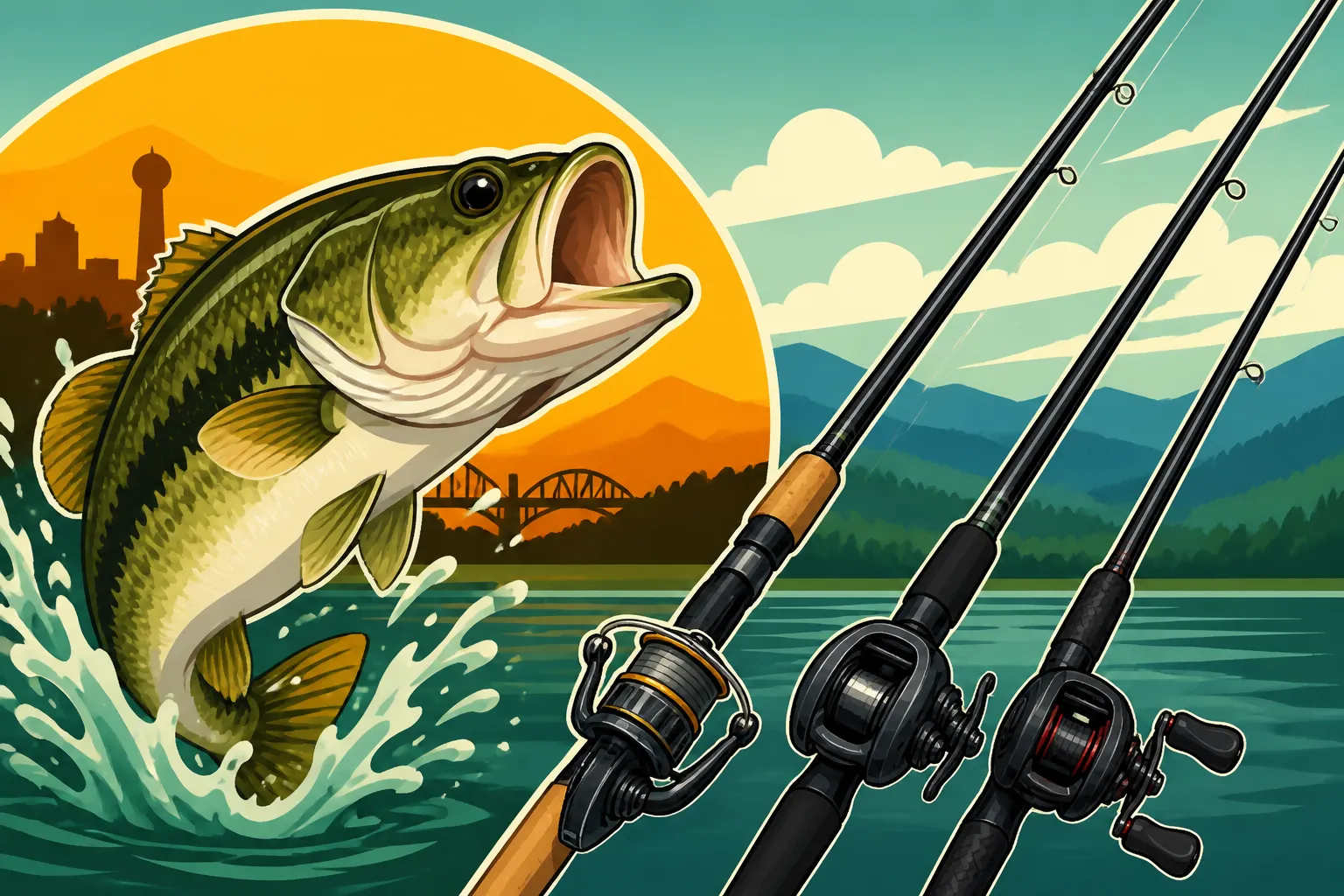
Best Rods for Tennessee Largemouth Bass
Choosing the right fishing rod for largemouth bass in Tennessee can feel like navigating a maze of options, leaving many anglers wondering what truly makes a difference. It's a common frustration, especially with the diverse waters and fishing styles we have across the state. This guide aims to cut through the confusion, helping you understand the key features and types of rods that will put more Tennessee largemouth in your boat or on the bank.
Understanding Largemouth Bass Behavior in Tennessee
Before we even talk about rods, it’s vital to understand the creature you’re trying to catch. Largemouth bass aren't just one-trick ponies; their behavior changes dramatically depending on where they are and what time of year it is. In Tennessee, with our vast reservoirs, winding rivers, and even smaller farm ponds, these fish adapt to a wide array of conditions. Knowing their habits is the first step to selecting the perfect tool for the job.
Habitat and Cover Preferences
Tennessee largemouth bass are masters of ambush, and their preferred habitats reflect this. You'll find them lurking around any kind of cover they can use to hide from prey and predators alike. This could mean thick stands of hydrilla or milfoil in lakes like Chickamauga, dense flooded timber in the backwaters of Kentucky Lake, or rocky bluffs and deep points in clear waters like Norris Lake. They love structure – whether it's natural, like stumps and fallen trees, or artificial, such as docks, bridge pilings, and brush piles sunk by local anglers.
When you're fishing these areas, the type of cover dictates the tackle you'll need. Pitching a jig into a dense brush pile requires a different rod than casting a topwater bait over open water near a lily pad field. The rod needs to have the backbone to pull a feisty bass out of heavy cover, preventing it from burying itself in snags and snapping your line. It's a constant dance between power and precision, and the rod is your partner in that choreography. Understanding these preferred hideouts helps you anticipate the fight and choose a rod capable of handling it.
Seasonal Patterns and Feeding Habits
Just like us, largemouth bass change their routines with the seasons. Their feeding habits, activity levels, and locations shift dramatically throughout the year in Tennessee. In the spring, during the pre-spawn and spawn phases, bass move shallow, often near beds, becoming aggressive or highly protective. This might call for delicate presentations or powerful flips into tight spots. Tennessee Bass Fishing Seasons and Patterns explains these shifts in detail. As the water warms in summer, they often retreat to deeper, cooler waters or seek shade under heavy cover, becoming more lethargic during the heat of the day but active during dawn and dusk. In the fall, they binge feed, chasing baitfish in preparation for winter.
These seasonal shifts directly influence the types of lures you'll throw and, consequently, the rods you’ll need. For instance, a fast-action rod might be perfect for quickly setting the hook on a reaction strike in warm water, while a slower, more parabolic rod could be ideal for fishing a deep-diving crankbait when fish are less aggressive. If you're targeting big fish that are feeding heavily, you'll need a rod that can handle the violent strikes and powerful runs. Conversely, when fish are finicky, a more sensitive rod can help detect the lightest bites. How Water Temperature Affects Bass Feeding is a great resource to understand these changes.
Key Rod Characteristics for Largemouth Bass
Selecting the best rod isn't just about picking one off the shelf; it's about understanding the core characteristics that define its performance. These attributes—power, action, and material—work together to dictate how a rod casts, how it feels a bite, and how it handles a fighting fish. Getting these elements right is crucial for success, especially when targeting hard-fighting Tennessee largemouth.
Rod Power and Action Explained
Let's break down two of the most misunderstood terms in rod selection: power and action.
-
Rod Power, often referred to as taper or weight, describes the amount of force required to bend the rod. Think of it as the rod's lifting strength or backbone.
- Ultralight/Light: These rods bend easily and are designed for very light lines and small lures, perfect for panfish or very finesse largemouth applications when they are incredibly wary.
- Medium-Light/Medium: These are versatile choices, often seen as "all-around" bass rods. They handle a good range of lure weights and line sizes, making them suitable for spinnerbaits, chatterbaits, and lighter Texas rigs.
- Medium-Heavy/Heavy: This is where most serious largemouth anglers spend their time. These rods have significant backbone, capable of slinging heavier jigs, big worms, swimbaits, and pitching into dense cover. They provide the leverage needed to horse a big bass out of thick weeds or wood.
- Extra Heavy: Reserved for the heaviest cover and biggest baits, like punching mats or throwing giant swimbaits. You'll use these when you absolutely need maximum power and minimal stretch.
-
Rod Action describes where along the blank the rod bends and how quickly it returns to its straightened position.
- Fast Action: The rod bends mostly in the top third or quarter of the blank. This action provides maximum sensitivity for feeling subtle bites and lightning-fast hooksets, essential for single-hook lures like jigs and Texas rigs.
- Moderate-Fast Action: Bends in the top half of the blank. A good compromise between sensitivity and forgiveness, often preferred for spinnerbaits and some topwater lures.
- Moderate Action: Bends in the middle of the blank. This "parabolic" bend allows the fish to load up on the rod, making it great for treble hook baits like crankbaits and jerkbaits, as it helps prevent hooks from tearing out of a fish's mouth during the fight.
- Slow Action: Bends throughout the entire rod. Rarely used for largemouth bass, these are more common for delicate fly fishing or specific ultra-light presentations.
Understanding how power and action combine is key. For example, a "medium-heavy, fast action" rod is a popular choice for Texas rigging or jigging because it offers the power to move fish out of cover and the fast tip to detect subtle bites and set the hook quickly. On the other hand, a "medium, moderate action" rod would be better for medium-diving crankbaits, allowing the fish to engulf the lure without the angler pulling it away too soon.
Material Matters: Graphite vs. Fiberglass
The material a rod is made from profoundly impacts its performance, affecting its weight, sensitivity, durability, and cost. For largemouth bass fishing, you'll primarily encounter rods made from graphite, fiberglass, or a composite blend of the two.
-
Graphite Rods: These are generally lighter, stiffer, and significantly more sensitive than fiberglass rods. The increased sensitivity means you can feel even the lightest "thump" of a bass picking up your worm, or the subtle texture of the bottom. This makes graphite rods ideal for "feel" techniques like jigging, Texas rigging, Carolina rigging, and dropshotting. They also offer excellent hook-setting power due to their stiffness. However, graphite can be more brittle than fiberglass, making it more prone to snapping if mishandled or stressed excessively, especially cheaper models. Many high-end rods you'd find at Bass Pro Shops are graphite, designed for maximum performance.
-
Fiberglass Rods: On the other end of the spectrum, fiberglass rods are heavier, more flexible, and less sensitive. Their slower, more parabolic action makes them excellent for baits with treble hooks, such as crankbaits and lipless crankbaits. The flexibility allows a fish to fully engulf the lure without the angler pulling it away prematurely, and the rod's forgiving nature helps keep fish pinned during erratic head shakes, reducing the chances of hooks tearing out. Fiberglass rods are also very durable and generally more affordable. While they lack the finesse of graphite, they are indispensable for specific techniques where their forgiving nature is an advantage.
-
Composite Rods: These rods combine the best attributes of both materials, often featuring a graphite core wrapped in fiberglass, or a blend of fibers. They aim to strike a balance between sensitivity and durability, or offer a unique action that's a hybrid of the two. A composite rod might offer more sensitivity than pure fiberglass for crankbaits, while still providing that crucial moderate action. You'll often find these advertised as specialized rods for certain applications, offering a middle ground for anglers who want versatility without sacrificing too much performance in either direction.
When choosing, consider your primary fishing techniques. If you're a keen jig fisherman working deep structure on a lake like Center Hill, you'll want the unparalleled sensitivity of a high-modulus graphite rod. If you spend your days ripping lipless crankbaits through grass on Chickamauga, a fiberglass or composite crankbait rod will likely be your best friend.
Rod Types Tailored for Specific Largemouth Techniques
Largemouth bass fishing is incredibly diverse, with countless techniques designed to entice strikes in different conditions. Trying to use one rod for every technique is like trying to use a hammer for every carpentry job – it just doesn't work optimally. That's why understanding specialized rod types, and having a few in your arsenal, can dramatically improve your success.
Casting Rods for Heavy Cover and Big Baits
Casting rods, paired with baitcasting reels, are the workhorses of serious largemouth bass fishing, especially in Tennessee where big fish often relate to heavy cover. These rods are designed for accuracy, power, and handling heavier lines and lures.
-
Pitching and Flipping Rods: These are typically long (7' to 8' or more), heavy or extra-heavy power rods with fast to extra-fast actions. Their length provides the leverage needed to accurately pitch or flip heavy jigs and soft plastics into tight spots like dense mats, flooded timber, or under docks. The stiff backbone is crucial for penetrating heavy cover with your hookset and then immediately turning a big bass away from snags. Imagine trying to pull a five-pound largemouth out of a thick hydrilla mat on Watts Bar Lake; a flimsy rod simply won't cut it. Brands like Lew's and St. Croix offer excellent options for these techniques, often found at Bass Pro Shops. How to Fish a Texas Rig for Bass is a perfect technique for these rods.
-
Jig and Worm Rods: These are often medium-heavy to heavy power with fast actions, typically ranging from 6'10" to 7'6". Their primary purpose is to provide maximum sensitivity to detect subtle bites when fishing jigs, Texas rigs, or Carolina rigs on the bottom. The fast tip allows for precise lure manipulation and quick, powerful hooksets. A sensitive graphite rod in this category lets you feel the difference between a rock, a stick, and a bass mouthing your bait, which is critical when fishing for finicky bass in clearer waters.
-
Swimbait Rods: As the name suggests, these are specifically designed for throwing large, heavy swimbaits that imitate baitfish. They are usually very long (7'6" to over 8'), with heavy to extra-heavy power and a moderate-fast to fast action. The length is needed to cast these heavy lures a long distance and to manage the line during the retrieve. The power is essential to control the heavy lure and to handle the large fish these baits often attract. They also need a bit more parabolic bend than a pure jig rod to prevent ripping the hooks out of a big fish's mouth with multiple trebles.
Spinning Rods for Finesse and Lighter Lures
While casting rods get a lot of attention for power, spinning rods paired with spinning reels are indispensable for finesse techniques and when working with lighter lures and lines. They excel in situations where stealth and a delicate presentation are key.
-
Dropshot and Finesse Worm Rods: These rods are typically medium-light to medium power with fast to extra-fast actions, ranging from 6'6" to 7'6". Their light power and sensitive tip allow for casting light dropshot rigs, small finesse worms, and Ned rigs on light fluorocarbon or braided line. The fast action provides excellent bite detection, even the tiniest "tick," and allows for quick, responsive hooksets with minimal line stretch. These are perfect for targeting pressured bass in clear water, or when fish are lethargic and require a subtle approach, such as during winter bass fishing. Many anglers find high-quality spinning rods on Amazon for these specialized techniques.
-
Small Jig and Light Lure Rods: When you're throwing smaller jigs, light shaky heads, or small topwater poppers, a medium-light spinning rod with a fast action is often ideal. These rods offer enough backbone to handle a decent bass, but are limber enough to cast light lures effectively and provide a more sporting fight. They are great for situations where bass are feeding on smaller baitfish or insects, or when you need to make long, accurate casts with lightweight offerings.
Spinning rods are also often the preferred choice for beginners, as they are generally easier to cast without fear of backlashing. However, even seasoned pros keep a selection of spinning gear on hand for those tough days when a finesse presentation is the only way to get a bite.
Specialized Rods for Cranking and Jigging
Beyond the general categories, certain techniques have highly specialized rods that significantly improve performance and success. When you're passionate about a specific technique, investing in a purpose-built rod is often worth it.
-
Crankbait Rods: These rods are designed with a specific action to excel with treble-hooked crankbaits. They typically have a moderate to moderate-fast action and a medium to medium-heavy power, often in the 7' to 7'10" range. The more forgiving, parabolic bend of a good crankbait rod is crucial. It allows the bass to fully inhale the lure before the rod loads up, preventing premature pulling away. More importantly, during the fight, the rod acts like a shock absorber, cushioning the violent head shakes of a bass and preventing those small treble hooks from tearing free. If you spend a lot of time throwing lipless or deep-diving crankbaits in Tennessee reservoirs, a dedicated crankbait rod (often fiberglass or composite) will significantly increase your landing ratio.
-
Jigging and Topwater Rods: While many rods can throw a topwater, a dedicated topwater rod often has a moderate-fast to fast action with a medium to medium-heavy power, typically in the 6'6" to 7'2" range. The faster tip allows for precise lure manipulation (like "walking the dog" with a Spook) and quick hooksets, while still offering enough give to prevent over-setting the hook on a surface strike. For vertical jigging in deeper water, a highly sensitive, medium-heavy fast action graphite rod is essential. This rod needs to transmit the subtle "thump" of a spoon hitting the bottom or a soft jig lure being picked up, allowing for immediate reaction. It also needs the power to lift fish from deep water quickly.
-
Swim Jig and Bladed Jig Rods: These baits are versatile and often require a rod that can bridge the gap between a casting rod for jigs and one for spinnerbaits. A medium-heavy fast action rod, usually around 7' to 7'4", works well. It offers enough tip to cast the bait accurately and feel the vibration, along with sufficient backbone to set the hook through grass or deflect off cover, and then extract the fish. The choice often comes down to personal preference and the specific weight of the lure being thrown.
Choosing the Right Rod Length and Power
The length and power of your fishing rod are two of the most foundational decisions you'll make, impacting everything from casting distance and accuracy to leverage and overall fish-fighting ability. For largemouth bass fishing in Tennessee, where diverse conditions and cover types abound, understanding these aspects is paramount.
Length: Reach, Accuracy, and Leverage
The length of a fishing rod significantly influences how it performs, and there’s no single "best" length for all situations. It’s all about matching the rod to your technique, environment, and personal preferences.
-
Shorter Rods (Under 6'6"): While less common for modern largemouth bass techniques, shorter rods can offer exceptional accuracy in extremely tight quarters, like skipping lures under docks or overhanging trees. They are also easier to maneuver in small boats or kayaks. However, they sacrifice casting distance and leverage against larger fish. For delicate, precise placements in very confined spaces on smaller waters, a shorter rod might have a niche, but they are generally outmatched by longer rods for most bass applications.
-
Medium Length Rods (6'6" to 7'2"): This is often considered the sweet spot for many bass fishing applications and is an excellent starting point for new anglers. Rods in this range offer a good balance of casting distance, accuracy, and control. A 7-foot rod, for example, is highly versatile for casting spinnerbaits, chatterbaits, topwater lures, and even some lighter jigs. They provide enough leverage to handle decent fish without feeling cumbersome. If you're looking for a good all-around rod to get started, a 6'10" or 7' medium-heavy fast action rod is a fantastic choice that can handle a surprising variety of techniques. Best Rod and Reel Combo for Beginners often feature rods in this length range.
-
Longer Rods (7'3" to 8' and above): Longer rods truly shine in specific situations and have become increasingly popular with professional anglers.
- Increased Casting Distance: The longer blank allows for greater line speed, propelling lures further. This is advantageous for covering large flats with crankbaits or searching vast open waters.
- Better Line Control and Hooksets: The extra length provides more leverage for sweeping hooksets, especially with long casts or when fishing with slack line. It also helps manage line better, keeping it off the water's surface, which can be crucial in windy conditions or when fishing topwater.
- Working Heavy Cover: For pitching and flipping into dense mats or thick brush, longer rods (7'6" to 8' and up) are indispensable. The extra length provides the backbone to horse big bass out of heavy vegetation and prevent them from tangling you up. Best Lake for Largemouth Bass in Tennessee like Chickamauga often demand these longer, powerful rods due to the heavy vegetation.
- Swimbait and Umbrella Rig Applications: Very long, heavy power rods are essential for casting and working large, heavy swimbaits or multi-lure umbrella rigs, which would be impossible to cast effectively with a shorter rod.
Consider the areas you typically fish in Tennessee. If you're on smaller streams or incredibly brushy banks, a shorter rod might be more manageable. But for wide-open reservoirs and dense cover, longer rods will almost always give you an advantage.
Power: From Medium to Heavy
We touched on rod power earlier, but it’s worth reiterating its importance in the context of specific bass fishing scenarios. Power is essentially the rod's strength – how much weight it can cast and how much force it can exert on a fish.
-
Medium Power Rods: These are incredibly versatile. A medium power rod, particularly with a fast action, is excellent for lighter jigs, smaller spinnerbaits, topwater lures, and medium-diving crankbaits. It provides enough backbone to handle most average-sized largemouth while offering a good casting experience with lighter baits. If you're fishing pressured areas or targeting less aggressive fish, the lighter feel of a medium power rod can be beneficial.
-
Medium-Heavy Power Rods: If you could only have one rod for largemouth bass fishing in Tennessee, a medium-heavy power rod would be it. This is the ultimate all-rounder. It has enough power to pitch jigs and Texas rigs into moderate cover, cast medium to large spinnerbaits and chatterbaits, and handle beefier topwater lures. The medium-heavy power gives you the leverage to pull solid fish away from light to moderate cover and provides a strong hookset. Most anglers building a bass fishing arsenal will start with one or two medium-heavy rods.
-
Heavy Power Rods: When you're fishing in truly heavy cover – think punching through dense lily pads, flipping into thick brush piles, or ripping lures through hydrilla mats – a heavy power rod is non-negotiable. These rods have maximum backbone, allowing you to use heavier lines and lures without fear of the rod breaking or lacking the muscle to extract a stubborn bass. The goal here is control and brute force, preventing the fish from gaining any advantage. Using a heavy power rod for techniques like punching mats on Reelfoot Lake or flipping jigs into thick timber on Kentucky Lake will save you countless lost fish. Tennessee's Largemouth Bass Limit Is 5 Per Day, Only 1 Over 18 Inches but you'll still need that power to get them to the boat!
-
Extra-Heavy Power Rods: These are specialized tools for the most extreme situations: fishing monster swimbaits, punching through the densest vegetation imaginable, or muscling giant fish out of virtually impenetrable cover. They are designed for maximum power and are typically paired with heavy braided line. These rods are not for the faint of heart or everyday use but are essential for specific big-fish, heavy-cover tactics.
The key is to match the rod's power to the lure weight you're using and the type of cover you're fishing. An underpowered rod will struggle to cast heavy lures and won't have the strength to fight fish effectively in cover. An overpowered rod will make casting lighter lures difficult and can make setting the hook too aggressive, tearing hooks from a fish's mouth.
Matching Your Rod with Other Gear
A fishing rod is just one piece of the puzzle. To truly maximize your effectiveness on Tennessee's waters, you need to think of your rod as part of a cohesive system, carefully matched with your reel, line, and even your tackle box setup. Each component plays a vital role in how your setup performs, and a mismatch can lead to frustration and lost fish.
Reel Pairing for Optimal Performance
The synergy between your rod and reel is critical. They need to balance each other out for comfortable casting, retrieving, and fighting fish.
-
Baitcasting Reels with Casting Rods: This is the most common pairing for largemouth bass in Tennessee. Baitcasting reels are designed to handle heavier lines and lures, making them perfect for the power and accuracy casting rods provide. When choosing, ensure the reel's gear ratio matches your intended technique. A high gear ratio (e.g., 7.1:1 or higher) is great for quickly taking up slack, working jigs, or quickly retrieving lures. A moderate gear ratio (e.g., 6.4:1) is more versatile, while a lower gear ratio (e.g., 5.0:1) offers more cranking power, ideal for deep-diving crankbaits. The size and weight of the baitcaster should also complement the rod's balance point, making it comfortable to hold and cast all day. You'll find a massive selection of high-quality baitcasters at Bass Pro Shops or on Amazon. Check out Best Baitcasting Reels for Bass Anglers for more in-depth advice.
-
Spinning Reels with Spinning Rods: Spinning reels are best for lighter lines and lures, which is why they are paired with spinning rods that offer more flexibility and sensitivity. Again, consider the reel's size and weight in relation to your rod. An ultralight spinning reel on a medium-heavy casting rod would be completely out of balance and impractical. Spinning reels come in various sizes (e.g., 1000, 2000, 2500, 3000), indicating their line capacity and physical size. For most bass fishing applications, a 2000 or 2500 series spinning reel is a good match for medium-light to medium power spinning rods, offering ample line capacity and a smooth drag system for finesse fishing.
-
Balance is Key: Regardless of the type, the reel needs to balance the rod. When you hold the rod just above the reel, it should feel balanced, not tip-heavy or butt-heavy. A well-balanced setup reduces fatigue during a long day of casting and improves your ability to feel subtle bites. It's often a good idea to bring your chosen reel to the store (or check specifications meticulously online) when buying a new rod to ensure a proper fit and feel.
Line Choice and Its Impact
Your fishing line is the direct link between you and the fish, and its properties significantly impact how your rod performs and how you fish.
-
Monofilament (Mono): This is a good all-around line, known for its stretch, affordability, and knot strength. The stretch in mono can be beneficial with treble hook baits, acting like a shock absorber to prevent hooks from tearing out. However, its stretch also reduces sensitivity, making it less ideal for "feel" techniques. It floats, making it suitable for topwater lures.
-
Fluorocarbon (Fluoro): Fluorocarbon is quickly becoming a favorite among bass anglers. It has very little stretch, offering excellent sensitivity, similar to braid. It's also virtually invisible underwater, which is a huge advantage in clear waters or when fishing for pressured bass. Fluoro sinks, making it great for bottom contact baits like jigs and worms. However, it can be stiffer than mono and more prone to memory, and generally more expensive. Best Lures for Pre-Spawn Bass Fishing often pair well with fluorocarbon.
-
Braided Line (Braid): Braided line has virtually no stretch, providing incredible sensitivity and extreme strength for its diameter. This makes it perfect for heavy cover fishing, punching mats, or throwing reaction baits where maximum sensitivity and brute force are needed. Its floating nature also makes it ideal for frog fishing or other heavy topwater applications. However, braid is highly visible, so many anglers will tie a fluorocarbon or monofilament leader to it, especially in clearer water. It can also be harder to cut and requires specific knot-tying techniques.
-
Matching Line to Rod and Technique:
- Heavy Cover/Punching/Flipping: Heavy braid (40-65lb test) on a heavy/extra-heavy casting rod.
- Jigs/Worms: Fluorocarbon (10-17lb test) on a medium-heavy fast action casting rod. Some prefer braid with a fluoro leader for added sensitivity and strength.
- Crankbaits: Monofilament (10-14lb test) or lighter fluorocarbon (8-12lb test) on a moderate action casting rod.
- Finesse Techniques: Light fluorocarbon (6-10lb test) or braid (10-15lb) with a fluorocarbon leader on a medium-light spinning rod.
- Topwater: Monofilament (10-17lb test) or braid (30-40lb) on a medium-heavy fast action casting rod.
Choosing the right line weight and type ensures that your rod can perform as intended, casting smoothly, delivering the right action to your lure, and providing the necessary strength to land fish. Always check the rod's recommended line weight range, usually printed on the blank, and stay within those guidelines for optimal performance and rod longevity.
Maintenance and Care for Your Bass Rods
You wouldn't neglect your truck or boat, and your fishing rods deserve the same respect. Proper maintenance and care will not only extend the lifespan of your valuable gear but also ensure they perform at their peak when you're out chasing largemouth on Tennessee's incredible waterways. A well-cared-for rod means better sensitivity, smoother casting, and ultimately, more fish in the net.
Cleaning and Storage Tips
Taking a few moments after each trip, and certainly at the end of the season, can make a huge difference in the longevity of your rods.
-
Wipe Down After Each Trip: This is the simplest yet most effective step. After a day on the water, especially if you've been in muddy or salty conditions (though Tennessee is mostly freshwater, boat spray can still be grimey), wipe down your rods with a damp cloth. Pay special attention to the reel seat, grips, and guides. This removes dirt, grit, and any fish slime that can build up and potentially damage components over time. For more stubborn grime, a mild soap solution can be used, but always rinse thoroughly with clean water.
-
Check Guides and Ferrules: While cleaning, take a moment to inspect your rod guides. Look for any bent, cracked, or missing ceramic inserts. Damaged inserts can fray or even cut your line, leading to lost fish. If you find any issues, replace the guide or have it repaired. Also, if your rod is a multi-piece design, check the ferrules (the joints where sections connect). Ensure they are clean and fit snugly. Dirt in the ferrules can cause them to wear prematurely or even fail under stress.
-
Proper Storage is Key: How you store your rods when not in use is just as important as cleaning them.
- Vertical Storage: The best way to store rods is vertically, in a rod rack, to prevent warping or damage to the blanks. Keep them in a cool, dry place, away from direct sunlight and extreme temperature fluctuations.
- Rod Sleeves: For rods stored horizontally or transported frequently, individual rod sleeves are a game-changer. These fabric or mesh sleeves protect the rod blank and guides from nicks, scratches, and tangles with other rods. They are particularly useful for keeping your Tackle Box Setup for Bass Fishing organized and preventing damage during transport in your boat or vehicle.
- Avoid Pressure Points: Never lean a rod against a wall for extended periods, or store it in a way that puts constant pressure on one section of the blank. This can lead to permanent bends or weakened spots that will eventually break.
By implementing these simple cleaning and storage routines, you'll ensure your rods are ready for action whenever you hit the water, whether it's for a casual evening trip on Percy Priest or a competitive tournament on Chickamauga Lake.
Common Issues and Troubleshooting
Even with the best care, sometimes things go wrong. Knowing how to identify and address common rod issues can save you a trip to the repair shop or, worse, prematurely replacing a favorite rod.
-
Broken Guide Inserts: This is probably the most common rod issue. As mentioned, ceramic inserts in guides can crack or pop out. You'll often notice your line fraying or a strange grinding noise when reeling in.
- Troubleshooting: Immediately stop using the rod if you suspect a broken insert. Continuing to fish will destroy your line. Many fishing shops (like Bass Pro Shops) offer guide repair services, or you can buy replacement guide kits and do it yourself with a little patience and a steady hand. It involves carefully removing the old guide and epoxying on a new one.
-
Loose Reel Seat: Over time, the locking nut on your reel seat can loosen, causing your reel to wobble or even fall off.
- Troubleshooting: Always ensure your reel is snugly tightened down before fishing. If the reel seat itself feels loose on the rod blank, it might indicate a more serious adhesive failure, which often requires professional repair. For a simple loose nut, a quick twist will usually solve it.
-
Rod Blank Nicks or Cracks: Sometimes, rods can get accidentally banged or stepped on, leading to small nicks or hairline cracks in the blank. These might seem minor but can compromise the rod's structural integrity, leading to a catastrophic break under stress.
- Troubleshooting: Regularly inspect your rod blank for any signs of damage. If you find a small nick, you might be able to carefully sand it smooth and apply a thin layer of epoxy to reinforce it. However, if it's a significant crack or a deep gouge, it's safer to have a professional assess it or consider replacing the rod, especially if it's a critical component of your bass fishing arsenal.
-
Stuck Ferrule (Multi-Piece Rods): If you have a multi-piece rod, sometimes the sections can get jammed together.
- Troubleshooting: Never twist or yank aggressively. Instead, try holding the rod sections close to the joint, use rubber gripping pads (or even rubber gloves) for better traction, and pull with steady, firm pressure. Sometimes, a gentle twisting motion while pulling can help. Avoid using lubricants like WD-40 on the ferrules, as this can make them too slippery and prone to coming apart during casting.
Being proactive about rod care and knowing how to troubleshoot minor issues will keep your gear in top shape, allowing you to focus on the exciting challenge of reeling in those big Tennessee largemouth bass.
| Rod Characteristic | Best for Lure Type | Target Species | Typical Action | Typical Power | Casting Distance | Sensitivity |
|---|---|---|---|---|---|---|
| Casting Rod | Jigs, Texas Rigs, Swimbaits | Largemouth Bass | Fast to X-Fast | Heavy to X-Heavy | Long | High |
| Spinning Rod | Dropshot, Ned Rig, Small Jigs | Largemouth Bass, Panfish | Fast to X-Fast | Medium-Light to Medium | Moderate | Very High |
| Crankbait Rod | Deep-Diving Crankbaits, Lipless | Largemouth Bass | Moderate | Medium to Medium-Heavy | Very Long | Moderate |
| Flipping Rod | Punching, Heavy Jigs, Soft Plastics | Largemouth Bass | Fast to X-Fast | Heavy to X-Heavy | Short (accurate) | High |
| Topwater Rod | Poppers, Walkers, Frogs | Largemouth Bass | Moderate-Fast | Medium-Heavy | Long | High |
Disclaimer
This article is for general informational purposes only and does not constitute professional advice. Laws, prices and regulations vary by location and change over time. Consult a qualified professional for guidance on your specific situation.