Best Small Boats for Smoky Mountains Trout Streams
Navigating the beautiful, often challenging, trout streams of the Great Smoky Mountains can be an incredibly rewarding experience for any angler. However, the unique terrain and water conditions often make traditional large boats impractical, leading many to struggle with how to effectively access prime fishing spots. This guide is designed to help you understand the best small boat options for these specific waterways, ensuring you can enjoy a productive and safe trout fishing adventure in Tennessee's mountain streams.
Why Small Boats for Smoky Mountain Trout Streams?
The pristine, cold waters flowing through the Great Smoky Mountains are a trout angler's dream, but they are far from the wide-open expanses of Tennessee's major reservoirs. These streams present a distinct set of characteristics that necessitate a different approach to watercraft. Simply put, what works on Kentucky Lake or Chickamauga Lake isn't going to cut it on the Little Pigeon River or the Middle Prong of the Little River.
The Unique Challenges of Mountain Streams
Imagine trying to maneuver a bass boat designed for deep, wide channels through a stream that can be ankle-deep in some sections and dotted with boulders the size of small cars in others. It's a non-starter. Smoky Mountain trout streams, whether we're talking about the famous Best Trout Streams in the Great Smoky Mountains, Tennessee or lesser-known tributaries, are characterized by their dynamic nature. They are often narrow, with varying depths that can change dramatically with rainfall. Rocks, fallen trees, and swift currents are common features, demanding extreme maneuverability and minimal draft from any watercraft. Furthermore, many of these prime trout habitats are nestled deep within the mountains, far from conventional boat ramps. This means whatever vessel you choose must be easily transportable, often requiring you to carry it over uneven terrain from your vehicle to the water's edge.
Beyond the physical obstacles, there's also the delicate ecosystem itself. These cold-water streams are home to native brook trout, as well as populations of rainbow and brown trout, many of which are wild or frequently stocked by the Tennessee Wildlife Resources Agency. Heavy, noisy boats can disturb these sensitive environments, spooking fish and potentially damaging stream beds. The goal is to blend in, move quietly, and minimize your impact, which inherently points towards smaller, lighter, and more agile watercraft.
Benefits of Smaller Watercraft
The advantages of opting for a smaller boat in this environment are numerous and directly address the challenges mentioned above. First and foremost, maneuverability is key. A compact kayak, canoe, or even a specialized packraft allows you to navigate tight bends, slip between rocks, and pivot quickly to avoid obstacles or position yourself for the perfect cast. You can access those hidden pools and runs that are completely unreachable from the bank or with a larger boat.
Secondly, smaller boats are inherently less disruptive. Their lighter weight means they draft less water, allowing you to float over shallow riffles without dragging bottom or creating excessive commotion. They are also much quieter, enabling a stealthy approach that won't alert wary trout to your presence. This stealth factor is crucial when Fly Fishing Basics for Trout or using subtle Spin Fishing Techniques for Trout for skittish fish in clear mountain waters.
Finally, transport and launch are significantly simplified. You're unlikely to find paved boat ramps on most prime Smoky Mountain trout streams. Instead, you'll be looking for informal access points, often involving a short hike. A small boat can be car-topped, truck-bedded, or even carried by hand, making those hard-to-reach honey holes suddenly accessible. This ease of transport and launch translates directly into more time fishing and less time struggling with logistics.
Types of Small Boats Ideal for Trout Streams
When considering a small boat for the Smoky Mountains, you're looking for a vessel that balances portability, maneuverability, and durability. There isn't one single "perfect" option, but rather a range of choices, each with its own strengths and weaknesses depending on your specific needs and the type of stream you plan to tackle.
Kayaks and Canoes: The Classic Choice
For many anglers venturing into mountain streams, kayaks and canoes are the go-to options, and for good reason. They are the epitome of quiet, human-powered propulsion, making them incredibly effective for sneaking up on trout.
Kayaks: Fishing kayaks have exploded in popularity, offering stable platforms with dedicated storage for gear. For streams, shorter, sit-on-top kayaks, typically 8-10 feet in length, are often preferred. Their open design makes it easy to get in and out, which is handy when you need to wade or portage around rapids. They are also generally more stable than traditional sit-inside kayaks, which is a big plus when casting or landing a fish. Brands like Perception and Old Town make excellent fishing kayaks that strike a good balance between stability and maneuverability. You can find a fantastic selection, often with helpful reviews, on platforms like Amazon or at a dedicated outdoor retailer like Bass Pro Shops. Just remember that even a short kayak can be heavy, so consider how you'll get it from your vehicle to the water. Some specialized "river running" kayaks are designed for whitewater but can be adapted for fishing in faster sections, offering enhanced durability against rock scrapes.
Canoes: Canoes offer more open space and often a higher carrying capacity, making them ideal if you're fishing with a partner or carrying a significant amount of gear. A solo canoe, or a lightweight tandem canoe (around 12-14 feet), can be highly effective. The higher seating position in a canoe often provides a better vantage point for spotting fish or reading the water. They are typically paddled with a single-bladed paddle, which can be advantageous in tighter spots. While traditional canoes can be a bit more challenging to maneuver solo in a strong current compared to a kayak, a skilled paddler can make them dance. The downside is that they can be bulkier to transport and often require two people for easy loading and unloading. However, for a leisurely float down a wider mountain river, or if you plan on bank fishing a good portion of the time and just need a way to move between spots, a canoe is a wonderfully versatile option.
Small Jon Boats and Dinghies
While less common directly on the narrowest trout streams, small jon boats and dinghies certainly have their place on the slightly wider, slower-moving sections of mountain rivers, or on the lower stretches of rivers that transition into larger reservoirs. These boats offer a stable, flat bottom design, which can be advantageous for standing to cast, though less so for navigating heavy current or rocky bottoms.
Jon Boats: A very small jon boat, perhaps 10-12 feet long, made of aluminum, can be a workhorse. Their flat bottom allows for very shallow draft, which is good in some stream scenarios, but can also make them prone to getting hung up on rocks if there's no keel. They are incredibly durable and can withstand bumps and scrapes against rocks and logs that might damage a fiberglass kayak. The biggest draw for some is the ability to mount a small electric trolling motor. While many dedicated trout streams prohibit gas motors, and even electric motors might be too much in some sensitive areas, an electric motor can be a game-changer on larger, slower stretches of river where you need to cover more ground. Just be sure to check local regulations carefully before assuming you can use any motor on a specific stream. Tennessee Fishing Regulations Explained will be your friend here!
Dinghies: Similar to jon boats but often with a slightly more rounded hull or a pointed bow, dinghies are also robust and can be quite stable. They share many of the same pros and cons as jon boats for stream fishing. Their heavier weight compared to kayaks or packrafts makes portaging difficult, limiting their use to areas with very easy access or where you don't anticipate needing to lift them out of the water frequently. They are better suited for accessing areas where you can simply pull up to a bank and step out, rather than dragging them long distances. For anglers who prioritize stability and the option of a small motor for covering wider river sections, a very small dinghy or jon boat might fit the bill.
Inflatables and Packrafts
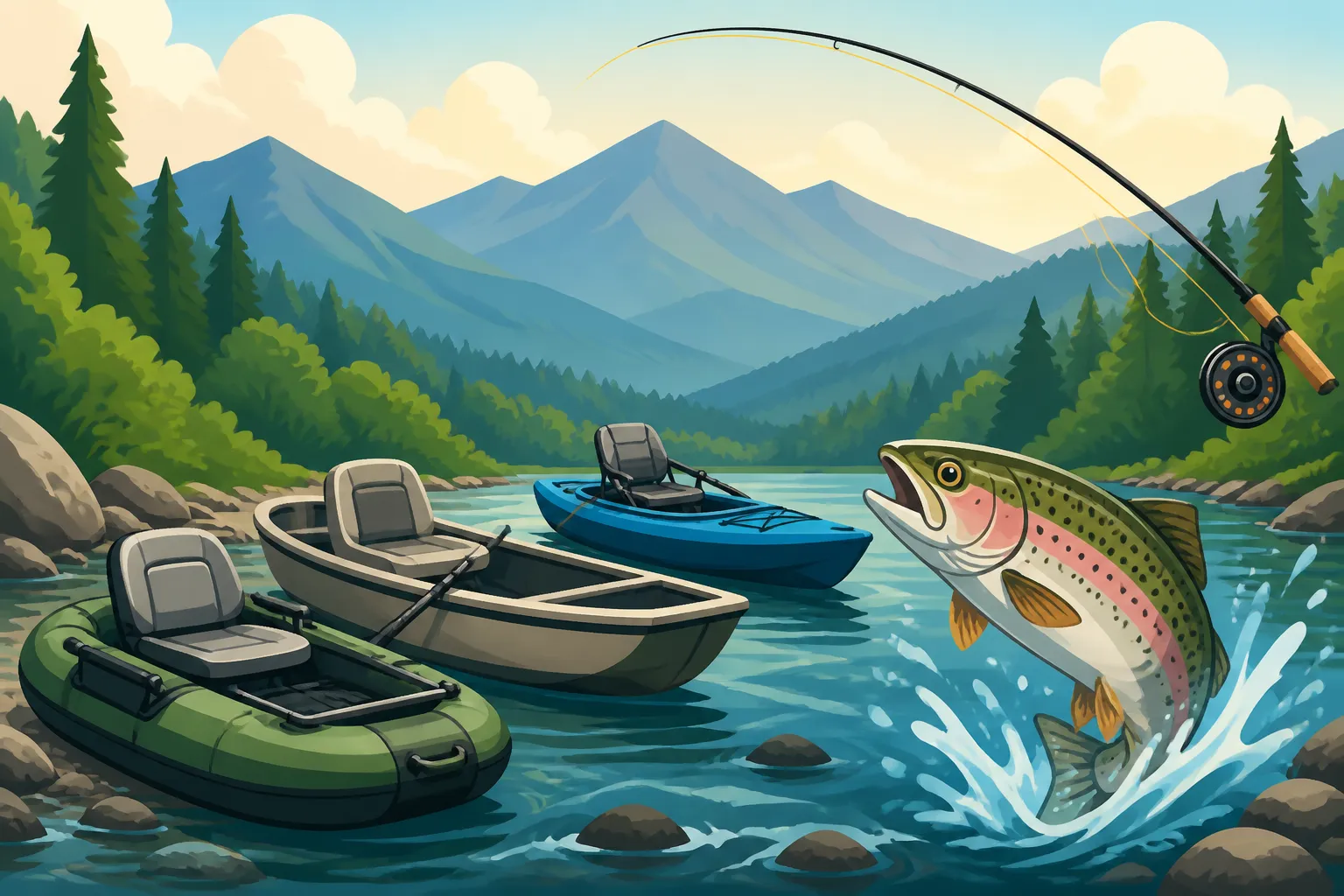
For the ultimate in portability and access to truly remote waters, inflatable boats and packrafts are increasingly popular among adventurous trout anglers. These options break down into small, manageable packages, making them perfect for backpacking into pristine wilderness areas.
Inflatable Kayaks/Canoes: These are a step up from basic pool inflatables, constructed from durable PVC or Hypalon, with multiple air chambers for safety. Brands like Advanced Elements or Sea Eagle offer stable, rugged inflatable kayaks and canoes that can handle rough water and resist punctures surprisingly well. They are comfortable, often have adjustable seats, and can be inflated relatively quickly with a good pump. The main advantage is their compact storage; you can throw one in the trunk or even a large backpack. The downside is that they can be slower to paddle than a rigid boat and are more susceptible to wind. However, for a stream where you might encounter varied conditions and need ultimate transportability, they are an excellent compromise.
Packrafts: These are the ultralight champions of the small boat world. Designed specifically for backpackers, packrafts weigh as little as 5-10 pounds and pack down to the size of a sleeping bag. Despite their small size, they are incredibly tough, made from robust fabrics, and are surprisingly stable on the water. They are ideal for float-fishing sections of stream that are otherwise impossible to reach, allowing you to hike in, inflate your boat, float down, and then deflate and hike out. They often have spray skirts and tie-down points for gear. Alpacka Raft is a well-known name in this niche. While they are usually single-person boats and lack the storage of a larger canoe, for a minimalist angler targeting Brook Trout: Tennessee's Native Cold-Water Species deep in the backcountry, a packraft opens up a whole new world of opportunities. They are an investment, but the access they provide can be unparalleled.
| Boat Type | Pros | Cons | Best Use Case |
|---|---|---|---|
| Recreational Kayak | Maneuverable, quiet, stable (sit-on-top) | Limited storage, heavier than packrafts | Moderate streams, solo trips, easy access |
| Solo/Tandem Canoe | Good storage, higher view, can carry more | Bulkier, challenging solo in strong current | Wider, slower rivers, tandem fishing, gear-heavy |
| Small Jon Boat | Stable, durable, motor option (where allowed) | Heavy, harder to portage, loud with motor | Wider river sections, areas with boat ramps |
| Inflatable Kayak | Highly portable, durable, comfortable | Slower, susceptible to wind, inflation time | Varied stream conditions, car-toppable access |
| Packraft | Ultralight, extremely portable, tough | Minimal storage, single person, investment | Remote backcountry streams, hike-in fishing |
Essential Gear for Small Boat Trout Fishing in the Smokies
Once you've picked your small boat, it's time to think about the essential accompanying gear. Fishing in mountain streams from a small craft requires a specific setup to ensure both safety and efficiency, especially given the dynamic nature of these waters.
Propulsion and Steering
Even if you have an electric motor on a jon boat, you'll almost always need manual propulsion in mountain streams.
Paddles/Oars: For kayaks, a double-bladed paddle is standard. Choose one that's lightweight but durable, as you'll be using it extensively for propulsion and steering, sometimes even to push off rocks. For canoes, a single-bladed paddle or a pair of oars is essential. Having a spare paddle is always a wise idea; losing one in a swift current could leave you stranded. You can find excellent, durable paddles at Bass Pro Shops or online at Amazon, often with adjustable lengths.
Anchors and Drift Socks: While a heavy anchor isn't practical or necessary in many shallow trout streams, a lightweight grapple anchor with a sufficient length of rope can be invaluable in deeper pools or slower currents. It allows you to hold your position over a promising seam or structure. Even more useful for controlled drifts is a drift sock or small drogue. This acts like a parachute in the water, slowing your boat down and helping it orient correctly with the current, giving you more time to cast into productive water. This is particularly useful in slightly wider rivers where the current isn't too extreme.
Small Electric Motors: As mentioned earlier, gas motors are generally a no-go on most trout streams in the Smokies due to regulations and practicality. However, a small, lightweight electric trolling motor (often transom-mount or even bow-mount for small jon boats) can be an option on wider river sections or reservoirs at the fringes of the mountains. Always double-check the specific waterway's regulations before assuming any motor, electric or gas, is permitted. These motors require a battery, which adds weight, so factor that into your transport plan.
Safety and Comfort
Safety should always be your top priority, especially when navigating potentially unpredictable mountain waters.
Life Jackets (PFDs): This is non-negotiable. Always wear a Coast Guard-approved Personal Flotation Device (PFD). In Tennessee, state law requires all children under 12 to wear a PFD when on the open deck of any recreational vessel, but for your own safety in dynamic stream environments, every adult should wear one too. Consider an inflatable PFD for maximum freedom of movement, though a traditional vest-style PFD offers more inherent flotation. Life Jacket Rules for Kayaks and Canoes in Tennessee covers this in detail. Make sure it fits properly and is comfortable enough to wear for hours.
First-Aid Kit: A compact, waterproof first-aid kit is essential. Minor cuts, scrapes, or insect bites are common, and having supplies to treat them promptly can prevent them from becoming bigger issues. Include essentials like bandages, antiseptic wipes, pain relievers, and any personal medications.
Dry Bags: Keeping your electronics, spare clothing, and other sensitive items dry is crucial. Invest in quality dry bags of various sizes. A large one for a change of clothes and a smaller one for your phone, keys, and wallet are good starting points. These prevent water damage if you capsize or simply encounter heavy spray.
Appropriate Clothing: Dress in layers, using quick-drying synthetic materials or wool. Avoid cotton, as it loses its insulating properties when wet. Even on a warm day, mountain waters can be cold, and if you take an unexpected dip, you'll appreciate layers that keep you warm. A good rain jacket and pants are also highly recommended, as mountain weather can change rapidly.
Navigation Tools: While many smaller streams are straightforward, it's easy to get disoriented, especially in unfamiliar territory. A waterproof map, compass, or a reliable GPS device (or a smartphone with downloaded offline maps) can be a lifesaver. Ensure your phone has a sturdy, waterproof case.
Fishing-Specific Accessories
Equipping your small boat with a few thoughtful accessories can greatly enhance your fishing experience.
Rod Holders: While not strictly necessary, a good rod holder allows you to keep your hands free for paddling, baiting, or managing your line. Many fishing kayaks come with integrated flush-mount holders, but external clamp-on or rail-mount holders are available for other boat types. This is especially useful when trolling or simply moving between spots.
Tackle Storage: Keep your tackle organized and easily accessible in waterproof boxes or bags. For a small boat, minimalist tackle is often best. Focus on the Best Fly Patterns for Stocked Trout or Best Lures for Stocked Rainbow Trout that you know work, rather than bringing your entire collection. Soft-sided tackle bags that fit snugly into hatches or under seats are ideal.
Portable Fish Finders: While large, advanced fish finders are overkill for many mountain streams, a small, portable, castable fish finder can be surprisingly useful in deeper pools or when trying to locate schools of trout. Many connect wirelessly to your smartphone and can provide basic depth and fish readings. They are a good option if you want some technology without the bulk and battery drain of a full system.
Landing Nets: A landing net is almost a necessity for trout fishing, especially if you plan on catch and release. A rubberized, knotless net minimizes harm to the fish's protective slime coat and fins. Choose one with a long enough handle to reach from your boat, but not so long that it becomes cumbersome. A net with a magnetic or clip-on lanyard is excellent for keeping it secure but instantly accessible.
Navigating Smoky Mountain Trout Streams with a Small Boat
Successfully fishing the Smoky Mountain trout streams from a small boat isn't just about having the right gear; it's also about understanding the water, planning your trip, and respecting the environment.
Reading the Water and Planning Your Route
One of the most crucial skills for any stream angler, especially from a boat, is the ability to read the water. This involves understanding how currents flow, where fish are likely to hold, and identifying potential hazards.
Identifying Currents and Obstacles: Look for seams where faster water meets slower water, eddies behind rocks or logs, and plunge pools below rapids—these are prime holding areas for trout. As you drift or paddle, constantly scan ahead for submerged rocks, fallen trees, or sudden drops in depth. How to Read Water When Trout Fishing is an excellent resource for developing this crucial skill. Fast-moving water often conceals obstacles, so approach these sections with caution. If a rapid looks too challenging, don't hesitate to pull over and scout it from the bank, or even portage around it. Your safety and the integrity of your boat are far more important than running a risky section.
Planning Your Floating Trip: Before you even launch, spend some time studying maps of the stream, looking for access points, potential rapids, and areas where the stream might narrow or widen. Consider the length of your float and how long it will take, factoring in paddling, fishing time, and potential portages. Have a clear put-in and take-out point, and ideally, arrange for a shuttle so you don't have to paddle back upstream. Always check current water levels; streams that are easily navigable at normal flow can become dangerous torrents after heavy rains. Conversely, very low water might make some sections impassable, forcing you to drag your boat.
Launch and Retrieval Considerations
Unlike lakes with paved ramps, accessing mountain streams often requires a bit more effort and thought.
Access Points and Portaging: Many suitable stream access points are informal, often just pull-offs along a road or designated walk-in areas. Look for spots where the bank is relatively low and free of dense vegetation. You'll likely need to carry your boat a short distance, which reinforces the need for lightweight options. If you encounter rapids or waterfalls that are too dangerous to run, you'll need to portage—carefully carrying your boat and gear around the obstacle. This can be strenuous, especially with a heavier boat, so be prepared. Having a friend to help with heavier boats makes a huge difference.
Protecting the Stream Bank: When launching or retrieving your boat, try to do so in designated areas or at spots that show signs of previous use to minimize damage to the stream bank and riparian vegetation. Avoid trampling sensitive plants or eroding the bank. Take extra care not to drag your boat excessively over rocks or through shallow vegetation, as this can disturb the delicate substrate and habitat for aquatic insects that trout feed on. Your goal is to leave the stream as pristine as you found it.
Environmental Responsibility and Regulations
Fishing in the Great Smoky Mountains is a privilege, and it comes with the responsibility to protect its natural beauty and resources.
Leave No Trace Principles: Always practice Leave No Trace principles. Pack out everything you pack in, and if you see any trash, consider packing that out too. Avoid disturbing wildlife, and keep noise levels to a minimum. Camp and build fires only in designated areas, and ensure any fires are completely extinguished. The health of these trout streams depends on every angler doing their part.
Understanding Local Rules: It is absolutely critical to understand and adhere to all local fishing regulations, which can vary significantly even within different sections of the same stream. This includes understanding Tennessee Fishing Season and Catch Limits, specific tackle restrictions (some streams are fly-fishing-only or artificial-lures-only), and any special permits required. For instance, Do You Need a Trout Permit With Your Tennessee License in addition to your general fishing license? The answer is usually yes if you plan to keep trout. Always check the current TWRA regulations handbook or their website before your trip. Violating these rules can result in hefty fines and harm the fishery. Specific areas might also have different Tennessee Trout Stocking Schedule and Season which can influence your trip planning. Being informed ensures a legal and enjoyable trip for everyone.
Disclaimer
This article is for general informational purposes only and does not constitute professional advice. Laws, prices and regulations vary by location and change over time. Consult a qualified professional for guidance on your specific situation.