Bluegill Fishing for Beginners in Tennessee
There's nothing quite like the simple joy of a bobber disappearing under the water, signaling a bite. For many folks new to fishing, or those looking to introduce their kids to the sport, the thought of getting started can feel overwhelming. You might be wondering about licenses, where to go, what gear you even need, and how to actually catch anything! This guide is designed to cut through that confusion, focusing specifically on bluegill fishing in Tennessee, making it easy and fun for absolute beginners and families alike.
Why Bluegill are the Perfect Catch for New Anglers
Bluegill are often considered the quintessential beginner fish, and for good reason! They’re abundant, relatively easy to catch, and provide a ton of action, which is exactly what you want when you’re just learning the ropes or taking a little one out for their first time. Forget about the frustration of sitting for hours with no bites; bluegill are usually eager to cooperate.
Abundant and Widespread Across Tennessee
One of the biggest advantages of targeting bluegill is just how common they are. You don't need to embark on a quest to find some hidden, remote stream. These little sunfish thrive in a huge variety of habitats across our beautiful state, from tiny farm ponds to the massive reservoirs like Kentucky Lake and Chickamauga. This means that no matter where you are in Tennessee, there’s likely a good bluegill spot within a short drive. Their widespread nature means less travel time and more fishing time, which is always a plus, especially when you're trying to keep the attention of excited kids.
They’re a foundational part of Tennessee's freshwater ecosystems, serving as a food source for larger game fish like bass and catfish, while also providing endless entertainment for anglers. Because they reproduce quickly and are quite resilient, their populations remain strong, ensuring that there are always plenty to go around. You'll often find them schooled up, too, so once you find one, you're likely to find many more, leading to consistent action that builds confidence and excitement for new anglers.
Eager Biters and Great Fighters
Unlike some more finicky fish, bluegill are rarely shy. If you put a tasty morsel in front of them, chances are they're going to investigate, and usually, they'll bite without much hesitation. This high bite-to-cast ratio is invaluable for beginners. There's nothing more discouraging than hours of casting without so much as a nibble, which can quickly turn someone off from fishing altogether. Bluegill keep things exciting by providing frequent opportunities to feel that tug on the line.
And don't let their small size fool you! When hooked, bluegill can put up a surprisingly spirited fight, especially on light tackle. That bending rod and the splashing at the surface can feel like battling a much larger fish to a novice angler, delivering a real thrill. For children, reeling in a feisty bluegill is an exhilarating experience that ignites a lifelong love for the sport. It teaches them the basic mechanics of setting the hook, reeling in, and handling a fish, all without the pressure of trying to land a trophy-sized specimen right away.
Simple Gear and Techniques
You absolutely do not need expensive, specialized equipment to catch bluegill. In fact, some of the best bluegill fishing happens with the most basic, affordable setups. This makes it a very accessible sport for anyone, regardless of budget. A simple cane pole, a spinning rod and reel combo you picked up for a song, or even just a handline can be incredibly effective. The focus is more on getting out there and having fun, rather than having the latest high-tech gear.
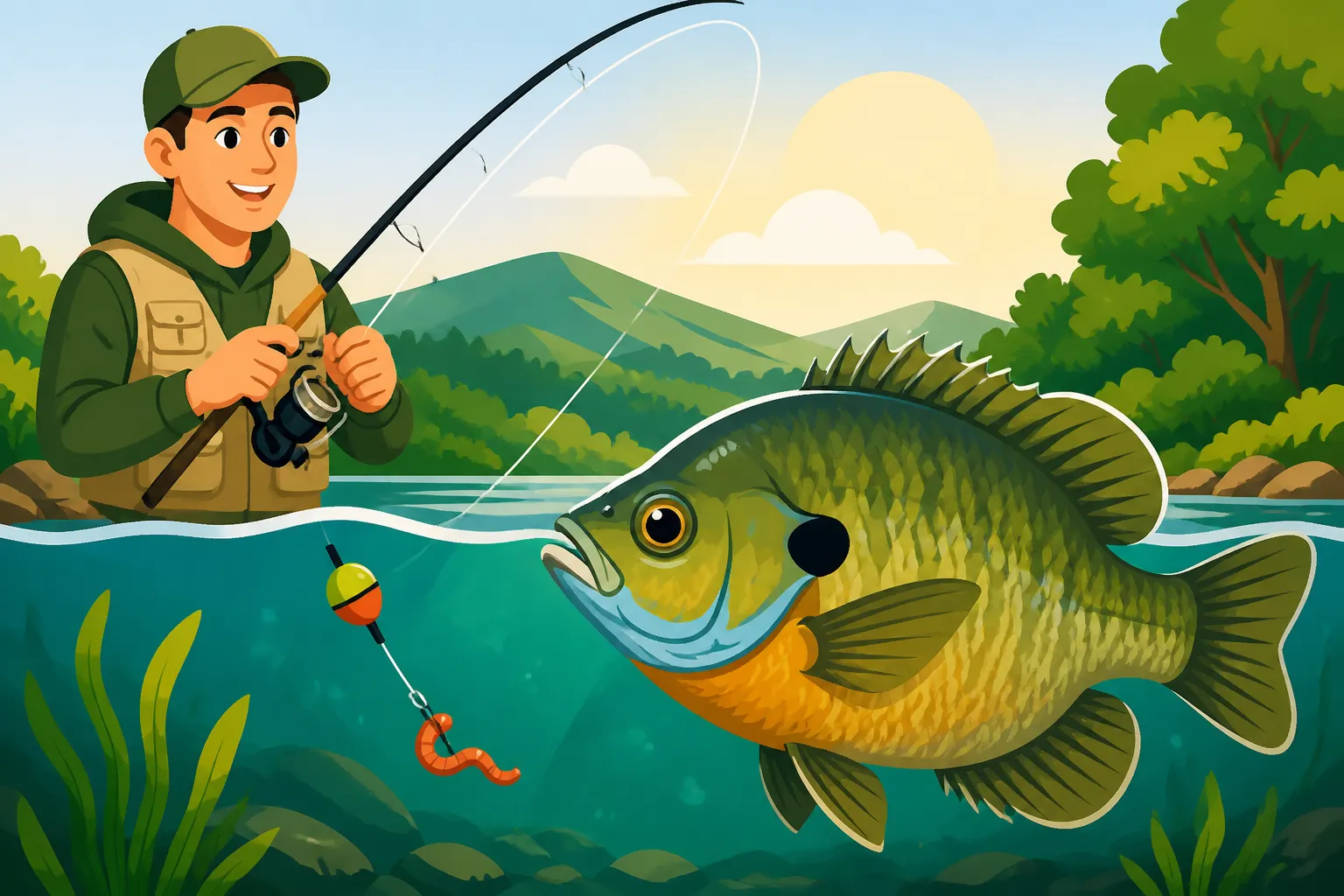
The techniques are also straightforward. We're talking about basic bobber fishing, which involves watching a float on the water and waiting for it to go down. This visual cue is easy for anyone to understand and react to. Baiting a hook is also simple, often involving readily available and inexpensive options like worms or crickets. This low barrier to entry means less time learning complex knots or casting techniques, and more time actually fishing. It’s perfect for those initial outings where you just want to experience the joy of the catch. For a truly beginner-friendly approach, you might explore the concepts in Simple Bluegill Rig for Kids.
Where to Find Bluegill in Tennessee
Tennessee is blessed with an incredible variety of waterways, and thankfully, bluegill call most of them home. Knowing where to focus your efforts can make a huge difference in your success, ensuring you spend more time catching and less time searching.
Ponds and Small Lakes
If you're looking for prime bluegill real estate, start with ponds and smaller lakes. These smaller bodies of water often have thriving bluegill populations because they provide ample shallow, weedy areas that bluegill love. Farm ponds, community parks with fishing ponds, and even smaller state park lakes are fantastic options. These spots are often less intimidating for beginners than vast reservoirs, offering easier access and a more contained fishing experience. Think about local parks around Nashville like Edwin Warner Park ponds, or community lakes in suburban areas.
Bluegill in these smaller waters often congregate near submerged structures like fallen trees, brush piles, or even dock pilings. They're also commonly found around lily pads, cattails, and other aquatic vegetation, which provide both food and shelter from predators. When approaching these spots, look for signs of activity, like ripples on the surface or small splashes, which can indicate schooling fish. These locations are also generally safer and less crowded, making them ideal for family outings with young children. For more specific guidance, check out Where to Find Bluegill in Tennessee Ponds.
Large Reservoirs and River Backwaters
While ponds are great, don't overlook Tennessee's larger reservoirs and their associated river backwaters. Lakes like Kentucky Lake, Chickamauga Lake, Percy Priest Lake, and Watts Bar Lake, while famous for their bass and catfish, also hold enormous numbers of bluegill. The key here is to focus on specific areas within these vast bodies of water. Bluegill generally won't be found in the deep, open channels but rather in the shallower coves, bays, and feeder creeks.
Look for areas with gradual slopes, plenty of submerged timber, rocky banks, or healthy stands of aquatic grasses. The backwaters of rivers feeding into these reservoirs, which often have slower current and more vegetation, are also bluegill hotspots. These areas provide the warmer, calmer water and cover that bluegill prefer for spawning and feeding. Exploring these larger bodies of water can lead to some truly impressive catches, as bluegill in reservoirs often grow to larger sizes due to abundant food sources. Just be mindful that larger waters can sometimes be busier with boat traffic, so always prioritize safety. For general fishing spots, consider Tennessee State Park Fishing Spots or Kid-Friendly Fishing Spots in Tennessee.
Prime Bluegill Habitat: What to Look For
Understanding bluegill habitat is like having a secret map to where the fish are hiding. Bluegill are masters of camouflage and survival, and they gravitate towards specific types of cover and structure that offer them safety, food, and ideal spawning conditions. If you can "read" the water and identify these features, you'll dramatically increase your chances of success.
| Habitat Feature | Why Bluegill Love It | Fishing Strategy |
|---|---|---|
| Weed Beds/Lily Pads | Offers shelter from predators, acts as a feeding ground for insects. | Cast to the edges or drop bait into pockets within the weeds. |
| Fallen Trees/Brush Piles | Provides ambush points for feeding, protection from sun and predators. | Fish tight to the cover, being mindful of snags. |
| Docks/Piers | Shade, structure, and often attract smaller baitfish and insects. | Drop bait directly under and around the pilings. |
| Rocky Banks/Shorelines | Attracts insects and provides crevices for bluegill to hide. | Work your bait along the bottom or just off the rocks. |
| Shallow Flats | Warmer water, especially in spring, crucial for spawning. | Use stealth, cast to visible beds or target edges of drop-offs. |
Bluegill are visual feeders, so clear or slightly stained water is usually better than murky conditions. They also prefer water temperatures in the range of 68-75 degrees Fahrenheit, which influences where they'll be found throughout the seasons. In the spring, they'll move into very shallow, warm areas to spawn, often creating "beds" that look like dinner-plate depressions on the bottom. In the summer, they might move slightly deeper during the heat of the day, seeking cooler water and more shade, then return to the shallows during dawn and dusk. Always observe the water for any signs of baitfish or insect activity, as bluegill are usually not far behind their food source.
Essential Gear for Bluegill Fishing
One of the beautiful things about bluegill fishing is that you don't need to break the bank to get started. Basic, affordable gear is perfectly effective, making it an excellent entry point into the world of angling. You can easily assemble a comprehensive starter kit without feeling overwhelmed by options or cost.
Rods and Reels: Simple is Best
For bluegill, a lightweight and easy-to-handle setup is ideal. You don't need heavy-duty equipment designed for battling monstrous bass; finesse is often more effective.
Spinning Combos for Versatility
A light or ultralight spinning rod and reel combo is arguably the best all-around choice for bluegill beginners. These setups are incredibly versatile and user-friendly. A rod around 5 to 6 feet in length, with a fast or moderate action, will give you enough sensitivity to feel those subtle bluegill bites and enough backbone to cast light baits. The ultralight rating means the rod is designed to handle very light fishing line and small lures or baits, which is exactly what you're using for bluegill.
Spinning reels are straightforward to operate, making casting simple even for novices. They have an open-face design where you manually flip a bail, cast, and then close it to retrieve your line. Look for a small reel size, usually in the 1000 to 2000 range, which balances well with an ultralight rod. You can find excellent beginner spinning combos from brands like Ugly Stik or Shakespeare at most sporting goods stores or even on Amazon for a very reasonable price. These combos often come pre-spooled with line, saving you an extra step. For a more general overview, consider Best Rod and Reel Combo for Beginners.
Cane Poles: The Ultimate Simplicity
For the purest, most uncomplicated bluegill fishing experience, a good old-fashioned cane pole is unbeatable. These are essentially long, flexible poles with a fixed length of line attached to the tip. There's no reel, no casting mechanism – you simply lower your bait into the water and pull the fish in. Cane poles are especially fantastic for kids because they eliminate the complexities of casting and reel management, allowing them to focus entirely on watching the bobber and feeling the fish.
You can typically find cane poles made of bamboo or fiberglass. Fiberglass poles are a bit more durable and consistent in flexibility. Pair it with about 8-10 feet of 4-6 pound test monofilament line, a small bobber, a few split shot weights, and a hook, and you're ready to go. This minimalist approach is incredibly effective in tight quarters, like fishing around docks, brush piles, or lily pads, where precision drops are more important than long casts.
Line, Hooks, and Weights
These are the unsung heroes of your bluegill setup. Getting these right is crucial for success.
Monofilament Line and Light Test
When it comes to fishing line for bluegill, monofilament is the way to go. It's inexpensive, easy to tie, and has enough stretch to act as a shock absorber when a fish bites, preventing hooks from tearing out of their soft mouths. For bluegill, you want a light line, typically 4 to 6 pound test. This lighter line is less visible to the fish and allows your small baits to present more naturally in the water. Plus, it makes even a small bluegill feel like a heavyweight fighter!
Avoid anything heavier than 8-pound test, as it can be too stiff for the tiny hooks and baits you'll be using, and it might deter the more cautious fish. Spooling your reel with fresh line at the beginning of each season is a good practice, as old line can become brittle and lead to frustrating break-offs.
Small Hooks for Small Mouths
Bluegill have relatively small mouths, so using appropriately sized hooks is vital. Too large, and they won't be able to get the hook fully into their mouth; too small, and you might lose them. Sizes 8, 10, or even 12 are generally perfect for bluegill. These numbers refer to the hook's size – the larger the number, the smaller the hook. You'll often find these labeled as "panfish hooks" or "bream hooks."
Offset worm hooks or aberdeen hooks are popular choices because their thin wire and wide gap make them excellent for holding small baits like worms or crickets. Always check your hook points to ensure they're sharp; a dull hook will result in missed bites. Many anglers also prefer bronze hooks for bluegill as they tend to rust away faster if a fish breaks off, reducing long-term harm.
Split Shot Weights for Presentation
You'll need a tiny amount of weight to help cast your light bait and get it down to where the bluegill are. Small split shot weights are ideal because they're easy to pinch onto your line without needing to tie them. Start with one small split shot, usually in sizes 7 or B, placed about 6-12 inches above your hook. The goal is just enough weight to get your bait to sink naturally, but not so much that it makes your bobber sink too deep or spooks the fish with a heavy splash.
If you're fishing in a slight current or need to get your bait down a bit faster, you can add another small split shot. The trick is to use the absolute minimum amount of weight necessary for a natural presentation. Over-weighting your line can make your bait look unnatural and cause bluegill to lose interest.
Bobbers and Bait: The Classics Reign Supreme
These are the key components that bring the whole bluegill fishing experience together.
The Magic of Bobbers
For beginners, a small, sensitive bobber (or float) is absolutely indispensable. Bobbers serve two main purposes: they suspend your bait at a desired depth, and they act as a visual strike indicator. When a bluegill takes your bait, that bobber will dip, twitch, or disappear under the surface, signaling it's time to set the hook!
Spring-clip plastic bobbers are common and easy to attach to your line. However, for maximum sensitivity, consider small slip bobbers. These allow your line to slide through them, meaning you can fish at any depth by adjusting a small knot (bobber stop) on your line. A small, pencil-shaped bobber or a classic red-and-white spherical bobber are both excellent choices. The key is to use one that's small enough that a bluegill can easily pull it under. A bobber that's too large will require too much force from the fish to move, resulting in missed bites. How to Rig a Bobber for Bluegill offers a detailed look at this setup.
Live Bait Favorites
Bluegill are omnivores, but they have a particular fondness for live bait. The classics are classics for a reason – they work!
- Worms: Red wigglers, nightcrawlers (cut into smaller pieces), or even plain old garden worms are bluegill magnets. They're cheap, readily available at bait shops, and easy to keep. Thread a small piece onto your hook, leaving a bit dangling for extra attraction.
- Crickets: These are a bluegill's absolute favorite treat. The subtle vibrations and natural movements of a cricket on the hook are irresistible. You can buy crickets at most bait shops or even pet stores. Hook them gently through the collar behind their head to keep them lively.
- Wax Worms/Mealworms: These grubs are another excellent choice, especially when bluegill are a bit pickier. They're small, soft-bodied, and have a unique scent that often draws fish in.
Artificial Alternatives (for the adventurous)
While live bait is king for beginners, as you gain confidence, you might experiment with tiny artificial lures. Small jigs, particularly those tipped with a piece of grub or a micro-plastic bait, can be very effective. Try 1/32 or 1/64 ounce jigs in bright colors like chartreuse, white, or pink. Small spinnerbaits or inline spinners also catch bluegill, especially when they're actively feeding. These artificial options are more about casting and retrieving, offering a different challenge once you've mastered the basics of live bait. For more on bait options, see Best Bait for Bluegill and Panfish.
Basic Bluegill Fishing Techniques
Now that you've got your gear ready, let's talk about how to actually catch some bluegill. The beauty of bluegill fishing for beginners is its simplicity. You don't need years of experience or complicated maneuvers; just a few basic techniques will put you on the path to success.
Setting Up Your Rig
Before you even think about casting, you need to properly rig your line. This is where many beginners get hung up, but it's actually quite simple.
The Classic Bobber and Bait Setup
This is your bread and butter for bluegill. Here’s a quick rundown on how to assemble it:
- Attach your bobber: If it's a spring-clip bobber, simply press the button on the top and bottom to open the clips, then secure it to your main fishing line. For a slip bobber, thread your line through the bobber, then tie a bobber stop knot at the desired depth. This depth will depend on how deep the water is where you're fishing. Start by setting it to about 2-3 feet in shallow areas, adjusting deeper or shallower as needed.
- Add split shot weights: About 6 to 12 inches below your bobber (or below your bobber stop if using a slip bobber), gently crimp on one or two small split shot weights. The goal is just enough weight to help your bait sink and cock your bobber correctly, but not so much that it pulls it completely under.
- Tie on your hook: At the very end of your line, tie on a small hook (sizes 8-12 are perfect). A simple clinch knot or an improved clinch knot works great for this. Don't stress too much about fancy knots as a beginner; any knot that holds securely is good enough. You can find visual guides for these knots easily online.
- Bait your hook: This is the fun part! Gently thread a piece of worm, a cricket, or a wax worm onto your hook. The key is to cover the hook point while leaving some of the bait wiggling or dangling to attract attention. For worms, a small piece is usually sufficient, as bluegill have small mouths. For crickets, hook them lightly through the collar to keep them alive and active.
This entire setup is incredibly versatile. You can use it fishing from the bank, from a dock, or even from a boat. The bobber makes it easy to see bites and keeps your bait suspended just off the bottom, right where bluegill like to feed. If you're fishing with children, a basic Simple Bluegill Rig for Kids can make the experience even smoother.
Casting and Presentation
Once your rig is ready, it's time to get your bait into the water. Casting can seem daunting at first, but with a spinning reel, it's surprisingly intuitive.
The Overhead Cast (Spinning Reel)
For most situations, the overhead cast is all you need:
- Hold the rod: Hold your rod with your dominant hand, thumb on the reel foot or rod handle, with the reel hanging below.
- Open the bail: Use your non-dominant hand to manually flip open the bail on your spinning reel. This releases the line.
- Hook the line: Use your index finger of your dominant hand to hook the fishing line against the rod handle, holding it taut.
- Look back: Bring the rod tip up and back over your shoulder, pointing it behind you. Keep your eye on your target.
- Forward swing: With a smooth, fluid motion, swing the rod forward, releasing your index finger just as the rod tip points towards where you want your bait to land.
- Close the bail: As soon as your bait hits the water, manually flip the bail closed to stop the line from spooling out further.
Practice makes perfect! Start in an open area, perhaps your yard or a wide-open park, with just a practice weight (or even a bobber with no hook) until you get the hang of it. The key is a smooth motion, not a jerky one. You're not trying to whip the rod; you're letting the rod's flex do the work of launching the bait. When fishing from the bank, remember to look for spots where How to Catch Bluegill From the Bank might be most effective.
Stealth and Patience
Bluegill can be spooky, especially in clear, shallow water. Try to approach your fishing spot quietly and avoid stomping around on the bank. Cast your bait gently; a loud splash can send nearby bluegill scattering. Once your bait is in the water, resist the urge to constantly reel it in and check it. Bluegill often need a moment to find the bait and decide to strike.
Patience is a virtue in fishing. If you're not getting bites after 10-15 minutes, try a slight change. Move your bobber deeper or shallower, try a different bait, or simply move to another spot along the bank. Sometimes, just a few feet can make all the difference. When you see that bobber twitch or disappear, give it a quick, gentle tug to set the hook. Don't yank too hard; bluegill have soft mouths.
Handling and Releasing Your Catch
Once you've reeled in your bluegill, it's important to handle it properly, especially if you plan to release it.
Gently Remove the Hook
Bluegill are small and delicate. When you bring one in, grasp it gently but firmly, taking care to avoid its sharp dorsal fin spines (they can give a small prick, but aren't dangerous). Use a pair of small needle-nose pliers or a hook-remover tool to carefully unhook the fish. If the fish has swallowed the hook deeply, it might be better to simply cut the line as close to the hook as possible rather than trying to dig it out, which can cause irreparable damage.
If you plan to keep a few for a delicious fish fry, place them immediately into a cooler with ice or a livewell to keep them fresh. If releasing, get them back into the water as quickly as possible.
Responsible Release
To ensure a bluegill's survival after release:
- Wet Hands: Always wet your hands before handling a fish. Dry hands can remove the protective slime coat, making the fish more susceptible to disease.
- Support Its Weight: Support the fish horizontally, especially if it's a larger one, to avoid damaging its internal organs.
- Quick Release: Don't keep the fish out of the water longer than necessary for a quick photo (if desired) and hook removal.
- Revive If Needed: If the fish seems sluggish, hold it gently in the water, facing into a slight current if possible, and move it back and forth to help water flow over its gills until it swims away under its own power.
Teaching beginners, especially kids, the importance of proper fish handling and conservation sets a great example and fosters respect for the environment.
Tennessee Regulations for Bluegill Anglers
Even for a fun, casual activity like bluegill fishing, understanding and following the local regulations is super important. The Tennessee Wildlife Resources Agency (TWRA) sets these rules to ensure healthy fish populations for everyone to enjoy, and it's our responsibility as anglers to know them.
Fishing License Requirements
The most fundamental rule for fishing in Tennessee is the requirement for a fishing license. Almost everyone needs one, with very few exceptions.
Who Needs a License in Tennessee
Generally, if you are 13 years of age or older and plan to fish in Tennessee's public waters, you need a valid fishing license. This applies to both residents and nonresidents. The funds from license sales directly support the TWRA's conservation efforts, including stocking programs, habitat management, and enforcement, so purchasing one is a direct contribution to maintaining our fantastic fishing resources.
Tennessee offers several types of licenses, including annual, three-day, and ten-day options for nonresidents, and annual options for residents, often combined with hunting privileges. There are also special licenses for seniors and those with disabilities. It’s important to select the correct license type for your situation. For a detailed breakdown, you can always refer to the Tennessee Fishing License Guide or specific information on Tennessee Fishing License Costs and Types.
Exceptions to the Rule
There are a few key exceptions where a license is not required:
- Free Fishing Day: Tennessee usually has one "Free Fishing Day" each year, typically in early June, when anyone can fish without a license. This is a fantastic opportunity for beginners to try fishing without the initial cost of a license.
- Private Ponds: If you are fishing in a private pond on private land and have the owner's permission, you generally do not need a license, provided that pond is entirely on private property and does not have any public access or outflow to public waters.
- Youth Anglers: Kids under the age of 13 generally do not need a fishing license in Tennessee. This is excellent news for families introducing youngsters to the sport! However, it's always good to double-check the exact age cutoff, which can be found in the TWRA's official regulations. For more specifics, consider reading Do Kids Need a Fishing License in Tennessee.
It's your responsibility to know the current regulations. You can easily purchase licenses online through the TWRA website, at most sporting goods stores, bait shops, and even some county clerk offices. Always carry proof of your license while fishing, whether it's a physical copy or a digital version on your phone.
Bluegill Specific Limits and General Rules
While bluegill are abundant, there are still rules about how many you can keep and other general fishing practices. These are designed to prevent overfishing and maintain healthy ecosystems.
Daily Creel and Size Limits
For bluegill and other sunfish (often grouped as "bream"), Tennessee typically has a generous daily creel limit, meaning the maximum number of fish you can legally keep in one day. While specific numbers can change, it's often around 20-50 fish for panfish species. However, it's crucial to check the most current TWRA regulations for the exact daily limit, as well as possession limits (how many you can have in your possession after multiple days of fishing).
Unlike some other game fish like bass or trout, bluegill generally do not have minimum size limits. This means if you catch a bluegill, no matter how small, you can legally keep it (up to your daily creel limit). This is another reason they are so beginner-friendly; you don't have to worry about measuring every fish before deciding whether to keep or release. However, most anglers choose to release the very small ones, keeping only those that are a good "eating size" (typically 6 inches or longer).
General Fishing Rules and Etiquette
Beyond licenses and limits, there are some overarching rules and courtesies to observe:
- Respect Private Property: Always ensure you have permission before fishing on private land. Many ponds are privately owned, and trespassing is illegal.
- No Littering: Pack out everything you pack in. Leave your fishing spot cleaner than you found it. This includes discarded fishing line, bait containers, and any other trash.
- Boating Safety (If Applicable): If you're fishing from a boat, be aware of all Tennessee boating regulations, including life jacket requirements, especially for children.
- Sporting Methods: Use legal and ethical fishing methods. This typically means rod and reel, cane pole, or handline. Using illegal methods like poisons, explosives, or snagging is strictly prohibited.
- Check Local Regulations: Some specific lakes, rivers, or Wildlife Management Areas (WMAs) might have special regulations that override statewide limits or rules. Always check for posted signs at your fishing location or consult the TWRA fishing guide for any area-specific rules. Tennessee Fishing Regulations Explained provides a broader context for understanding these rules.
By adhering to these rules, you're not only staying on the right side of the law but also contributing to the health of Tennessee's aquatic environments and ensuring that future generations can enjoy the same fantastic bluegill fishing experiences.
Making it a Family Affair: Fishing with Kids
Fishing is more than just catching fish; it's about creating memories, spending time outdoors, and teaching valuable life lessons. Bluegill fishing is truly one of the best ways to introduce children to the joys of the outdoors and the sport of angling.
The Joys of Introducing Kids to Fishing
There’s a unique magic that happens when a child feels that first tug on the line. Their eyes light up, their excitement is contagious, and it's a moment you’ll both remember forever. Bluegill fishing is particularly well-suited for kids because it offers consistent action, which is vital for holding a child's attention. Sitting for hours with no bites is tough for adults, let alone a wiggly youngster! With bluegill, the chances of getting frequent nibbles and catches are high, keeping the fun factor high.
Beyond the thrill of the catch, fishing teaches kids patience, observation skills, and respect for nature. They learn about aquatic ecosystems, how to identify different fish species, and the importance of conservation. It's an opportunity to unplug from screens, breathe fresh air, and bond as a family. Plus, the gear is simple and robust enough to withstand a bit of rough handling, and the fish are small enough that even the littlest hands can manage them with a little help. For specific tips, see Bluegill Fishing Tips for Kids in Tennessee.
Tips for a Successful Family Fishing Trip
To ensure everyone has a good time, especially the little ones, a bit of planning goes a long way.
Keep it Short, Keep it Fun
Children have shorter attention spans, so don't plan an all-day epic fishing adventure right out of the gate. An hour or two of focused fishing is often plenty for a first trip. If they start to get bored, fidgety, or hot, it's time to pack up or switch activities. The goal is to leave them wanting more, not burnt out. Even if you only catch one fish, if they had fun, it was a successful trip!
Pack plenty of snacks, drinks, and other non-fishing activities like a small ball or a book for when their interest wanes. Sometimes, the "best" fishing trip isn't about the biggest catch, but about the laughter, the exploration, and the simple joy of being together outdoors. Remember, the experience is more important than the harvest.
Prioritize Safety and Comfort
Comfortable kids are happy kids. Be mindful of the weather, and dress them appropriately. Sunscreen, hats, and sunglasses are non-negotiable for protecting delicate skin and eyes. Bring bug spray, especially if you're near standing water during warmer months. A comfortable chair or blanket can also make a big difference.
Safety is paramount. Ensure all children (and adults, of course!) have properly fitted life jackets if you're fishing near or on the water, especially if there's any risk of falling in. Keep hooks and sharp objects out of reach when not in use, and teach kids how to handle fish gently but carefully. Choose fishing spots that are easily accessible and relatively safe, away from strong currents, deep drop-offs, or heavy boat traffic. Many Tennessee State Park Fishing Spots are designed with family-friendliness in mind.
Simple Gear for Little Hands
Equip kids with gear that's easy for them to manage. A short cane pole is often the best choice for very young children (under 6-7 years old), as it eliminates the complexities of a reel. For slightly older kids, a pre-spooled spincast rod and reel combo (often called "push-button" reels) are excellent. These reels are incredibly simple to operate: just push a button, cast, and release. Brands like Zebco or Kid Casters offer great, durable, and colorful options that are perfect for little hands. You can often find these beginner combos at retailers like Amazon.
Use larger, more visible bobbers for kids so they can easily spot a bite. And don't shy away from using the easiest bait – worms are almost universally effective and simple to put on a hook. Let them help bait the hook (with supervision, of course), cast (with help), and definitely reel in their own fish. Giving them ownership of the process builds confidence and makes the experience more engaging.
Ultimately, bluegill fishing provides a fantastic, low-pressure gateway into the world of fishing for anyone, especially families. It’s accessible, affordable, and most importantly, incredibly fun. So grab some simple gear, find a local pond, and get ready to make some wonderful memories out on the water!
Disclaimer
This article is for general informational purposes only and does not constitute professional advice. Laws, prices and regulations vary by location and change over time. Consult a qualified professional for guidance on your specific situation.